Canyoning in Switzerland: best spots, season & what to expect
When is canyoning season in Switzerland?
Canyoning season in Switzerland runs from May to September, with July and August offering the warmest water temperatures. Spring flows are higher and faster; autumn is drier and calmer.
Canyoning in Switzerland: gorges, waterfalls, and glacial rivers
| At a glance | |
|---|---|
| Where | Interlaken & Bernese Oberland (Saxeten, Grimsel); Alpnach near Lucerne (Chli Schliere); Ticino (Verzasca, Maggia) |
| Cost | Around CHF 100-180 for a half-day tour, CHF 180-250+ for full-day programs, depending on canyon and operator |
| Time needed | Half-day tours run roughly 3-5 hours door to door; full-day programs 6-8 hours |
| Getting there | Most Bernese Oberland canyons are a short drive/train from Interlaken; Chli Schliere is around 20 minutes by train from Lucerne to Alpnach |
| Best time | Peak season is July-August; many guides rate September the best month overall for calmer flows and fewer crowds |
Switzerland’s mountain topography creates some of Europe’s finest canyoning terrain. Glacial rivers have carved narrow gorges through limestone and granite, leaving behind slots, natural slides, waterfalls, and plunge pools that form the playground for one of the country’s most popular adventure sports. Canyoning — the activity of descending these gorges using a combination of swimming, scrambling, abseiling, and jumping — has grown steadily from a specialist sport in the 1990s to a mainstream adventure activity offered throughout the Alps.
The two most popular canyoning regions for visitors are the Bernese Oberland around Interlaken, and Central Switzerland, where the Chli Schliere canyon near Alpnach offers a very different but equally compelling experience. This guide covers both in detail, plus an overview of other notable Swiss canyoning locations, the seasonal conditions, difficulty levels, and what to expect if you are doing it for the first time.
Why Switzerland for canyoning?
The appeal comes down to geology and geography. Switzerland’s rivers descend rapidly from high Alpine terrain through relatively young rock formations that have been carved by glacial meltwater over millennia. The Bernese Oberland in particular has numerous accessible gorges within a short distance of Interlaken — many within a 20-minute drive or train ride of the town centre. This makes logistics simple for operators and visitors alike.
Swiss outdoor operators are licensed and regulated, which matters for an activity involving ropes, heights, and moving water. The standard of guiding, equipment, and safety protocols is consistently high compared to many other countries. Wetsuits, helmets, harnesses, and buoyancy aids are provided by all reputable operators.
Canyoning in Interlaken: the Bernese Oberland’s gorges
Interlaken is Switzerland’s adventure sports hub, and canyoning is one of its flagship activities. The gorges accessible from the town range from gentle half-day introductions to serious full-day technical descents.
The Saxeten canyon
One of the most popular canyoning runs near Interlaken is found in the Saxeten valley above Wilderswil, a few kilometres south of the town. The canyon features a mix of short jumps (typically 2-5 metres), natural water slides, and abseiling sections through cascading waterfalls. The water here is glacial blue — cold even in summer — and the gorge walls are close enough in sections that you can touch both sides simultaneously.
The Saxeten run takes around 3-4 hours to complete with a guide, including the approach walk and final exit. It is classified as a beginner to intermediate route, appropriate for most adults with a basic level of fitness. No swimming ability beyond basic water confidence is required, though guides assess this at the start.
The Grimsel gorges
Slightly more demanding routes are found in the upper valleys of the Bernese Oberland, near Meiringen. These canyon sections involve longer abseils (up to 20 metres), higher jumps, and more sustained swimming through pools. Water temperatures are colder given the higher elevation. These routes are better suited to participants with some prior outdoor experience.
Full-day canyoning programs
Several Interlaken operators offer full-day programs that combine multiple canyon sections, including lunch at a remote mountain point. These programs give a more complete picture of the terrain and are worth considering if you are spending several days in the area and want a memorable full day outdoors.
Book canyoning in InterlakenChli Schliere canyon, Alpnach: Central Switzerland’s finest
The Chli Schliere, near Alpnach Dorf in the canton of Obwalden, is considered one of Switzerland’s most scenic and technically varied canyoning experiences. The Schliere river has carved a dramatic gorge through the limestone above Alpnach, creating a series of waterfalls, natural pools, and narrow slot sections that make for an exceptional descent.
What makes Chli Schliere special
Unlike the broader Bernese Oberland gorges, Chli Schliere is narrow and intimate. In certain sections, the gorge walls converge overhead, creating cave-like passages lit by filtered light. The combination of geological features — including natural rock bridges, carved potholes, and multi-tiered waterfalls — makes this canyon particularly photogenic and varied in character.
The descent involves multiple abseils (the longest around 25 metres), several controlled jumps into deep pools, and sections where the current carries you through narrow passages. The technical difficulty is rated intermediate to advanced, making it more suitable for participants with some comfort in outdoor or water environments. First-timers with good fitness and no fear of heights generally manage well with proper guiding.
Practical details for Chli Schliere
The canyon tour typically runs 4-5 hours including briefing, gearing up, the descent itself, and the exit walk. Alpnach is easily accessible by train from Lucerne (around 20 minutes), making this an excellent day trip from the city. The nearest station, Alpnach Dorf, is a short walk from the operator meeting point.
Book the Chli Schliere river canyoning tourOther notable canyoning locations in Switzerland
Ticino: Mediterranean character in Alpine terrain
The canton of Ticino in southern Switzerland combines Alpine altitude with a warmer, Mediterranean-influenced climate. Rivers like the Verzasca, Maggia, and Melezza create canyoning terrain that differs noticeably from the northern Alps — the rock is often granite rather than limestone, the water is crystal clear, and the vegetation is lusher. Canyoning in Ticino tends to feel wilder and more remote than the well-developed routes near Interlaken.
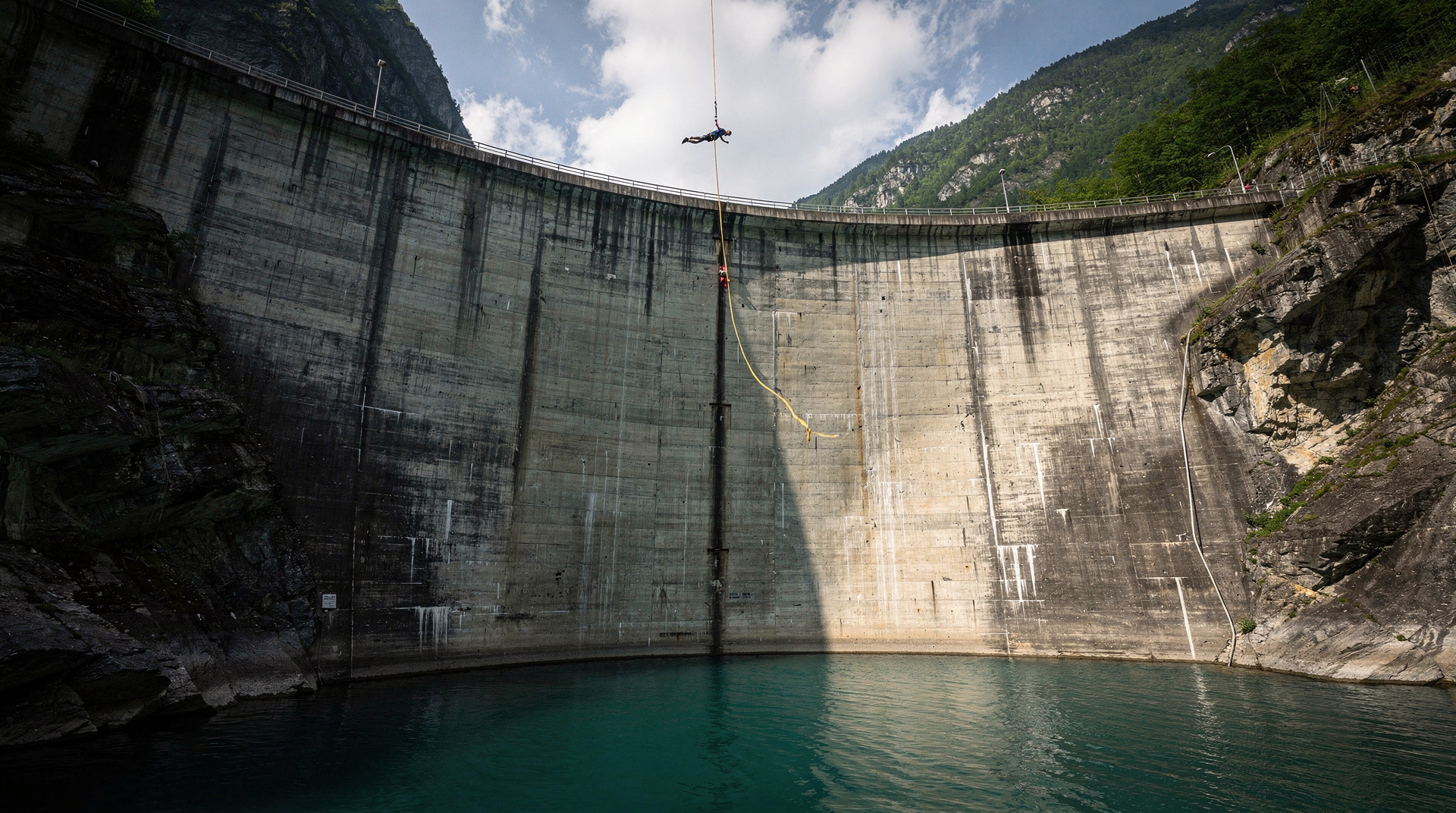
The Verzasca valley is perhaps the most famous, partly because of the Verzasca Dam’s association with bungee jumping, but the river below the dam creates outstanding canyoning in its own right, with turquoise pools, massive granite boulders, and several striking natural arches.
Valais: high-altitude canyoning
The Valais (Wallis) canton offers canyoning at higher elevations than most other Swiss regions, with some routes beginning above 1,500 metres. Water temperatures are very cold even in August, and the terrain can feel more committing. These routes are generally for experienced participants or those wanting a serious physical challenge. The reward is extraordinary scenery in some of Switzerland’s most dramatic valleys.
Graubunden: the canton of rivers
Graubunden is Switzerland’s largest canton and is crossed by dozens of rivers descending from the Alps and Engadine plateau. Several canyoning routes have been developed here, particularly around the Safiental and Rhine tributaries. The region sees fewer commercial tour operators than Interlaken, which means a more independent experience for those willing to seek it out.
Difficulty levels explained
Swiss canyoning operators typically use a colour or numbered rating system, but the underlying factors are consistent:
Beginner (easy): Short jumps of 1-3 metres, abseils of under 10 metres, swimming sections in calm pools. No prior experience required. Suitable for most adults and older children (usually 12+ with operator approval). Typical example: many Interlaken standard half-day routes.
Intermediate: Jumps of 3-7 metres, abseils of 10-20 metres, some exposure to current in swimming sections. Requires comfort with heights and water. Suitable for adults with reasonable fitness. Typical example: Chli Schliere, Grimsel area routes.
Advanced: Jumps of 7+ metres, long or multi-pitch abseils, sustained swimming in current, and sections requiring technique rather than just nerve. Recommended for participants with prior outdoor experience. Not appropriate as a first-time activity.
Expert/Technical: Routes involving mandatory jumps above 10 metres, serious technical ropework, and real consequence from error. Run only by specialist guides and appropriate for experienced canyoners only.
Most commercially offered tours fall in the beginner to intermediate range, which covers the vast majority of visitor demand.
What to expect on the day
Arrival and briefing
Tours typically begin with a 20-30 minute safety briefing at the operator base. Guides explain the techniques for jumping (entry positions, feet-first requirement), abseil descent, and swimming in current. They will ask about swimming ability, any medical conditions, and previous outdoor experience. Be honest — guides use this to adjust the program and their supervision.
Gear up
All equipment is provided: a full wetsuit (essential even in summer — canyon water is consistently cold), neoprene socks and gloves, a helmet, a harness, and a buoyancy aid or PFD. Personal items go into a dry bag. Wear old swimwear or shorts and a T-shirt underneath the wetsuit. Leave jewellery at home — rings and necklaces can be hazardous.
The descent
Guides lead the group through the canyon in small teams (typically 6-12 people per guide). The pace is set by the slowest participant. Guides will position themselves at jump and abseil points to assist anyone uncertain about technique. You are never required to complete any feature you are unwilling to attempt — there are usually bypass routes. However, some jumps are mandatory on certain routes, which operators disclose in advance.
After the canyon
Most programs end with a short walk back to the base or a vehicle pickup. Operators provide changing facilities and somewhere to dry off. Allow 4-6 hours for a half-day program including travel, briefing, activity, and return.
Season guide
May and June: high flows
Snowmelt from the Alps keeps rivers high and fast in May and early June. Canyon sections that are calm in summer can be significantly more powerful. Operators run tours in May with experienced guides, but the experience is more demanding and cold. Water temperatures in high-altitude canyons can be 6-10 degrees Celsius in May. Not recommended for first-timers or those sensitive to cold.
July and August: peak season
The sweet spot. Water levels have dropped to manageable levels, temperatures are 12-16 degrees Celsius in most canyons (still cold, but manageable in a full wetsuit), and weather is most reliable. Tour slots fill quickly — book at least a week in advance during July and August. The canyon environment is less intimidating for first-timers.
September: excellent conditions
Often considered the best canyoning month by operators. Flows are lower and calmer, water temperatures remain reasonable, crowds are smaller, and the autumn light in the gorges is beautiful. Many experienced canyoners specifically target September for this reason.
October: late season
Some operators extend into October on good-weather days. Water temperatures drop rapidly, and weather becomes increasingly unpredictable. The season is winding down — check with operators about availability.
Age and fitness requirements
Most commercial operators set a minimum age of 10-12 years for junior participants, and 14-16 for more demanding routes. Children must be assessed by the guide at the start.
There is no specific fitness test, but participants should be able to walk for 1-2 hours on uneven terrain, swim short distances, and climb out of a pool. A moderate level of general fitness makes the experience more enjoyable. Obesity or severe joint problems that prevent easy movement in a wetsuit may be limiting factors — check with operators.
What to bring
- Old swimwear or shorts and a T-shirt (worn under the wetsuit)
- Closed-toe sports shoes or old trainers that can get wet (no sandals, no bare feet)
- Towel and dry clothes for after
- Sunscreen (apply before, not during)
- Water bottle
- Leave phones and cameras in a dry bag provided by the operator unless you have a dedicated waterproof housing
Safety and what to look for in an operator
Switzerland’s outdoor adventure industry operates under a licensing framework that requires commercial operators to register with Seco (State Secretariat for Economic Affairs) and maintain equipment and guide qualifications to specified standards. When choosing an operator:
- Check that they provide all safety equipment (wetsuit, helmet, harness, buoyancy aid) as standard
- Verify that guides hold Swiss or internationally recognised canyoning guide qualifications
- Look for operators with a substantial review history on booking platforms
- Be cautious of unusually low prices that do not include proper equipment
Reputable operators in Interlaken and Central Switzerland cancel or modify tours based on water levels and weather. If an operator is willing to run a tour in genuinely dangerous high-flow conditions, that is a serious red flag.
What canyoning feels like: sensory account for first-timers
The hardest thing to convey about canyoning before you have done it is the sensory totality of the experience. A description of “jumping into a pool” does not prepare you for the cold, the sound, the visual compression of the gorge walls, and the way the water moves.
The cold: Swiss canyon water is cold. Even in August, at 12-14 degrees Celsius, submersion is initially shocking. The full wetsuit manages this — within 30 seconds to a minute, the water trapped between the neoprene and your skin is body-warmed and the cold becomes manageable. But the first jump into a deep pool always registers as a physical shock, which is part of the experience.
The sound: Water sounds different inside a narrow gorge. The rock walls reflect and amplify everything — the roar of waterfalls, the echo of voices, the slap of water against the canyon floor. Sections where the gorge narrows to 2-3 metres can be acoustically overwhelming in high flow.
The visual: Gorges carved by glacial rivers through limestone are narrow, vertical, and often overhung. The sky appears as a strip of light far above. The rock is smoothed and sculpted by centuries of water flow into organic, almost architectural forms. The combination of the rock colour, the blue-green water, and the slanting light creates a visual environment unlike anything above ground.
The movement: Between the set pieces (jumps, abseils), canyoning involves a continuous flow of scrambling, wading, swimming, and climbing through the terrain. There are no pauses for standing still and looking — you are always moving through the environment. This continuous engagement with the physical landscape is what many canyoners cite as the most distinctive aspect of the sport.
Planning a multi-canyon trip to Switzerland
For visitors specifically focused on canyoning, Switzerland offers enough variety across its three main regions to sustain a week or more of activity:
3 days in the Bernese Oberland: Standard Interlaken half-day tour (Day 1); full-day Grimsel area canyoning (Day 2); Meiringen gorges (Day 3). Use Interlaken or Meiringen as a base.
2 days in Central Switzerland: Chli Schliere full day from Lucerne (Day 1); Engelberg-area technical route for experienced participants (Day 2). Use Lucerne as a base.
2 days in Ticino: Verzasca canyon (Day 1); Maggia river program (Day 2). Use Locarno or Ascona as a base.
The Swiss Travel Pass covers the intercity rail connections between all three regions, making a multi-region canyoning trip logistically simple. The adventure itinerary guide provides further multi-day program suggestions.
Combining canyoning with other activities
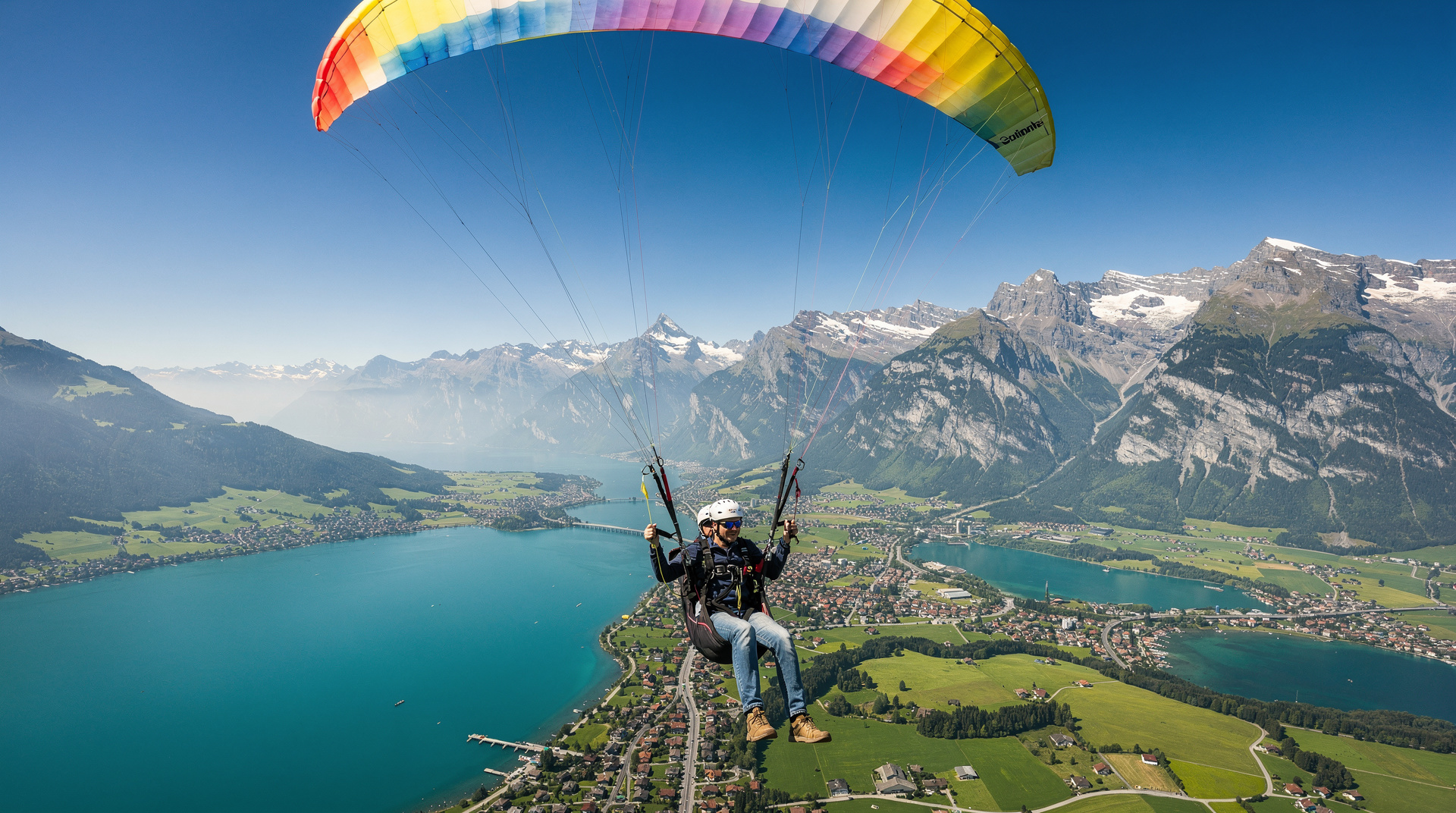
Canyoning fits well into a broader adventure itinerary in Switzerland. Interlaken’s proximity to paragliding launch sites, the canyon swing in Grindelwald, and white-water rafting rivers means a multi-day adventure trip can pack in several distinct experiences. Many operators offer combination packages — canyoning in the morning, rafting in the afternoon, for example — that reduce overall cost and logistics.
For those basing themselves in Lucerne, the Chli Schliere offers an excellent single-day adventure without needing to travel to Interlaken, and Lucerne’s central position makes it a convenient hub for exploring Central Switzerland’s outdoor options.
The adventure activities section of this site covers the full range of adrenaline experiences available across Switzerland, with links to detailed guides for each.
Canyoning vs other Swiss adventure sports
First-timers deciding between adventure activities often ask how canyoning compares to alternatives on offer around Interlaken and beyond. Canyoning is more physically continuous than the canyon swing in Grindelwald (a single big adrenaline moment) or bungee jumping (also a single jump) — it demands sustained movement, cold-water tolerance, and comfort with heights across a multi-hour descent, but requires no free-fall commitment of its own.
Compared with white-water rafting, canyoning is more technical and physically demanding but covers a much shorter distance; rafting suits groups wanting a shared, less technical outdoor experience. If unsure which suits you, a beginner canyon like Saxeten is a reasonable middle ground between a passive scenic activity and a full technical adventure sport.
Booking and cancellation practicalities
Tours are weather- and water-level-dependent, so most reputable Interlaken and Central Switzerland operators build flexibility into their booking terms. Expect free rescheduling if the operator cancels for safety reasons (typically after sustained heavy rain or unusually high snowmelt), but check the specific policy before paying — cancellation terms vary between operators and are rarely retroactively generous. Booking a day or two ahead is usually enough outside July-August; during peak season, book at least a week ahead as popular slots (particularly Chli Schliere and the standard Interlaken half-day) sell out.
Frequently asked questions about Canyoning in Switzerland
Do I need to know how to swim to go canyoning in Switzerland? Basic water confidence is required, but you do not need to be a strong swimmer. Guides assess everyone’s comfort in water at the start and can adjust the program; a buoyancy aid is provided throughout.
Is canyoning safe for beginners? Yes, when booked with a licensed operator. Beginner routes like Saxeten near Interlaken are specifically designed for first-timers, with full safety equipment, small guided groups, and bypass options for anyone unwilling to attempt a specific jump or slide.