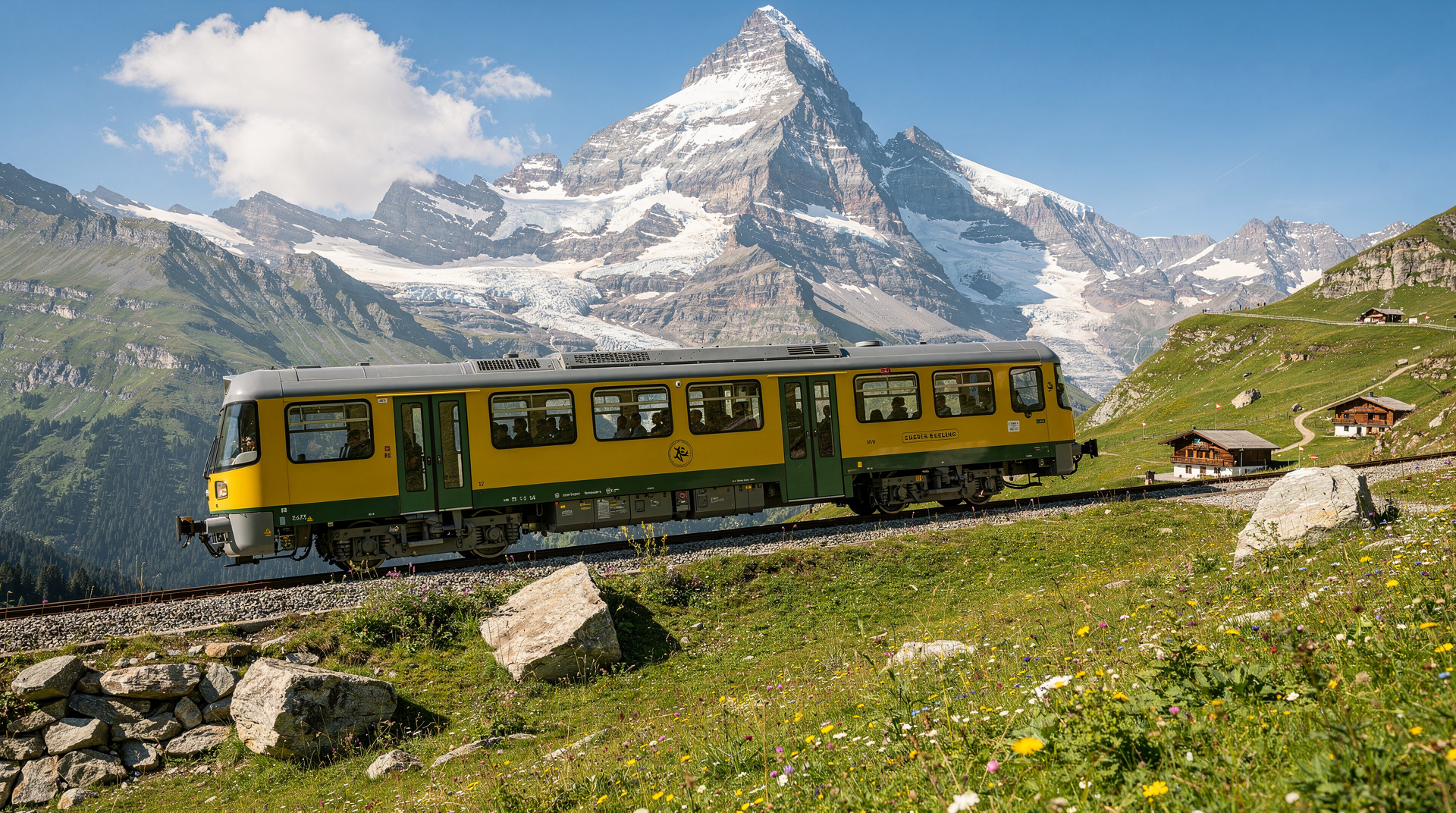
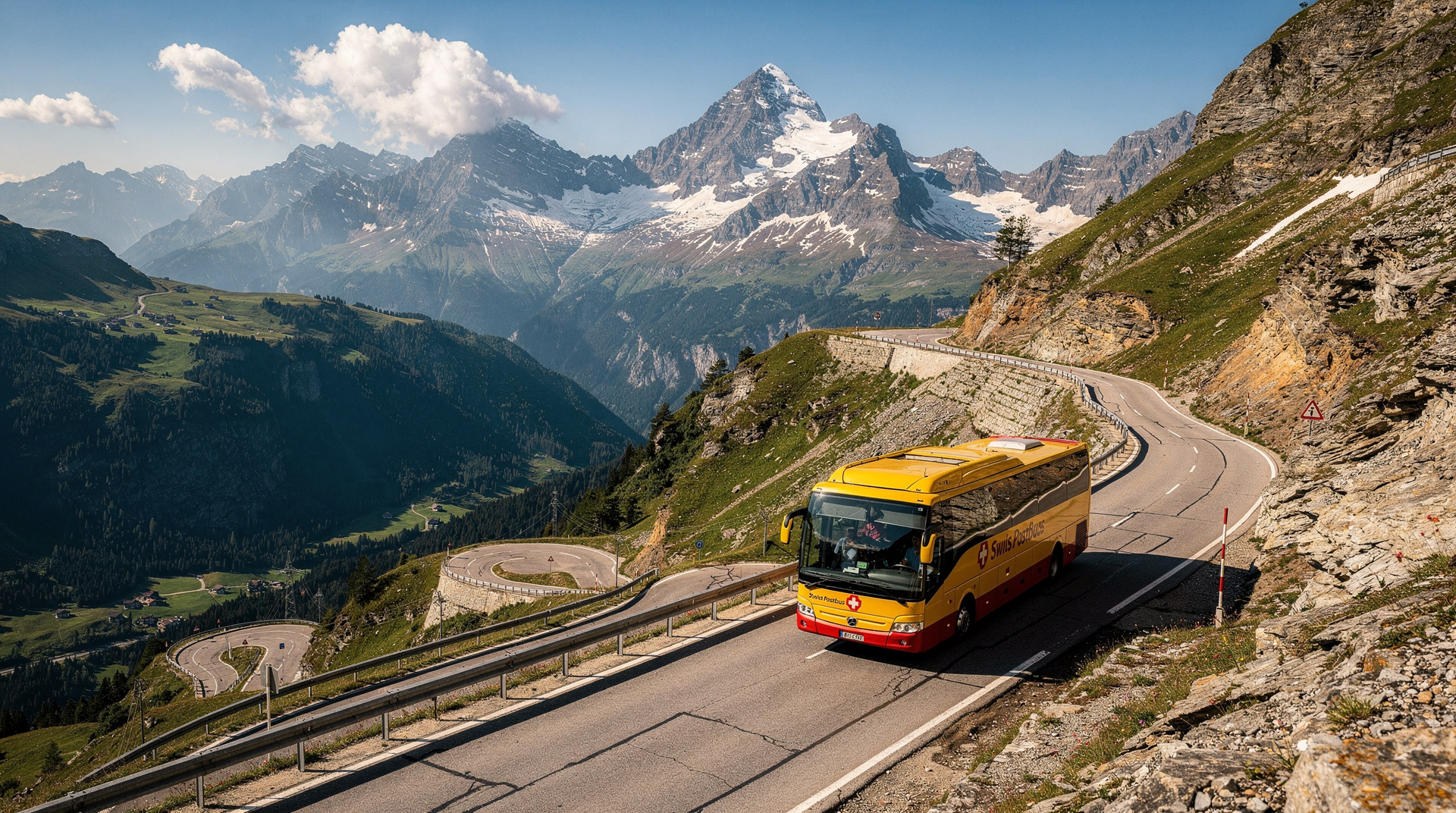
© Swiss Travel System AG, 2018, Fotograf: Daniel Ammann
Swiss Travel Pass: the complete guide
Is the Swiss Travel Pass worth it?
For most visitors spending 4+ days and planning 2-3 mountain excursions, yes. It covers unlimited trains, buses, boats, city transport, 500+ museums, and gives 25-50% off most mountain railways.
What is the Swiss Travel Pass?
| At a glance | |
|---|---|
| Cost | around CHF 254-637 for 3-15 consecutive days (second class) |
| Covers | trains, most private railways, PostBus, lake boats, city transport in 90+ cities, 500+ museums |
| Mountain railways | 25-50% off most, Rigi fully free |
| Best for | trips of 4+ days with multiple regions or mountain excursions |
| Compare against | Half Fare Card or Eurail |
The Swiss Travel Pass is an all-in-one transport pass for visitors to Switzerland, covering unlimited travel on the Swiss Federal Railways (SBB) network and most private railways, buses, lake boats, and city trams and buses in 90 cities. It also provides free entry to over 500 Swiss museums and discounts on most mountain railways, cable cars, and funiculars.
It is the most comprehensive way to move around Switzerland without a car, and for travellers planning to use trains heavily — particularly the scenic trains — it typically pays for itself within the first two or three travel days. The pass is marketed by Switzerland Tourism and distributed through SBB, Rail Europe, and various travel agencies worldwide.
This guide covers the 2026 prices, exactly what is and is not included, how to calculate whether the pass is right for your trip, and how it compares to the alternative (the Half Fare Card).
Swiss Travel Pass — all-in-one unlimited travel
Unlimited trains, buses, lake boats, city transport, 500+ museums, and 25–50% off mountain railways. The single best-value card for a Switzerland trip.
- Free cancellation
- from CHF 254
2026 prices
The Swiss Travel Pass comes in two formats: consecutive days (unlimited travel for 3, 4, 6, 8, or 15 consecutive days) and Flex (3, 4, 6, or 8 days of travel within a 1-month window).
Consecutive pass prices (adult, 2nd class)
| Duration | Price |
|---|---|
| 3 days | CHF 254 |
| 4 days | CHF 309 |
| 6 days | CHF 393 |
| 8 days | CHF 476 |
| 15 days | CHF 637 |
Consecutive pass prices (adult, 1st class)
| Duration | Price |
|---|---|
| 3 days | CHF 391 |
| 4 days | CHF 478 |
| 6 days | CHF 609 |
| 8 days | CHF 737 |
| 15 days | CHF 985 |
Flex pass prices (adult, 2nd class)
| Duration | Price |
|---|---|
| 3 days in 1 month | CHF 296 |
| 4 days in 1 month | CHF 362 |
| 6 days in 1 month | CHF 459 |
| 8 days in 1 month | CHF 554 |
Flex pass prices (adult, 1st class)
| Duration | Price |
|---|---|
| 3 days in 1 month | CHF 456 |
| 4 days in 1 month | CHF 560 |
| 6 days in 1 month | CHF 712 |
| 8 days in 1 month | CHF 857 |
Prices are per adult. Youth (under 26) prices are available at approximately 25% below adult rates. Children under 6 travel free. Children 6–16 travel free if accompanied by an adult holder of a Swiss Travel Pass, using the Family Card (free from SBB when purchasing the adult pass).
Book via GetYourGuide for convenience:
What the Swiss Travel Pass covers
Trains
The Swiss Travel Pass covers unlimited travel on:
- All SBB mainline trains (IC, ICE, IR, RE, S-Bahn)
- Rhaetian Railway (RhB) — Bernina Express base fare, Albula line, all RhB routes
- MOB (Montreux-Oberland-Bernois) — GoldenPass Express base fare
- Zentralbahn — Lucerne-Interlaken Express
- BLS (Bern-Lötschberg-Simplon) — Spiez-Interlaken, Bern-Spiez-Brig, various Bernese Oberland lines
- Matterhorn Gotthard Bahn — Zermatt connections
- Appenzellerbahn
- Most other private railways throughout Switzerland
The pass covers the complete Glacier Express base fare, Bernina Express base fare, GoldenPass Express base fare, and Gotthard Panorama Express base fare (both boat and train sections). Mandatory reservations are not covered — see below.
Buses
The pass covers all post buses (Swiss PostBus network) throughout the country, including alpine valley routes to mountain villages not served by train. This is more valuable than it sounds: the PostBus is how you reach places like Engelberg, Pontresina via alternate routes, and dozens of mountain villages with no rail connection.
It also covers city buses in 90 Swiss cities including Zurich, Geneva, Bern, Basel, Lucerne, Lausanne, and Lugano.
Lake boats
The pass covers all scheduled lake boat services on:
- Lake Lucerne (Vierwaldstattersee) — including the historic paddle steamers used by the Gotthard Panorama Express
- Lake Geneva (Leman)
- Lake Thun (Thunersee) and Lake Brienz (Brienzersee)
- Lake Zurich
- Lake Constance (Swiss portion)
- Lake Maggiore (Swiss portion)
- Lake Lugano
This is a significant benefit for itineraries that include Lucerne, Interlaken, and Lugano. Lake cruises that would cost CHF 30–50 individually are entirely free with the pass.
City transport
Unlimited use of trams, buses, and urban rail within 90 Swiss cities during pass validity. This covers the metro/tram in Zurich, Geneva’s tram network, Bern’s tram and S-Bahn, and similar systems in all major cities. Over a 6-day trip with urban exploration this easily saves CHF 50–100.
Museums
Free entry to over 500 Swiss museums, indicated by the “Swiss Museums Pass” logo. Major museums covered include:
- Zurich: Kunsthaus Zurich, Swiss National Museum, Rietberg Museum
- Bern: Kunstmuseum Bern, Bern Historical Museum, Einstein Museum
- Basel: Kunstmuseum Basel, Basel Historical Museum
- Geneva: Museum of Art and History, Ariana Museum, MAMCO
- Lucerne: Swiss Museum of Transport, Rosengart Collection
- Lausanne: Olympic Museum, Cantonal Museum of Fine Arts
Museum entry is typically CHF 15–25 per venue. If you visit 3–4 museums over your trip, this benefit alone can be worth CHF 60–100.
What the Swiss Travel Pass does NOT cover
Understanding the exclusions is as important as knowing the inclusions.
Seat reservations on scenic trains: Mandatory on the Glacier Express (CHF 54), required on the GoldenPass Express (CHF 10–16), required for Gotthard Panorama Express (CHF 14–20), and required on the Bernina Express (see rhb.ch for current fees). Always pay separately.
Most mountain railways and cable cars: The major mountain excursions — Jungfraujoch, Matterhorn Glacier Paradise, Pilatus, Titlis, Schilthorn, and others — are only partially discounted. Standard discount is 50%, except:
- Rigi: fully covered (free) with Swiss Travel Pass
- Stanserhorn: 50% discount
- Jungfraujoch: 25% discount
The Chocolate Train full package: The Chocolate Train is a curated excursion, not a standard rail service. Swiss Travel Pass holders receive a discount (approximately CHF 20) on the package price, but the full CHF 89–99 is not covered.
Excellence Class supplement on Glacier Express: The base 1st class fare is covered by a 1st class pass; the Excellence Class supplement is not.
Sleeper trains (international CityNight Line): International overnight trains require a separate booking. The pass covers Swiss domestic overnight services.
Food and drinks on board: Nothing edible is covered by any Swiss rail pass.
Mountain railway discounts in detail
The 50% discount on mountain railways is one of the most valuable pass benefits for typical tourist itineraries.
| Mountain destination | Without pass | With 2nd class pass | Saving |
|---|---|---|---|
| Jungfraujoch (from Grindelwald Terminal) | from CHF 129.60 | 25% off (see the price calculator on jungfrau.ch) | 25% |
| Matterhorn Glacier Paradise | CHF 120–132 | CHF 60–66 (50% off) | CHF 60–66 |
| Mount Titlis (from Engelberg) | CHF 102 | CHF 51 (50% off) | CHF 51 |
| Mount Pilatus (from Alpnachstad, summer round trip) | CHF 84 | CHF 42 (50% off) | CHF 42 |
| Schilthorn (from Murren) | CHF 91.40 | CHF 45.70 (50% off) | CHF 45.70 |
| Rigi Kulm (from Vitznau, round trip) | CHF 84 | Free | CHF 84 |
Two mountain excursions at 50% discount (e.g., Titlis at CHF 51 and Matterhorn Glacier Paradise at CHF 60) save CHF 111 combined. Three mountain excursions save more than CHF 130. This alone can cover a substantial portion of the pass cost.
For the Matterhorn Glacier Paradise discount, book via Zermatt Matterhorn Glacier Paradise on GetYourGuide. For Mount Titlis, the Titlis ticket from Lucerne including the train to Engelberg is a convenient bundle.
Consecutive vs Flex: which to choose?
Consecutive days give you unlimited travel every day of your trip. Best if you are moving between cities and regions daily — the typical Switzerland tour where you sleep in a different place most nights.
Flex days give you a set number of travel days within a one-month window. Best if you are based in one or two places and taking day trips. On non-travel days, you keep the museum benefit but do not consume a travel day.
Example: If you are staying 10 nights in Switzerland but spending 3 nights each in Zurich, Lucerne, and Zermatt with 1 transit day between each, you use only 6–7 actual travel days. A 6-day Flex pass might suit you better than an 8-day consecutive pass.
The Flex pass costs approximately 15–20% more per travel day than the consecutive equivalent. The cost difference is worth it if you will genuinely use more non-travel days (days when you do not need to move at all).
Is the Swiss Travel Pass worth it? The calculation
Skip the maths: plug your trip into our free Swiss Travel Pass calculator — it adds up your point-to-point fares and tells you whether the pass beats them in under a minute.
The honest answer is: it depends on your itinerary. Here is how to calculate it for your specific trip.
Step 1 — List every train journey you plan to take. Include intercity trains between major cities, scenic trains, and regional trains to destinations like Zermatt, St. Moritz, Lugano, and Appenzell.
Step 2 — Look up the full SBB point-to-point price for each journey. Use sbb.ch in incognito mode to see undiscounted prices.
Step 3 — Add mountain excursion costs. Note the 25% or 50% discount available with the pass.
Step 4 — Add city transport costs. Estimate CHF 5–10 per day for trams and buses in cities.
Step 5 — Add museum entry fees. List specific museums you plan to visit.
Step 6 — Compare total with the pass price. If the total exceeds the pass price, the pass is worth it.
Rough rule of thumb: If you are spending 4+ days, moving between at least 3 cities, doing 2+ mountain excursions, and riding 1–2 scenic trains, the Swiss Travel Pass almost certainly pays for itself.
Scenario: 6-day trip, Geneva to Zurich
- Geneva–Lucerne: CHF 77
- Glacier Express (Zermatt–St. Moritz) base fare: CHF 153
- St. Moritz–Chur–Zurich: CHF 64
- Matterhorn Glacier Paradise discount saving: CHF 60
- Mount Titlis discount saving: CHF 51
- City transport (6 days): CHF 60
- 2 museums: CHF 40
- Total without pass: CHF 505
- 6-day consecutive 2nd class pass: CHF 393
- Saving: CHF 112
In this scenario, the pass saves CHF 112.
The Half Fare Card alternative
The Half Fare Card (Halbtax) costs CHF 150 for 1 month and halves the price of almost all Swiss rail tickets. It does not cover city transport, lake boats, or museums. It does not cover mountain railways.
When should you choose the Half Fare Card over the Swiss Travel Pass?
- If you are making only 2–3 long-distance journeys and not using city transport
- If you do not plan mountain excursions
- If you are staying mostly in one place and moving only occasionally
When the Swiss Travel Pass is clearly better:
- Any trip with 3+ travel days and regular movement
- Any trip including mountain excursions
- Any trip combining scenic trains with city exploration
See our detailed Swiss Travel Pass vs Half Fare Card comparison for a full side-by-side analysis.
Swiss Half Fare Card — book here if this suits your itineraryWhere to buy the Swiss Travel Pass
SBB (sbb.ch): Direct purchase. Delivered digitally or by post depending on your location.
Rail Europe (raileurope.com): Popular for European-based travellers.
GetYourGuide: Swiss Travel Pass on GetYourGuide
At Swiss train stations: Available from SBB ticket offices at Zurich Airport, Geneva Airport, Basel, Bern, Zurich HB, and all major stations. No advance booking required.
Buy the pass before arriving in Switzerland if possible — it takes a day or two for digital delivery confirmation and you want it ready on day one.
How to activate and use the pass
Digital pass: Open the SBB app, navigate to your tickets, and activate the pass on the first day of use. You enter a start date when prompted. The pass is then live as a QR code in the app — show it to conductors on trains along with a photo ID.
Physical pass: Write the start date in ink on the pass on the first day of use, before boarding any train. Show it along with photo ID.
At mountain railway ticket offices: Show the pass and ask for the discount. Some mountain railways scan the QR code; others ask you to present the physical card. Always have it accessible.
For museum entry: Show the pass at the ticket desk. No pre-booking needed for most museums.
Tips for maximising the pass
Tip 1 — Activate it on your first travel day, not your arrival day. If you arrive in the evening and take only a short taxi or metro, your first full travel day starts the next morning. Activate then.
Tip 2 — Book scenic train reservations before you buy the pass. Reservations for Glacier Express and Bernina Express are booked separately from the pass. Decide which scenic trains you want, secure reservations first, then purchase the pass.
Tip 3 — Use the lake boats freely. Lake Geneva boats, Lake Lucerne boats, Lake Brienz boats — all covered. These are genuinely enjoyable and often skipped because travellers do not realise they are free. Budget at least one lake afternoon into your itinerary.
Tip 4 — Remember the museum benefit on city days. If you spend a full day in Zurich, Bern, or Basel, visit 2–3 museums. The combined savings (CHF 40–75) contribute meaningfully to the pass justification.
Tip 5 — Take the free Rigi. Rigi is the only major mountain summit fully free with the Swiss Travel Pass. The lake boat from Lucerne to Vitznau, then the Rigi cogwheel railway to the summit — all covered. The panoramic views from Rigi over Lakes Lucerne, Zug, and Lauerz are superb. It costs nothing extra with the pass. Or combine the boat, cogwheel train, and the Rigi Kaltbad mineral baths in one day with the Lucerne boat, Rigi train, and mineral baths ticket.
Tip 6 — Buy the Family Card. If travelling with children 6–16, the Family Card (free from SBB when purchasing an adult pass) allows children to travel free on all pass-covered routes alongside a pass-holding adult. This is one of the most underutilised benefits for family travellers.
The scenic trains and the Swiss Travel Pass together
The most popular use case for the Swiss Travel Pass is a Swiss scenic train itinerary. Here is how the pass economics work specifically for the scenic trains cluster:
- Glacier Express base fare saved: CHF 153 (2nd class)
- Bernina Express base fare saved: see rhb.ch for the current fare
- GoldenPass Express base fare saved: CHF 64
- Gotthard Panorama Express base fare saved: CHF 98 (includes boat)
- Lucerne-Interlaken Express: covered entirely (no reservation fee)
Riding the named scenic trains with a Swiss Travel Pass means paying only the seat reservations (see the operators’ official sites for current fees), while the pass covers the base rail fares — on top of every other journey during its validity period.
For the full picture on booking all scenic trains, see our how to book Swiss scenic trains guide. For specific train guides, start with the Glacier Express and Bernina Express, which are the most popular with Swiss Travel Pass holders.
If you are still building your Switzerland itinerary, our 7-day Switzerland itinerary and best time to visit Switzerland guides will help you plan around when and how long to travel.
Mastering the general train mechanics first
However you use the pass, the underlying Swiss rail system works the same way for everyone. Our Swiss trains guide covers ticket machines, platform boards, and the “clock-face” timetable in detail — useful background even once you have the pass activated and no longer need to buy individual tickets.
When a different mountain comparison helps
If your itinerary is built around specific mountains rather than the pass itself, Jungfraujoch vs Pilatus vs Titlis and Eiger Express vs Jungfraujoch Railway break down which excursions the pass discounts most generously.
Frequently asked questions about the Swiss Travel Pass
What does the Swiss Travel Pass cover?
The Swiss Travel Pass covers unlimited travel on trains, buses, boats, and city trams/buses in 90 cities, plus free entry to over 500 museums. It also provides 25-50% discounts on most mountain railways and cable cars. Rigi is the only major mountain summit fully free with the pass.
Does the Swiss Travel Pass cover Jungfraujoch?
The Swiss Travel Pass does not fully cover Jungfraujoch, but it provides a 25% discount on the mountain railway fare from Interlaken or Grindelwald. The pass does cover all connecting trains to Interlaken and Grindelwald at no additional cost, which adds further value.
Can I buy the Swiss Travel Pass at the airport?
Yes, the Swiss Travel Pass is available from SBB ticket offices at Zurich Airport and Geneva Airport, as well as all major train stations. However, buying online before your trip is recommended so you have it ready on arrival and avoid spending time at the ticket counter.
Swiss Travel Pass vs Half Fare Card: which is better?
The Swiss Travel Pass is better for trips of 4+ days with regular movement between cities, mountain excursions, and scenic trains. The Half Fare Card (CHF 150 for one month) is better for shorter trips with only 2-3 long-distance journeys and no mountain excursions. The pass includes city transport and museums; the Half Fare Card does not.
Do children travel free with the Swiss Travel Pass?
Children under 6 always travel free in Switzerland. Children aged 6-16 travel free when accompanied by an adult Swiss Travel Pass holder, provided you request the free Family Card when purchasing the adult pass. This is one of the most valuable and underused benefits for families.
Does the Swiss Travel Pass cover the Glacier Express?
The Swiss Travel Pass covers the full base fare of the Glacier Express in the class matching your pass (2nd or 1st class). However, the mandatory seat reservation fee of CHF 54 per person is not covered and must be purchased separately. The same applies to all scenic trains with mandatory reservations.
Can I use the Swiss Travel Pass on city buses and trams?
Yes, the Swiss Travel Pass covers unlimited use of all public transport — trams, buses, and urban rail — in 90 Swiss cities including Zurich, Geneva, Bern, Basel, Lucerne, and Lausanne. This benefit alone can save CHF 50-100 over a typical trip.
How do I activate the Swiss Travel Pass?
If you have a digital pass, open the SBB Mobile app, navigate to your tickets, and activate it on your first travel day by entering a start date. For a physical pass, write the start date in ink before your first journey. Always carry photo ID alongside the pass, as conductors will check both.
Is the Swiss Travel Pass better than buying a Eurail pass?
For Switzerland-only trips, yes — the Swiss Travel Pass includes boats, city transport, and museums that Eurail doesn’t cover. Eurail only makes sense if you’re combining Switzerland with multiple other European countries on the same trip. See our Swiss Travel Pass vs Eurail comparison for the full breakdown.
What’s the minimum number of days that makes the pass worth it?
As a rough rule, 4 or more active travel days with movement between at least 3 destinations and 1-2 mountain excursions is where the pass typically starts beating individually bought tickets. Shorter or slower trips often do better with the Half Fare Card instead.