© Swiss Travel System AG, 2021, Fotograf: Tobias Ryser
Gotthard Panorama Express: Lucerne to Lugano
What makes the Gotthard Panorama Express unique?
It combines a paddle steamer cruise on Lake Lucerne with a panoramic train ride through the Gotthard tunnel, crossing from German-speaking to Italian-speaking Switzerland in about 5.5 hours.
What is the Gotthard Panorama Express?
The Gotthard Panorama Express is Switzerland’s most operationally unusual scenic train experience. Unlike its peers, the Glacier Express or Bernina Express, the Gotthard Panorama Express is not purely a train journey. It begins on the water: a historic paddle steamer or lake cruiser departs from Lucerne and navigates the full length of Lake Lucerne (Vierwaldstattersee) to Fluelen at the southern end. From there, a panoramic train takes over, climbing through the historic Gotthard mountain route and descending to Italian-speaking Ticino, arriving in Lugano.
At a glance
| Route | Lucerne to Lugano, by lake steamer then panoramic train |
| Duration | around 5.5 hours total (3h boat, 2.5h train) |
| Cost | roughly CHF 98-153 depending on class, plus a CHF 14-20 seat reservation on the train |
| Season | late April to October only; does not run in winter |
| Swiss Travel Pass | covers both the boat and the train; reservation still payable separately |
Total journey time: approximately 5.5 hours. Distance: around 180 kilometres. Cultural distance: immense — you depart from the centre of German-speaking Switzerland and arrive in a city that feels convincingly Italian, with palm trees, espresso culture, and arcaded piazzas.
The combination of lake and mountain transit is what distinguishes this route. You cross the Alps without using the new Gotthard Base Tunnel (the world’s longest railway tunnel, running directly beneath the mountains). Instead, the Panorama Express uses the historic 1882 Gotthard route — the one that winds up the mountain through spiral tunnels and over the Gotthard Pass massif.
The two-part journey
Part 1: The lake cruise from Lucerne to Fluelen
Duration: approximately 3 hours
The journey begins at Lucerne’s central station pier. Paddle steamers or modern lake cruisers of the Lake Lucerne Navigation Company (SGV) operate this section. If your departure coincides with a historic paddle steamer (Uri, Unterwalden, Schiller), you are on one of the finest vessels on Swiss lakes — these Belle Epoque ships have been in continuous operation since the early 20th century, with restored saloons, exterior promenade decks, and the satisfying sound of steam-driven paddle wheels.
The route from Lucerne to Fluelen passes through the arm of Lake Lucerne called the Urner See (Lake Uri). Key sights along the water:
Ruetli Meadow: The meadow above the western shore where, according to Swiss tradition, representatives of the three original forest cantons (Uri, Schwyz, Unterwalden) took the oath of confederation in 1291. The meadow is visible from the boat and is accessible by a short walk from a small landing stage. It is one of the most historically resonant places in Switzerland.
Schiller Stone (Schillerstein): A rock rising dramatically from the lake inscribed with the name of Friedrich Schiller, the German poet who immortalised Swiss independence in his play “Wilhelm Tell.” The rock is passed at close range on the way south.
Tellskapelle (Tell’s Chapel): A small chapel on the rocky shoreline marks the spot where, according to the legendary accounts, William Tell leaped from the boat of the tyrannical governor Gessler during a storm. The captain slows for a better view.
Brunnen: A small resort town at the junction of Lake Uri and the main body of Lake Lucerne. The views here across to the Fronalpstock and south into the lake’s southern arm are spectacular.
Fluelen: The southern terminus of the lake. A small town in the canton of Uri. From here, the boat passengers disembark and board the panoramic train.
The lake cruise is leisurely and genuinely scenic. Buy a coffee or beer from the on-board cafe and spend the time on the outdoor deck (weather permitting) or in the saloon. The boat rarely feels rushed.
Part 2: The panoramic train from Fluelen to Lugano
Duration: approximately 2.5 hours
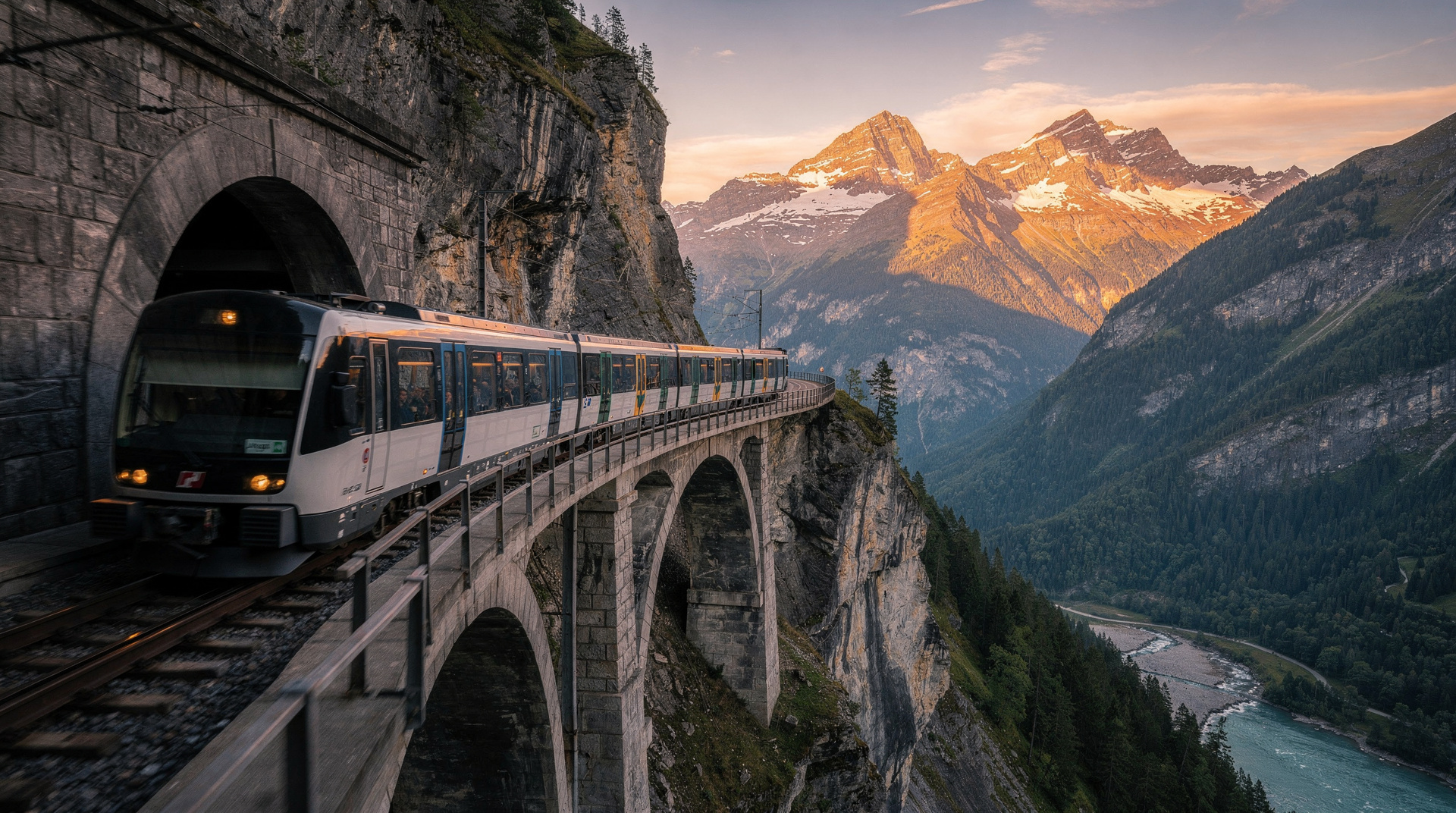
The panoramic train from Fluelen follows the historic Gotthard route — the line completed in 1882 that was, for much of the 20th century, the primary rail artery connecting northern Europe to Italy through the Alps.
The train climbs from Fluelen (altitude 436m) through the Uri Valley, passing Altdorf (the town with the famous William Tell fountain) and Erstfeld (the northern portal of the new Gotthard Base Tunnel). The line then begins its serious climb.
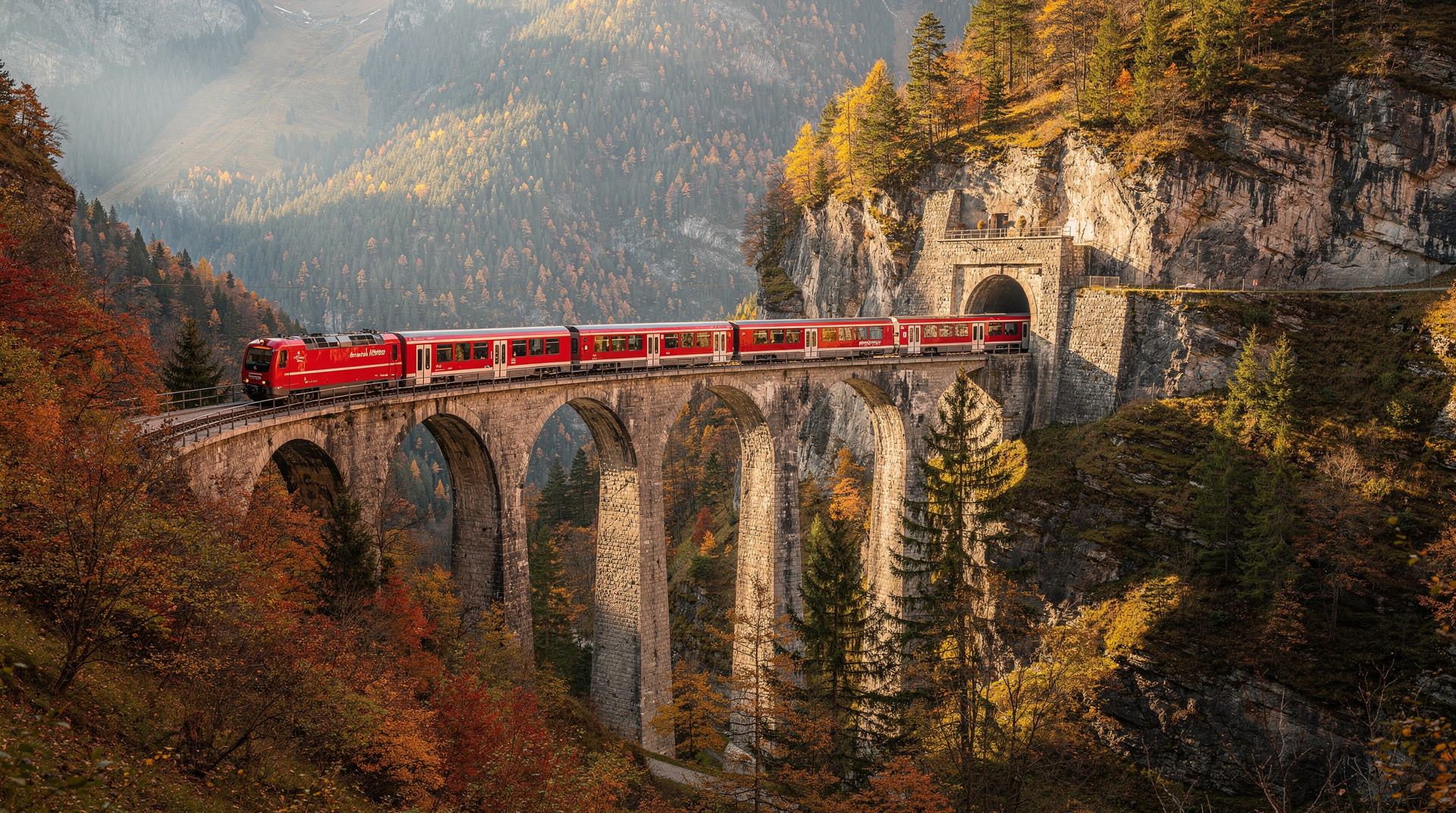
The Gotthard spiral tunnels: The engineering challenge of climbing the Gotthard without exceeding a safe gradient was solved by the original builders using a system of spiral tunnels — the train enters a tunnel, loops inside the mountain, and exits higher up the same valley. The landscape outside the window seems to shift and spiral as the train gains altitude. This section, between Wassen and Goschenen, is one of the most extraordinary pieces of mountain railway engineering in existence.
Wassen church: A small white church in the village of Wassen appears from three different angles as the spiral loops carry the train above and around the valley. Swiss schoolchildren have traditionally used the Wassen church to count their progress up the Gotthard — you know you have passed the third spiral when you have seen the church from three different vantage points.
Airolo and the tunnel entrance: After the summit, the train descends briefly to Airolo, the northern portal of the historic 1882 Gotthard Tunnel (not the new base tunnel). The 15km historic tunnel passes beneath the Gotthard Pass massif.
Ticino — the Italian face of Switzerland: After the tunnel, the train emerges into a different Switzerland. The Leventina Valley south of the Gotthard is southern in feel: chestnut trees replace conifers, stone villages replace timber chalets, Italian replaces German on station signs. The temperature rises noticeably in summer.
Bellinzona: The capital of Ticino and a UNESCO World Heritage Site for its three medieval castles (Castelgrande, Montebello, Sasso Corbaro) that defend the valley entrance. The castles are visible from the train. Bellinzona deserves a visit in its own right — it is less touristed than Lugano but arguably more authentically Ticinese.
Lugano: Arrival at Lugano station, set above the city on a hill. Lugano itself sits on Lake Lugano, surrounded by hills partially in Italy. The city has a lakeside promenade, excellent restaurants, a busy waterfront, and the distinctly relaxed character of Italian-speaking Switzerland. Monte San Salvatore and Monte Bre are accessible by funicular for views over the lake and into Italy.
Ticket prices 2026
| Section | 2nd class | 1st class |
|---|---|---|
| Lake cruise (Lucerne to Fluelen) | Included in GPE package | Included |
| Panoramic train (Fluelen to Lugano) | CHF 55 | CHF 91 |
| Full Gotthard Panorama Express package | CHF 98 (2nd) | CHF 153 (1st) |
A seat reservation on the panoramic train is required:
- 2nd class: CHF 14
- 1st class: CHF 20
Note: The boat section does not require a reservation but does require a valid ticket. The package ticket covers both.
Swiss Travel Pass coverage
The Swiss Travel Pass covers both sections of the Gotthard Panorama Express — the lake cruise and the panoramic train — at no additional cost. The mandatory train reservation (CHF 14–20) must be paid separately. Swiss Travel Pass holders on the boat also receive free travel on the Lake Lucerne boat services for the full duration of their pass — making extended lake cruising possible on any day.
If you have a Swiss Travel Pass, this is one of the best value scenic journeys available: both the 3-hour cruise and the 2.5-hour panoramic train are covered, and you only pay the CHF 14–20 reservation.
You can buy the Swiss Travel Pass online before departure, and consider adding a separate Lake Lucerne panoramic cruise on another day to explore the lake further.
Booking
Book through SBB (sbb.ch) — search for “Gotthard Panorama Express.” Boat departure times coordinate with the train connections, so book the full package rather than separate components. Departures are available daily from late April through October.
The service does not run in winter (November to late April). Confirm exact season dates for 2026 on SBB.
Book 2–4 weeks ahead for summer travel. July and August departures can fill up, particularly on weekends.
What class to choose
Second class: The panoramic carriages in 2nd class are modern and comfortable, with large windows that provide excellent views. The boat section in 2nd class uses the lower decks of the steamers — perfectly adequate, but the upper promenade deck (technically 1st class space on some vessels) offers better views.
First class: On the train, 1st class carriages are noticeably less crowded and the seat width is larger. On the historic paddle steamers, 1st class access includes the upper saloon and promenade deck — on a warm summer day, this is a worthwhile upgrade for the 3-hour lake section.
For most travellers, 2nd class is entirely satisfactory. If you are travelling with a 1st class Swiss Travel Pass, upgrade to the 1st class experience automatically.
Practical tips
Tip 1 — Spend a day in Lucerne before departing. The Gotthard Panorama Express departs in the morning — the standard departure leaves Lucerne around 09:12. Arriving in Lucerne the previous evening gives you time to explore the covered bridge (Kapellbrucke), the old town, and the lake promenade.
Tip 2 — Sit on the upper deck of the boat in good weather. The outdoor promenade deck provides unobstructed panoramic views and the best photography angles. The enclosed saloon is comfortable in poor weather, but the experience is better in fresh air.
Tip 3 — Watch for Wassen church from the left side of the train. The spiral ascent means you will see the church from three different heights. Sit on the left side of the train travelling south for the best views of this phenomenon.
Tip 4 — Spend at least one night in Lugano. Lugano is worth more than an afternoon. The lakeside, Monte San Salvatore funicular, the old town, and the Ticino food culture (local Merlot wine, polenta, risotto) all reward a longer stay. The Swiss Travel Pass covers city transport in Lugano including buses and some funicular services.
Tip 5 — Consider reversing the direction (Lugano to Lucerne). The morning light on Lake Lucerne is beautiful from the south. Doing the journey in reverse — train from Lugano to Fluelen, then boat to Lucerne — means arriving in Lucerne in the late afternoon, in time for an evening by the lake.
Tip 6 — Add Bellinzona as a stop. The train passes through Bellinzona, and the journey is flexible enough that a few-hour stop to explore the UNESCO castles is possible if you hold a Swiss Travel Pass (free boarding on the next train to Lugano, no extra reservation needed for the standard service).
Lugano: what to do on arrival
Lugano sits at 274 metres above sea level on the northern shore of Lake Lugano. Key things to do:
- Monte San Salvatore: Funicular from Paradiso (walkable from the city centre). The summit at 912m offers views over the lake to Monte Rosa and the Alps on clear days. Allow 2–3 hours return.
- Lugano old town: The piazza Riforma and the streets around it. Arcaded shopping streets, excellent espresso, and a distinctly Italian cafe culture. The cathedral of San Lorenzo is worth a visit.
- Ceresio boat: Lake Lugano cruises connect to Morcote (one of Switzerland’s most beautiful villages) and to the Italian town of Campione d’Italia (an Italian enclave surrounded by Switzerland).
- MASI art museum: The Museo d’Arte della Svizzera Italiana has impressive temporary exhibitions in a lakeside building. Entrance is discounted for Swiss Travel Pass holders.
The wider context: the Gotthard in Swiss history
The Gotthard Pass has been the most strategically important Alpine crossing for over 700 years. The route through the Schollenen Gorge north of Andermatt was made passable by the construction of the Devil’s Bridge in the 13th century, opening trade routes between the Po plain and northern Europe. The cantons of Uri, Schwyz, and Unterwalden — whose shores you cruise past on Lake Lucerne — formed the original Swiss Confederation partly to control and manage this vital passage.
The 1882 railway tunnel was an engineering achievement that transformed travel time through the Alps from days to hours. The new Gotthard Base Tunnel, opened in 2016 at 57 kilometres the world’s longest railway tunnel, now carries most freight and high-speed passenger traffic beneath the mountain. The historic route, which the Gotthard Panorama Express uses, has been transformed from a transit corridor into a heritage experience — slower, more scenic, and far more historically resonant than the express alternative.
For connecting scenic train journeys, the Bernina Express departs from nearby St. Moritz, reachable from Lugano via Bellinzona and Chur. Our scenic trains itinerary shows how to combine the two routes into an unforgettable multi-day loop across the Alps.
If you are building a wider Switzerland trip, see our 7-day itinerary and the Swiss Travel Pass guide — the pass makes both sections of the Gotthard Panorama Express free to ride, and the lake cruises on any day of your pass validity.
Frequently asked questions about Gotthard Panorama Express
Does the Gotthard Panorama Express run in winter?
No. The service operates seasonally from late April through October only. Outside this window, you can still cross the Gotthard by regular train through the Gotthard Base Tunnel, but without the lake cruise or the historic panoramic route.
Is the Gotthard Panorama Express worth it compared to the direct Gotthard Base Tunnel route?
If your only goal is speed, the Gotthard Base Tunnel route is far faster. The Panorama Express exists for the journey itself — the paddle steamer on Lake Lucerne, the spiral tunnels between Wassen and Goschenen, and the cultural shift into Italian-speaking Ticino. It is best thought of as a full-day scenic excursion rather than transport A to B.