Switzerland scenic train itinerary: 10 days on the great railways
Why a train-focused trip works
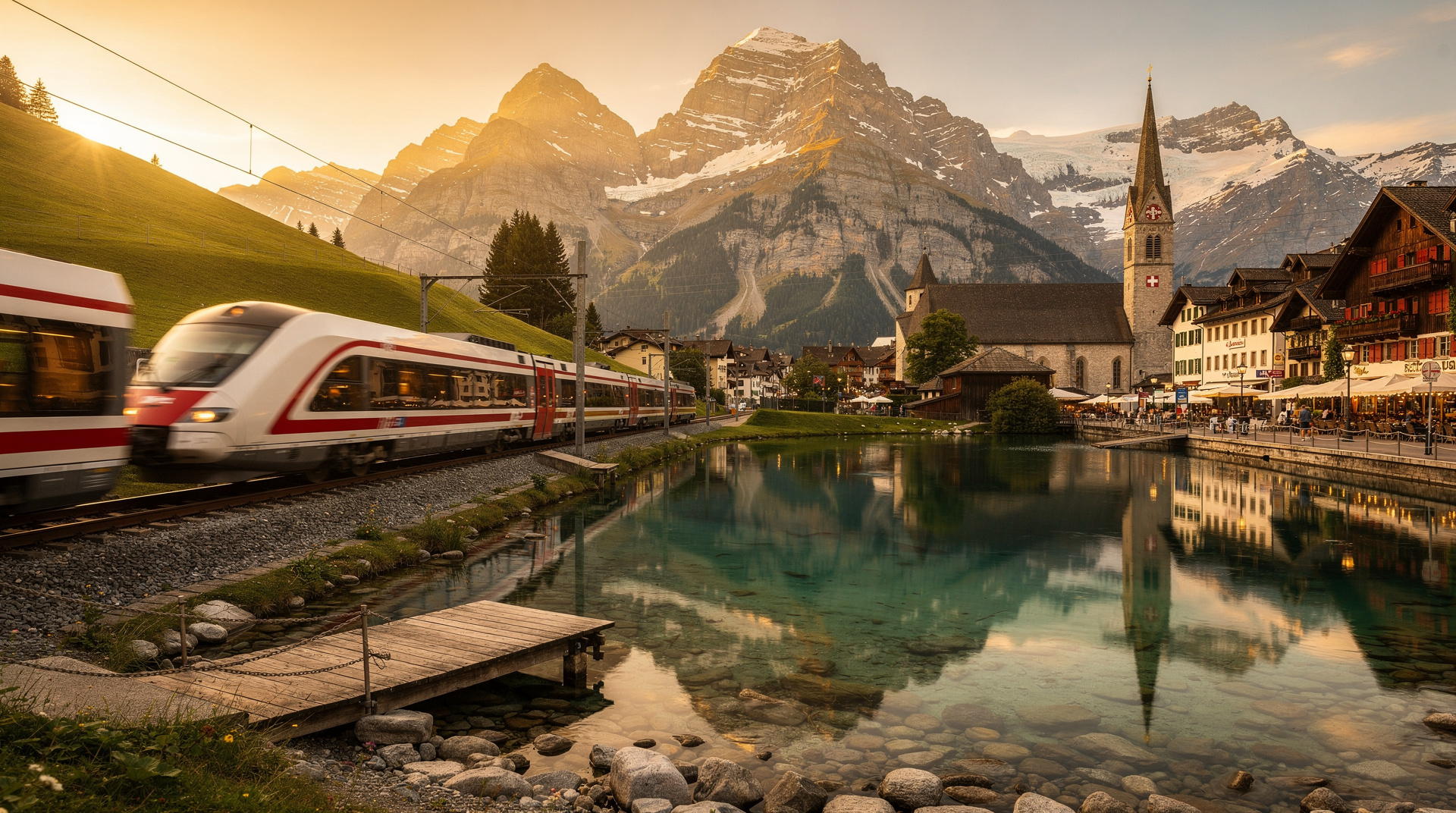
Switzerland has built the finest mountain railway network in the world. The combination of 19th-century engineering ambition, extraordinary Alpine topography, and a national commitment to public transport has produced a system where every major route is a scenic experience — and where five specific trains have become famous as the world’s great rail journeys. This 10-day itinerary is built around riding all five of them while also visiting the destinations they serve.
The five iconic trains:
- The Glacier Express — Zermatt to St. Moritz, 8 hours, 291 bridges, 91 tunnels
- The Bernina Express — St. Moritz to Tirano (Italy) over the highest Alpine pass railway
- The GoldenPass Panoramic — Montreux to Interlaken through Pays-d’Enhaut
- The Gotthard Panorama Express — Lucerne to Locarno by steamer and vintage train
- The Chocolate Train — Montreux to Broc via Gruyères
The Swiss Travel Pass covers all of them; seat reservations are required for the Glacier Express and Bernina Express (and recommended for the GoldenPass Panoramic).
| At a glance | |
|---|---|
| Route | Zurich → Lucerne → Locarno/Lugano → St. Moritz → Zermatt → St. Moritz → Interlaken/Montreux → Geneva |
| Cost (excl. flights) | Around CHF 2,800-3,500 per person |
| Pace | Relaxed by day count, but demanding on logistics — most days involve a reserved train at a fixed time |
| Getting there | Fly into Zurich or Geneva; both have direct rail from the airport into the network |
| Best time | Late May to early October for open mountain routes and daylight scenery; the Bernina and Glacier Express run year-round but winter days are shorter |
Day 1: Zurich — arrival and preparation
Arrive in Zurich and pick up your Swiss Travel Pass (or activate the digital version on the SBB app). Zurich Hauptbahnhof is the largest railway station in Switzerland and worth exploring in its own right — the main hall has a giant pendulum sculpture by Jean Tinguely, and the lower levels reveal a vast underground shopping and transit city.
Spend the afternoon in Zurich. Walk the old town: Grossmünster, Fraumünster (Chagall windows), and the Lindenhügel for the classic city panorama. The Lindt Home of Chocolate museum at Kilchberg (20 minutes by S-Bahn, last entry 5pm) is an excellent afternoon option and relevant context for the Chocolate Train later in the week.
In the evening, study your train reservation details. The Glacier Express requires a specific departure time and seat. The Bernina Express should already be booked.
Book the Lindt Home of Chocolate museum — perfect context for the Chocolate Train later →Accommodation: 1 night Zurich.
Day 2: Lucerne — gateway to the Gotthard
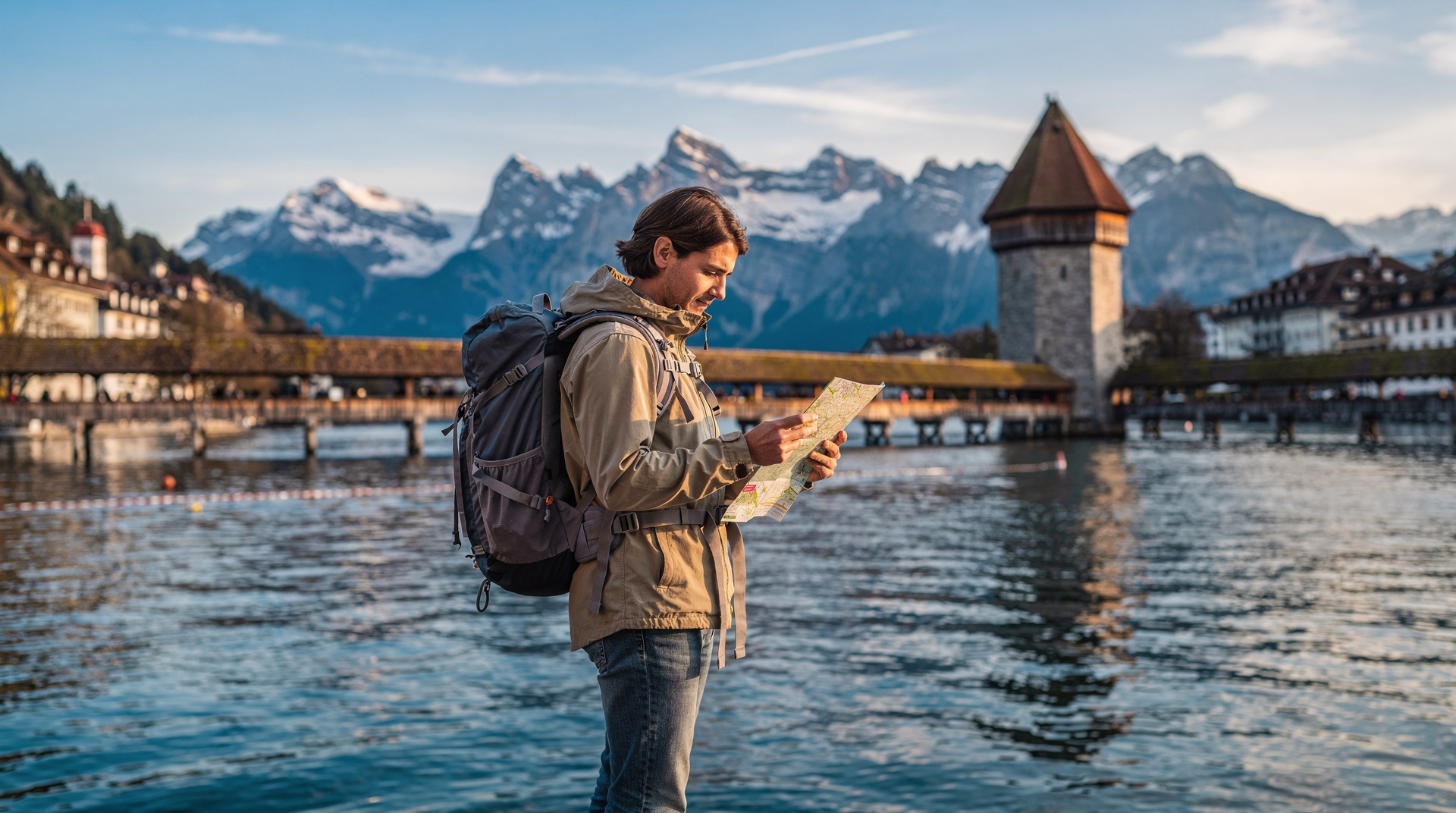
Train from Zurich to Lucerne (45 minutes). Spend the morning in the city: Chapel Bridge, Musegg Wall, and the Swiss Museum of Transport (covered by Swiss Travel Pass). The transport museum is uniquely appropriate for a train-focused itinerary — the railway hall traces 175 years of Swiss rail history with original locomotives and interactive displays.
Afternoon train briefing
Lucerne is the departure point for the Gotthard Panorama Express, which you will ride tomorrow. In the afternoon, walk along the Reuss river and the lakeshore, and enjoy a final dinner in a mid-range lakefront restaurant before the big scenic train days begin.
The SBB Railaway shop in Lucerne station has an excellent selection of Swiss train books and souvenirs. Worth a browse.
Accommodation: 1 night Lucerne.
Day 3: Gotthard Panorama Express — Lucerne to Locarno
The steamer and the mountain railway
This is one of Switzerland’s lesser-known scenic journeys and one of its most atmospheric. The Gotthard Panorama Express is a two-stage experience: a historic paddle steamer from Lucerne down the full length of Lake Lucerne (2.5 hours), then a panoramic train through the Gotthard massif to Locarno on Lake Maggiore (2 hours).
The steamer section departs from Lucerne’s Bahnhofquai at 10:38am (check current timetable) and passes the Rütli meadow — the founding place of the Swiss Confederation in 1291 — the Tell’s Platte (William Tell landing stage), and the narrowing of the lake at Brunnen where the mountains rise vertically from the water. Lunch can be taken on the boat’s restaurant deck (covered but with open sections).
The train section from Flüelen through the old Gotthard tunnel route climbs through the historic spiral tunnels (built 1882) that solved the gradient problem with four complete loops. The section through Ticino, descending through chestnut forests toward the Italian border, is dramatically different from the Alpine north — the vegetation, the light, and the architecture all change within minutes.
Arrive in Locarno on Lake Maggiore by early evening. Seat reservation required (approximately CHF 15).
Accommodation: 1 night Locarno or Lugano.
Day 4: Lugano and connections south
If you stayed in Locarno, take the train to Lugano (50 minutes) for the day. Lugano is Switzerland’s most southerly major city — palm trees, a piazza lifestyle, and a deep-blue lake surrounded by pre-Alpine hills. Walk the Corso Pestalozzi and Piazza della Riforma, take the funicular to Monte San Salvatore (912 metres) for the classic panorama, and have lunch in one of the piazza restaurants.
In the afternoon, take the train from Lugano northward via Bellinzona toward St. Moritz, changing at Thusis or Chur (approximately 3 hours). This is positioning travel for tomorrow’s Bernina Express.
Book the Monte San Salvatore funicular tour — Lugano panorama from 912 metres →Accommodation: 1 night St. Moritz.
Day 5: Bernina Express — St. Moritz to Tirano
The UNESCO mountain railway
The Bernina Express is widely considered the most scenic railway journey in the world — a UNESCO World Heritage Line that rises to 2,253 metres above sea level at the Bernina Pass, crosses permanent snowfields and glaciers in summer, and descends 1,800 metres through subtropical vegetation to the Italian border town of Tirano. The entire journey from St. Moritz to Tirano takes about 2.5 hours.
Key moments: the Montebello Curve (the classic curved viaduct with the Morteratsch Glacier backdrop, endlessly photographed), the Diavolezza mountain (visible from the train), Alp Grüm (2,091 metres, with views of the Poschiavo valley ahead), the Palu Lake, and the Brusio Circular Viaduct — a perfect stone loop used to control the gradient on the Italian-border descent, one of the great structures in railway engineering.
The Bernina Express tourist train uses panoramic carriages with curved windows that extend up into the roof. Seat reservation required (CHF 13-33 depending on class). First class gives wider panoramic windows and a dining service.
Arrive in Tirano by early afternoon. Walk the Italian border town’s Basilica di Madonna di Tirano (1505, just metres from where the train arrives) and have a real Italian lunch before the journey continues.
Book your Bernina Express seat reservation — Brusio viaduct and glacier views →Afternoon — Poschiavo and return
Options from Tirano: return to St. Moritz by the same route on a later Bernina Express, or take the regional train and stop in Poschiavo — a beautifully preserved Spanish-style village in the Italian valley. Either way, aim to be in St. Moritz or Chur for the night.
Accommodation: 1 night St. Moritz or Chur.
Day 6: Travel to Zermatt — positioning for the Glacier Express
Train from St. Moritz or Chur to Zermatt via Brig (approximately 4 hours). This is not a scenic train day in the programmatic sense, but the route through the Rhône Valley and Matter Valley is genuinely beautiful. Arrive in Zermatt by mid-afternoon.
Spend the evening in the car-free village. Walk to the Sunnegga funicular (Swiss Travel Pass 50% off) for the last afternoon light on the Matterhorn. Dinner — raclette, Zermatt’s signature dish.
Double-check your Glacier Express reservation for tomorrow morning. The train departs Zermatt at 9:52am (departure time varies by season — check current SBB timetable). Your seat is assigned.
Accommodation: 1 night Zermatt.
Day 7: Glacier Express — Zermatt to St. Moritz
The world’s most famous scenic train
The Glacier Express from Zermatt to St. Moritz in first class is the culmination of this itinerary. Eight hours, 291 bridges, 91 tunnels, 296 kilometres from the Matterhorn’s base to the Engadine. The train departs at 9:52am from Zermatt and arrives in St. Moritz at 6:57pm.
The route narrates the entire topography of the central Alps. From Zermatt, the train climbs the Matter Valley and crosses the Furka Pass (2,431 metres via the Furka Base Tunnel) to Andermatt. The Andermatt to Disentis section climbs the Oberalp Pass (2,033 metres, the highest point of the journey) through open tundra-like landscape with views to the Uri Alps. The descent to Chur passes through the Rhine Gorge (Ruinaulta) — a 13-kilometre canyon of white rock stacked like collapsed masonry, sometimes called the “Swiss Grand Canyon.” From Chur, the train climbs the Albula Pass to the Engadine and arrives in St. Moritz at altitude.
Lunch is served at your seat in first class — a proper three-course meal with wine. The famous tilted wine glass (the train is so slow and the gradient so consistent that wine poured on the Oberalp Pass remains at an angle in the glass) is a standard joke among Glacier Express veterans.
Seat reservation for first class costs CHF 43 in addition to the Swiss Travel Pass. Book at least two to three weeks in advance in summer.
Reserve your Glacier Express first-class seat — the world’s most famous scenic train →Accommodation: 1 night St. Moritz (or Chur if you wish to stop short).
Day 8: GoldenPass — St. Moritz area to Interlaken via Zweisimmen
From the Engadine to the Bernese Oberland
Position yourself from St. Moritz to Zweisimmen by regular train (via Chur, approximately 3 hours), then board the GoldenPass Panoramic for the section from Zweisimmen to Montreux (about 2 hours), which is the most scenic part of the route. Alternatively, take a morning train from Interlaken (where you stayed the previous night) and join the GoldenPass at Zweisimmen westbound.
The GoldenPass Panoramic crosses the Pays-d’Enhaut highland — a high pastoral landscape of Alpine meadows and old wooden farmhouses entirely different from the high-mountain scenery of the Glacier Express. The descent through the Vaud Prealps toward Montreux gives views of Lake Geneva and the French Alps from the panoramic windows. The new GoldenPass Express (introduced 2022) operates the full Interlaken to Montreux route without changing trains, using variable-gauge wheelsets. Book the panoramic first-class seats at the front of the train for the best forward views.
Arrive in Montreux by late afternoon. Walk the lakefront and the Freddie Mercury statue.
Book Château de Chillon for tomorrow — Switzerland’s most-visited monument →Accommodation: 2 nights Montreux.
Day 9: The Chocolate Train — Montreux to Broc and back
Sweet railway day trip
The Chocolate Train (Chocolate Train Panoramique) runs from Montreux to Broc via Gruyères on selected days from May to October. The route takes the MOB narrow-gauge railway through the Pays-d’Enhaut, stops in Gruyères for a visit to the cheese dairy (La Maison du Gruyère), continues to the Cailler-Nestlé chocolate factory at Broc for a factory tour and tasting, and returns to Montreux. The whole excursion takes a full day.
The cheese and chocolate experience in Gruyères can also be done independently if the Chocolate Train is not running on your chosen day — take the regular train from Montreux to Montbovon, change for Gruyères, and follow the same itinerary.
The medieval village of Gruyères perched on its hill, the working cheese dairy, and the extraordinary Cailler chocolate factory tour (with unlimited tasting at the end) make this one of the great Swiss day trips.
Afternoon back in Montreux: visit the Château de Chillon, 3 kilometres from town by lakeside path — the 13th-century fortress on its lake rock with dungeons, great halls, and Byron’s carved name.
Day 10: Geneva and departure
Train from Montreux to Geneva (45 minutes, covered by Swiss Travel Pass). Final morning in Switzerland’s most international city: the Jet d’Eau, the old town with the Reformation Wall, and a last coffee watching the lake before the direct train to Geneva Airport (15 minutes from Cornavin).
Practical information
Advance bookings — essential for this itinerary
| Train | Reservation | Lead time required |
|---|---|---|
| Glacier Express | CHF 43 (1st class) | 3+ weeks in summer |
| Bernina Express | CHF 13-33 | 2+ weeks in summer |
| GoldenPass Panoramic | CHF 10-15 | 1 week |
| Gotthard Panorama Express | CHF 15 | 1 week |
| Chocolate Train | Included in ticket | 2+ weeks |
All reservations can be made via the SBB website or app.
Transport
The Swiss Travel Pass (10 consecutive days) at CHF 445 per adult covers the base fare on all five scenic trains. Seat reservations are additional. The pass also covers urban trams, buses, and lake boats throughout the itinerary.
Budget estimate (per person, 10 days)
- Swiss Travel Pass (10 days): CHF 445
- Train reservations (all five): CHF 80-100
- Mountain excursions (Pilatus, Sunnegga): CHF 60-80
- Accommodation (10 nights, mid-range): CHF 1,600-2,200
- Food (CHF 65/day): CHF 650
Total per person (excluding flights): CHF 2,835-3,475
For full guides to each scenic train see Glacier Express and Bernina Express on this site.
Understanding what makes Swiss scenic railways special
The engineering behind the scenery
Swiss mountain railways are not scenic by accident — they are the result of extraordinary engineering decisions made in the 19th and early 20th centuries, when building railways through the Alps seemed either impossible or insane to most of Europe. The rack railways (using a central cog rail to grip the track on steep gradients) were invented specifically for Swiss mountains: the Rigibahn (1871) was the first mountain rack railway in Europe. The Pilatus rack railway (1889) still holds the world record for gradient at 48%. The Jungfraubahn tunnel through the Eiger (completed 1912 after 16 years of construction) involved drilling through 7 kilometres of solid rock with hand tools and early electric machinery.
The Glacier Express route was assembled from several regional railways in the 1930s — the last connection (the Furka tunnel, replacing the seasonal Furka Pass rack railway) was completed only in 1982. The Bernina Express route dates from 1910 and was one of the first electric mountain railways in the world. The GoldenPass line connecting the German and French-speaking regions was designed to serve both tourist and local needs, and still does both.
What makes riding these lines so compelling today is that the engineering constraints — the curves required by the gradient limits, the tunnels and bridges built to maintain a workable grade, the spiral loops used to gain altitude — create exactly the drama that makes the scenery possible. You are not looking through a window at a static view; you are part of a moving engineering solution to a geographical problem, and the scenery reveals itself precisely because of the technical challenge of getting through it.
First class vs second class on scenic trains
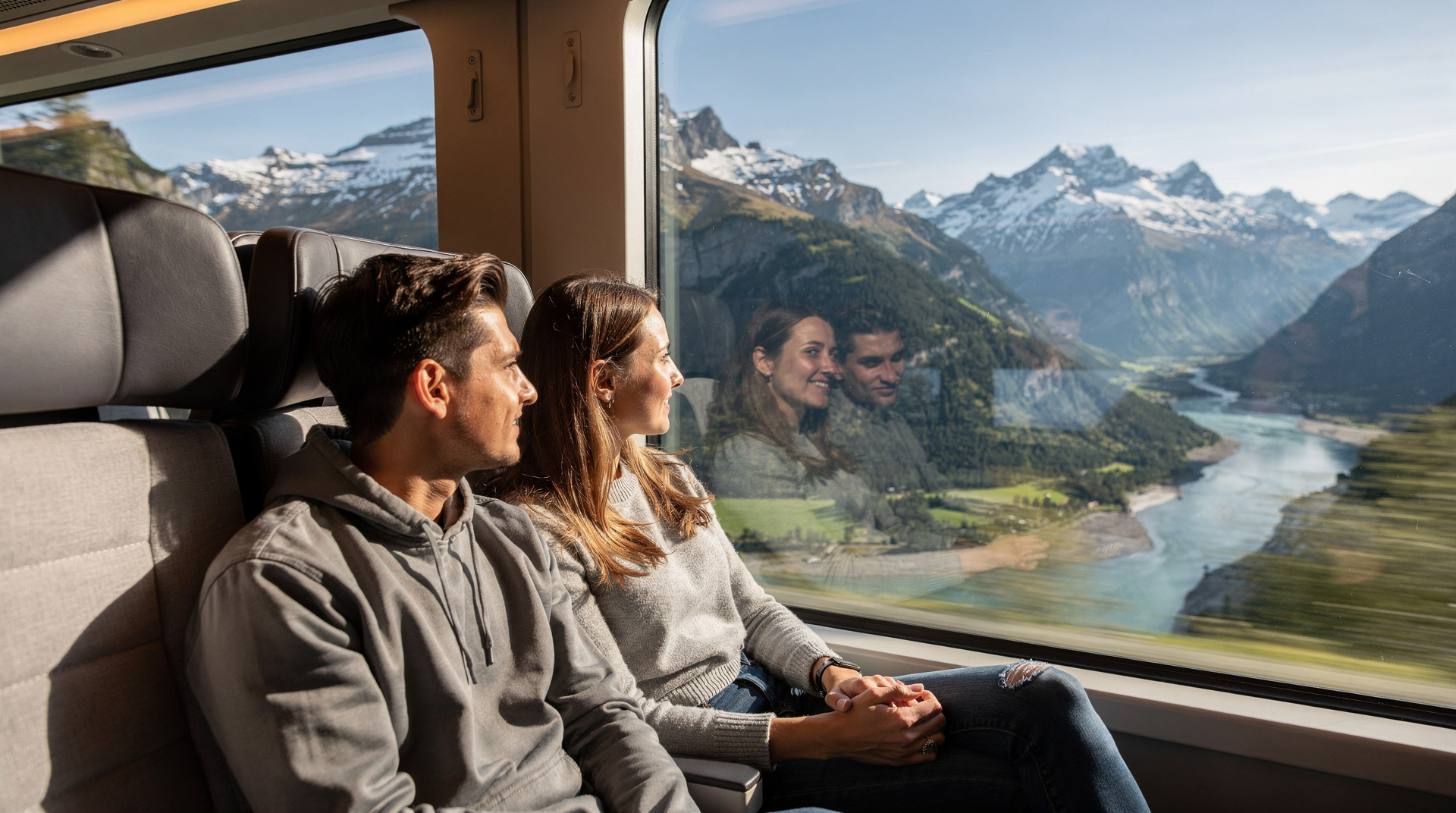
The question of class is more relevant on Swiss scenic trains than on regular rail. On the Glacier Express and Bernina Express, first class carriages have panoramic windows that curve upward into the roof — the viewing angle is significantly better than second class for photographing and watching the landscape. First class seats are also arranged in pairs facing each other across a small table, making the dining service and wine-with-views experience more comfortable.
On the GoldenPass Panoramic, the front panoramic seats (available in both classes) give a driver’s-eye view forward — these require a specific reservation and are worth booking even in second class. On the Gotthard Panorama Express, the vintage panorama carriages are all in the same class; the experience is uniform.
Budget recommendation: for the Glacier Express and Bernina Express, first class is worth the upgrade if your budget allows. For the GoldenPass, book the panoramic front seats in second class. For the Gotthard Panorama Express, second class is perfectly comfortable.
Photography tips for Swiss train journeys
Swiss scenic trains present particular photography challenges: you are moving (often quite slowly, which helps), the light comes from one side (usually the south for east-west routes, east for north-south), and the most dramatic views appear without warning. General guidance:
Choose your seat on the correct side for the best views. For the Glacier Express westbound (Zermatt to St. Moritz), sit on the right side (south-facing) for the Rhône Valley section and switch to the left for the Rhine Gorge. For the Bernina Express southbound from St. Moritz, the left side (east-facing) gives the Morteratsch Glacier approach; the right side gives the Poschiavo valley descent.
Keep your camera ready for the first 10 minutes after each major station — the train has usually just completed a curve or tunnel and emerges into the most dramatic section of the next valley. The Montebello Curve on the Bernina Express, the Oberalp Pass on the Glacier Express, and the Rhine Gorge entrance all appear suddenly and with minimal warning.
Use the window ventilation openings where available (older panoramic cars often have small opening sections) for reflection-free photography. A polarising filter removes reflections from the glass on sunny days.
The Voralpen Express — a bonus sixth scenic train
If you have an extra half-day, the Voralpen Express from Lucerne to St. Gallen (1h 45min) is a quieter, less famous scenic journey through the rolling hills of eastern Switzerland — entirely different in character from the mountain railways but genuinely beautiful. It passes through the Napf foothills, the Entlebuch biosphere reserve, and the Toggenburg region before arriving in St. Gallen (which has a UNESCO-listed baroque abbey library containing some of the finest illuminated manuscripts in Europe). This can be added as an additional half-day from Lucerne before the Gotthard day.
Day-by-day summary
| Day | Base | Main scenic train |
|---|---|---|
| 1 | Zurich | Arrival, no train day |
| 2 | Lucerne | Museum of Transport, briefing |
| 3 | Locarno/Lugano | Gotthard Panorama Express |
| 4 | St. Moritz | Positioning via Lugano |
| 5 | St. Moritz/Chur | Bernina Express |
| 6 | Zermatt | Positioning via the Rhône Valley |
| 7 | St. Moritz/Chur | Glacier Express |
| 8 | Montreux | GoldenPass Panoramic |
| 9 | Montreux | Chocolate Train |
| 10 | Geneva | Departure |
If you only have time for two trains
The Glacier Express and Bernina Express are the two journeys almost nobody skips — they are genuinely the most spectacular and the most heavily booked, so reserve them first even before fixing the rest of the route. If a full 10 days isn’t possible, a shortened version pairing just these two (Zermatt to St. Moritz to Tirano, roughly 4-5 days including the Zurich/Geneva bookends) still delivers the core of what this itinerary is built around.
For a broader, less rail-specific route through the same regions, the 7-day itinerary or the 14-day itinerary both pass through Zermatt and St. Moritz territory at a gentler logistical pace. Families who want the scenery without the tight reservation windows are usually better served by the family itinerary, which uses shorter, unreserved regional trains instead.
Weather and disruption planning
Scenic train routes at altitude are exposed to weather in ways ordinary city travel is not. The Glacier Express crosses the Oberalp Pass at 2,033 metres and the Bernina Express reaches 2,253 metres at the Bernina Pass — both can see snow closures or reduced visibility outside the core June-to-September window, and heavy snowfall occasionally suspends services for a day even in shoulder season. Build at least one buffer day into a rail-heavy itinerary like this one, ideally around the Gotthard or GoldenPass days rather than the two flagship reservations, since rebooking a missed Glacier Express or Bernina Express slot in peak season can mean a multi-day wait. Check SBB’s live status page the evening before each reserved journey.