3 days in Switzerland: the best short trip
3 days in Switzerland: the perfect short itinerary
Three days in Switzerland sounds impossibly short — and yet, with the right plan, you can cover two of the country’s most iconic destinations, ride a mountain railway to 3,454 metres above sea level, and still have time for a leisurely lakeside dinner. This itinerary is built for first-timers who want maximum impact with minimum stress. It pairs Lucerne, one of Europe’s most beautiful medieval cities, with Interlaken and the jaw-dropping Jungfrau region. Think turquoise lakes, snowy peaks, chocolate-box villages, and trains that seem to defy gravity.
The key to making three days work is choosing a base and moving efficiently between it. We recommend flying into Zurich, spending night one in Lucerne, then moving to Interlaken for nights two and three. The Swiss Travel Pass covers almost all trains, buses, and boats, so you won’t be queuing at ticket windows. Book your Jungfraujoch train ticket well in advance — it sells out fast, especially in summer.
| At a glance | |
|---|---|
| Where | Lucerne + Interlaken/Jungfrau region, via Zurich arrival |
| Cost | Moderate — around CHF 1,400-1,800 for two people over 3 days (excluding flights) |
| Time needed | 3 full days, 2 nights (1 Lucerne, 2 Interlaken) |
| Getting there | Fly into Zurich Airport; direct rail link into the city and onward by train |
| Best time | May-October for clearest mountain views; book Jungfraujoch well ahead in July-August |
Day 1: Zurich arrival and Lucerne
Morning — arriving in Zurich
Most international flights land at Zurich Airport, which has a direct rail link into the city centre every 10-15 minutes. If you arrive early enough, drop your luggage at a left-luggage locker (available in the main station) and spend an hour or two exploring Zurich’s old town and the Limmat riverbanks before heading on. The train from Zurich Hauptbahnhof to Lucerne takes about 45 minutes and runs every half hour — it is one of the most pleasant short rail journeys in Switzerland, curving through farmland and forests before the lake comes into view.
If time is tight, skip Zurich entirely and head straight to Lucerne. You will have a full morning there.
Afternoon — exploring Lucerne
Lucerne is compact enough to see on foot, which is exactly what makes it perfect for a short itinerary. Start at the Chapel Bridge (Kapellbrücke), the 14th-century covered wooden footbridge adorned with painted panels depicting Swiss history. It is one of the most photographed spots in the country, and for good reason — the combination of the timber bridge, the stone Water Tower rising from the river, and the reflections in the Reuss is genuinely stunning.
From there, wander into the old town. The painted facades on the Hirschenplatz and Weinmarkt squares are some of the finest examples of Swiss Renaissance decoration. Climb the Musegg Wall, the only medieval wall in Switzerland where you can still walk along the top of the towers. The Zyt Tower has a clock that chimes one minute before all other Lucerne clocks — a privilege granted by the city council in 1535.
If you have a particular interest in Swiss transport history, the Swiss Museum of Transport (Verkehrshaus) is on the lakefront and is genuinely one of the best museums in the country, particularly good if you’re travelling with children. It takes two to three hours to do properly.
Evening — lakeside dinner in Lucerne
Reserve a sunset catamaran cruise on Lake Lucerne →Lucerne’s lakefront promenade is one of the most pleasant places in Switzerland to watch the sun set. Boats criss-cross the water, swans drift past the stone quays, and the Alps glow on the horizon. For dinner, try one of the restaurants on Bahnhofstrasse or head to the KKL waterfront complex for something slightly more contemporary. Expect to pay around CHF 25-40 for a main course at a mid-range restaurant. Budget travellers can pick up excellent sandwiches and prepared meals from the Coop or Migros supermarkets.
Accommodation: Lucerne has a wide range of hotels. Mid-range options on the lakefront cost CHF 150-220 per night. Budget travellers should look at the youth hostel or guesthouses a short walk from the centre.
Day 2: Mount Pilatus and the journey to Interlaken
Morning — Mount Pilatus golden round trip
This is one of the great mountain excursions in Switzerland and it fits neatly into a morning. The classic Pilatus Golden Round Trip takes a boat across the lake to Alpnachstad, then the world’s steepest rack railway up to the summit at 2,132 metres, and returns by cable car and gondola via Fräkmüntegg and Kriens. The whole circuit takes about four hours and is covered by the Swiss Travel Pass (with a 50% discount on the mountain section).
At the top, the views stretch across the entire Central Swiss plateau on clear days — you can see Lake Lucerne below, the Bernese Alps to the south, and even, on exceptional days, the Black Forest in Germany. There are two summit hotels with restaurants. The rack railway itself dates from 1889 and has a maximum gradient of 48% — nothing quite prepares you for that angle as it crawls up the cliff faces. Allow yourself time to walk the short summit ridge between the Esel and Oberhaupt peaks before heading back down.
The round trip including boat and mountain railway costs around CHF 92 for adults (CHF 46 with Swiss Travel Pass). Book the Pilatus excursion in advance during peak summer months.
Skip the queue — pre-book the Pilatus Golden Round Trip →Afternoon — train to Interlaken
Return to Lucerne by early afternoon and catch the train toward Interlaken. The most scenic option is via Brienz along the Brünig Pass route — an older, slower line that climbs through forests, skirts the turquoise Brienzersee, and offers views that the fast route misses entirely. The journey takes about two hours with a change at Meiringen. You arrive into Interlaken Ost, right on the Aare river between the two lakes.
Check into your accommodation and spend the rest of the afternoon on the Höheweg, the main tree-lined boulevard running between Interlaken West and East stations. The north face of the Eiger, Mönch, and Jungfrau towers at the end of the valley — on a clear afternoon the light on those walls is extraordinary. Stop for a coffee at one of the café terraces and start building your excitement for tomorrow.
Evening — Interlaken
Interlaken has a buzzing mix of restaurants, fondue restaurants, and adventure company offices. For dinner, head to the old town streets near Interlaken West or try one of the traditional Swiss restaurants in the centre for a cheese fondue or rösti. The town is lively in the evening without being overwhelming.
Accommodation: Interlaken suits every budget. Hostels in the centre cost CHF 40-60 per dorm bed. Mid-range hotels on or near the Höheweg cost CHF 130-200 per night. Booking ahead is essential in July and August.
Day 3: Jungfraujoch — top of Europe
Morning — the train to the top of Europe
This is the centrepiece of the entire itinerary. Jungfraujoch sits at 3,454 metres and is the highest railway station in Europe, reached by a remarkable feat of 19th-century engineering — a tunnel bored through the Eiger and Mönch. The full journey from Interlaken Ost takes about two hours and involves several train changes: first to Lauterbrunnen or Grindelwald, then up to Kleine Scheidegg, and finally through the tunnel to the summit.
Book your Jungfraujoch train ticket well in advance. The cost is around CHF 145-190 for a return ticket from Interlaken (Swiss Travel Pass holders pay a reduced rate). The first morning trains (before 9am) are quieter and often have clearer skies before afternoon cloud builds in. Aim to be at Interlaken Ost station by 7:30am.
At the top you will find the Sphinx Observatory, the Plateau of Ice, the Ice Palace (a network of tunnels carved entirely inside the glacier), and the Alpine Sensation permanent exhibition about the history of the railway. In summer you can walk on the glacier itself — the views across the Aletsch Glacier, the longest in the Alps, are completely unlike anything else in Europe. Dress warmly regardless of the season: temperatures at the summit are typically around 0°C even in August, and winds can be fierce.
Secure your Jungfraujoch train ticket before they sell out →Late morning — descent via Lauterbrunnen or Grindelwald
On the way back down, take the route via Lauterbrunnen rather than retracing your steps exactly. The Lauterbrunnen valley is arguably the most spectacular glacial valley in Switzerland — sheer limestone cliffs rise nearly 300 metres on both sides, and 72 waterfalls pour from the clifftops. The valley was one of the inspirations for Tolkien’s Rivendell. Walk along the valley floor for an hour, visiting Staubbach Falls which drops 297 metres directly from the cliff edge above the village.
Afternoon — return to Zurich or onward travel
Depending on your flight home, you can either return directly to Zurich from Interlaken (about two hours by direct train) or extend your last afternoon in Interlaken. The train back to Zurich airport takes around two hours with a change at Bern. If you have time, the 45-minute stop in Bern is worth taking — walk across the Nydegg Bridge for the classic view of the city’s medieval arcades and the bears.
Practical information
Getting around
The Swiss Travel Pass is the most efficient option for this itinerary. A 3-day consecutive pass costs approximately CHF 244 for adults (2026 prices). It covers trains, buses, boats, and gives discounts on mountain railways. The Swiss Travel Pass is available through various booking platforms and is worth buying before you leave home.
Trains in Switzerland run with extraordinary punctuality. Download the SBB (Swiss Federal Railways) app for real-time timetables and platform information. You can also buy tickets on the app if you don’t have a pass.
Budget estimates
This is a moderate-budget itinerary. Expect to spend:
- Accommodation: CHF 130-200 per night (two people sharing)
- Food: CHF 60-80 per day for two people (one restaurant meal, one supermarket meal)
- Swiss Travel Pass (3 days): CHF 244 per adult
- Jungfraujoch ticket (with pass discount): approximately CHF 145 per person
- Pilatus round trip (with pass discount): approximately CHF 46 per person
Total estimated spend for two people over 3 days (excluding flights): CHF 1,400-1,800.
Best time to visit
May through October is ideal for this itinerary. The Jungfraujoch railway runs year-round but mountain visibility is best in early summer (June) before afternoon thunderstorms become common, and in autumn (September-October) when the weather is often stable and the crowds thin. July and August are the busiest months — book everything well in advance.
Winter (December-March) is a completely different and equally beautiful experience, with snow covering the valleys and the mountain railway running to a winter timetable. See the winter itinerary for a cold-weather version of Switzerland.
What to pack
Even in summer, bring a warm layer for Jungfraujoch and Pilatus — temperatures at altitude are dramatically lower than in the valleys. Comfortable walking shoes are essential; full hiking boots are not needed for this itinerary. A reusable water bottle is useful as Swiss tap water is excellent everywhere.
Day-by-day summary
Day 1: Arrive Zurich — train to Lucerne (45 min) — Chapel Bridge, old town, Musegg Wall — lakeside dinner — overnight Lucerne.
Day 2: Pilatus Golden Round Trip (morning) — train to Interlaken via Brünig Pass (afternoon) — Höheweg, fondue dinner — overnight Interlaken.
Day 3: Early train to Jungfraujoch — Ice Palace, Aletsch Glacier views — descent via Lauterbrunnen valley — return to Zurich or onward.
Making the most of 3 days: tips and trade-offs
Why this route and not others
The Lucerne-Interlaken combination is the most concentrated collection of genuinely unmissable Swiss experiences within a small geographical area. Lucerne has medieval architecture that compares with anything in Europe and one of the finest mountain lake settings in the world. The Jungfraujoch is the highest railway station in Europe and represents Swiss engineering at its most extraordinary. The route between them (via the Brünig Pass scenic railway) is itself a journey worth making.
The alternative for a 3-day trip — Zurich and Lucerne only, without going to the mountains — would miss the essential alpine experience. Interlaken without Jungfraujoch would feel incomplete. This combination was not arrived at accidentally; it is the result of many years of visitors discovering what makes Switzerland different from everywhere else, and the answer consistently involves mountains accessed by railway.
What to skip if pressed for time
If the Pilatus round trip (Day 2 morning) feels like too much in two days, skip it and use the morning for a more relaxed exploration of Lucerne — the Swiss Museum of Transport is genuinely excellent and could occupy a full morning. The Pilatus is spectacular but Jungfraujoch is non-negotiable: of the two mountain excursions, the Jungfraujoch is the one experience that is singular to Switzerland and unavailable anywhere else in the world.
If weather closes in on Jungfraujoch day (check the forecast the evening before — there is a live webcam at the summit), descend from Kleine Scheidegg to the Lauterbrunnen valley instead and spend the time exploring the waterfalls and valley floor. This is genuinely beautiful and often underrated compared to the summit experience.
Swiss food worth eating in three days
Day 1 (Lucerne): Rösti — the Swiss German potato cake, best with a fried egg on top and a green salad alongside. Available at almost any traditional restaurant in Lucerne for CHF 18-22. This is the everyday Swiss German dish, not a tourist creation.
Day 2 (Interlaken): Cheese fondue. The Bernese Oberland produces some of the finest Emmentaler and Gruyère in the world and a shared fondue pot with local bread and white wine is the quintessential Swiss dining experience. Budget CHF 25-35 per person for fondue in Interlaken.
Day 3 (Jungfraujoch): Ironically, the summit restaurant at Jungfraujoch is expensive and unremarkable. Pack your own lunch from a Coop or Migros below — a good sandwich, some Swiss chocolate, and a thermos of tea or coffee. Eat it outside on the Plateau de Glace with the Aletsch Glacier in front of you. This is vastly better than eating inside.
Swiss chocolate: what to buy
Switzerland produces exceptional chocolate at all price points. The supermarket options (Lindt, Frey, Cailler) are better than most artisan chocolate sold elsewhere in Europe. For a specific Lucerne purchase, the Heini Konditorei on the Hauptgasse has been making chocolate since 1918. In Interlaken, several shops on the Höheweg stock local producers. Expect to pay CHF 4-8 for a 100g bar of quality chocolate — significantly less than the tourist-trap shops near the stations.
Extending the trip
Three days is a wonderful introduction to Switzerland but barely scratches the surface. If you have more time, consider the 5-day itinerary which adds Zurich and Zermatt, or the 7-day itinerary which is the most comprehensive introduction to the country. The Glacier Express between Zermatt and St. Moritz is the one train journey that rewards every extra day you can find.
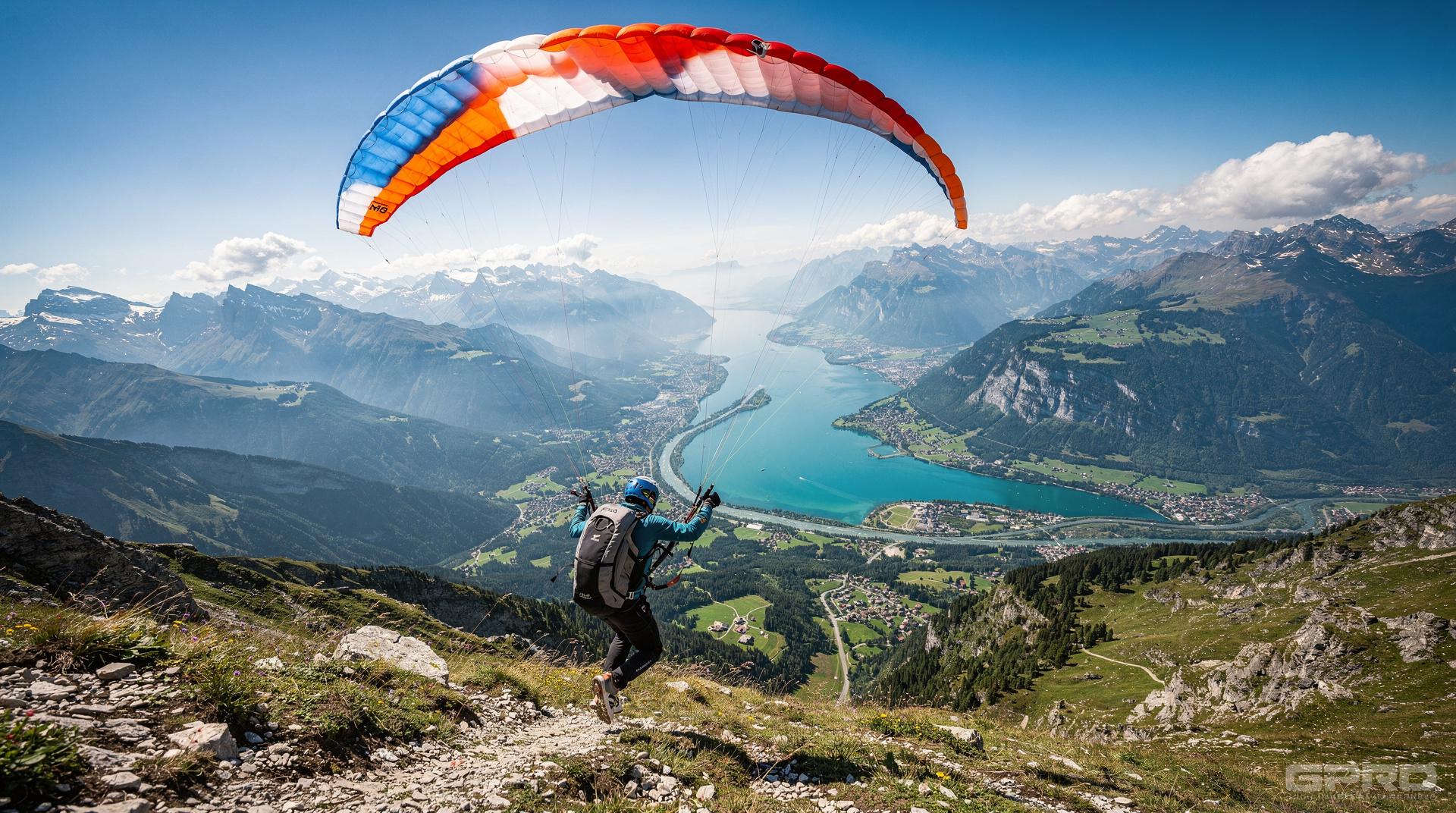
For those interested in a specific theme, the adventure itinerary based in Interlaken is worth exploring — paragliding over the Bernese Alps from Interlaken is one of the great thrills of Swiss tourism and pairs beautifully with a Jungfraujoch excursion.
If you only have 2 days, not 3
Cutting this itinerary to two days means losing one full experience, not just trimming hours. The honest trade-off: either skip Lucerne entirely and spend both days around Interlaken and Jungfraujoch, or skip Pilatus and Jungfraujoch’s descent-via-Lauterbrunnen and compress Day 1 and Day 3 into a single very long day. Neither is ideal — if you genuinely only have two days, the budget itinerary has a shorter Lucerne-only variant that keeps the pace realistic rather than rushed. Three days is close to the practical minimum for this route; two days works better focused on a single base like Lucerne or Interlaken alone rather than both.
Frequently asked questions about 3 days in Switzerland
Is 3 days enough to see Switzerland?
Three days is enough for a focused introduction — one city (Lucerne) and one mountain region (Interlaken/Jungfraujoch) — but not for the whole country. It works best as a taster or as part of a longer European trip. For a fuller first visit, see the 5-day or 7-day itineraries.
Can I do Jungfraujoch as a day trip without staying in Interlaken?
Yes, technically, but it makes for a very long day from Lucerne or Zurich (over 4 hours of travel round trip before you even reach the summit). Staying at least one night in Interlaken, as this itinerary does, makes the Jungfraujoch morning far less rushed and leaves time for the Lauterbrunnen valley on the way back down.