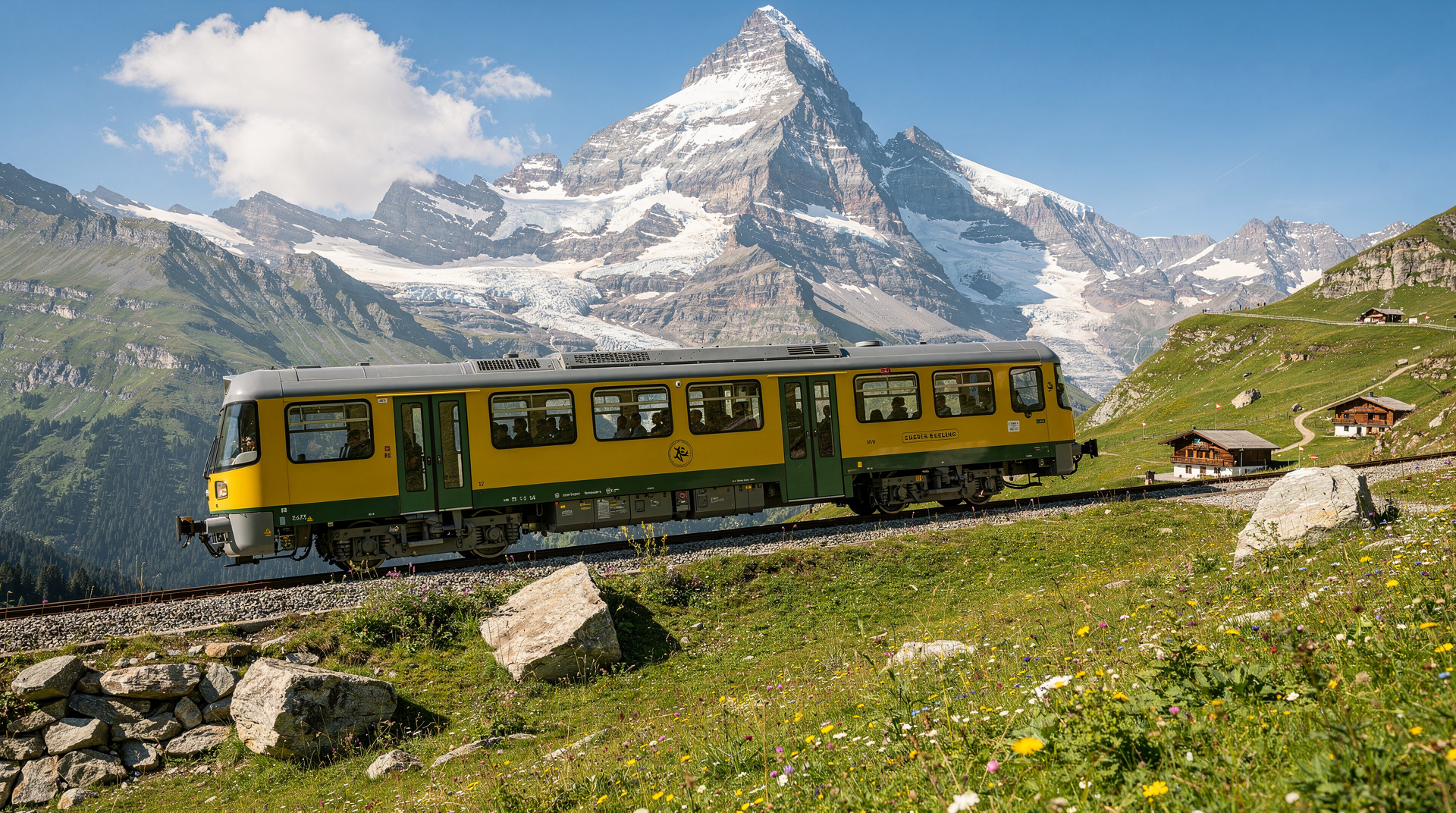
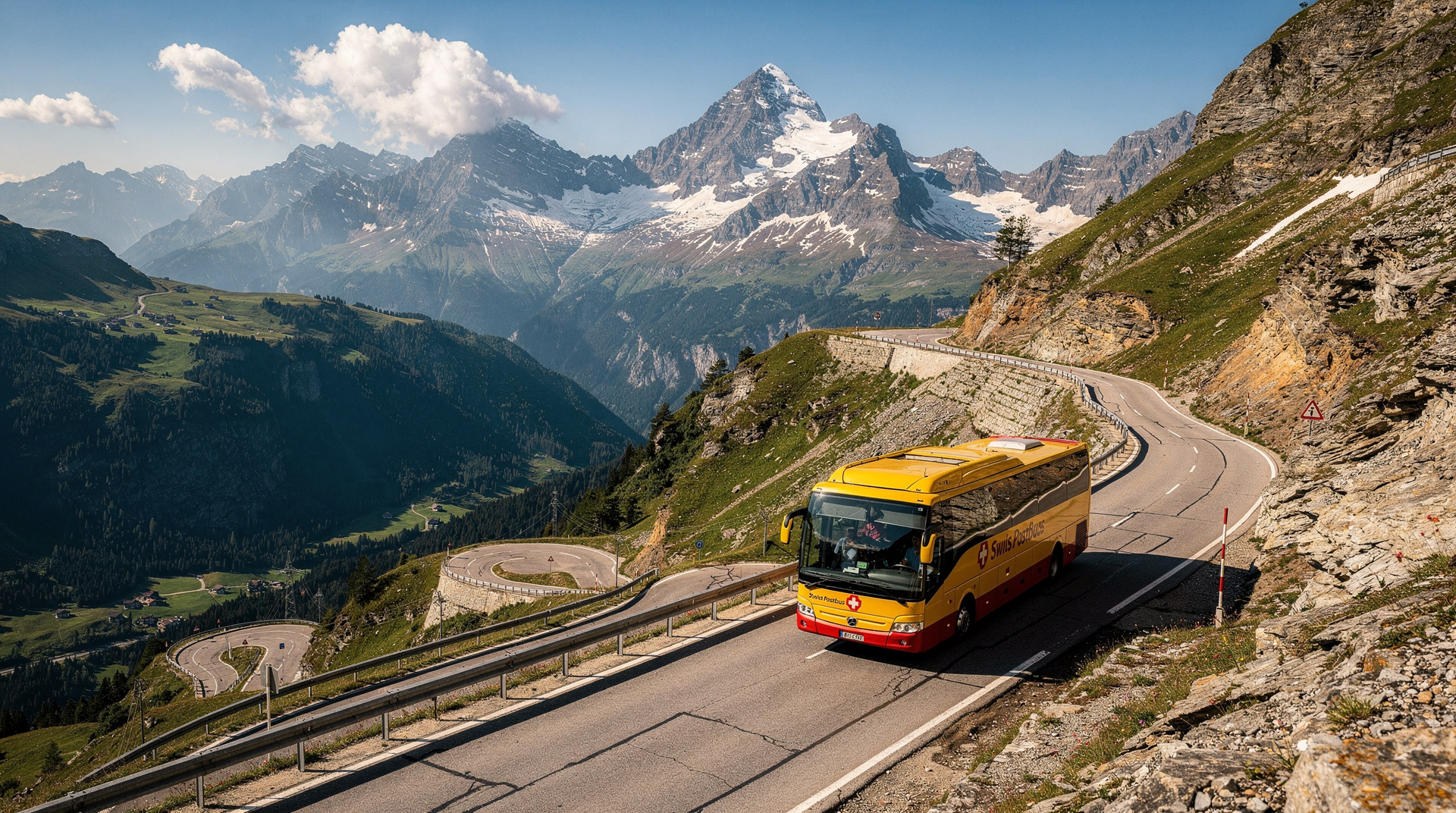
© Swiss Travel System AG, 2018, Fotograf: Daniel Ammann
Swiss Half Fare Card: is it worth CHF 150?
Is the Swiss Half Fare Card worth it?
If you plan at least CHF 300 in train/mountain trips over one month, yes. At CHF 150, it pays for itself in 2-3 train rides. It's ideal for travelers doing fewer than 4 travel days.
What is the Swiss Half Fare Card?
The Swiss Half Fare Card is one of Switzerland’s best-kept secrets for independent travelers. For a flat fee of CHF 150, you get 50% off virtually every form of public transport in Switzerland — trains, buses, boats, funiculars, cable cars, and most mountain railways — for a full calendar month.
Unlike the Swiss Travel Pass, it doesn’t give you unlimited travel. You still pay for each journey, but at half price. That distinction is crucial when deciding which pass makes sense for your trip, and it’s exactly what makes the Half Fare Card the smarter choice for a surprising number of visitors.
This guide covers everything you need to know: what it covers, what it doesn’t, where to buy it, and a realistic breakdown of whether it’s worth the CHF 150 investment for your specific trip.
| At a glance | |
|---|---|
| Where | Valid nationwide on SBB, PostBus, boats, most private railways and mountain lines |
| Cost | CHF 150 for one calendar month |
| Time needed | A few minutes to buy online or at a station counter |
| Getting there | Purchase online in advance, at any SBB ticket counter, or in the SBB Mobile app |
| Best time | Any time you have 2-5 active travel days spread over a month; less suited to 4+ consecutive heavy travel days |
What the Half Fare Card covers
The Half Fare Card gives 50% off on:
- All SBB (Swiss Federal Railways) trains, including intercity, regional, and IR services
- PostBus routes throughout Switzerland
- Lake boat services (Lake Geneva, Lake Lucerne, Lake Zurich, Lake Thun, Lake Brienz, Lake Constance, and more)
- Most private railways, including the Rhaetian Railway (Glacier Express route), BLS trains, and MOB trains
- Most mountain railways and cable cars, including routes to Jungfraujoch, Mount Pilatus, the Matterhorn Glacier Paradise, and others
- Urban trams and buses in many cities (Zurich, Bern, Geneva, Basel, Lucerne)
That last point is often overlooked. Many city transport networks are included, meaning you save on daily commuting within cities as well as long-distance journeys.
What is not covered
A few services fall outside the Half Fare Card’s scope:
- Some private excursion operators (always check before booking)
- Certain tourist trains that operate on completely private networks
- Airport transfers from some carriers
- Rental bikes and car-sharing schemes
In practice, the vast majority of journeys you’ll want to take are covered. The exclusions are rare and usually involve highly specialized private tourist services.
How much do you actually save?
Here are some real example prices to show what 50% off looks like in practice. These are full second-class fares for one-way journeys.
- Zurich to Lucerne: CHF 26 full price / CHF 13 with card
- Zurich to Interlaken: CHF 60 full price / CHF 30 with card
- Zurich to Zermatt: CHF 79 full price / CHF 39.50 with card
- Geneva to Bern: CHF 51 full price / CHF 25.50 with card
- Bern to Grindelwald: CHF 41 full price / CHF 20.50 with card
- Jungfraujoch (from Grindelwald Terminal): from CHF 129.60 full price / half price with card
- Lucerne to Mount Pilatus (golden round trip): CHF 119.80 full price / CHF 59.90 with card
- Zurich to Lugano: CHF 64 full price / CHF 32 with card
The break-even point is simple: once your half-price savings total CHF 150, the card has paid for itself. Given these numbers, you reach that threshold after about 2-3 full-price long-distance journeys, or one major mountain excursion plus a few city-to-city trips.
Is it worth it? The honest calculation
The Half Fare Card makes financial sense in these situations:
You’re doing 2-5 days of active travel spread over a month. If you’re traveling on fewer days but covering real distances — Zurich to Zermatt one day, Interlaken to Lucerne another — the savings add up fast without justifying the full Swiss Travel Pass.
You’re planning one or two major mountain excursions. Jungfraujoch alone costs from CHF 129.60 from the Grindelwald Terminal (second class), and the card halves the fare. Add a train journey or two and you’ve already covered the card cost.
You’re basing yourself in one region but doing day trips. A week in Lucerne with day trips to Mount Pilatus, Rigi, and Interlaken would cost far more in full-price tickets. With the Half Fare Card, those same journeys cost half as much — so the card itself pays for itself quickly.
You’re combining business and leisure. If you’re in Switzerland for work but want to explore on weekends, the Half Fare Card gives you flexibility without locking you into a fixed-day pass.
The card is probably NOT worth it if:
- You’re only taking one or two short regional trips
- You’re planning 5 or more full days of heavy travel (the Swiss Travel Pass may be better — see our comparison guide)
- You’re staying in one city the entire time and rarely using intercity trains
Swiss Half Fare Card vs Swiss Travel Pass: the key difference
This is the question most visitors ask. The short answer: the Half Fare Card is for travelers doing fewer travel-heavy days; the Swiss Travel Pass is for those doing 4 or more days of intensive travel.
The Swiss Travel Pass gives unlimited travel on trains, buses, and boats — plus free entry to 500+ museums and free travel on many mountain railways (with no half-price reduction; they’re often included entirely). It costs from CHF 254 for 3 days to CHF 513 for 15 days (2026 second-class prices).
The math typically works out like this:
- 1-3 active days: Half Fare Card wins
- 4-8 active days: Swiss Travel Pass usually wins
- 9+ days: Swiss Travel Pass almost always wins
For a detailed breakdown, read the Swiss Travel Pass vs Half Fare Card comparison.
Where to buy the Swiss Half Fare Card
Online (recommended): The easiest option is to buy directly through GetYourGuide, which lets you purchase before you arrive in Switzerland:
Buy the Swiss Half Fare Card on GetYourGuideYou can also book the Swiss Half Fare Card as a ready-to-use voucher before you travel.
At Swiss train stations: Available at any SBB ticket counter or ticket machine. Major airports (Zurich, Geneva, Basel) have ticket desks where you can buy it on arrival.
At the SBB website and app: You can purchase and activate the card digitally through sbb.ch or the SBB Mobile app, then show it on your phone.
How to use the Half Fare Card
Once you have the card (physical or digital), using it is simple:
- Show the Half Fare Card when buying tickets at a counter or machine
- Select “with Half Fare Card” when booking online or in the SBB app
- Always carry the card with you — ticket inspectors check it alongside your ticket
On ticket machines, look for the “with subscription” or “Halbtax” option. In the SBB app, link your card to your account and discounts apply automatically.
The Half Fare Card for mountain excursions
One of the biggest wins for travelers is using the card on mountain railways. Switzerland’s iconic mountain excursions are expensive at full price — but half price makes them genuinely affordable.
Jungfraujoch (“Top of Europe”) is the highest railway station in Europe at 3,454 meters. Full price from Grindelwald Terminal is from CHF 129.60. With the Half Fare Card: half price. For context, a Swiss Travel Pass gets you 25% off this route (not free), so the Half Fare Card actually gives you a better discount here.
Mount Pilatus near Lucerne offers the iconic golden round trip (cogwheel train up, gondola down, or vice versa). Full price: CHF 119.80. Half Fare Card: CHF 59.90.
Rigi near Lucerne: Full price from Vitznau CHF 84 return. Half Fare Card: CHF 42.
Matterhorn Glacier Paradise (Zermatt): Full price CHF 120 return (CHF 132 in July and August). Half Fare Card: half price.
Schilthorn (Mürren area): Full price from Stechelberg CHF 115 return. Half Fare Card: CHF 57.50.
These savings are substantial. A traveler doing three of these excursions can cover the card’s cost on the mountain railways alone, before counting a single train journey.
City transport with the Half Fare Card
In most Swiss cities, the Half Fare Card grants 50% off urban public transport as well. This includes:
- Zurich trams, buses, and S-Bahn trains within zones 10 and 21
- Bern trams and buses
- Geneva trams and buses (most zones)
- Lucerne buses
- Basel trams
In Zurich, for example, a single zone 10 ticket costs CHF 2.70. With the Half Fare Card: CHF 1.35. A day ticket for zones 10+21 costs CHF 8.80; with the card it’s CHF 4.40. If you’re spending several days in Zurich and using public transport regularly, these savings add up.
Note: Some cities require a separate city pass or have their own transport cards that may be better value for extended stays. The Swiss Travel Pass includes unlimited city transport in over 90 cities, which is one of its major advantages for travelers spending time in multiple cities.
Practical tips for getting the most from your card
Plan your big trips first. Calculate your total transport costs before buying. If your planned journeys don’t add up to CHF 300 at full price, reconsider.
Book scenic trains in advance. Some popular trains like the Glacier Express require seat reservations. The Half Fare Card gives you 50% off the base ticket, but the seat reservation fee (CHF 54) applies separately. Book the Glacier Express early in peak season.
Use the SBB app. The official Swiss railways app (free to download) makes it easy to plan journeys, see real-time departure boards, and buy tickets with your Half Fare Card discount applied automatically. Link your card to the app.
Don’t forget boats. Lake boat services are often overlooked by visitors, but a cruise on Lake Lucerne or Lake Geneva is a beautiful way to travel between destinations. The Half Fare Card applies to all scheduled boat services, so these become much more affordable.
Save receipts. If you’re traveling for work and expensing transport costs, keeping receipts makes accounting easier. The card itself can be listed as a transport expense.
Check if your hotel offers free local transport. Many mountain resorts give guests free valley transport as part of the accommodation. If local transport is free anyway, the card’s benefit is mainly for intercity journeys.
One-month validity: planning your timing
The standard Half Fare Card is valid for one calendar month from the date you specify when purchasing. You can choose your start date, which is useful for planning.
Important notes:
- The month validity is a calendar month, not 30 days. A card starting April 10 expires May 10, not April 10 + 30 days.
- You cannot pause or extend the validity period
- There is no one-week or two-week version of the regular visitor card (there is a year-long resident version, but it costs CHF 185/year and is mainly for Swiss residents)
If you’re visiting for more than a month, you could theoretically buy two consecutive cards — but at CHF 300 total, you’d almost certainly be better off with a longer Swiss Travel Pass.
What about first-class?
First-class train travel in Switzerland is genuinely comfortable — wider seats, less crowded, quieter, and often with better views. First-class tickets cost roughly 70% more than second class. The Half Fare Card applies to both classes, so first-class travel at half price is often surprisingly affordable.
For example, a first-class ticket from Zurich to Lucerne costs around CHF 44 full price. With the Half Fare Card: CHF 22. Many travelers find this a reasonable upgrade, especially on scenic routes.
Traveling with children
Children under 6 travel free on Swiss public transport when accompanied by an adult. Children ages 6-16 can benefit from the Swiss Family Card, which allows children to travel free when accompanying a parent who has a valid pass or Half Fare Card. The Family Card itself is free to get.
This makes the Half Fare Card even more valuable for families. Two adults plus two children under 16 effectively get family travel for the cost of two Half Fare Cards (CHF 300 total) — a significant saving over buying individual tickets.
Summary: should you buy it?
Buy the Swiss Half Fare Card if:
- You plan 2-4 days of active train travel spread over a month
- You want flexibility to decide each day whether to travel
- You’re planning one or two major mountain excursions
- You’re visiting Switzerland as part of a longer European trip
- You want to save money in Switzerland without sacrificing experiences
Consider the Swiss Travel Pass instead if:
- You’re doing 4 or more dedicated travel days in succession
- You plan to visit lots of museums
- You want unlimited city transport in every Swiss city
- You’re traveling with children who benefit from the free family card
The Half Fare Card is one of the genuinely good deals in a country known for being expensive. Used strategically, it can save you CHF 200-400 on a typical 7-10 day trip — and that’s money you can spend on the experiences that make Switzerland unforgettable.
For help planning your overall Switzerland budget, see our Switzerland travel budget guide.
Frequently asked questions about the Swiss Half Fare Card
Can I buy the Half Fare Card at Zurich Airport? Yes. The SBB ticket counter at Zurich Airport sells the card. You can also buy it online before you arrive.
Do I need a photo ID with the card? The physical card has a small photo area. When buying online or at a machine, the card is linked to your name. Train conductors may ask for ID, so carry your passport.
Is the Half Fare Card valid on the Glacier Express? Yes, the base ticket on the Glacier Express is half price with the card. The mandatory seat reservation fee (CHF 54 in first and second class, no seasonal rate) is not discounted. Book the Glacier Express well in advance for summer travel.
Can two people share one card? No. The card is personal and non-transferable. Each traveler needs their own card.
What if I lose the card? Report it immediately to SBB. There is typically a replacement fee. If you bought a digital version in the SBB app, it can be recovered more easily through your account.
Does the card work on the Bernina Express? Yes — the Rhaetian Railway is covered. You get 50% off the base fare, with a separate seat reservation required.
Is it available year-round? Yes. The Half Fare Card can be purchased any time. There’s no seasonal restriction on availability, though some mountain services may be closed in early spring or late autumn.
Can I combine the Half Fare Card with a regional pass like the Jungfrau Travel Pass? Yes. There’s no conflict — you can hold both. If your trip is concentrated in one region, a regional pass may cover excursions more cheaply than repeated half-price fares, so it’s worth comparing the two for your specific region before buying.
Does the Half Fare Card cover city transport in every Swiss city? Most, but check the specific city — Zurich, Bern, Geneva, Lucerne, and Basel are covered, but some smaller cities have separate transport cards. The Swiss Travel Pass has broader city transport coverage (90+ cities) if that matters more to your trip.
For more transport planning, see our complete guide to getting around Switzerland and our tips for first-time visitors.
Planning your routes with the Half Fare Card
To get the most from your card, spend 20 minutes with the SBB journey planner (sbb.ch) before your trip. Enter your planned journeys without selecting “with Half Fare Card” to see full prices. Then calculate the half-price total and compare it to the CHF 150 card cost.
Here’s a sample calculation for a common 7-day trip:
Base: Zurich for 2 nights, Lucerne for 2 nights, Interlaken for 2 nights, return to Zurich
Key journeys at full price:
- Zurich airport to Zurich city: CHF 6.80 (small, but included)
- Zurich to Lucerne: CHF 26
- Lucerne day trip to Rigi: CHF 84 (free with Swiss Travel Pass, CHF 42 with Half Fare Card)
- Lucerne to Interlaken: CHF 31
- Day trip to Jungfraujoch: from CHF 129.60 (from Grindelwald Terminal)
- Interlaken to Zurich: CHF 60
- City transport (Zurich 2 days, Lucerne 2 days): approx. CHF 50
Totals: use the price calculator on jungfrau.ch for the exact Jungfraujoch fare, halve the full-price total, add the CHF 150 card and compare with the Swiss Travel Pass (5 days: CHF 338, which includes museums but gives only 25% off Jungfraujoch, not 50%).
In this example the two options come out close, and the 50% off Jungfraujoch is the decisive factor.
This calculation changes if you add museum visits (Swiss Travel Pass then wins), or if you remove Jungfraujoch and do Rigi instead (Swiss Travel Pass wins because Rigi is free). The math depends entirely on your specific plans.
For the full side-by-side calculation methodology, see our Swiss Travel Pass vs Half Fare Card comparison.
Where to use the Half Fare Card that surprises people
PostBus: Switzerland’s yellow PostBus network serves mountain villages, rural valleys, and communities not on the rail network. The Half Fare Card applies to all PostBus routes. If you’re venturing into the Bernese Oberland valleys (Simmental, Kandertal), Ticino, or remote Graubünden by bus, the savings apply.
Lucerne and Zurich boat services: Both cities have scheduled lake services. Zurich’s lake boats from Bürkliplatz run to lakeside towns. Lucerne’s boats serve Mount Rigi’s base stations and multiple lakeside communities. All at half price.
Regional railways you’ve never heard of: The Appenzeller Bahnen, the Brünig line (Lucerne to Interlaken), the MThB in Thurgau, the RBS (Bern’s regional suburban network) — all covered by the Half Fare Card. Switzerland’s regional rail network is extensive and beautiful; the card applies throughout.
Parking at mountain resorts: Not relevant to the card, but a good reminder — if you’re combining a rental car with the Half Fare Card, parking at valley stations (Park+Rail) and using the card for the cogwheel/gondola portion is a valid strategy. Many resorts have free or cheap Park+Rail facilities.
The Swiss Half Fare Card is one of those rare travel products where the more you use Switzerland’s transport network, the more value it creates. Budget travelers, mid-range travelers, and even comfort travelers who are doing 2-3 active days of Swiss travel all benefit. It’s CHF 150 well spent.
Combining with regional passes
If your trip is concentrated in one alpine region, a regional pass can stack with or replace part of the Half Fare Card’s value. The Jungfrau Travel Pass covers unlimited travel within the Jungfrau region (Grindelwald, Wengen, Mürren, and the railways between them) and is often better value than paying half-price fares repeatedly within that one area. Similarly, the Berner Oberland Pass (which can be booked at a discount for Half Fare Card holders) and the Tell Pass (central Switzerland) bundle regional mountain excursions at a flat rate. Work out whether your trip is regionally concentrated (a regional pass may win) or spread across the country (the Half Fare Card or Swiss Travel Pass wins) before buying anything.