© Swiss Travel System AG, 2018, Fotograf: Daniel Ammann
Switzerland for first-time visitors: the essential guide
What should I know before visiting Switzerland?
Buy a Swiss Travel Pass or Half Fare Card, plan for high prices (CHF 200+/day mid-range), pack layers for mountain weather, and book popular trains like the Glacier Express in advance.
Everything first-time visitors need to know about Switzerland
Switzerland is one of the world’s most rewarding travel destinations — but it’s also one of the most complex to plan if you’ve never been before. Four official languages, four distinct cultural regions, a mountain landscape that changes everything from transport to weather planning, and prices that can catch the unprepared off guard.
This guide covers the things that matter most for a first visit: practical realities, what to prioritize, common mistakes, and the knowledge that turns a confusing first trip into a smooth, memorable experience.
| At a glance | |
|---|---|
| Where to base yourself | 2-3 hubs — commonly Zurich or Geneva for arrival, plus Lucerne and Interlaken for mountains |
| Cost | Realistically CHF 200-350 per person per day mid-range, more with mountain excursions |
| Time needed | 7 days covers the highlights without rushing; 10-14 days allows a more relaxed pace |
| Getting there | Zurich, Geneva, and Basel airports all connect directly to the rail network within minutes |
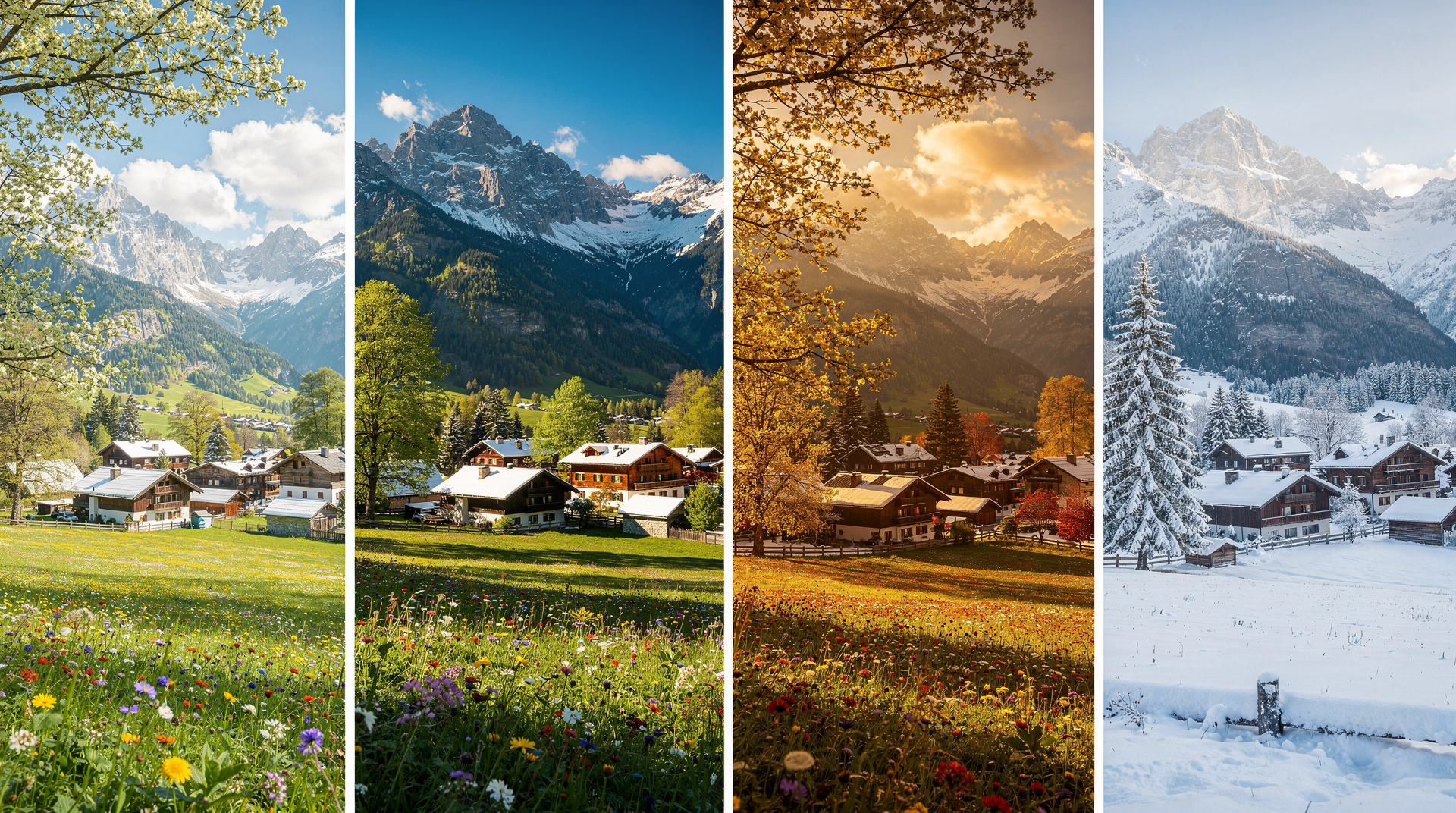
| Best time | June-September for hiking and full mountain railway access; December-March for skiing and Christmas markets |
Start here: what makes Switzerland different
Switzerland is unlike most European destinations in a few fundamental ways:
It’s not in the EU. Switzerland uses the Swiss franc (CHF), not the euro. EU roaming rules don’t apply. Schengen Area rules do apply for entry (no passport check from most EU countries), but visa rules follow Swiss/Schengen regulations independently.
The transport system is exceptional. Trains run every 30 minutes on most main routes, they’re almost always on time, and connections are coordinated across the national network. Planning transport here is genuinely easier than in most countries.
Mountains change everything. Weather at altitude is completely different from the valleys. Facilities can be closed due to season or conditions. Some experiences require advance booking. The mountains are also the reason most people visit.
Prices are high. Switzerland consistently ranks among the most expensive countries in the world. A realistic mid-range budget is CHF 200-350 per person per day. This isn’t a reason not to visit, but ignoring it causes genuine problems.
The most important decision: which transport pass?
Your first planning decision — before booking accommodation, before choosing cities, before anything — should be your transport approach. It affects your total budget significantly.
Option 1: Swiss Travel Pass Unlimited travel on virtually all trains, buses, and boats for a set number of days. Includes free entry to 500+ museums and free travel on city transport. Costs CHF 244 (3 days) to CHF 513 (15 days) in second class.
Best for: Travelers doing 4+ active travel days moving between cities and regions.
Option 2: Half Fare Card CHF 150 for one month. Gives 50% off every ticket. You still pay per journey but at half price. Also gives 50% off most mountain railways and cable cars.
Best for: Travelers doing 2-3 active travel days, or those who want flexibility over the whole month.
Option 3: Individual tickets Works if you’re staying in one place or doing very minimal travel. Can be expensive quickly for anyone covering real distance.
Read the full Swiss Travel Pass vs Half Fare Card comparison before deciding. This single decision can save or cost you hundreds of francs. You can purchase the Swiss Travel Pass online before your trip for activation on arrival.
Where to go on a first visit
Switzerland has many regions but first-timers typically benefit from focusing on 2-3 bases rather than trying to see everything. Here’s what each major region offers:
Lucerne and Central Switzerland The classic introduction to Switzerland. The old town with its covered wooden bridge (Kapellbrücke), the lake, and easy access to Mount Pilatus and Rigi make it the ideal first base. Compact, beautiful, and accessible.
Interlaken and the Bernese Oberland Gateway to the Jungfrau region and some of the most dramatic mountain scenery in Europe. A base here gives access to Jungfraujoch, Grindelwald, Wengen, Mürren, and the Lauterbrunnen valley. Essential for anyone wanting serious mountain experiences. If you want an easier alternative to Jungfraujoch, the gondola ride up Mount First from Grindelwald offers big views and optional adventure activities.
Zurich Switzerland’s largest city and most common entry point. World-class museums, vibrant food and nightlife, a beautiful old town, and excellent onward transport connections. Often overlooked as a destination itself — it deserves at least two days.
Geneva More cosmopolitan and French-influenced than German-speaking Switzerland. The Jet d’Eau fountain, the old town, and beautiful Lake Geneva are highlights. Also a gateway to the Lavaux wine region and Montreux.
Bern The federal capital, often underrated. The arcaded old town is a UNESCO World Heritage Site. A beautiful city for walking, with the added bonus of being central and well-connected.
Zermatt The car-free mountain village beneath the Matterhorn is one of Switzerland’s most iconic destinations. Requires advance planning and is more expensive than other bases, but the setting is unparalleled.
A realistic first-time itinerary: 7 days
For a first visit of one week, this covers Switzerland’s highlights without rushing:
Days 1-2: Zurich — Arrive, explore the old town and Lake Zurich, visit the Swiss National Museum (free with Swiss Travel Pass).
Day 3: Travel to Lucerne (26 minutes by train). Afternoon exploring the old town and Kapellbrücke. Evening on the lakefront.
Day 4: Day trip from Lucerne to Mount Pilatus via the cogwheel railway. Return via gondola for the classic “golden round trip.” Back to Lucerne for the evening.
Day 5: Train from Lucerne to Interlaken (approx. 2 hours). Afternoon in Interlaken. Evening meal with mountain views.
Day 6: Full day excursion to Jungfraujoch. Take the early train from Interlaken Ost to Grindelwald, then the Eiger Express gondola to Eigergletscher, then the Jungfrau Railway to the summit. Allow 5-6 hours total for the excursion. Book ahead.
Day 7: Travel from Interlaken to Geneva (2.5 hours by train) or back to Zurich for departure.
For more developed itinerary options, see our 7-day Switzerland itinerary.
Common mistakes first-time visitors make
Mistake 1: Not budgeting realistically The most common issue. Switzerland is not the place to wing the budget. Research actual prices before you go. A realistic daily budget for a mid-range traveler is CHF 200-350. See our full Switzerland travel budget guide.
Mistake 2: Buying the wrong transport pass Many visitors buy a Swiss Travel Pass reflexively without calculating whether the Half Fare Card would be cheaper for their itinerary. Others buy neither and pay full price for everything. Spend 20 minutes with a calculator before booking.
Mistake 3: Not booking mountain excursions in advance Jungfraujoch can sell out, especially in summer. The Glacier Express requires seat reservations that fill weeks ahead. Book key excursions and scenic trains at least 1-2 weeks in advance in peak season, earlier for popular dates.
Mistake 4: Expecting the euro to work Switzerland uses the Swiss franc. Some tourist areas near borders and larger cities occasionally accept euros, but you’ll get poor exchange rates. Use CHF.
Mistake 5: Underestimating mountain weather A warm day in Interlaken (25C) can mean very different conditions at Jungfraujoch (-5C and wind). Pack warm layers regardless of summer weather. A thin rain jacket and a fleece fit in any daypack and are essential.
Mistake 6: Ignoring the afternoon thunderstorm pattern In summer, thunderstorms build from midday and break in the afternoon, almost daily. Plan mountain excursions for mornings and early afternoons. Being at a mountain summit in a thunderstorm is dangerous and unpleasant.
Mistake 7: Trying to see too much Switzerland is small but the mountains make getting around slower than a map suggests. Lucerne to Zermatt takes about 3.5 hours. Zurich to Geneva is 2.5 hours. Factor in real travel times rather than assuming fast connections everywhere.
Mistake 8: Forgetting that services close Many mountain facilities are closed in November, and some in early April/May. Check opening dates before booking accommodation around specific attractions.
Mistake 9: Only visiting tourist areas Switzerland’s villages and secondary towns are often as beautiful as the famous spots with a fraction of the crowds. Brienz, Appenzell, Gruyeres, Murten, and Stein am Rhein are all worth seeking out.
Mistake 10: Tipping anxiety Tipping is not obligatory in Switzerland. Rounding up or leaving 5-10% for excellent service is appreciated. Nobody will be offended if you don’t tip. See our currency and tipping guide.
Practical essentials for first-timers
Language: Switzerland has four official languages — German (65%), French (23%), Italian (8%), and Romansh (1%). English is widely spoken in tourist areas. In German-speaking Switzerland, “Grüezi” is the standard hello. In French-speaking areas, “Bonjour.” In Ticino, “Buongiorno.”
Electricity: Switzerland uses Type J plugs (3-pin, similar to Type C but with a grounding pin). Voltage is 230V, 50Hz — compatible with most European and international devices. Bring an adapter.
Tap water: Drink it everywhere. Swiss tap water is some of the cleanest and best-tasting in the world. Many public fountains in cities also dispense drinking water. You’ll see locals filling bottles constantly. Never buy bottled water if you have a reusable bottle.
Emergency number: 112 (EU-standard emergency number works here). Also: Police 117, Fire 118, Ambulance 144.
Pharmacy (Apotheke/Pharmacie): Widespread and well-stocked. Many staff speak English. Green cross symbol.
Post offices: Can also exchange currency and handle various administrative tasks. Reliable and widespread.
Sunday trading: Many shops are closed on Sundays, particularly in smaller towns. Supermarkets in major train stations are open 7 days a week. Plan grocery shopping accordingly.
Recycling: Switzerland takes recycling seriously. Separate glass, paper, aluminium, and general waste. Many accommodations provide separation containers.
Getting from the airport
Zurich Airport (ZRH): The main international hub. A direct train from the airport to Zurich main station (Zurich HB) takes 10-13 minutes and costs CHF 6.80 (covered by Swiss Travel Pass). Trains run every few minutes.
Geneva Airport (GVA): Extremely convenient. A free shuttle train from the terminal to Geneva Cornavin station takes 8 minutes. Yes, it’s free for arrivals. Swiss Travel Pass valid. Tickets available at airport machines for those without a pass.
Basel Airport (BSL/EAP): Shared with France. Buses connect to Basel SBB station.
Bern Airport (BRN): Small airport with limited international connections. Bus to city center.
Connectivity and communication
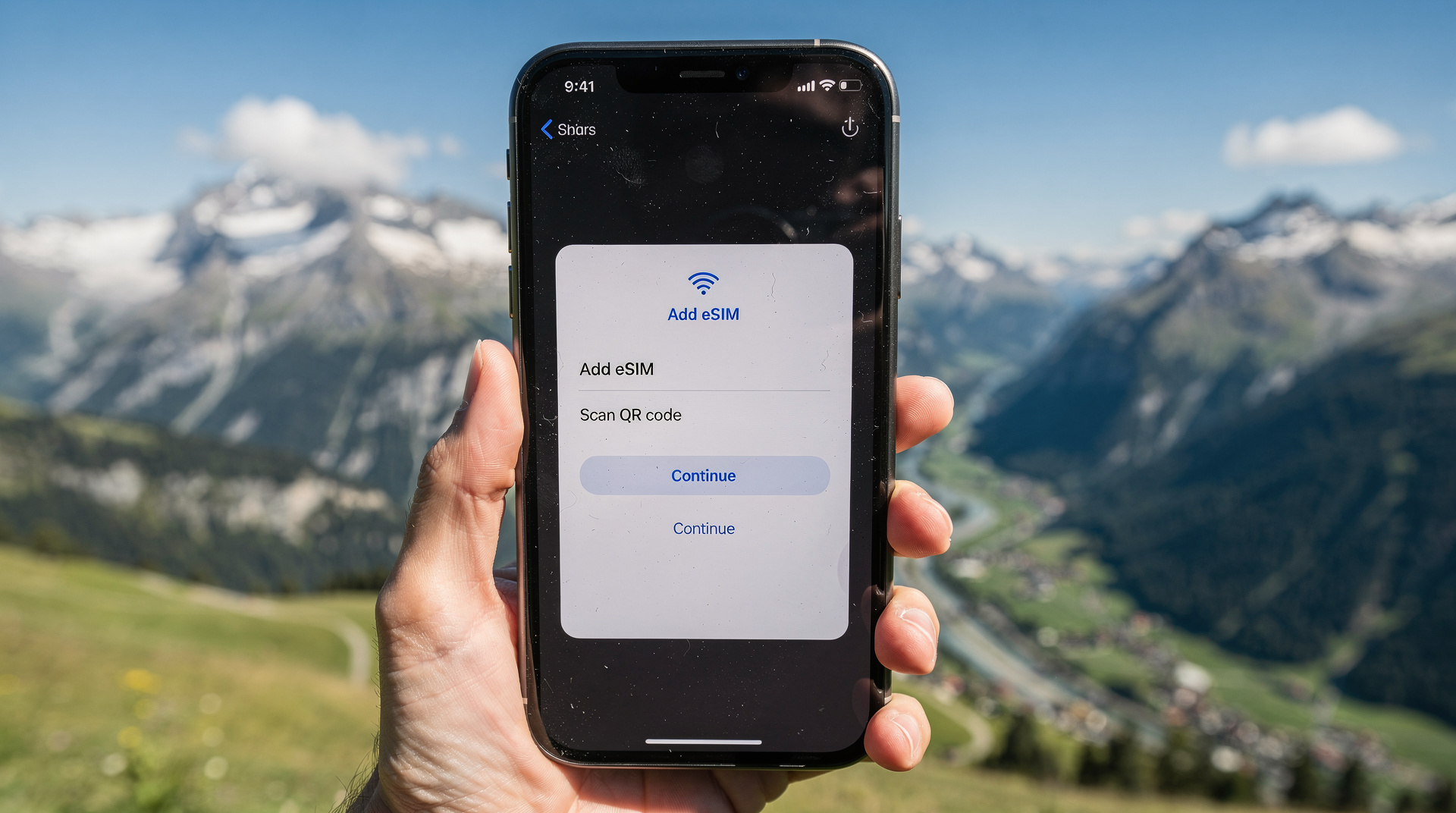
Most travelers find an eSIM the easiest solution for mobile data in Switzerland. See our complete eSIM and internet guide for options and prices.
Free WiFi is available at most hotels, restaurants, and all main train stations (SBB Free WiFi). The network coverage across Switzerland is generally excellent, even in mountain areas with cable car infrastructure.
Money basics
The Swiss franc (CHF) is strong and stable. ATMs are everywhere and generally have good exchange rates. Cards (Visa, Mastercard) are accepted almost universally. American Express less so.
Keep some cash for small mountain huts, some rural restaurants, and small purchases. But you can realistically get through most of a Swiss trip without ever needing cash if you’re prepared to occasionally encounter a cash-only situation.
See our complete currency and tipping guide.
Visas and entry
Most visitors from Western countries (US, Canada, UK, Australia, EU, New Zealand, Japan) do not need a visa for stays up to 90 days. Switzerland is part of the Schengen Area, which means no border checks from most EU/Schengen countries. See our visa requirements guide for full details.
The five things that will make your trip
1. Book the right transport pass — The decision you make here shapes your entire budget.
2. Get up early for mountains — The best mountain conditions are 8am-12pm before clouds build. Early starts transform excursions.
3. Eat where locals eat — Coop and Migros restaurants are excellent and used by Swiss people every day. Don’t feel like you’re missing out by using them.
4. Leave the main path occasionally — Some of Switzerland’s most beautiful spots are 15 minutes from the famous ones. Wengen instead of Grindelwald. Iseltwald instead of Interlaken. Morschach instead of Lucerne.
5. Pack layers — A light waterproof jacket and a thin insulating layer take almost no space and completely change your comfort on mountain days.
For more, see our practical Switzerland travel tips and our comprehensive guide to planning your trip step by step.
Before you book: the checklist
- Dates confirmed and flights/trains booked
- Transport pass decision made (Swiss Travel Pass or Half Fare Card)
- Accommodation booked (especially for summer or ski season)
- Key excursions identified (Jungfraujoch, Glacier Express, etc.) and reservations made
- Budget calculated realistically using our budget guide
- Travel insurance purchased (recommended for mountains and outdoor activities)
- Packing list includes warm layers and rain gear
- eSIM or roaming plan arranged for connectivity
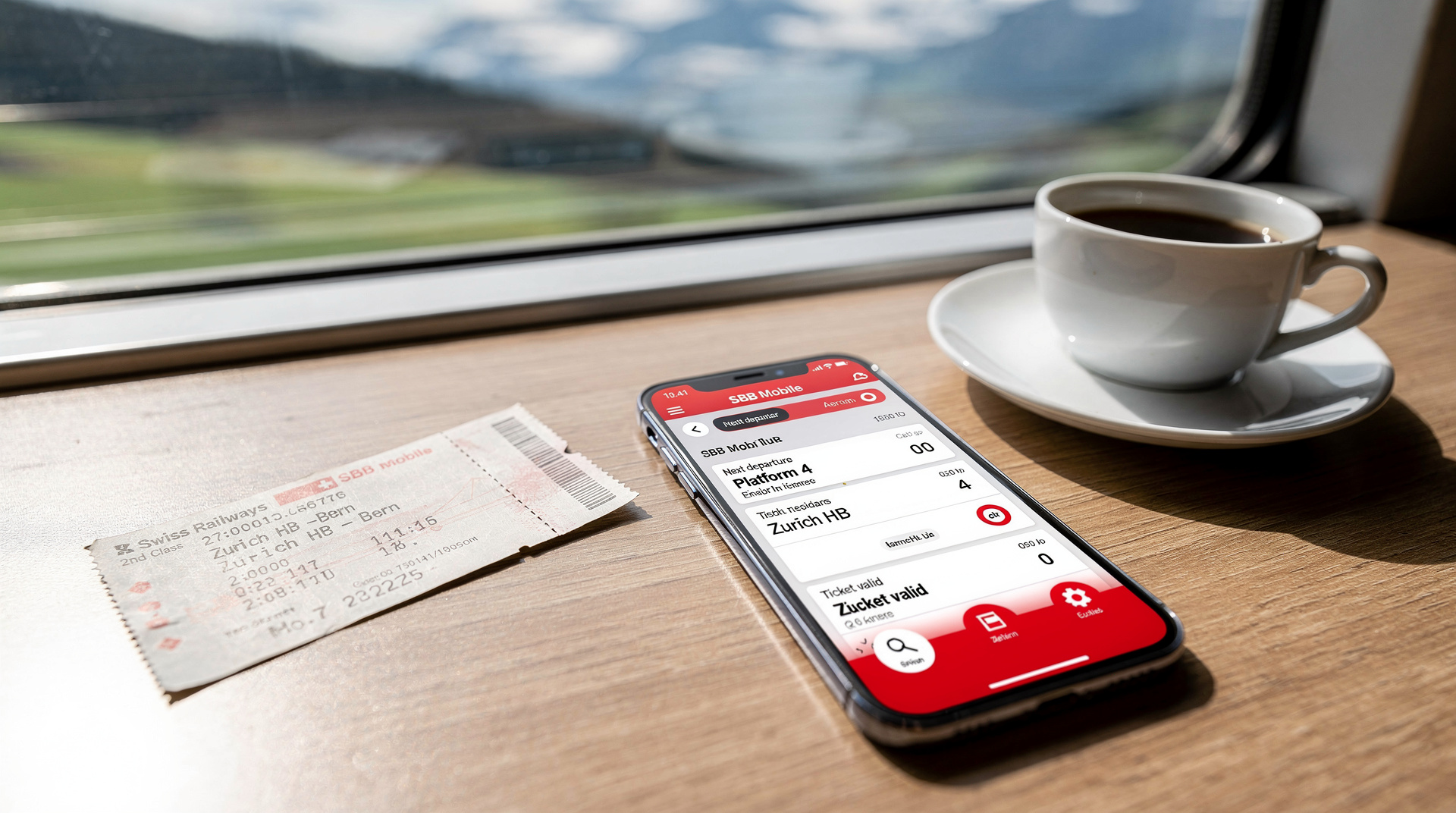
- SBB app downloaded for real-time train information
Switzerland rewards those who plan ahead. Once you’re there, the infrastructure is so good that day-to-day travel is effortless — but arriving without the groundwork done can lead to unnecessary expense and missed experiences. Take the time to plan, and Switzerland will deliver experiences you’ll talk about for years.
Understanding Switzerland’s four languages and regions
Switzerland’s linguistic diversity confuses many first-time visitors. The country has four official languages, and knowing which region speaks which helps with navigation and expectations:
German-speaking Switzerland (65% of population): Everything north of the Alps and east of Fribourg. Zurich, Bern, Lucerne, Basel, St. Gallen, the Bernese Oberland, Graubünden, and most mountain resorts. Note that Swiss German (Schweizerdeutsch) is a distinct spoken dialect — quite different from standard German. Menu items, train announcements, and street signs use standard High German.
French-speaking Switzerland (Romandy, 23%): West of the “Röstigraben” (the informal cultural border). Geneva, Lausanne, Montreux, Fribourg, Neuchâtel, and the Jura. The French spoken here is standard French, not a dialect — completely understood in France.
Italian-speaking Switzerland (Ticino, 8%): South of the Alps. Lugano, Locarno, Bellinzona, Ascona. Standard Italian spoken here.
Romansh-speaking (1%): Graubünden canton only, primarily in rural valleys. Very few signs and services in this language outside its home communities.
For tourists: English is widely spoken in all tourist areas, at all major transport hubs, and in hotels and restaurants. You can navigate Switzerland comfortably with only English. Learning a few words of the local language (Grüezi/Bonjour/Buongiorno as a greeting; Danke/Merci/Grazie for thank you) is appreciated and easy.
Swiss culture: what to know before you arrive
Punctuality is sacred. Switzerland’s reputation for timekeeping extends beyond trains to social contexts. If invited somewhere at 7pm, arrive at 7pm — not 7:15. In professional contexts, being even five minutes late is noticed.
Sundays are quiet. Most shops close on Sundays in Switzerland. Exceptions: supermarkets and shops in main train stations (open 7 days), some tourist-area shops in popular destinations. Plan grocery shopping for Saturday if you’ll need supplies on Sunday.
Noise rules are real. In Swiss residential buildings and neighborhoods, quiet hours are taken seriously — typically 10pm to 6am, and sometimes noon to 2pm. Don’t be the loud tourist.
Recycling is a social contract. Switzerland has one of the highest recycling rates in the world. Visitors are expected to separate waste into glass, paper, aluminium, and residual waste. Hotels provide containers. In public spaces, multi-colored bins make it straightforward.
Direct communication. Swiss people tend toward directness in communication. If your bag is on a train seat and they need it, they’ll tell you. This isn’t rudeness — it’s the cultural norm.
The weather reality
Switzerland’s mountains create weather patterns that regularly surprise first-time visitors. Two practical realities to accept:
Afternoon thunderstorms in summer are almost daily. The Alps heat up in the morning sun, moisture builds, and thunderstorms develop between noon and 6pm. This doesn’t mean full days of rain — mornings are often spectacular. But plan mountain activities for mornings and be prepared to be indoors or at lower altitude by 2pm.
Altitude changes everything. A warm day in the valley (28C in Interlaken) can mean cold and wind at Jungfraujoch (-5C with wind chill). Always pack a warm layer for mountain excursions regardless of valley weather. This is the most common clothing mistake among first-timers.
See our complete Switzerland weather guide for seasonal and regional detail.
Food: what to try on a first visit
Switzerland’s food culture deserves attention beyond the famous cheese and chocolate:
Fondue: Melted cheese (Gruyere and Emmental mixed) with crusty bread for dipping. The definitive Swiss meal. Order “moitié-moitié” (half and half) for the classic mix. CHF 22-35 per person. Pair with white wine or herbal tea (the Swiss believe cold drinks make the cheese harden in your stomach — whether true or not, the custom persists).
Raclette: A wheel of cheese melted under a grill and scraped onto boiled potatoes, pickled onions, and gherkins. Simpler and perhaps even better than fondue. Often found at mountain restaurants and local festivals.
Rösti: Swiss hash browns. Done well, it’s spectacular — crisp outside, soft inside, sometimes topped with cheese or bacon. The staple potato dish of German-speaking Switzerland.
Zürcher Geschnetzeltes: Zurich’s signature dish — thin strips of veal in a cream and mushroom sauce, served with rösti. Found in every traditional restaurant in Zurich. CHF 35-45.
Bircher Müesli: The original overnight oats, created by Dr. Bircher-Benner in Zurich in the 1900s. Swiss hotels and cafes serve it for breakfast — soaked oats with fruit, yogurt, and nuts. Light and excellent.
Swiss chocolate: The real thing is noticeably different from chocolate made elsewhere with the same brand name. Lindt, Läderach, Cailler, Frey — all are worth trying from Swiss shops and not duty-free versions.
Connecting with Switzerland’s natural world
First-time visitors often focus on the iconic paid excursions and miss the quieter natural experiences that stay with you just as long:
Swimming in a Swiss lake with the Alps reflected in the still early-morning water. Walking through a flower meadow at 1,800 meters where cowbells from hidden herds ring across the valley. Watching the Aare River flow past Bern’s terraced roses garden in the evening light. Standing at a viewpoint accessible by free hiking trail and seeing the same mountain panorama the Glacier Express passengers paid CHF 200 to see, in complete quiet.
These experiences are available to every visitor regardless of budget. They’re part of what free things to do in Switzerland means in practice. Don’t let the famous paid attractions crowd out the quieter moments.
Getting help in Switzerland
Switzerland Tourism: myswitzerland.com is the official source for practical information, event listings, and destination guides.
SBB Customer Service: Available in German, French, Italian, and English. Ticket counters at major stations are staffed and helpful.
Tourist Information Offices: Every major city and resort has a tourist office, usually near or inside the main train station. Staff speak English. They can help with local accommodation, tours, and practical questions.
Emergency: 112 (general), 117 (police), 144 (ambulance), 118 (fire).
App ecosystem for Switzerland:
- SBB Mobile: trains and transport
- MeteoSwiss: weather
- MySwitzerland: attractions
- Maps.me or Google Maps (offline): navigation
Your first visit to Switzerland will likely create a second. Most people who go once return. The combination of physical beauty, efficient infrastructure, cultural richness, and extraordinary outdoor access is rare in the world. Planning it well — transport pass, realistic budget, the right bases — turns a good trip into an exceptional one.
Comparing the classic first-time bases
| Base | Best for | Downsides | Good day trips |
|---|---|---|---|
| Zurich | Arrival, museums, easy onward rail | Feels more “city” than “Alps” on its own | Rhine Falls, Appenzell |
| Lucerne | Compact old town, first taste of the mountains | Very touristy in peak summer | Mount Pilatus, Mount Rigi |
| Interlaken | Serious mountain access, Jungfrau region | Interlaken itself is a functional base rather than a destination | Jungfraujoch, Grindelwald First |
| Geneva | French-Swiss culture, Lake Geneva | Furthest from the Bernese Oberland mountains | Lavaux wine region, Montreux |
| Zermatt | The Matterhorn, car-free village atmosphere | Most expensive base, needs more advance planning | Gornergrat |
If your time is genuinely limited, comparing Interlaken vs Lucerne or Geneva vs Zurich as a starting point is a faster decision than trying to weigh every region at once.
Frequently asked questions about Switzerland for first-time visitors
Is Switzerland too expensive for a first-time budget traveler? It’s expensive relative to most of Europe, but not impossible on a budget. Staying in hostels, cooking with supermarket food (Migros/Coop), and using the Half Fare Card instead of full-price tickets brings costs down substantially. The budget guide covers realistic lower-cost strategies in detail.
How many days do I need for a first trip to Switzerland? Seven days is the practical minimum to see a genuine cross-section — a city base, a lake, and a mountain excursion — without feeling rushed. Ten to fourteen days allows a more relaxed pace and room for a second mountain region. See the 7-day itinerary and 10-day itinerary for structured options.