Swiss etiquette: dos and don'ts for visitors
What are the main etiquette rules in Switzerland?
The key Swiss etiquette rules are: be punctual, keep noise down after 10pm, greet people when entering small spaces, recycle correctly, tip modestly (rounding up is standard), give way uphill on hiking trails, and avoid noisy activities on Sundays.
At a glance
| Core rules | Be punctual, keep quiet after 10pm, greet in small spaces, sort recycling, tip modestly |
| Where it matters most | German-speaking Switzerland (most rule-conscious); more relaxed in Ticino |
| Sundays | Most shops closed; keep noise to a minimum |
| Tipping norm | Round up the bill; 5-10% for good service, no more |
| Cost of getting it wrong | Rarely a fine for tourists, but visible irritation from locals is common |
Understanding Swiss social norms
Switzerland is one of the smoothest-functioning countries in the world. Trains leave on time. Recycling is sorted with extraordinary precision. Neighbourhoods are quiet at night. Streets are clean. This is not accidental — it reflects a genuine and deeply held set of social norms that Swiss residents take seriously, and that visitors who understand and respect will find make the country an even more pleasant place to travel through.
Swiss etiquette is not particularly complicated, but it differs enough from other European and global norms that some visitors get caught out, occasionally to the visible irritation of locals. This guide covers the main rules, explains why they exist, and gives you the practical knowledge to navigate Switzerland without inadvertently causing offence.
Switzerland has four official languages — German, French, Italian, and Romansh — and the culture varies somewhat by region. German-speaking Switzerland (Zürich, Bern, Basel, Lucerne) tends to be more formal and rule-conscious than French-speaking Switzerland (Geneva, Lausanne, Neuchâtel) or Italian-speaking Ticino. The notes in this guide apply broadly across all regions but are most relevant in the German-speaking majority areas.
Punctuality
Punctuality in Switzerland is not merely polite — it is a form of respect. Being late for a meeting, a tour, a reservation, or an appointment signals that you do not value other people’s time. Swiss people typically arrive on time or a few minutes early.
For tourists this matters in a few specific contexts:
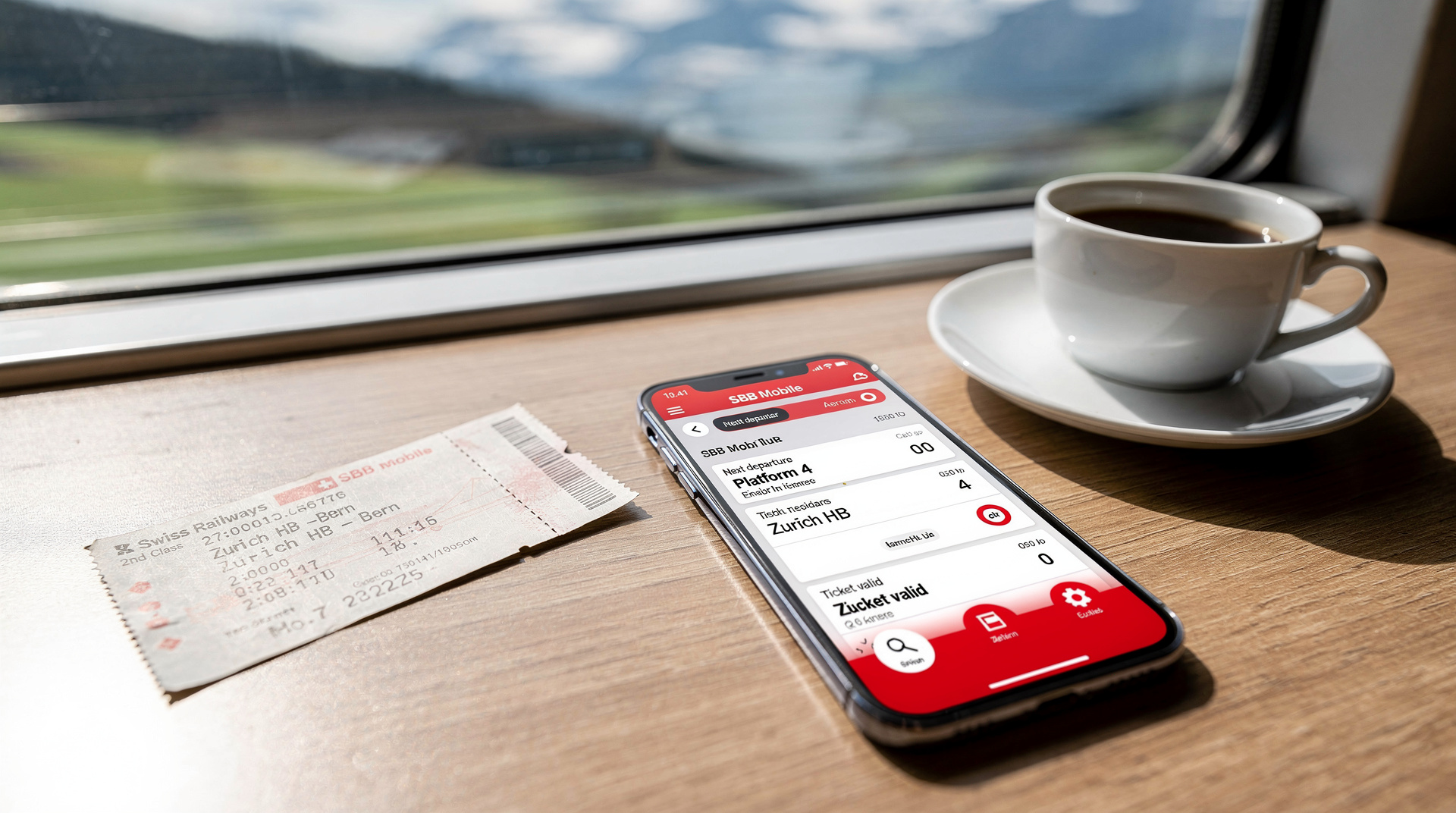
Train connections: Swiss trains depart on time to the minute. If your connection gives you three minutes between platforms, three minutes is genuinely enough — and also genuinely tight. Do not assume the next train will wait. Check the SBB app for real-time updates and plan accordingly. Holding a Swiss Travel Pass also means you never have to queue at a ticket machine against the clock.
Restaurant reservations: If you are 15 or more minutes late without calling ahead, your table may be given to someone else. Call the restaurant if you are running late — they will appreciate it.
Guided tours: Most guided tours (including private tours and transfer services) give a specific departure time. Be there. Guides will typically wait no more than five minutes past the stated time.
Appointments and services: In everyday Swiss life, showing up late is taken as a sign of disrespect. Visitors interacting with hotels, tour operators, or service providers should aim for the agreed time.
Noise rules and quiet hours
Switzerland has formal quiet hours — periods during which noise that could disturb neighbours is prohibited. This applies in apartment buildings, campgrounds, residential streets, and most public spaces. The rules vary slightly by canton and by type of accommodation, but the general framework is:
- Night quiet hours: 10pm to 7am (sometimes 6am). Running washing machines, playing music, raising your voice in hallways, and slamming doors are all considered violations during this period.
- Lunch quiet time: In some German-speaking cantons and many residential areas, 12pm to 1pm or 1:30pm is also a quiet period. This is less universally enforced than the night quiet but worth being aware of.
- Sundays: Sunday quiet rules are stricter. Lawn mowers, drills, loud music, and unnecessary outdoor noise are expected to be avoided throughout Sunday in many areas. See the Sunday section below for detail.
For tourists, the most practical implication is behaviour in hotel corridors, holiday apartments, and hostels: keep your voice down after 10pm, avoid slamming doors, and do not play music that can be heard through walls. Swiss residents living near tourist-heavy areas are accustomed to some noise disruption, but visible irritation when rules are ignored is common.
Sunday quiet and restrictions
Sunday in Switzerland has a particular rhythm that surprises many visitors from cultures where Sunday is the busiest shopping day. Most Swiss shops are closed on Sunday, including supermarkets. Shopping malls and supermarkets in major train stations are notable exceptions (they can open due to their transport hub status), but neighbourhood shops, hardware stores, and most retail in residential areas are closed.
In residential areas, Sunday quiet rules are taken seriously. Using power tools, mowing lawns, or doing anything noisily home-improvement-oriented on a Sunday will draw complaints from neighbours. Washing hung outside and dripping onto a neighbour’s balcony on a Sunday has been known to cause genuine disputes.
For visitors, the practical adjustments are:
- Do your supermarket shopping on Saturday afternoon if staying in a self-catering apartment
- Plan for quieter activities on Sunday — hiking, museums, lake walks, cable car trips — rather than shopping
- Keep morning noise to a minimum; Sunday is the one day many Swiss residents sleep in
In tourist destinations like Interlaken or Zermatt, tourist-facing businesses (restaurants, cable cars, tourist shops) generally open on Sundays. It is the day-to-day Swiss retail and residential environment that observes the tradition strictly.
Greetings and social interactions
Swiss greeting customs differ from the handshake-and-nod approach of some cultures, and from the casual nod of others.
In German-speaking Switzerland, the common greeting is “Grüezi” (formal, to a stranger) or “Hoi”/“Hallo” (informal, to people you know). When entering a small space — a lift, a small shop, a cable car cabin, a doctor’s waiting room — it is customary to greet the people already there with a brief “Grüezi.” This feels strange to visitors from cultures where strangers do not greet each other, but failing to do it is mildly rude by Swiss standards.
In French-speaking Switzerland, “Bonjour” to strangers in small spaces serves the same function. A simple “Bonjour” when entering a shop, stepping into a lift, or walking past a mountain refuge is expected.
Three kisses on the cheek are the standard greeting between friends and acquaintances in many parts of Switzerland — particularly in French-speaking regions. Start on the right cheek. This is for people you know; strangers receive a Grüezi or handshake, not kisses.
When leaving a restaurant or café, it is normal to say goodbye to the staff and other diners nearby — something between a wave and a “Tschüss” or “Au revoir.” This social acknowledgement is standard and appreciated.
First names vs. surnames: In formal or professional settings, Swiss people use surnames until explicitly invited to use first names. This is more pronounced in German-speaking Switzerland. In everyday tourism contexts, first names are generally fine.
Tipping
Switzerland is not a strong tipping culture. Service staff are paid living wages — Swiss minimum wages and sectoral agreements ensure restaurant and hospitality workers earn a reasonable income — so tips are a genuine expression of appreciation, not a supplement to low wages.
The standard approach:
- Round up the bill to a convenient number. If your lunch comes to CHF 23.40, paying CHF 25 is a perfectly good tip.
- Leave 5–10% if service was genuinely good in a nicer restaurant.
- No tip necessary in cafés when you pay at the counter or order at a bar.
- Do not tip with a card separately — the most common approach is to simply tell the waiter the total you want to pay when they bring the card machine (“That’s CHF 27, thank you” rather than entering a tip separately).
Never feel obligated to leave a large tip because you are from a country with a stronger tipping culture. Swiss service staff are not expecting it, and the round-up approach is genuinely standard.
See the currency and tipping guide for detailed information on payment methods and costs.
Recycling and waste
Switzerland has one of the most sophisticated — and enforced — recycling systems in Europe. Getting this right is not optional; it is a civic obligation, and in many cantons there are fines for incorrect sorting.
The key rules for visitors:
General household waste goes in official rubbish bags — these are coloured bags (grey or white depending on the canton) sold at supermarkets and post offices. They cost money (this is intentional — it incentivises recycling). If you are staying in a holiday apartment, your host should provide or explain these.
Recyclables are separated: Glass by colour (clear, green, brown), aluminium, paper and cardboard, PET plastic bottles, and batteries are all collected separately, either at street containers or at supermarkets. Glass containers (with specific hours — no glass recycling on Sundays in many areas) are found in most neighbourhoods.
Do not put recycling in the general bag — this will result in the bag being rejected or a complaint from building management.
For tourists staying in hotels, none of this applies — hotels handle their own waste. It is most relevant if you are in a self-catering apartment, a chalet, or a holiday let.
Public transport etiquette
Switzerland’s public transport is excellent and heavily used. The standard behaviour on trains, trams, and buses:
Validate your ticket before boarding (on trams and buses) or be sure you have a valid pass or purchased ticket before the inspector arrives. Ticket inspections are regular and the fines for travelling without a valid ticket are significant (typically CHF 100+ on top of the fare).
Keep your voice down on trains, especially in quiet carriages. Many Swiss trains have designated quiet zones (marked with a sign showing a mobile phone with a line through it). In these zones, phone calls are not permitted and conversations are expected to be near-silent.
Give up priority seats for elderly, pregnant, or disabled passengers. These are marked clearly on Swiss trains and trams.
Do not eat strong-smelling food in enclosed carriages. Sandwiches are fine; reheated takeaway is frowned upon.
Stand on the right on escalators in train stations, leaving the left side clear for people who want to walk up or down.
Keep luggage in the luggage rack rather than on seats, particularly during busy periods.
The getting around Switzerland guide has full information on using the Swiss public transport network effectively.
Hiking trail etiquette
Switzerland has one of the densest hiking trail networks in the world — over 65,000 kilometres of marked paths — and outdoor culture is taken seriously. The etiquette on Swiss trails is well-established:
Give way uphill: Hikers going uphill have right of way. If you are descending a narrow path, step aside to let uphill walkers pass. This is the standard rule on Swiss trails and most hikers observe it.
Greet fellow hikers: On mountain and forest trails, a brief “Grüezi” or “Hoi” when passing another hiker is normal and expected. You do not need to stop for a conversation, but acknowledging other walkers is the Swiss way.
Stay on marked paths: Swiss trail markings are colour-coded — yellow for easy walking paths, white-red-white for mountain hiking trails, white-blue-white for alpine routes requiring equipment. Leaving marked paths in alpine terrain can damage ecosystems and creates safety risks.
Leave no trace: Litter in the Swiss mountains is taken very seriously. Carry your rubbish back to the valley. Do not pick wildflowers — many alpine species are protected.
Mountain refuge etiquette: If you are staying in or stopping at a mountain hut (SAC hut or private refuge), remove muddy boots at the entrance, order something if you are resting there, and be quiet after 9pm. Huts typically operate lights-out rules.
Dog rules: Dogs must be on leads in many alpine areas, particularly during lambing season and near farms. Follow posted signs. Mountain farmers have legal rights to deter dogs threatening their livestock.
Restaurant and café customs
Swiss restaurant culture is relaxed but has a few specifics worth knowing:
Wait to be seated in most sit-down restaurants. Wandering and choosing your own table is done in some casual places but not in most mid-range and upscale establishments.
Tap water: Unlike in some European countries, Swiss tap water is safe, clean, and excellent — but it is not always offered free in restaurants. You may need to ask for it (“Ein Leitungswasser, bitte” in German, “De l’eau du robinet, s’il vous plaît” in French), and some restaurants will charge a small amount. Ordering bottled still or sparkling water is the default unless you ask.
Bread is not always free: In some Swiss restaurants, bread is charged per portion. Check if you are concerned.
Service: Swiss waitstaff are professional and not overly attentive. Catching their attention requires a raised hand or eye contact — calling out loudly is not the norm.
Money and prices
Switzerland is expensive by any European comparison. See the Switzerland budget guide for a full breakdown. In terms of etiquette: pay by card wherever possible (contactless is universally accepted in cities), carry small amounts of CHF for smaller transactions and mountain facilities, and do not haggle — prices in Switzerland are fixed.
Photography etiquette
Photography is generally welcomed in Switzerland’s public spaces. A few notes:
- Ask before photographing people at close range, particularly in rural areas and traditional festivals.
- Some museums and galleries prohibit photography — check signs.
- On private farms and at cheese dairies, ask permission before photographing staff at work. Most will say yes, but asking first is respectful.
A note on Swiss directness
Swiss communication, particularly in German-speaking Switzerland, is notably direct by some cultural standards. Swiss people will tell you clearly if something is wrong, if you are in the wrong queue, or if your behaviour is causing a problem. This is not rudeness — it is the cultural norm, and it coexists with a genuine politeness and helpfulness when you need assistance.
If a local corrects you — about noise, about queue position, about recycling — take it at face value as helpful information rather than aggression. The same directness means that if a Swiss person goes out of their way to help you, it is genuine.
For more on Swiss culture and making the most of your visit, see the best time to visit Switzerland guide and the Switzerland safety guide.
Regional cultural differences
Switzerland’s four language regions have distinct cultural identities, and etiquette expectations vary in useful ways:
German-speaking Switzerland (Deutschschweiz): The most rule-conscious and formal. Punctuality, quiet hours, and recycling rules are taken most seriously here. Formality in greetings (Grüezi, Sie form of address) persists longer before moving to informality. Direct communication is the norm — if someone looks displeasure, they will tell you why.
French-speaking Switzerland (Romandy): Closer to French cultural norms. The three-kiss greeting is more common. A more relaxed approach to some rules — Sunday quiet is observed but perhaps slightly less rigidly than in Zurich. Restaurants in the Vaud and Geneva tend toward a more leisurely, French approach to service. “Bonjour” on entering spaces is important here too.
Italian-speaking Switzerland (Ticino): The most Mediterranean of the regions. A warm, expressive culture with Italian-style greetings (two kisses, handshakes for strangers). Meals are taken seriously and have their own rhythm — breakfast is often a coffee standing at a bar. The evening passeggiata (stroll) culture is present in Bellinzona and Lugano. Rules are present but the cultural atmosphere is notably more relaxed than German Switzerland.
Romansh-speaking Switzerland (Graubünden): A small population and distinct culture in the Engadin and Surselva valleys. Romansh speakers are typically also German speakers; the cultural norms broadly follow German-Swiss patterns with a distinctive mountain community character.
Festivals and events: etiquette notes
Switzerland hosts many traditional festivals that have specific customs worth knowing about:
Fasnacht (Carnival): Held in Basel, Lucerne, and other cities in February/March. The Basel Fasnacht (starting at 4am on the Monday after Ash Wednesday — the “Morgestraich”) is the biggest carnival in Switzerland and culturally very specific. Participants wear costumes and play in cliques (groups). Visitors are welcome to watch; standing and watching respectfully is the correct approach. Do not touch participants’ costumes or interfere with the lantern displays.
Sechseläuten (Zurich): The Zurich spring festival in late April, featuring a parade of city guilds in historical costumes and the burning of a “Böögg” (snowman effigy) at 6pm. Visitors can watch from the Sechseläutenplatz; the correct etiquette is to watch the parade from the sides without blocking guild members’ paths.
Almabtrieb (Alpine descent): In September and October, many communities in mountain areas celebrate the descent of cattle from summer alpine pastures. Cows are decorated with flowers and large bells. These events happen in villages and are genuinely local — visitors who attend should observe, applaud appreciatively, and ask before photographing people in traditional dress.
National Day (August 1): Swiss National Day is celebrated with bonfires on hilltops, communal gatherings, and (in cities) official ceremonies followed by fireworks. The mood is celebratory and inclusive. Visitors are genuinely welcome to join in; the bonfires and gatherings in villages are informal and open.
Shopping customs
Swiss shops have specific customs that differ from some other cultures:
Greeting the shop assistant: When entering a smaller shop, it is polite to say Grüezi (or Bonjour in French regions). Leaving without greeting is considered slightly rude.
Queue discipline: Queues at supermarkets, bakeries, and service counters are observed strictly. There is no cutting in. If you are unsure whether a queue exists (in bakeries, for example), look for who arrived first and follow the order.
Handling produce: In supermarkets, touching and selecting loose fruit and vegetables is fine — use the provided bags. However, in market stalls, it is common to ask the vendor to select for you rather than picking through the display yourself.
Returns: Swiss shops generally accept returns within a defined period (varies by shop) with receipt. The process is matter-of-fact and straightforward.
Sunday shopping: As noted in the Sunday section earlier, most shops outside major train station complexes are closed on Sundays. Saturday afternoon is the main pre-weekend shopping period, and supermarkets close earlier on Saturday (typically 5pm or 6pm in many towns) than on weekdays.
Tipping in other contexts
The general tipping culture was addressed earlier; here are the specific contexts that visitors often ask about:
Hotel housekeeping: Leaving CHF 1–2 per night for housekeeping is appreciated but not expected. Leave it on the pillow or in a visible place with a note if you want to ensure it reaches the right person.
Taxi drivers: Round up to the nearest convenient figure. CHF 1–2 on a short journey, CHF 3–5 on a longer one. Swiss taxi drivers do not expect percentage tips.
Tour guides: For a day tour, CHF 10–20 per person is a generous and appropriate tip if you were satisfied with the experience. For a half-day tour, CHF 5–10 per person.
Cable car operators and mountain hut staff: No tip expected or typically given.
Hairdressers and beauty services: Round up is appropriate; 5–10% for very good service.
Language basics and courtesies
You do not need to speak German, French, or Italian to travel in Switzerland — English is widely spoken in tourist areas, hotels, and transport hubs. However, a few basic phrases in the local language of the region you are visiting go a long way toward demonstrating respect:
German-speaking Switzerland:
- Grüezi — Hello (to a stranger)
- Danke — Thank you
- Bitte — Please / You’re welcome
- Entschuldigung — Excuse me
- Tschüss / Auf Wiedersehen — Goodbye
French-speaking Switzerland:
- Bonjour — Hello
- Merci — Thank you
- S’il vous plaît — Please
- Excusez-moi — Excuse me
- Au revoir — Goodbye
Italian-speaking Switzerland (Ticino):
- Buongiorno / Ciao — Hello (formal/informal)
- Grazie — Thank you
- Per favore — Please
- Scusi — Excuse me
- Arrivederci — Goodbye
Making a genuine effort with the local language, even just a greeting, is noticed and appreciated across all regions of Switzerland. A local guide-led culture tour in Bern is a relaxed way to see these customs in practice and ask questions as you go.
Etiquette on scenic trains and cable cars
Because much of a Swiss trip involves shared transport — scenic trains, cable cars, mountain gondolas — a few extra points apply beyond the general public transport rules above. On the Glacier Express and Bernina Express, reserved seats are assigned and should not be swapped without asking; window seats are prized and other passengers will generally take turns for photos rather than block the glass for a whole leg. On cable cars and gondolas such as those to Jungfraujoch or Mount Pilatus, boarding is orderly and queue-jumping is not tolerated, even when a cabin looks half-empty.
First-time visitor blind spots
A few etiquette points catch first-time visitors specifically off guard, beyond the categories above. Covered in more depth in the first-time visitors’ guide: assuming card payment works everywhere (it is near-universal in cities but some mountain huts and small stalls remain cash-only), assuming all attractions are open on Mondays (some museums close), and assuming a fast pace is appreciated — Swiss service is efficient but not rushed, and impatience reads as rude rather than assertive.
For more practical tips on navigating Switzerland’s transport system, see the getting around Switzerland guide. For planning your budget, see the Switzerland budget guide.