eSIM and internet in Switzerland
What is the best way to get internet in Switzerland?
An eSIM (like Airalo or Holafly) is the easiest option for most travelers. Plans start around 5-10 EUR for 1-5 GB. Free WiFi is available at most hotels, restaurants, and train stations.
At a glance
| Best option for most travelers | eSIM (Airalo or Holafly), activated before arrival |
| Typical cost | Around EUR 5-10 for 1-5 GB / 7-30 days; unlimited plans around EUR 19-49 |
| Setup time | A few minutes, done before you fly |
| Where free WiFi is reliable | Hotels, SBB train stations, most restaurants and cafes |
| Best time to set up | Before departure, while on home WiFi |
Internet and connectivity in Switzerland: a practical guide
Staying connected in Switzerland is genuinely important — not just for social media, but for navigation (the SBB app needs data to update in real time), checking mountain weather forecasts, booking last-minute accommodation, and calling ahead to attractions. The good news is that Switzerland has excellent mobile coverage, and getting affordable data is easier than ever thanks to eSIMs.
This guide covers all your options for internet access in Switzerland, with honest assessments of each and current pricing.
Mobile network coverage in Switzerland
Switzerland has excellent mobile coverage across three main networks:
- Swisscom: The dominant network (formerly PTT). Best rural and mountain coverage. Most expensive.
- Sunrise: Strong network, good mountain coverage. Mid-range pricing.
- Salt: Competitive in cities; slightly weaker rural coverage.
All three networks use 4G LTE as standard, with 5G rolling out in cities and major towns. In mountain areas, coverage varies by carrier but is generally good in resorts and on popular hiking routes. Very remote areas (high Alpine passes, deep valleys) may have no signal.
Practical coverage note: In mountain huts, ski lifts, and on popular mountain railways, coverage is often good because these are high-traffic areas with dedicated infrastructure. You’re unlikely to have connectivity problems in any tourist area. Some isolated Alpine valleys have gaps.
Option 1: eSIM (recommended for most travelers)
An eSIM is a digital SIM card embedded in your device. Instead of buying and inserting a physical SIM card, you scan a QR code, download the plan, and activate it — usually in minutes. No SIM tray, no tiny card, no risk of losing the original SIM.
Compatibility: Most phones released from 2019 onward support eSIM, including iPhone XS and later, Google Pixel 3 and later, Samsung Galaxy S20 and later, and many others. Check your phone’s settings or manufacturer specs to confirm.
How to set up an eSIM:
- Purchase a plan online before you travel (or on arrival with WiFi)
- Receive a QR code by email
- Go to Settings > Cellular/Mobile > Add eSIM on your phone
- Scan the QR code
- Follow activation instructions
- Toggle to your eSIM when you land in Switzerland
Airalo
One of the largest eSIM marketplaces, with plans from multiple carriers for Switzerland. Current 2026 prices (approximate):
- 1 GB / 7 days: approximately EUR 5
- 3 GB / 30 days: approximately EUR 10
- 5 GB / 30 days: approximately EUR 15
- 10 GB / 30 days: approximately EUR 22
Airalo works with multiple underlying Swiss carriers. Coverage and speeds vary but are generally good. Best for travelers who need a modest amount of data and want the lowest price.
The Airalo app makes managing multiple eSIMs across different countries easy — useful if you’re combining Switzerland with other European destinations.
Holafly
Offers unlimited data plans, which is useful for heavy users who stream video or use navigation constantly. Prices (approximate 2026):
- 5 days unlimited: approximately EUR 19
- 10 days unlimited: approximately EUR 27
- 30 days unlimited: approximately EUR 49
“Unlimited” typically has fair-use policies that may throttle speeds after a certain threshold (usually 1-3 GB/day). For normal travel use, this is rarely an issue.
Holafly’s coverage in Switzerland is generally reliable. Their customer service is responsive through the app.
Simify, BNESIM, and other eSIM providers
Multiple other providers offer Switzerland plans with similar pricing to Airalo. Comparison sites like esimdb.com aggregate current prices across providers. If price is your main concern, comparing at booking time will find the cheapest current option.
Regional Schengen/Europe eSIMs
If you’re visiting multiple European countries, a “Europe” or “Schengen” eSIM covers Switzerland and surrounding countries on one plan. These are often better value than buying separate country plans.
Examples:
- Airalo “Eurolink” plans cover 39 European countries including Switzerland
- Holafly’s Europe unlimited plan covers most of the continent
Check whether your chosen plan explicitly includes Switzerland before purchasing — some “Europe” plans exclude Switzerland because it’s not in the EU.
Option 2: Physical SIM card
If your phone doesn’t support eSIM, or you prefer a physical card, you can buy a Swiss SIM on arrival.
Where to buy:
- Zurich Airport: Swisscom and Sunrise shops in the arrivals hall
- Major train stations: Mobile operator shops in Zurich HB, Geneva Cornavin, Bern
- Post offices: Sell Swisscom prepaid SIMs
- Convenience stores and kiosks: Some sell prepaid SIM starter packs
Current prepaid options (2026 approximate prices):
Swisscom PrepayMobile:
- Starter pack: CHF 10-15 (includes some data credit)
- 1 GB data add-on: CHF 5-7
- 10 GB data add-on: CHF 20-25
- Best coverage, especially in mountains
Sunrise Prepaid:
- Similar pricing to Swisscom
- Good coverage, slightly cheaper
Salt Mobile:
- Often the cheapest option
- Good in cities, less comprehensive in rural areas
What to watch out for: Swiss domestic SIMs don’t automatically include roaming to neighboring EU countries. If you’re doing day trips to France (from Geneva) or Germany (from Basel), check whether your SIM plan covers EU roaming or purchase an EU-roaming add-on.
Option 3: International roaming on your home plan
If your home country mobile plan includes international roaming, this may be the simplest option — no new SIM, no eSIM setup.
EU travelers: EU roaming rules allow EU residents to use their domestic data plan in other EU countries at no extra charge. However, Switzerland is NOT in the EU. Swiss roaming charges apply to EU plans when in Switzerland.
Check your specific plan. Some EU carriers include Switzerland in extended roaming packages. Others do not. A simple call or online check before travel avoids surprise bills.
US travelers: Most major US carriers (Verizon, AT&T, T-Mobile) have international add-ons or plans that include Switzerland at USD 5-15/day. T-Mobile Magenta and higher plans include basic international data. These can be cost-effective for short trips but work out expensive for stays over 5-7 days.
UK travelers: UK plans typically treat Switzerland as an international destination. Check your specific plan — many now have EU/international roaming packages.
If using roaming: Turn off automatic roaming before you leave, enable it only when you need it, and monitor your data usage carefully. Uncontrolled roaming charges can be significant.
Option 4: Pocket WiFi rental
Pocket WiFi devices (also called mobile hotspots or MiFi) are small battery-powered routers that connect to mobile networks and create a local WiFi hotspot for multiple devices.
Rental options:
- Available at Zurich and Geneva airports
- Various online rental companies ship devices to Swiss addresses or to airports
Pricing: Typically CHF 5-12/day plus a deposit.
Advantages: Share one connection across multiple devices and people (useful for groups or families).
Disadvantages: Another device to carry, charge, and not lose. Often costs more than an eSIM for a single traveler. Less practical than having data directly in your phone.
Pocket WiFi makes most sense for groups of travelers sharing costs, or for those with older devices that don’t support eSIM.
Free WiFi in Switzerland
Switzerland has good free WiFi availability in most tourist contexts:
Train stations: SBB Free WiFi is available at all major stations. Login required (enter your phone number or email for a code). Reliable and reasonably fast. Good for checking timetables and emails while waiting.
Hotels: Virtually all hotels include free WiFi. Even budget accommodations typically have good connections. Check for data limits at very cheap properties.
Restaurants and cafes: Most cafes and restaurants provide WiFi codes on request or printed on receipts. Usually no time limits.
McDonald’s and Starbucks: Present in all major cities, always have free WiFi. Useful in a pinch.
Public areas: Geneva and Zurich have some free public WiFi in central areas. Less comprehensive than private venues.
Mountain restaurants: Many mountain restaurants and cable car stations have WiFi. Quality varies — some are excellent, some are slow.
Airports: Zurich and Geneva airports have good free WiFi with no time limits.
For light users: The combination of hotel WiFi, station WiFi, and cafe WiFi may be sufficient without purchasing a data plan. Download offline maps (Google Maps or Maps.me allow offline map downloads) before your trip to reduce data needs.
Recommendations by trip type
Short trip (3-5 days), light data use: Free hotel/station WiFi plus a small eSIM plan (1-3 GB). Download offline maps before arriving.
7-10 day trip, moderate use: Airalo 5 GB plan (approximately EUR 15) or comparable. Enough for navigation, weather apps, messaging, and some photo uploads. Not enough for regular video streaming.
14+ days or heavy users: Holafly unlimited plan (approximately EUR 49) or a local Swisscom prepaid SIM with a 10 GB add-on (approximately CHF 25).
Group of 3-4 people: Consider a pocket WiFi rental or one person getting an unlimited plan and sharing the hotspot.
Multi-country Europe trip: A Schengen/Europe eSIM from Airalo or similar, covering all your destinations on one plan.
Apps that use significant data
Switzerland-specific apps that are worth downloading in advance (uses minimal data once downloaded):
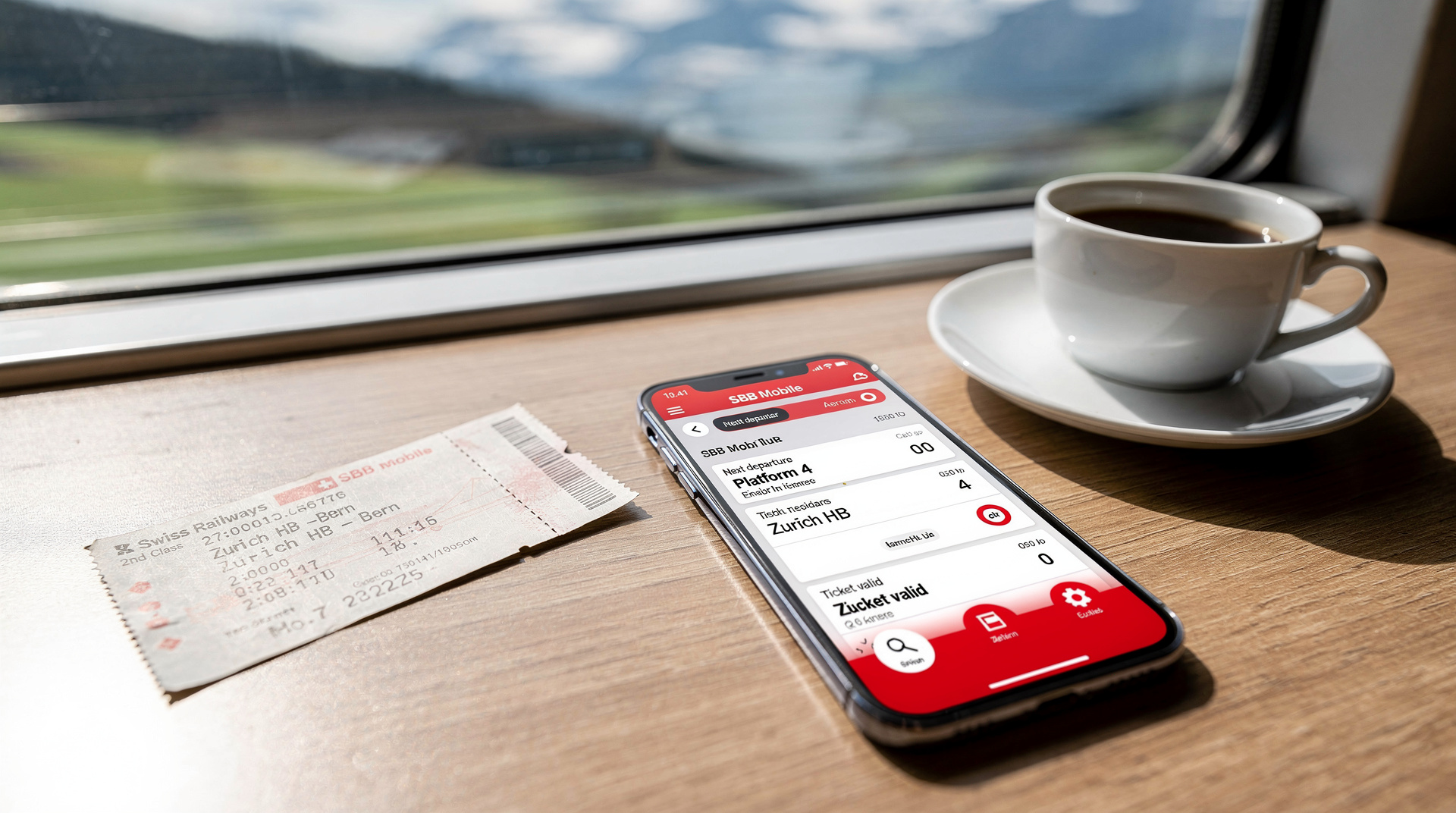
SBB Mobile: Real-time train information, tickets, and navigation. Moderate data use. Essential.
MeteoSwiss: Switzerland’s official weather app. Particularly useful for mountain weather forecasts and thunderstorm warnings. Light data use.
Maps.me or Google Maps (offline): Download the Switzerland map region for offline use before arriving. Then navigation uses minimal data even without connectivity.
SwissHiking (Schweizer Wanderwege): Official hiking app with trail maps. Download for offline use.
MySwitzerland: Swiss Tourism’s official app with destination guides and attraction information. Low data use.
Tips for managing data
Download maps offline: Before leaving for Switzerland, open Google Maps or Maps.me and download the Switzerland region for offline use. This single action reduces data consumption dramatically for navigation.
Use hotel WiFi for heavy downloads: Download podcasts, Netflix shows, large apps, and map updates over hotel WiFi rather than mobile data.
Check app background data: Some apps update constantly in the background. In your phone settings, restrict background data for apps you don’t need updating in real time.
Take advantage of station WiFi for SBB updates: The SBB app updates its live data when on WiFi. A quick refresh at each major station keeps your journey information current without using mobile data.
Download boarding passes and tickets before going to areas with poor signal: Save QR codes, confirmation emails, and tickets offline or as screenshots.
Summary
For most visitors to Switzerland, an eSIM from Airalo or Holafly is the simplest, most cost-effective solution. Buy it before leaving home, activate when you land, and you have reliable data throughout your trip without worrying about finding a SIM card shop or dealing with carrier contracts.
If you’re a light data user who will be staying in hotels and restaurants with WiFi most of the time, a small 1-3 GB eSIM plan (EUR 5-10) plus free WiFi at accommodations and stations will be perfectly sufficient.
For more practical Switzerland planning, see our first-time visitors’ guide and our Switzerland travel budget for cost planning across all categories.
Connectivity in specific Swiss situations
Mountain areas
Most mountain resorts and cable car stations have decent mobile coverage because high-traffic tourist areas have dedicated infrastructure. Specific notes:
Jungfraujoch (3,454m): Swisscom has coverage at the station. The restaurant and observatory have WiFi for guests. Photos upload fine. If you are planning the trip, you can book a Jungfraujoch round-trip railway ticket from Grindelwald in advance.
Mount Pilatus: Pilatus Kulm summit has Swisscom coverage. The cable car and cogwheel railway route has partial coverage.
Zermatt: Excellent coverage in the village (Swisscom primary). Coverage decreases on ski runs above the village; the Matterhorn Glacier Paradise cable car has good connectivity at the stations.
Hiking trails: Between the trail heads and mountain stations, coverage is patchy. Altitude and valley aspect affect signal significantly. Download offline maps before starting any hike.
Mountain huts: SAC alpine huts sometimes have WiFi (with passwords available from the hut warden) but don’t rely on it. Remote huts have no connectivity at all — one of their charms.
Trains
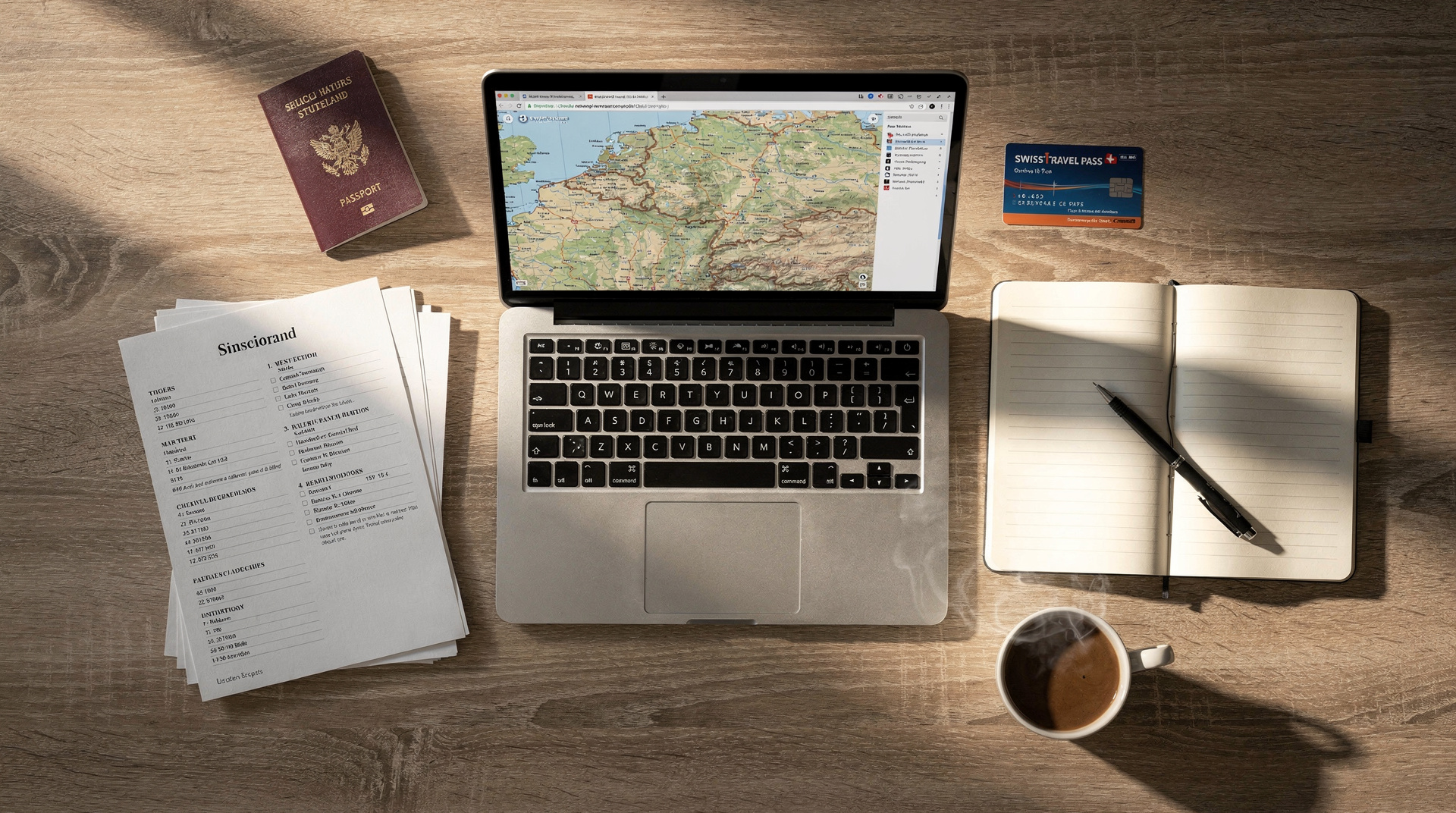
SBB provides free WiFi on many intercity trains (IC and IC2 trains). The network can be slow during peak hours and in tunnels. For real-time SBB app updates, the train’s own WiFi is sufficient. For video streaming, expect interruptions. If you will be riding trains, buses, and boats often, a Swiss Travel Pass for unlimited train, bus, and boat travel pairs well with a data plan, since the pass tickets can be kept on your phone.
The Glacier Express and Bernina Express trains have WiFi available but quality varies significantly in mountain sections.
Cities
Coverage is excellent in all Swiss cities. 4G is universal; 5G is available in most city center areas. The SBB app, navigation, messaging, and social media all work seamlessly throughout Zurich, Geneva, Lucerne, Bern, and Basel city centers.
Specific provider reviews for 2026
Based on traveler reports and network testing:
Airalo for Switzerland
Airalo connects to either Swisscom or Sunrise depending on availability. Coverage is generally good. The app interface is clean and allows you to monitor data consumption. Top-up is easy within the app if you run out.
Best for: Budget-conscious travelers who need 1-5 GB and want the cheapest reliable option.
Not ideal for: Travelers who need guaranteed Swisscom coverage in remote areas (the underlying carrier can vary).
Holafly for Switzerland
Holafly’s Switzerland plan uses the Sunrise network. Coverage is strong in cities and main tourist areas; slightly weaker in remote valleys compared to Swisscom.
Best for: Travelers who want unlimited data without thinking about GB counts. Heavy users — photographers uploading to cloud, people working remotely, families sharing data.
Not ideal for: Light users who would be overpaying for unused data.
Swisscom prepaid (physical SIM)
The gold standard for Switzerland coverage. If you have an unlocked phone and don’t have eSIM, a Swisscom prepaid SIM bought at the airport or train station gives you the best network in the country.
Best for: Travelers in remote areas, mountain hikers who want maximum coverage reliability.
Not ideal for: Travelers arriving outside of shop hours (airport Swisscom shop is not always open late); locked phones.
Using your phone abroad: practical settings
Before arriving in Switzerland, adjust these phone settings:
Turn off data roaming initially: If you’re using an eSIM, turn off roaming on your primary SIM to avoid accidental charges. Enable only your eSIM data line.
Enable WiFi calling: If available on your phone plan, enabling WiFi calling lets you make calls over any WiFi network without using mobile data. Useful for calling home from hotel WiFi.
Check iMessage and WhatsApp settings: These messaging apps use data, not your calling plan. As long as you have any data connection, these work normally at no extra cost.
Set app update restrictions: Go to Settings and restrict app updates to WiFi only. Automatic app updates can silently consume multiple GB of mobile data.
Adjust photo backup settings: If you use Google Photos, iCloud, or similar services, set automatic photo backup to WiFi only. Professional-quality photos are 4-8 MB each — uploading hundreds of mountain photos over mobile data burns through a plan quickly.
Download what you need before leaving WiFi: Offline Spotify playlists, Netflix downloads, Google Maps regions, and SBB timetables. Doing this over hotel or home WiFi means your mobile data is purely for real-time needs.
The SBB app and data use
The SBB Mobile app is the most important Switzerland travel app. Its data requirements:
- Timetable lookups: very low (a few KB per search)
- Real-time departure boards: low (updates every 30 seconds, ~50 KB per update)
- Purchasing tickets: low (requires a connection but uses minimal data)
- Maps within the app: moderate (depends on area and zoom level)
The SBB app can download timetable data for offline use. This is worth doing before mountain hikes where connectivity is uncertain.
Total estimated data use from SBB app for a 7-day trip: Approximately 100-200 MB. Very manageable even on a 1 GB plan.
Free WiFi locations that are often missed
Beyond hotels and restaurants, free WiFi is available at:
- All SBB train stations (SBB Free WiFi — simply connect and accept terms)
- Zurich Airport and Geneva Airport (unlimited, no time restriction)
- McDonald’s (all Swiss locations)
- Starbucks (all Swiss locations)
- Most shopping centers
- Public libraries in cities
- Swiss Post offices
- Many cable car and mountain railway stations
In cities like Zurich and Geneva, there is also increasing free public WiFi coverage in main squares and tourist areas (Zurich’s Sechseläutenplatz, Geneva’s Rive area, etc.).
Data security on public WiFi
Switzerland’s public WiFi networks are generally safe, but the standard precautions apply:
- Don’t access banking or sensitive accounts over public WiFi without a VPN
- HTTPS connections (padlock in browser) are encrypted even on public networks
- For anything sensitive (banking, work systems), use your mobile data rather than public WiFi
A basic VPN (NordVPN, ExpressVPN, Mullvad) costs EUR 3-10/month and provides adequate protection. Most traveler’s won’t need one for normal holiday use, but remote workers or those accessing sensitive data should use one.
Connectivity for specific traveler types
Digital nomads and remote workers: Reliable connectivity is a baseline requirement, not a nice-to-have. See the digital nomad Switzerland guide for coworking spaces and city-by-city notes on stable WiFi and mobile coverage.
Solo travelers: A single eSIM plan covering navigation, messaging, and emergency contact is usually enough; see the solo travel Switzerland guide for other safety-related planning.
Families with kids: With multiple devices in play, a pocket WiFi rental or an unlimited eSIM on one adult’s phone (shared via hotspot) tends to work out simpler than juggling several small data plans; see Switzerland with kids for broader family logistics.
For everything else about practical Switzerland travel, see our first-time visitors’ guide, our guide to getting around Switzerland, and our currency and tipping guide.