How to plan a trip to Switzerland: step by step
How do I start planning a trip to Switzerland?
Start with your dates and budget, then pick 3-5 base cities. Buy a Swiss Travel Pass or Half Fare Card, book accommodation early in summer, and plan 1-2 mountain excursions per base.
How to plan a trip to Switzerland from scratch
| At a glance | Details |
|---|---|
| Where to start | Dates and budget first, then bases, then transport pass |
| Cost | From around CHF 100-150/day (budget) to CHF 700+/day (luxury) |
| Time needed | A few hours of planning spread over 1-3 months before departure |
| Getting there | Fly into Zurich, Geneva, or Basel, or arrive by train from neighbouring countries |
| Best time | June or September for the best balance of open access, weather, and crowds |
Planning a Switzerland trip has a specific order of operations that differs from most other destinations. The mountains create dependencies — what you can do depends on when you go, what’s open, and how you get around. The transport system is so integrated that your pass choice affects almost every other decision.
This guide walks you through the planning process step by step, in the right order. Follow this sequence and you’ll avoid the common planning mistakes that cost first-time visitors time and money.
Step 1: Decide when to go
Your travel dates aren’t just a calendar choice — they determine which experiences are available to you.
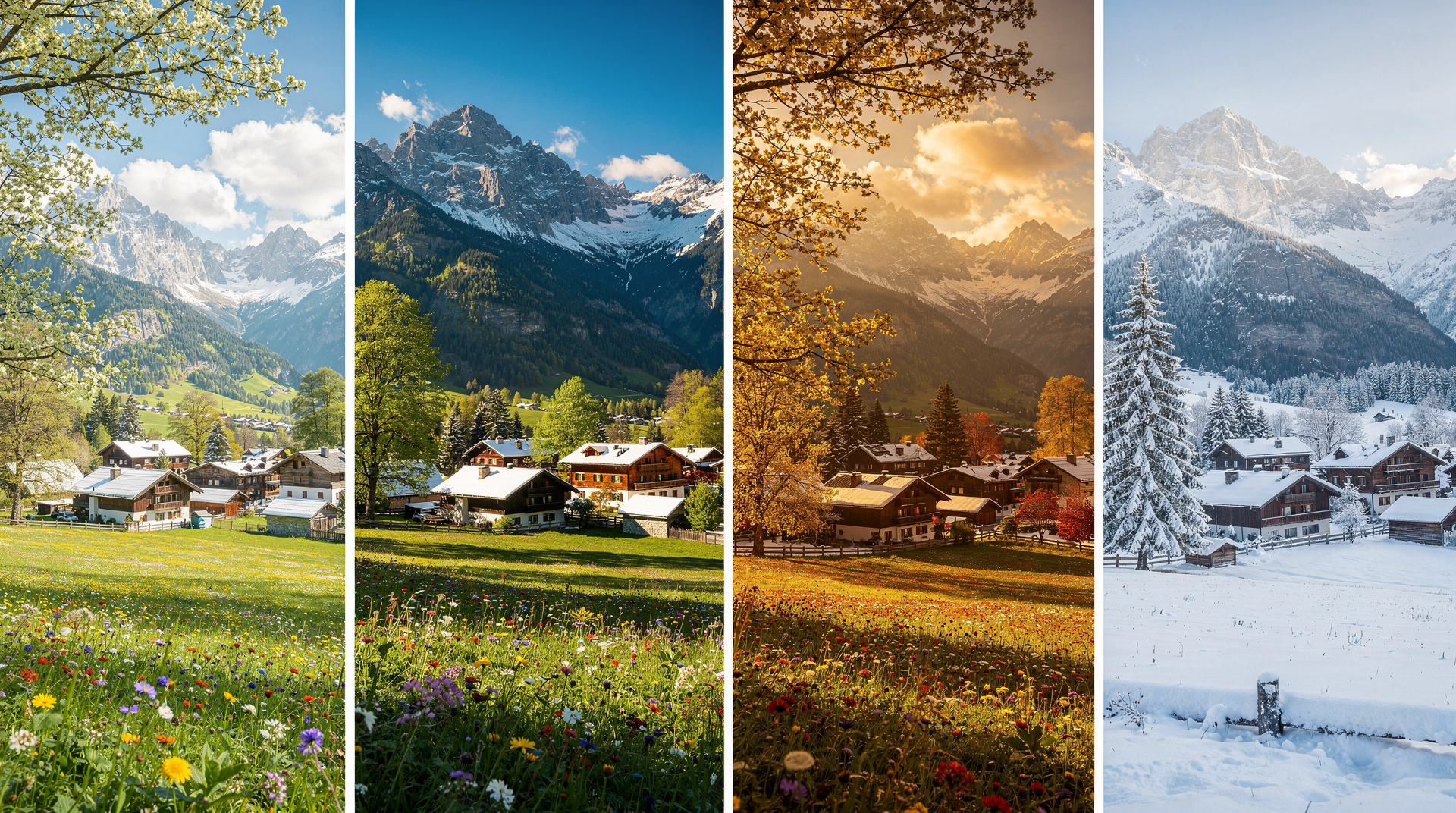
Summer (June-September): All mountain railways and hiking trails open. Peak crowds and prices in July-August. September is the sweet spot: open access, fewer crowds, lower prices, beautiful autumn light.
Winter (December-March): Ski season. Mountain viewpoints accessible but cold and snow-covered. Christmas markets in December are a highlight.
Shoulder seasons: April-May and October-November offer lower prices but some mountain facilities closed. November is the weakest month. May is increasingly good from mid-month onward.
The single best advice: if you have any flexibility, choose June or September over July-August. The experiences are identical but cheaper and less crowded.
For a detailed month-by-month breakdown, read our best time to visit Switzerland guide.
Step 2: Decide how long to go
Switzerland is small (about 260 km east to west, 220 km north to south) but the terrain makes everything take longer than a flat-country map suggests. Here’s a realistic breakdown by trip length:
3-4 days: Explore one region well. Zurich plus Lucerne, or Interlaken plus Lucerne, or Geneva plus Montreux. One mountain excursion.
5-7 days: The classic Switzerland trip. Two or three bases, 2-3 mountain excursions, a mix of city and nature. The sweet spot for most first-time visitors.
8-14 days: Full Swiss experience. Can cover the main regions, scenic trains, multiple mountain excursions, and begin exploring less-visited areas.
14+ days: Allows deeper exploration, off-the-beaten-path destinations, and a more relaxed pace.
See our 7-day Switzerland itinerary for a detailed example of what a week can cover.
Step 3: Set a realistic budget
Before booking anything, establish your per-day budget. Switzerland is expensive — but the number varies widely based on your travel style.
Budget: CHF 100-150/day (hostel dorms, supermarket meals, hiking, free activities) Mid-range: CHF 200-350/day (private room, one restaurant meal/day, transport pass, one excursion) Comfort: CHF 400-600/day (4-star hotels, restaurant meals, first-class transport) Luxury: CHF 700+/day
The biggest cost drivers are accommodation and mountain excursions. A single visit to Jungfraujoch costs CHF 66-132 per person depending on your pass. A 4-star hotel room in Zurich or Geneva starts at CHF 280/night.
See our full Switzerland travel budget breakdown for category-by-category pricing.
Step 4: Choose your bases
Switzerland has five main tourist regions. For a first visit, choose 2-3 bases:
Zurich: Best for: city culture, shopping, museums, nightlife. Day trips: Rhine Falls, Stein am Rhein, Rapperswil. Transport hub for the whole country.
Lucerne: Best for: classic Switzerland scenery, lake views, Mount Pilatus, Rigi, Titlis. The most photogenic Swiss city. Extremely popular.
Interlaken and Bernese Oberland: Best for: Jungfraujoch, Grindelwald, Wengen, Mürren, Lauterbrunnen valley, serious mountain experiences.
Geneva: Best for: international city atmosphere, Lake Geneva, Montreux, the Lavaux wine region, French-speaking Switzerland.
Bern: Best for: the UNESCO-listed old town, bears, museums, central location. Underrated and excellent.
Zermatt: Best for: the Matterhorn, premium mountain experiences, car-free village atmosphere. Requires more planning.
How many bases: Most travelers do best with 2-3 nights per base. Moving every day is exhausting and expensive (hotel changeovers). Moving less than every 2 nights means you don’t see much.
Step 5: Choose your transport pass
This decision affects your total trip cost by CHF 200-400, so it deserves serious attention.
Swiss Travel Pass: Unlimited travel on trains, buses, and boats. Free museum entry. Free city transport in 90+ cities. CHF 244-513 for 3-15 days (second class).
Half Fare Card: CHF 150 for one month. 50% off all tickets, mountain railways, and city transport. You pay per journey at half price.
The break-even: if you’re doing 4+ dedicated travel days with consistent movement, the Swiss Travel Pass is usually better. Fewer days or more flexibility, and the Half Fare Card wins.
You can buy both passes through GetYourGuide or directly through the SBB website.
Read the complete Swiss Travel Pass vs Half Fare Card comparison before deciding.
Step 6: Book flights or arrive by train
By air: Switzerland’s main airports:
- Zurich (ZRH): The main international hub. Direct connections from most major cities worldwide.
- Geneva (GVA): Excellent for Western Switzerland, with a free airport rail shuttle to the city.
- Basel (BSL/EAP): Smaller but growing, with good connections to Easyjet and other budget carriers.
For budget flights, Basel is often cheaper than Zurich. The train from Basel to Zurich takes 55 minutes.
By train from Europe: Switzerland is extremely well-connected by rail. Direct Eurocity and TGV trains run from Paris to Geneva (3h), Paris to Basel (2.5h), Milan to Zurich (3.5h), Munich to Zurich (3.5h), and Amsterdam to Basel (via Germany). Night trains connect Vienna and other eastern European cities.
Arriving and departing by train is seamless — no luggage check, no airport security, right into the city center.
Book in advance: For popular summer and Christmas periods, book flights 2-3 months ahead. European train tickets can be booked 3-6 months ahead, often at better prices.
Step 7: Book accommodation
Switzerland accommodation books up early for peak periods. Here’s the timeline:
Summer (June-August): Book 2-3 months ahead for popular areas. Some mountain resorts near Grindelwald, Wengen, and Zermatt get completely full. Don’t assume you can book 2-3 weeks out.
Christmas and New Year: Book 3-4 months ahead for ski resorts. This is the most constrained period.
Shoulder season (May, September, October): 4-6 weeks ahead is usually sufficient, but earlier is always safer.
What to look for:
- Location matters more than hotel star rating. A 3-star hotel 5 minutes from the train station beats a 4-star 30 minutes away on public transport.
- Check whether breakfast is included. Swiss hotel breakfasts are typically very good (cheese, cold meats, fresh bread, müesli) and worth CHF 20-30 at a cafe.
- Mountain resort guest cards: some accommodation includes a card giving free or discounted local transport. Ask when booking.
- Hostels in Switzerland are genuinely high quality. SiloCity in Basel, Youth Hostel Zurich, and the Backpackers hostel in Bern are excellent.
Step 8: Plan mountain excursions and scenic trains
These are the headline experiences in Switzerland and require advance planning for two reasons: seat reservations and budgeting.
Key excursions to consider:
Jungfraujoch (“Top of Europe”): The highest railway station in Europe at 3,454m. Full price CHF 132-145 from Grindelwald terminal; 25% off with Swiss Travel Pass, 50% off with Half Fare Card. Allow a full day. Book at least 1-2 weeks ahead in summer.
Mount Pilatus: Accessible from Lucerne. The classic “golden round trip” (cogwheel train up, gondola down) costs CHF 82 full price, free cogwheel section with Swiss Travel Pass, 50% off with Half Fare Card. CHF 41.
Schilthorn (Mürren): Piz Gloria revolving restaurant at 2,970m. CHF 108 return from Stechelberg, CHF 54 with Half Fare Card.
Matterhorn Glacier Paradise (Zermatt): Europe’s highest cable car at 3,883m. CHF 100 return, CHF 50 with Half Fare Card.
Scenic trains:
Glacier Express: Zermatt to St. Moritz (or reverse). 8 hours through stunning Alpine scenery. Seat reservation required: CHF 13 low season, CHF 33 high season. Book months ahead for summer. The base ticket is included with Swiss Travel Pass or 50% off with Half Fare Card.
Bernina Express: Chur/Davos to Tirano, Italy via the Rhaetian Railway’s UNESCO-listed route. Spectacular.
Golden Pass Line: Montreux to Lucerne via Interlaken and Zweisimmen. Can be done in stages.
Wilhelm Tell Express: Combination boat and train from Lucerne to Lugano via Lake Lucerne and the Gotthard route.
Step 9: Plan day trips from each base
The power of Switzerland’s rail network is that every base gives you access to extraordinary day trips within 1-2 hours.
From Zurich: Lucerne (45 min), Rhine Falls (30 min), St. Gallen (1h), Stein am Rhein (1h15), Schaffhausen (50 min), Bern (1h).
From Lucerne: Zurich (45 min), Interlaken (1h50), Mount Pilatus (40 min train + cogwheel), Rigi (1h15), Titlis (1h20).
From Interlaken: Grindelwald (35 min), Lauterbrunnen (20 min), Mürren (1h), Wengen (45 min), Jungfraujoch (2h20 total from Interlaken Ost), Bern (1h).
From Geneva: Lausanne (40 min), Montreux (1h), Bern (2h), Chamonix, France (1h15 by train+bus), Annecy, France (1h30 by bus or car).
Step 10: Check what’s open on your dates
Before finalizing your itinerary, verify that your planned activities are actually operating:
- Mountain railways often have annual maintenance closures, typically in November and sometimes in May.
- Some hiking trails are snow-covered until June or even July at higher altitudes.
- Christmas markets run only late November through December 24.
- Ski resorts open in December and close in March-April depending on altitude.
Always check the official websites of major attractions for current opening dates. SBB (sbb.ch) also lists most mountain railway schedules.
Step 11: Pack smart for Swiss conditions
Always pack (regardless of season):
- Lightweight waterproof jacket (mountain weather changes fast)
- Warm mid-layer (fleece or down jacket for mountain excursions, even in summer)
- Comfortable walking shoes with ankle support for uneven mountain paths
- Sunscreen (UV radiation is much stronger at altitude)
- Sunglasses (essential above the snowline)
- Reusable water bottle (tap water is safe and excellent everywhere)
Summer additions:
- Light clothes for warm valley days
- Swimwear (lake swimming is part of Swiss summer)
- Insect repellent for lower altitude evenings
Winter additions:
- Thermal base layers
- Hat, gloves, and scarf
- Waterproof and insulated footwear if skiing or walking in snow
See our Switzerland weather guide for seasonal packing details.
Step 12: Sort connectivity and money
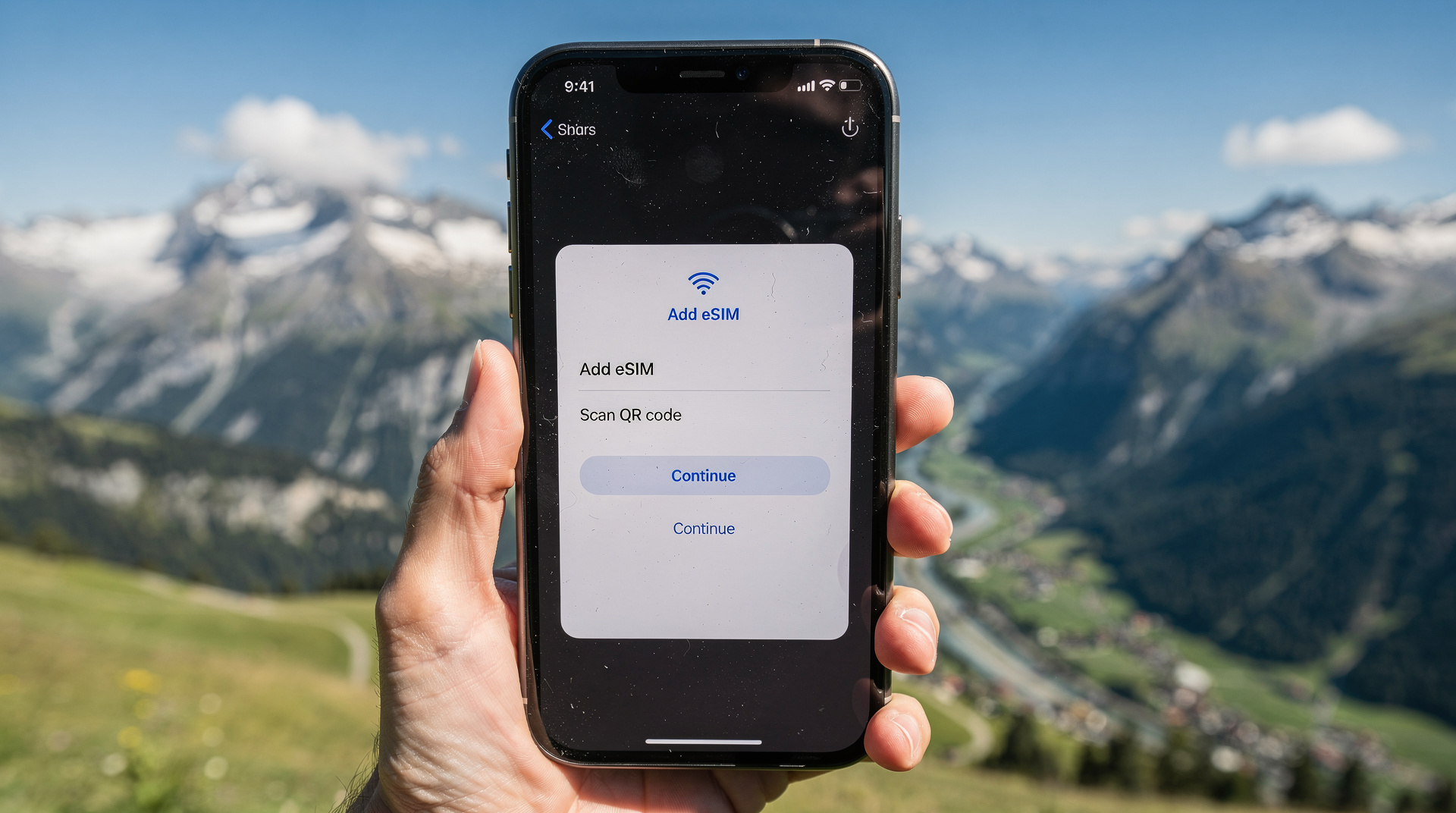
Internet: An eSIM (Airalo, Holafly, or similar) is the easiest option. Plans start around 5-10 EUR for 1-5 GB. Read our eSIM and internet guide.
Currency: Withdraw CHF from ATMs in Switzerland for the best rates. Keep CHF 50-100 cash for small purchases and cash-only places. Cards work almost everywhere.
Travel insurance: Recommended, especially for mountain activities. Mountain rescue in Switzerland is excellent but not free for non-residents. Check your policy covers altitude.
Your planning timeline
3-6 months before:
- Decide dates, duration, and budget
- Book flights
- Make Swiss Travel Pass or Half Fare Card decision
- Book accommodation for peak season travel
1-3 months before:
- Book accommodation if not done
- Book Glacier Express and other scenic trains requiring reservations
- Buy transport passes (or plan to buy on arrival)
- Research specific excursions and their current prices
2-4 weeks before:
- Book mountain excursions in summer (Jungfraujoch etc.)
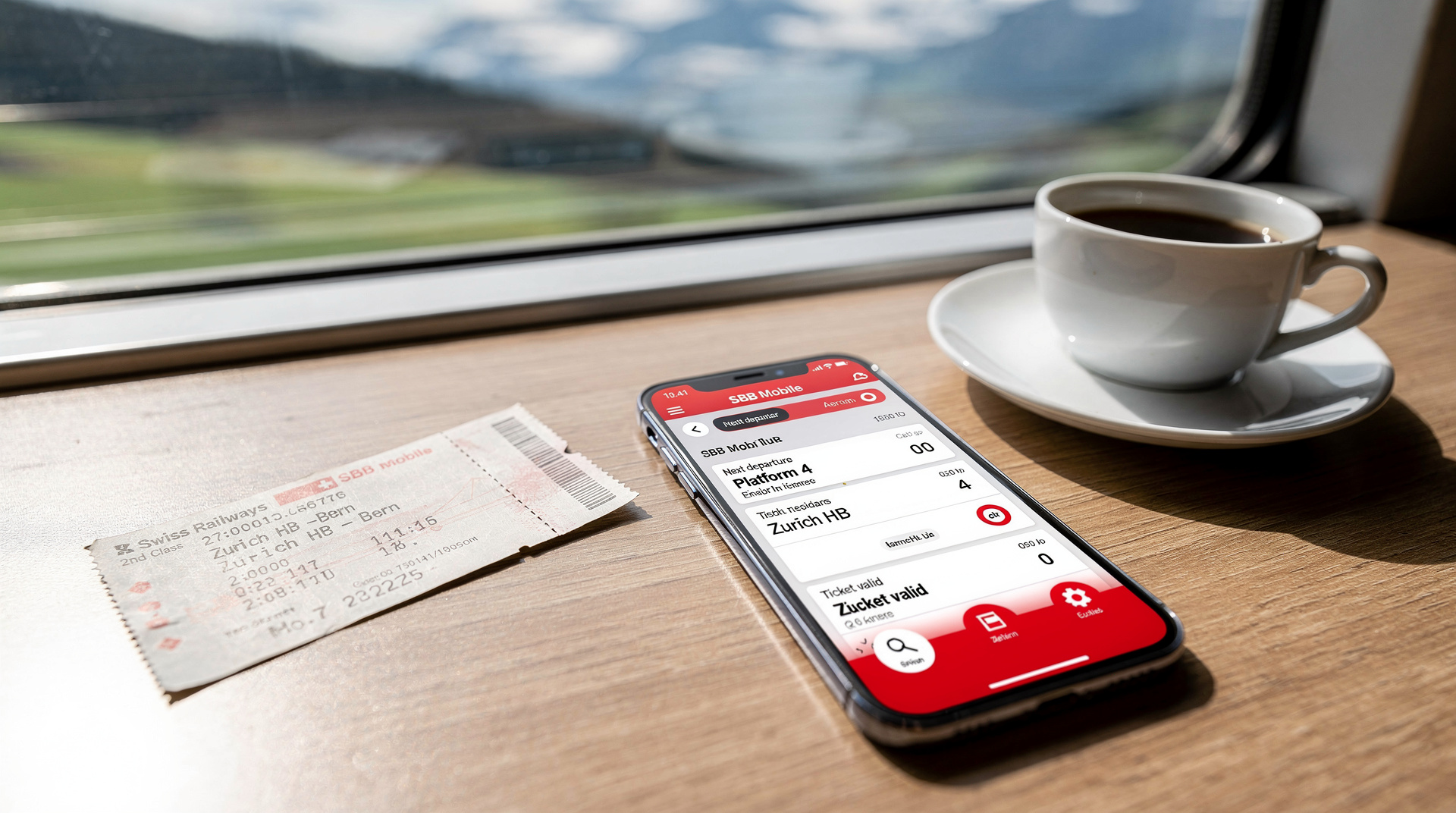
- Download SBB app and plan first few days of journeys
- Arrange eSIM if needed
- Confirm all booking confirmations saved or printed
Day of travel:
- Check weather forecast for mountains
- Activate transport pass on first travel day
- Have confirmation numbers for all bookings accessible offline (screenshots)
Planning Switzerland well takes a few hours of work upfront but pays back enormous dividends in saved money and stress-free days. The country is exceptionally well-set-up for visitors — once you’re there, the infrastructure does most of the work.
For specific money-saving strategies, see our 25 tips to save money in Switzerland and our guide to free things to do in Switzerland.
Seasonal planning considerations
The time of year shapes almost every aspect of your trip. Here’s what changes by season:
Planning a summer trip (June-August): Book accommodation 2-3 months ahead — this cannot be overstated enough for Grindelwald, Zermatt, and Lucerne in July-August. Plan mountain excursions for mornings and build in flexibility for afternoon weather. The best time to visit guide goes deep on summer specifics.
All mountain railways will be operating. The Glacier Express runs daily. Hiking trails at all altitudes are accessible (snowline recedes above 3,000m by July). Lake swimming is excellent. Crowds are heavy at all iconic spots.
Planning an autumn trip (September-October): September is arguably the single best month for most visitors. Accommodation is 10-25% cheaper than August, crowds drop, weather remains excellent, and all mountain services are still running (most close mid-to-late October). Autumn foliage starts in higher valleys from mid-September.
October brings lower prices still, but check specific mountain service closing dates before finalizing your plans — some cable cars and cogwheel railways take their maintenance breaks in October.
Planning a winter trip (December-March): If skiing, book ski resort accommodation 2-4 months ahead, especially for Christmas and February school holidays. If not skiing, focus on cities (Christmas markets in December, museums year-round) and avoid mountain resort towns where prices are high and the infrastructure is focused entirely on skiing.
The January-February period offers excellent city travel with minimal tourists. Zurich and Geneva at their most local and quiet.
Planning a spring trip (April-May): April is the most budget-friendly month but the hardest for mountain experiences — the gap between ski and summer seasons leaves many facilities closed. May improves substantially from mid-month as summer services begin reopening. Wildflower season in higher meadows from late May is spectacular.
Building your itinerary: principles that work
The 2-night minimum rule: Spend at least 2 nights in each base to have a full day there without arrival/departure overhead. Three nights is better. Moving every night exhausts you and wastes travel time.
Pair cities with nature: Switzerland’s most satisfying itineraries alternate between city culture and mountain/nature experiences. Zurich (city) + Lucerne and Pilatus (city + mountain) + Interlaken and Jungfraujoch (mountain) flows naturally.
Use the train network’s logic: Switzerland’s train network radiates from hubs. Zurich, Bern, and Lucerne are the three central hubs. Planning a route that passes through or between these hubs rather than backtracking saves time.
Build in at least one unplanned day: Swiss weather, spontaneous recommendations from fellow travelers, and the discovery of a beautiful place you want to stay longer all benefit from at least one flexible day in a longer trip.
Know your limits: An itinerary that looks compact on paper — Zurich, Lucerne, Interlaken, Zermatt, Geneva in 7 days — requires 4 travel days of logistics. That’s fine, but those travel days don’t have full exploring time. Being honest about what you want to do versus what looks impressive on paper makes for a better trip.
Booking tools and resources
sbb.ch: The Swiss train operator’s website. Use the Journey Planner to check routes, travel times, and indicative ticket prices. Set up a free account to save journeys and purchase tickets in advance.
booking.com / hotels.com / direct hotel websites: For accommodation. Booking directly with hotels often provides the best rate or a free upgrade. Booking platforms are useful for comparison and reviews.
myswitzerland.com: Switzerland Tourism’s official site. Reliable, comprehensive, and unbiased in coverage of destinations.
GetYourGuide: Useful for booking tours, mountain excursions, and transport passes including the Swiss Travel Pass and Half Fare Card.
MeteoSwiss app: Download before you go. Swiss mountain weather forecasting is excellent and specific to altitude zones.
SBB Mobile app: Download before you go. Essential for real-time train information and ticket purchase.
Common planning pitfalls
Over-ambition: “We’ll do Zurich, Lucerne, Interlaken, Grindelwald, Zermatt, Lausanne, and Geneva in 7 days.” This sounds achievable on a map. In practice, you spend half the trip on trains, don’t stay anywhere long enough to explore properly, and arrive home exhausted. Pick fewer bases and spend longer in each.
Ignoring opening dates: Always verify that specific attractions are open on your travel dates. Jungfraujoch is open year-round. Many cable cars are not. The Bernese Oberland tourist office website lists current opening dates for all mountain services in that region.
Leaving accommodation research too late: For July-August, waiting until 3-4 weeks before your trip to book accommodation often means either paying premium last-minute prices or choosing a location that doesn’t suit your itinerary.
Underplanning mountain excursions: Going to Jungfraujoch is an all-day affair. Going to Schilthorn is a full half-day minimum. Factor real time into your plan, not just the train timetable.
Not accounting for altitude effects: Some people experience mild altitude symptoms at Jungfraujoch (3,454m) — headache, slight breathlessness, nausea. This is normal and passes quickly. Ascend slowly, drink water, avoid alcohol on arrival at altitude. People with significant cardiac or respiratory conditions should consult a doctor before very high altitude excursions.
Planning Switzerland takes time upfront but pays back immediately once you’re there. Every connection works, every train is on time, every hotel is where the map says it is. The country is set up to work. Your job is to plan which parts of it to use.
First trip vs return trip: what changes
If this is your first visit, the planning priorities above (dates, budget, bases, transport pass) cover almost everything you need. Returning visitors tend to plan differently: fewer bases, more day trips off the beaten path, and a willingness to skip headline excursions like Jungfraujoch in favour of quieter valleys or a multi-day trek. If you already have a rough sense of what a “classic” Switzerland trip looks like, our 7-day and 10-day itineraries are built for first-timers, while the solo travel guide and multi-country itinerary suit those who want a different structure.
Families planning their first trip should also check the Switzerland with kids guide before finalising bases — some mountain excursions and hotels are far better suited to children than others, and knowing this before booking accommodation saves a lot of rework.
A few more planning questions
Should I book everything before arriving, or figure it out as I go? A hybrid approach works best. Lock in flights, accommodation for peak dates, and any seat-reserved scenic trains in advance. Leave day trips, restaurant choices, and minor excursions flexible — Swiss transport is reliable enough that same-day decisions rarely cause problems outside of July-August and Christmas.
Is it worth hiring a car for part of the trip? For most itineraries focused on cities and headline mountain excursions, no — see the renting a car guide for the specific situations where a car does add value, such as touring rural valleys or the Ticino countryside.