Switzerland travel budget: how much does it really cost?
How much does a trip to Switzerland cost per day?
Budget travelers: CHF 100-150/day. Mid-range: CHF 200-350/day. Comfort/luxury: CHF 400+/day. The biggest costs are accommodation and mountain excursions.
How much does Switzerland really cost?
Switzerland has a well-earned reputation as one of the world’s most expensive countries. But that reputation often scares travelers into either skipping it entirely or arriving without a realistic budget — both of which lead to bad outcomes. The truth is more nuanced: Switzerland is expensive, yes, but it’s also manageable with the right expectations and strategies.
This guide gives you real, specific numbers for 2026 across every budget category. Not vague ranges, but actual prices you’ll encounter so you can plan with confidence.
At a glance
| Budget travel | Around CHF 100-150/day |
| Mid-range travel | Around CHF 200-350/day |
| Comfort/luxury | CHF 400+/day |
| Biggest cost | Accommodation, then mountain excursions |
| Best value pass | Swiss Travel Pass (4+ travel days) or Half Fare Card (fewer, spread-out trips) |
| Cheapest season | November and April (fewer facilities open) |
The Swiss franc (CHF) is roughly on par with the euro and slightly above the US dollar. At the time of writing, 1 CHF is approximately 1.05 USD and 0.95 EUR, though exchange rates fluctuate.
Budget summary by travel style
Before diving into details, here’s the honest daily budget breakdown:
Backpacker/budget (CHF 100-150/day): Dorm bed in a hostel, eating at Coop and Migros, using a Half Fare Card or Swiss Travel Pass, skipping most paid attractions, doing free hiking. This is genuinely possible but requires discipline.
Mid-range (CHF 200-350/day): Private room in a 3-star hotel or guesthouse, one sit-down meal per day, a transport pass, and 1-2 paid activities. This is comfortable and realistic for most independent travelers.
Comfort/luxury (CHF 400-800+/day): 4-5 star hotels, multiple restaurant meals, first-class trains, premium mountain excursions. Switzerland at this level is exceptional but costs can escalate quickly.
Accommodation costs
Accommodation is typically your biggest daily expense in Switzerland.
Hostels: CHF 35-65 per person per night for a dorm bed. Private rooms in hostels run CHF 90-150 per room. Major hostels in Zurich, Lucerne, and Geneva are generally well-maintained.
Budget hotels / guesthouses: CHF 100-180 for a basic double room. Often family-run places in smaller towns or on the outskirts of cities.
3-star hotels: CHF 180-280 per room per night in most cities. Comfortable, clean, with breakfast often included.
4-star hotels: CHF 280-450 per room per night. This is the sweet spot for quality and value in Switzerland.
5-star / luxury: CHF 500-2,000+ per room per night. Switzerland has some genuinely world-class luxury properties, particularly in Zurich, Geneva, St. Moritz, and Gstaad.
Airbnb and apartments: CHF 80-200 per night depending on location and type. Often better value for families or longer stays, especially outside city centers.
Budget tips for accommodation:
- Book well in advance for summer (June-August) and ski season (January-March). Prices spike and availability drops.
- Consider staying one stop outside major cities. A hotel 20 minutes by train from Zurich center can cost 40% less.
- Some mountain resorts include a guest card with free or discounted local transport — this can save CHF 20-40/day.
- Camping is popular and affordable in summer. Campsites cost CHF 20-40 per person per night with spectacular settings.
Food and drink costs
Food is where Swiss prices hit hardest, but there are good strategies.
Supermarkets (Coop and Migros): These two chains are everywhere and are your best friend on a budget. A meal-sized sandwich or wrap: CHF 4-7. Ready-made pasta or salad: CHF 5-9. Yogurt: CHF 1-2. Bread: CHF 2-4. A full day’s food shopping for budget eating: CHF 20-35.
Both Coop and Migros have in-store restaurants and cafeterias (usually called “Coop Restaurant” or “Migros Restaurant”) serving hot meals for CHF 12-18. These are excellent value — hot, fresh, varied menus, and a local institution. Highly recommended for budget travelers.
Bakeries and cafes: Switzerland has excellent bakeries. A pastry: CHF 3-5. Coffee: CHF 4-7 for an espresso or cafe creme. A simple lunch at a bakery cafe: CHF 10-18.
Budget restaurants and ethnic food: Kebab shops, Asian restaurants, and pizzerias offer the best value for restaurant dining. Expect CHF 15-25 for a main course at these spots. Indian and Thai restaurants are particularly good value relative to Swiss standards.
Mid-range restaurants: A typical main course at a mid-range Swiss restaurant: CHF 25-45. Two courses with a drink: CHF 45-70 per person. Traditional Swiss dishes like fondue (CHF 25-35 per person), raclette (similar price), and Zürcher Geschnetzeltes (around CHF 35-40) are the things to eat — and they’re genuinely delicious.
Fine dining: Switzerland has more Michelin-starred restaurants per capita than almost any country. A tasting menu at a top restaurant: CHF 200-400+ per person.
Drinks: A beer at a bar: CHF 6-9. A glass of wine: CHF 7-12. Coffee: CHF 4-7. A bottle of water at a supermarket: CHF 0.50-1. Tap water in Switzerland is perfectly safe and some of the best-tasting in Europe — always refill your bottle.
Daily food budget estimates:
- Budget: CHF 25-45/day (supermarket shopping, bakery lunches)
- Mid-range: CHF 60-100/day (one restaurant meal, bakery or supermarket for others)
- Comfort: CHF 120-200/day (two restaurant meals daily)
Transport costs
Transport is a major budget item but also one where the right pass can save you significantly.
Swiss Travel Pass (second class / first class):
- 3 consecutive days: CHF 254 / CHF 404
- 4 consecutive days: CHF 309 / CHF 497
- 6 consecutive days: CHF 416 / CHF 662
- 8 consecutive days: CHF 468 / CHF 745
- 15 consecutive days: CHF 524 / CHF 787
Per day, this works out to CHF 35-85 for unlimited travel plus museum entry. For travelers using transport intensively, this is excellent value. You can purchase the Swiss Travel Pass online before departure.
Half Fare Card: CHF 150 for one month, then 50% off each ticket. Read the full Half Fare Card guide or our comparison of both options.
Individual tickets (full price, second class):
- Zurich to Lucerne: CHF 26
- Zurich to Interlaken: CHF 60
- Geneva to Bern: CHF 51
- Bern to Zermatt: CHF 64
- Zurich to Lugano: CHF 64
City day passes: In Zurich, a day ticket for zones 10+21 costs CHF 8.80. In Lucerne, a city day ticket costs around CHF 12. These are included with the Swiss Travel Pass; with the Half Fare Card you pay 50% of the face value.
Mountain excursions: These are often the biggest single transport costs. Budget for CHF 84-132 per person per excursion at full price, and about half with the Half Fare Card where it applies.
- Jungfraujoch: from CHF 129.60 return from Grindelwald Terminal (CHF 10 seat reservation compulsory 1 May-31 October, 25% off with the Swiss Travel Pass, half price with the Half Fare Card)
- Mount Pilatus: CHF 42 with Half Fare Card or Swiss Travel Pass (CHF 84 full price; 50% off with the pass, not free)
- Schilthorn: CHF 91.40 from Mürren or CHF 115 from Stechelberg return (CHF 45.70 with the Swiss Travel Pass)
- Matterhorn Glacier Paradise: CHF 120 return (CHF 132 in July-August)
- Rigi: CHF 42 with Half Fare Card (CHF 84 full price), free with Swiss Travel Pass
Car rental: CHF 60-120/day for a basic car, plus fuel (around CHF 2/liter for petrol), parking (CHF 3-6/hour in cities), and motorway vignette (CHF 44/year, mandatory on Swiss motorways). Driving is not recommended for city-based travelers — trains are faster and parking is expensive.
Activities and entrance fees
Free activities: Switzerland has an abundance of free things to do — and this is one area where visitors are often surprised. See our dedicated guide to free things to do in Switzerland.
- Hiking on 65,000+ km of marked trails: free
- Swimming in lakes (many beach areas): free
- Exploring old towns in Bern, Lucerne, and Zurich: free
- Many city parks, viewpoints, and promenades: free
- Most church interiors: free
Museum entry:
- Swiss National Museum, Zurich: CHF 10
- Kunsthaus Zurich: CHF 23
- Swiss Museum of Transport, Lucerne: CHF 30
- Chaplin’s World, Vevey: CHF 30
- Red Cross Museum, Geneva: CHF 15
- Olympic Museum, Lausanne: CHF 20
- Museum of Fine Arts, Bern: CHF 19
All free with the Swiss Travel Pass.
Major paid attractions:
- Rhine Falls boat tour: CHF 8-25 depending on route
- William Tell Express (boat+train): CHF 68+ (half price with card)
- Ballenberg Open Air Museum: CHF 32
- Zurich Zoo: CHF 32
- Gruyeres: free to walk the village, CHF 12 for the castle
Skiing: Ski passes vary by resort. A day ski pass costs approximately:
- Verbier: CHF 85-95
- Zermatt: CHF 85-95
- Grindelwald/Wengen area: CHF 75-80
- Davos/Klosters: CHF 75-80
- Smaller resorts: CHF 40-65
Ski rental (skis, boots, helmet): CHF 40-70/day. Ski school: CHF 50-100 for a half-day group lesson.
Sample daily budgets in detail
Budget traveler: CHF 120/day
- Accommodation: CHF 45 (hostel dorm)
- Breakfast: CHF 5 (supermarket)
- Lunch: CHF 12 (Coop Restaurant)
- Dinner: CHF 15 (supermarket, self-catering)
- Coffee: CHF 5
- Transport: CHF 25 (Half Fare Card amortized, some daily trips)
- Activity: CHF 0-15 (hiking or one small attraction)
- Total: CHF 107-122
Mid-range traveler: CHF 250/day
- Accommodation: CHF 150 (3-star double room, per person half of CHF 220)
- Breakfast: CHF 12 (hotel breakfast or cafe)
- Lunch: CHF 25 (bakery or casual restaurant)
- Dinner: CHF 55 (mid-range restaurant, one glass of wine)
- Transport: CHF 45 (Swiss Travel Pass amortized over 7 days)
- Activity: CHF 30 (one museum or partial mountain excursion)
- Miscellaneous: CHF 15
- Total: CHF 332 — adjust accommodation split for couples
Comfort traveler: CHF 450/day
- Accommodation: CHF 200 (per person share of 4-star double)
- Meals: CHF 150 (two restaurant meals, nice coffee and pastries)
- Transport: CHF 55 (Swiss Travel Pass, first class amortized)
- Mountain excursion: CHF 70 (premium excursion)
- Activities/shopping: CHF 50
- Total: CHF 525
Costs by trip length
3 days in Switzerland: Budget: CHF 360-500. Mid-range: CHF 750-1,200. Transport: Half Fare Card (CHF 150) or spot tickets. Focus on one region.
7 days in Switzerland: Budget: CHF 840-1,200. Mid-range: CHF 1,750-2,800. Transport: 6-day Swiss Travel Pass (CHF 416) or Half Fare Card (CHF 150). This is the most common trip length.
14 days in Switzerland: Budget: CHF 1,600-2,400. Mid-range: CHF 3,500-5,600. Transport: 15-day Swiss Travel Pass (CHF 524) or two weeks of Half Fare Card discounts.
Where Switzerland is worth spending more
Not everything in Switzerland is overpriced relative to the quality. Some things genuinely represent good value even at Swiss prices:
Public transport — The system is so reliable, clean, and comprehensive that the cost is justified. Trains run on time. Connections work. It’s stress-free travel.
Mountain excursions — Yes, Jungfraujoch at CHF 129.60 or more seems outrageous. But there is nowhere else on earth where a non-mountaineer can stand at 3,454 meters on a permanent snow field, have a meal in a restaurant carved into a cliff, and be back at sea level in two hours. The price reflects a unique experience.
Fondue and raclette — CHF 25-35 for a pot of fondue shared between two people is genuinely good value for a memorable meal.
Hiking — Free, and world-class. Switzerland’s trail network is exceptionally well-maintained with clear signage. Some of the best value anywhere.
Where to cut costs
Eat like a local: The biggest saving is at Coop and Migros. Swiss people eat at these supermarket cafeterias regularly — it’s not budget shame, it’s just practical.
Choose the right pass: We can’t overstate the importance of this. See the Swiss Travel Pass vs Half Fare Card comparison.
Stay outside city centers: A hotel in Olten (40 min from Zurich), Spiez (20 min from Interlaken), or Kriens (10 min from Lucerne) can be 30-50% cheaper.
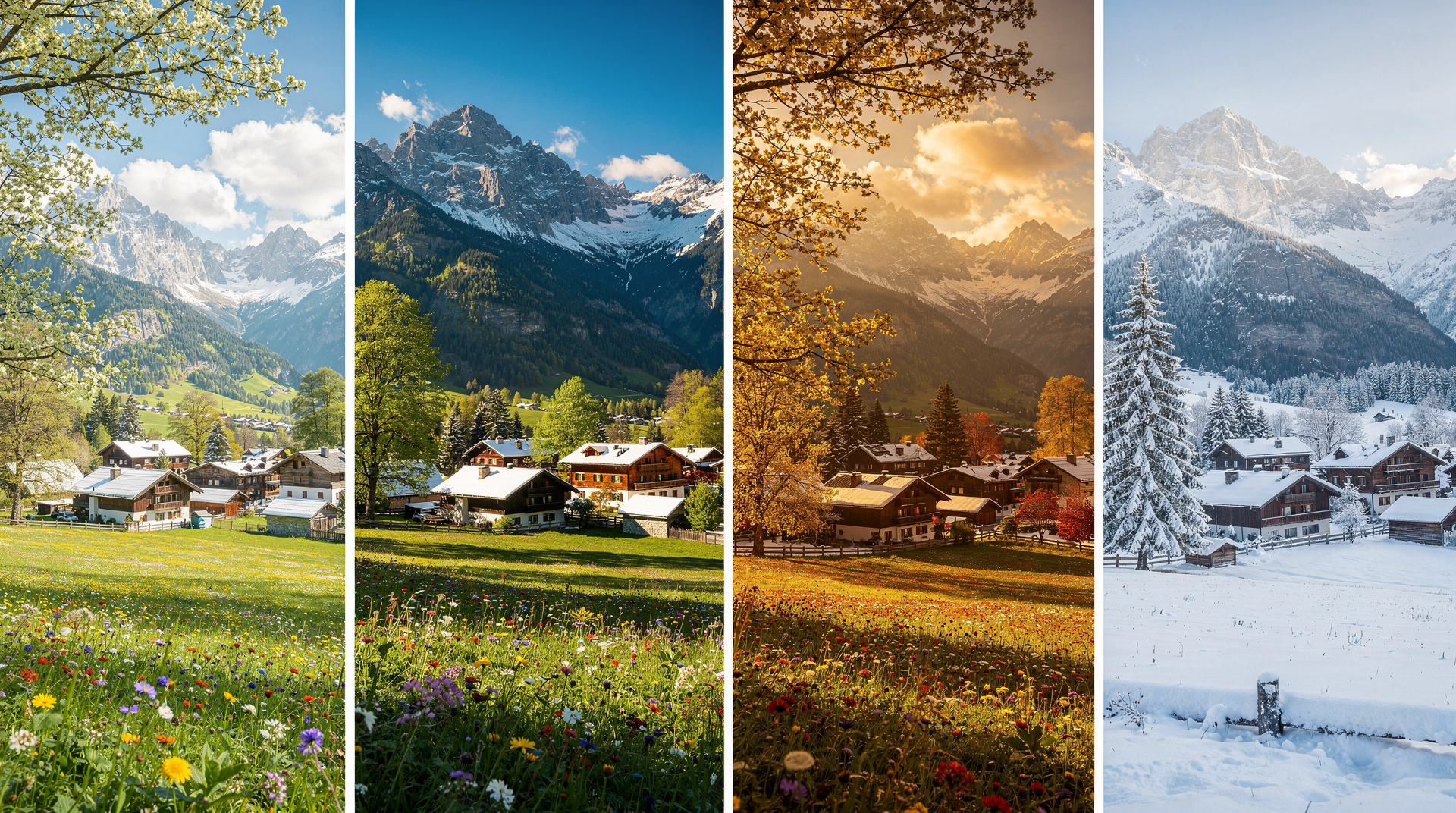
Visit in shoulder season: Late September and October, or May and early June, offer lower prices on accommodation and fewer crowds. Autumn in Interlaken and the Bernese Oberland is particularly beautiful.
Avoid tourist restaurants in top locations: The restaurants immediately next to the Jet d’Eau in Geneva or on the waterfront in Lucerne charge a significant premium. Walk two streets back for the same food at 30% less.
Free mountain alternatives: Instead of Jungfraujoch, consider Schynige Platte, Niederhorn, or First Mountain for beautiful mountain views at lower cost. Instead of the full Pilatus golden round trip, take just the gondola up and walk down.
For 25 specific money-saving strategies, see our full guide to saving money in Switzerland.
Currency and payments
Switzerland uses the Swiss franc (CHF). Cards are accepted almost everywhere — Visa and Mastercard are universal. American Express is less commonly accepted.
ATMs are abundant and generally have good exchange rates. Avoid currency exchange booths at airports, which charge high fees.
Some restaurants, particularly in smaller villages and mountain huts, are cash-only. Keeping CHF 50-100 in cash for emergencies is wise.
Tipping is not obligatory in Switzerland. Rounding up to the nearest franc or leaving 5-10% for excellent service is appreciated but never expected.
See our complete currency and tipping guide for more detail.
Planning your Switzerland budget
The best approach is to plan your itinerary first, then calculate costs:
- Decide how many days you’re visiting and which regions
- List the mountain excursions and activities you definitely want
- Calculate transport costs with your chosen pass
- Budget accommodation based on your comfort level
- Add food costs based on your eating style
- Add 10-15% buffer for unexpected costs
Switzerland will cost what you let it cost. With planning and the right strategies, a week here can be done for CHF 1,200-1,500 per person. Without planning, the same week can easily cost twice that.
For step-by-step planning help, see our guide to planning a trip to Switzerland and our first-time visitors’ guide.
Budget by region
Not all parts of Switzerland cost the same. Understanding regional price differences helps with planning:
Zurich: The most expensive city in Switzerland (and often ranked the most expensive in the world). Hotel prices are 20-30% higher than the national average. Restaurant prices similarly elevated. Worth visiting but budget accordingly.
Geneva: The second most expensive city. International character drives prices up, particularly for accommodation near the old town and lake. French influence means excellent restaurant quality, but at a premium.
Lucerne: Popular tourist city with prices to match. More moderate than Zurich or Geneva, but budget for tourist-location pricing at restaurants near the Kapellbrücke and lakefront.
Interlaken: Mountain resort pricing. Accommodation is expensive for the quality — you’re paying for location rather than luxury. Budget properties fill fast in summer.
Zermatt: One of Switzerland’s most expensive destinations. Car-free status and prestige location drive prices to Zurich levels or higher. A cheese fondue in Zermatt can easily cost CHF 45+ per person. Plan for this.
Ticino (Lugano, Locarno): Slightly more affordable than northern Switzerland, particularly for food. The Italian influence brings genuinely excellent pasta and pizza at prices that feel reasonable by Swiss standards.
Smaller towns and villages: Often 20-40% cheaper than major tourist cities for equivalent accommodation. Brienz, Thun, Spiez, Murten — all offer good bases at lower costs.
Unexpected costs to plan for
Luggage storage: CHF 5-9/day for a locker at train stations. Budget for this if you’re arriving early or departing late.
Tourist tax (Kurtaxe): Some municipalities add a nightly tourist tax of CHF 2-6 per person per night, sometimes not included in listed hotel prices. Ask when booking.
Motorway vignette: If renting a car, the annual motorway sticker costs CHF 44. Mandatory.
Scenic train seat reservations: Glacier Express seat reservations cost CHF 54 per person in first and second class on top of the base fare (Excellence Class is CHF 590 all-inclusive). Often overlooked when budgeting for the pass.
Mountain weather gear: If you arrive without appropriate layers, you’ll either buy them in Switzerland (expensive) or skip mountain excursions (a shame). Pack from home.
Souvenirs: Swiss souvenirs have a quality range. Cheap chocolates from supermarkets: CHF 3-8. Quality Swiss Army knives: CHF 30-150. Good Swiss chocolate from specialty shops: CHF 8-25 per bar. A Swatch watch: CHF 80-200. A Swiss mechanical watch from a proper brand: CHF 500 to infinity.
Cost comparison: Switzerland vs. neighboring countries
For context, Switzerland is generally 40-80% more expensive than France, Germany, Austria, and northern Italy. This is not a reason to skip it — the unique experiences are worth the price — but it’s useful for mental calibration.
Where Switzerland offers competitive value:
- Public transport (world-class system at competitive per-km costs)
- Hiking (free, world-class trails)
- Lake swimming (free)
- Swiss cheese and fondue in restaurants (actually reasonable given quality)
Where Switzerland is clearly more expensive:
- Hotel accommodation (20-40% above EU average)
- Restaurant meals (30-60% above EU average)
- Bar drinks (CHF 6-9 beer vs. EUR 3-5 in Germany/France)
Many visitors find that Switzerland’s higher costs come with higher quality. Transport is genuinely better. Infrastructure is excellent. Customer service is professional. These are real differences, not just marketing.
Tipping and service charges
Tipping is not obligatory in Switzerland, which saves travelers who come from tipping cultures a significant amount of money. Swiss service workers receive proper wages. Rounding up to the nearest franc or leaving 5-10% for exceptional service is appreciated. Nothing more is expected.
See our currency and tipping guide for full details.
The budget verdict
Switzerland is expensive but not impossible. With realistic expectations and smart strategies — the right transport pass, supermarket meals, shoulder-season travel, and a mix of paid and free activities — a week in Switzerland can cost CHF 1,000-1,500 per person. Without planning, that same week can cost CHF 2,500+.
The investment of an hour reading this guide and our 25 tips to save money in Switzerland before you book can realistically save you CHF 300-500 on a typical 7-day trip.
Frequently asked questions about costs in Switzerland
Is Switzerland really that expensive?
Yes, Switzerland is consistently one of the most expensive countries in the world for travellers. Restaurant meals cost 30-60% more than in neighbouring France, Germany, or Italy, and hotel prices are 20-40% above the EU average. However, many of the best experiences — hiking, lake swimming, exploring old towns — are completely free, and smart strategies like eating at Coop and Migros supermarket restaurants can reduce food costs significantly.
What is the cheapest way to travel around Switzerland?
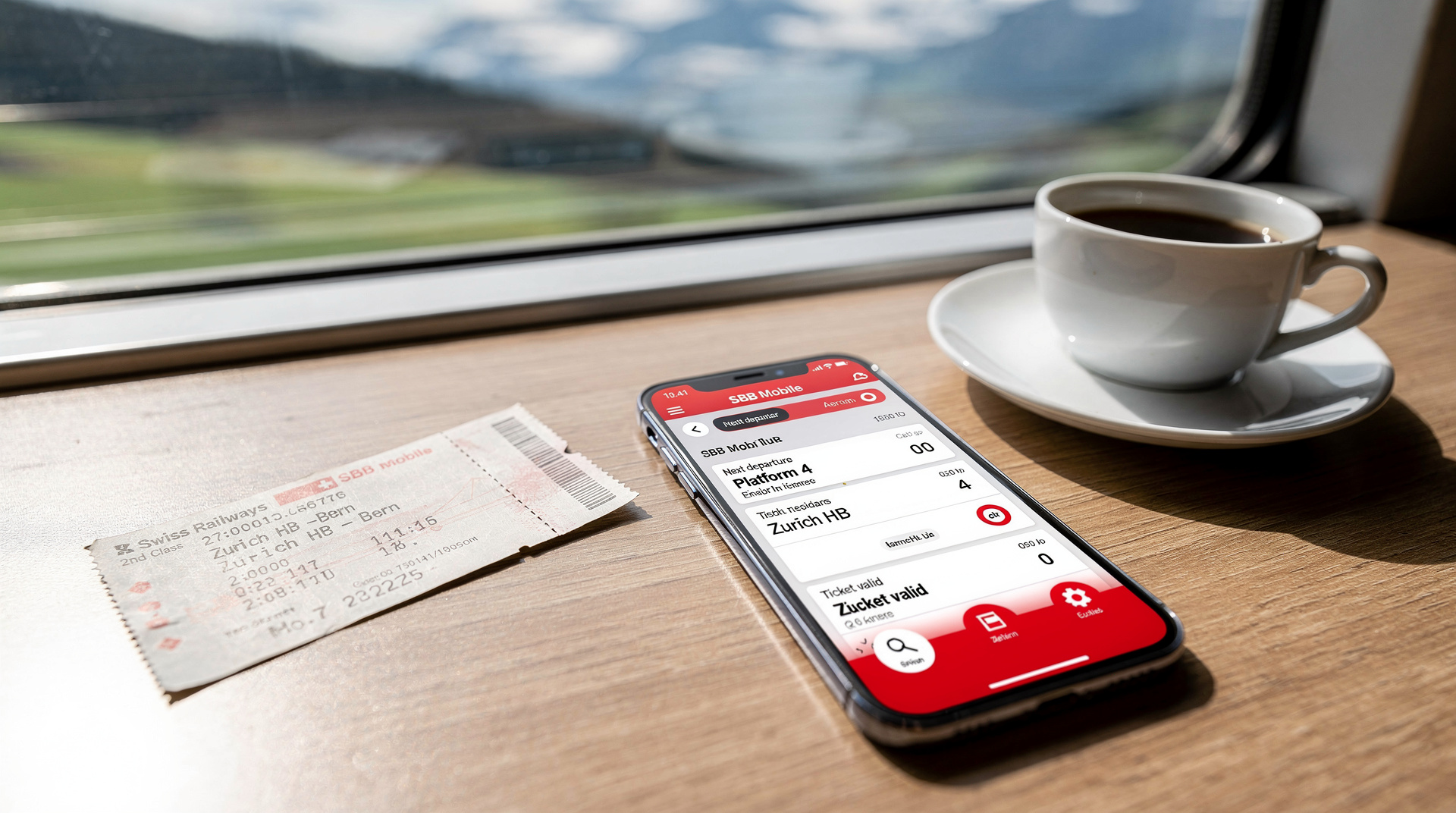
The cheapest way depends on your trip length. For 4+ travel days with regular movement, the Swiss Travel Pass offers the best per-day value at CHF 35-85 for unlimited trains, buses, boats, and 500+ museums. For shorter trips or fewer journeys, the Half Fare Card (CHF 150 for one month) halves all ticket prices. Buying individual Supersaver tickets in advance on the SBB app can also yield significant discounts on specific routes.
Can you visit Switzerland on a budget?
Yes, a budget of CHF 100-150 per day is genuinely achievable with discipline. This means hostel dorms (CHF 35-65), meals from Coop and Migros supermarkets and their in-store restaurants (CHF 20-35 per day for all meals), a Half Fare Card for transport, and focusing on free activities like hiking Switzerland’s 65,000+ kilometres of marked trails and swimming in lakes.
How much does food cost in Switzerland?
A meal at a mid-range restaurant costs CHF 25-45 for a main course, while a coffee runs CHF 4-7. The budget-friendly alternative is supermarket eating: Coop and Migros sell sandwiches for CHF 4-7, ready meals for CHF 5-9, and their in-store restaurants serve hot meals for CHF 12-18. A full day of budget eating costs CHF 25-45; mid-range eating with one restaurant meal costs CHF 60-100.
Are credit cards widely accepted in Switzerland?
Visa and Mastercard are accepted almost everywhere in Switzerland, including most shops, restaurants, and transport. American Express is less commonly accepted. Some mountain huts, smaller village restaurants, and rural areas may be cash-only, so keeping CHF 50-100 in cash is wise. ATMs are abundant and offer good exchange rates.
What is the cheapest time to visit Switzerland?
November and April offer the lowest accommodation prices and fewest crowds, though many mountain facilities are closed during these months. For the best combination of lower prices and full access to attractions, visit in late May, early June, or September — accommodation is 10-25% cheaper than peak summer while most mountain services are fully operational.
How much does a week in Switzerland cost?
A realistic budget for 7 days per person: budget travellers can manage CHF 840-1,200; mid-range travellers should plan for CHF 1,750-2,800; comfort travellers will spend CHF 3,000-5,000+. The biggest variables are accommodation (CHF 35-400+ per night) and mountain excursions (from CHF 42 each with a Half Fare Card).
Is it cheaper to book mountain excursions and trains in advance?
Sometimes. Scenic train seat reservations (like the Glacier Express) don’t get cheaper by booking early, but they do sell out in summer, so early booking protects your dates rather than your wallet. SBB Supersaver tickets, by contrast, are genuinely cheaper the earlier you buy them, sometimes 30-50% below the standard fare, but they lock you into a specific train. For passes like the Swiss Travel Pass or Half Fare Card, the price is fixed regardless of when you buy, so there’s no rush other than guaranteeing stock during peak season.
Should I buy a multi-day pass or pay as I go?
It depends on how much ground you plan to cover. As a rule of thumb, if you’re taking more than two or three significant train journeys in a week, or visiting several mountain excursions, a Swiss Travel Pass usually works out cheaper than paying per ticket, on top of the convenience of free museum entry. If your trip is based in one or two cities with limited day trips, the Half Fare Card or even single tickets can be more cost-effective — run the numbers with our Swiss Travel Pass vs Half Fare Card comparison before committing.
How costs stack up: quick comparison table
| Category | Budget | Mid-range | Comfort |
|---|---|---|---|
| Accommodation/night | CHF 35-65 (dorm) | CHF 180-280 | CHF 280-450+ |
| Daily food | CHF 25-45 | CHF 60-100 | CHF 120-200 |
| Daily transport | CHF 15-25 (Half Fare amortized) | CHF 35-55 (Travel Pass amortized) | CHF 55-85 (first class) |
| One mountain excursion | CHF 42-51 (half price) | CHF 84-102 (full price) | CHF 120-132+ (full price, premium) |
| Typical daily total | CHF 100-150 | CHF 200-350 | CHF 400-800+ |