Switzerland weather and climate guide
What is the weather like in Switzerland?
Summers are warm (20-30C in valleys) with afternoon thunderstorms. Winters are cold with snow above 1,000m. Mountain weather changes fast — always pack layers. The south (Ticino) is warmer and sunnier.
Switzerland weather: what to expect and when
| At a glance | Details |
|---|---|
| Where it varies most | Plateau (Zurich/Bern/Basel), Alps, Ticino, Valais each have distinct climates |
| Typical summer temps | Around 20-30C in valleys, 10-20C at mid-altitude resorts |
| Typical winter temps | Around -2 to 7C on the plateau, -15 to -5C at ski altitude |
| Key resource | MeteoSwiss app for mountain-specific forecasts and thunderstorm warnings |
| Best time overall | June and September for a balance of good weather and manageable crowds |
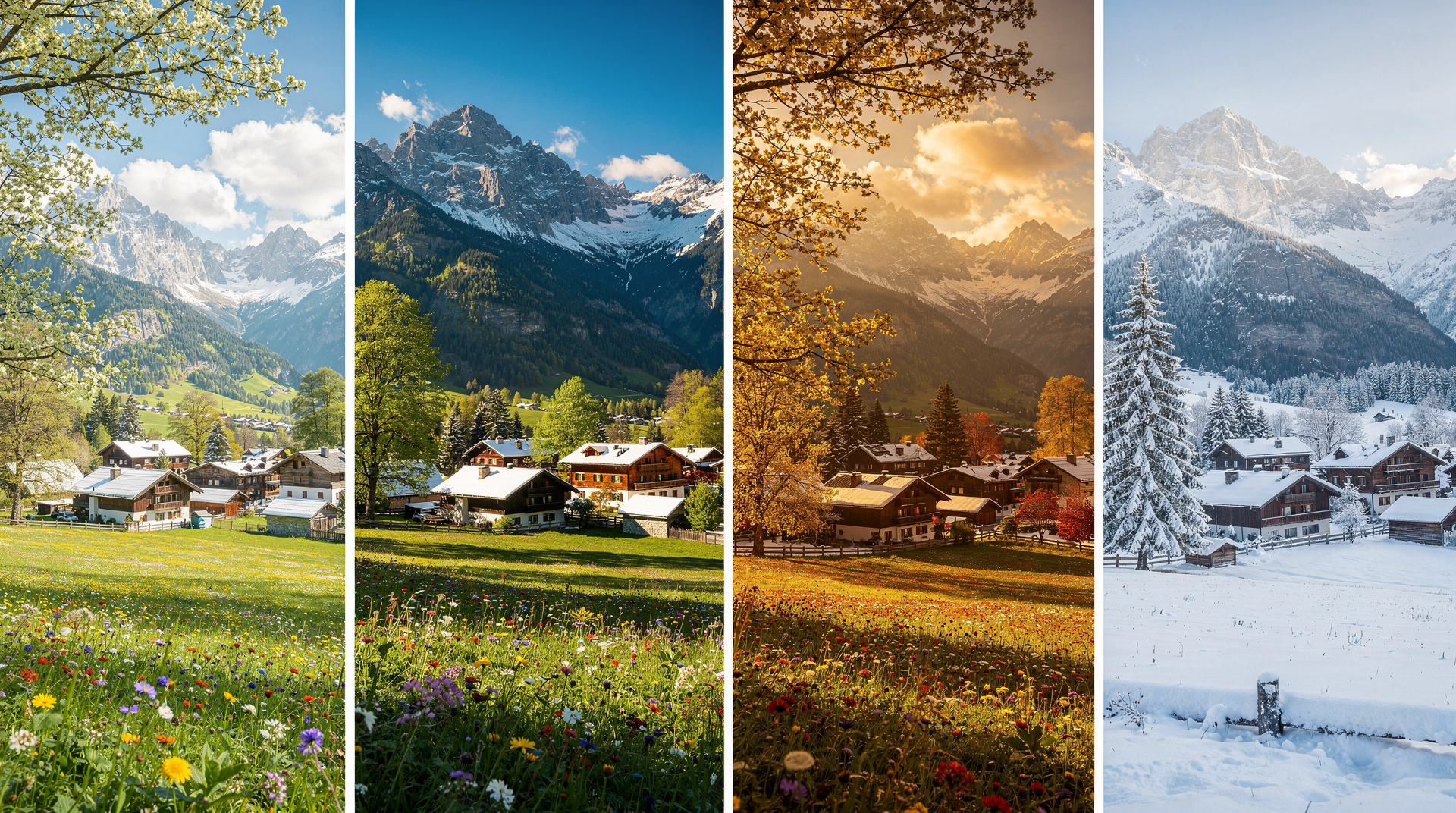
Switzerland’s weather is driven by one thing more than anything else: the Alps. These mountains create multiple distinct climate zones within a country smaller than New England. Understanding Swiss weather isn’t just about looking up average temperatures — it’s about understanding how altitude, aspect, and regional geography combine to produce wildly different conditions within a few kilometers.
This guide covers weather by season, by region, and by altitude — with specific temperatures and practical packing advice.
Switzerland’s four climate zones
The Swiss Plateau (Mittelland)
The plateau between the Jura mountains to the northwest and the Alps to the south is where most Swiss people live. Cities like Zurich, Bern, and Basel sit here. Climate characteristics:
- Warm summers: 22-30C June-August
- Cold winters: -2 to 7C December-February
- Prone to “Hochnebel” (high fog): in autumn and winter, cold air settles in the valleys below about 800m, creating persistent grey fog. Above it, the sky is clear and blue.
- Moderate rainfall throughout the year: no strong dry season
The Alpine region
The Alps themselves, including mountain resorts like Zermatt, Grindelwald, and Verbier. Climate characteristics:
- Cool summers at altitude: 10-20C at 1,500-2,000m; near freezing above 3,000m
- Heavy snowfall in winter: mountain valleys get 3-6 meters of snow annually at resort altitude
- Very sunny in winter above the fog layer — many mountain resorts average 300+ sunny days per year
- Afternoon thunderstorms are a near-daily occurrence in summer
- Weather changes rapidly and dramatically
Ticino (Italian Switzerland)
The canton south of the Alpine divide has a Mediterranean-influenced climate. Lugano and the Ticino lakes feel more like northern Italy than Switzerland. Climate characteristics:
- Hot summers: 28-35C in the valleys, occasionally pushing 38C
- Mild winters: 5-12C in valley towns
- Very sunny compared to northern Switzerland
- Storms can be intense but pass quickly
- Palms and Mediterranean plants grow in the lower areas — a visual surprise for visitors from northern Switzerland
Valais
The Rhone Valley in the southwest, running from Brig toward the Rhone delta. Includes Zermatt and Saas-Fee. Climate characteristics:
- Continental and arid — sheltered from moist Atlantic air by surrounding mountains
- Very sunny, with some areas receiving over 300 days of sun per year
- Hot summers in the valley floor (28-35C in Sion)
- Snow reliable in the high resorts throughout winter
- Some of the clearest mountain views in Switzerland due to low humidity
Weather by season
Spring (March-May)
March: Still cold in most of Switzerland. The plateau sees temperatures creeping toward 10-15C by late March, but it feels like early spring with variable conditions. Alpine resorts still in full ski season. Hochnebel fog persists in valleys through much of the month.
April: Transitional month. Temperatures reach 10-18C on the plateau. Spring flowers appear, particularly daffodils and crocuses at lower altitudes. Mountain roads begin reopening as snow levels rise. Many mountain railways and cable cars still closed for their shoulder-season maintenance.
May: Switzerland wakes up. Temperatures reach 15-22C in cities. Alpine wildflowers begin appearing in meadows, particularly from mid-month. Some mountain services reopen in late May (dates vary by snowpack). The risk of cold snaps persists at altitude. Afternoon thunderstorms begin appearing more regularly.
What to pack for spring: Light layers, a waterproof jacket, comfortable walking shoes. If planning mountain excursions, add a warm fleece as conditions above 2,000m remain cold.
Summer (June-August)
June: Peak conditions for hiking and mountain excursions. Temperatures: 22-28C in valley cities, 15-22C at mid-altitude resorts. Most mountain services now open. The alpine wildflower meadows (particularly in the Bernese Oberland and Graubünden) are at their most spectacular in late June and early July.
Weather pattern: Summer days in Switzerland follow a remarkably consistent pattern. Mornings are usually clear with excellent visibility. Clouds build through late morning. By 2-4pm, thunderstorms develop in the mountains, often bringing heavy rain for 1-3 hours before clearing again in the evening.
Practical implication: Start mountain excursions and hikes early (by 9am at the latest), aim to be at the highest point by noon, and begin descending by 1-2pm to be below exposed ridges before storms arrive.
July-August: Peak of summer. Cities (especially Zurich, Geneva, Basel) can be hot and humid, 25-33C. Mountain resorts are comfortable at 18-25C during the day. The thunderstorm pattern continues. UV radiation at altitude is very high — sunscreen essential even on cloudy days.
What to pack for summer:
- Light clothes for warm city days
- Layers for mountain excursions (temperature drops 6-7C per 1,000m of altitude)
- Waterproof jacket (for afternoon thunderstorms)
- Warm mid-layer (fleece or light down jacket) for mountain summits even in July
- Strong sunscreen (SPF 50 minimum)
- Sunglasses rated for mountain use
- Swimwear (lake temperatures peak in August)
Autumn (September-October)
September: Many travelers’ favorite month. Temperatures remain warm (18-25C in valleys), mountain services are still fully operational, crowds thin dramatically after the first week, and prices drop. Alpine meadows develop autumn colours from mid-month. Visibility often exceptional. The afternoon thunderstorm pattern becomes less frequent.
October: Full autumn. Valley temperatures: 10-18C. Higher areas see first snowfall, often spectacular with white-capped peaks against golden valley trees. Many cable cars and mountain railways begin their annual closure for maintenance and/or winter preparation — typically between mid-October and late November. Always check specific facility operating dates before planning.
What to pack for autumn:
- Mid-weight layers for daytime activity
- Warm jacket for evenings (it cools quickly after sunset)
- Waterproof jacket
- Warm footwear for higher altitudes from October
Winter (November-March)
November: The most difficult month for visitors wanting outdoor experiences. Most mountain facilities between winter and summer operations are closed. Valley weather: grey, cold (3-10C), often foggy. The Hochnebel high fog is at its most persistent. Some Christmas markets begin in late November.
December: Ski resorts open from approximately December 5-15 at most major resorts. Christmas markets throughout the country (through December 24). Weather varies: cold in cities (0-7C), snowy in mountain resorts.
January-February: Peak ski season. Mountain resorts: -5 to -15C with heavy snowfall. Cities: -2 to 5C. Very sunny above the fog layer. While uncomfortable for non-skiing visitors to mountain resorts, this is ideal weather for skiing and snowboarding.
March: Late ski season with better weather. Spring skiing conditions — sunny days, softer snow, often the best combination of conditions and lower prices (after mid-March).
What to pack for winter:
- Warm base layers (thermal)
- Insulating mid-layer (down jacket or heavy fleece)
- Waterproof outer layer
- Hat, gloves, scarf
- Waterproof, insulated boots if visiting mountains or small towns where roads are snowy
- Ski gear if skiing (or rent at resort — comparable quality and cost)
Temperature by altitude
Understanding altitude’s effect on temperature is essential for mountain planning. For every 1,000 meters you ascend, temperature drops approximately 6-7C. This means:
| Altitude | Summer day temp | Winter temp |
|---|---|---|
| 300-500m (cities) | 25-30C | 0-5C |
| 800-1,200m (lower resorts) | 18-23C | -5 to 0C |
| 1,500-2,000m (ski villages) | 12-18C | -8 to -3C |
| 2,500-3,000m (mountain stations) | 5-12C | -15 to -8C |
| 3,500m (Jungfraujoch) | 0-5C in summer | -20 to -10C |
At Jungfraujoch (3,454m), it can be -5C with wind chill in August while it’s 28C in Interlaken valley below. This is not an exaggeration — it’s the actual weather difference. Always pack for both. If the forecast looks clear, you can book a Jungfraujoch round-trip railway ticket from Grindelwald and choose the day once you have checked the cloud base.
Regional climate details
Zurich region
The city sits at about 408m altitude. Summers: 22-28C average, with heat waves occasionally pushing 33-35C. Winters: -1 to 4C, with a few weeks of proper snow most years. The lake moderates extreme temperatures. Hochnebel fog typical from October through February.
Bernese Oberland (Interlaken, Grindelwald)
Valley temperatures similar to Zurich (20-28C summer). The mountains are dramatically visible — on clear days, the Eiger north face dominates the view from Interlaken. Foehn wind events in spring and autumn can produce sudden warm, dry conditions. More precipitation than Valais.
Valais (Zermatt, Saas-Fee, Verbier)
Zermatt sits in a high valley at 1,608m altitude. Summer temperatures: 15-22C. Famous for exceptional sunshine — the Matterhorn is often visible on 300+ days per year. The mountain climate is drier and clearer than northern Switzerland due to Alpine protection from moist Atlantic air.
Lake Geneva region
Geneva at 374m elevation has a climate influenced by the lake and the Jura mountains. Slightly warmer summers than Zurich. Bise wind (cold northeast wind) a regular feature in winter and spring, making mild temperatures feel colder. Lavaux vineyards east of Lausanne have a particularly sunny microclimate.
Ticino (Lugano, Locarno, Ascona)
The warmest and most Mediterranean part of Switzerland. Lugano averages over 2,200 hours of sunshine per year (compared to 1,600-1,700 in Zurich). Summers: 28-35C. Winters: 5-12C (occasionally warm enough for outdoor dining in sheltered spots). The palm trees along the lakefront are real, not decorative gestures.
What to wear: the practical guide
Universal rule for Switzerland: Always bring one more layer than you think you need.
For cities in summer: T-shirts, light trousers or shorts, comfortable walking shoes. Bring a light waterproof layer — afternoon showers can arrive quickly even in city centers.
For mountain excursions in summer: Light base layer, insulating mid-layer (fleece or light down), waterproof outer layer, comfortable boots or hiking shoes with ankle support. Strong sunscreen. Sunglasses. Gloves if going above 3,000m.
For hiking in autumn: Add heavier insulating layers and be prepared for wet and muddy trails in October.
For skiing in winter: If renting ski gear (recommended for most visitors), ensure you have thermal base layers, ski socks, and a good outer layer. Helmets are strongly recommended and available for rental.
Always in Switzerland:
- Good waterproof jacket (not just water-resistant)
- Comfortable walking shoes — cobblestones, mountain paths, and rainy days make grip and waterproofing important
- Sunscreen (mountain UV is intense even in cloud)
- A reusable water bottle — tap water is excellent everywhere
Apps and resources for checking Swiss weather
MeteoSwiss: The official Swiss meteorological service. Excellent app and website with mountain-specific forecasts, UV index, thunderstorm warnings, and snow conditions. Free.
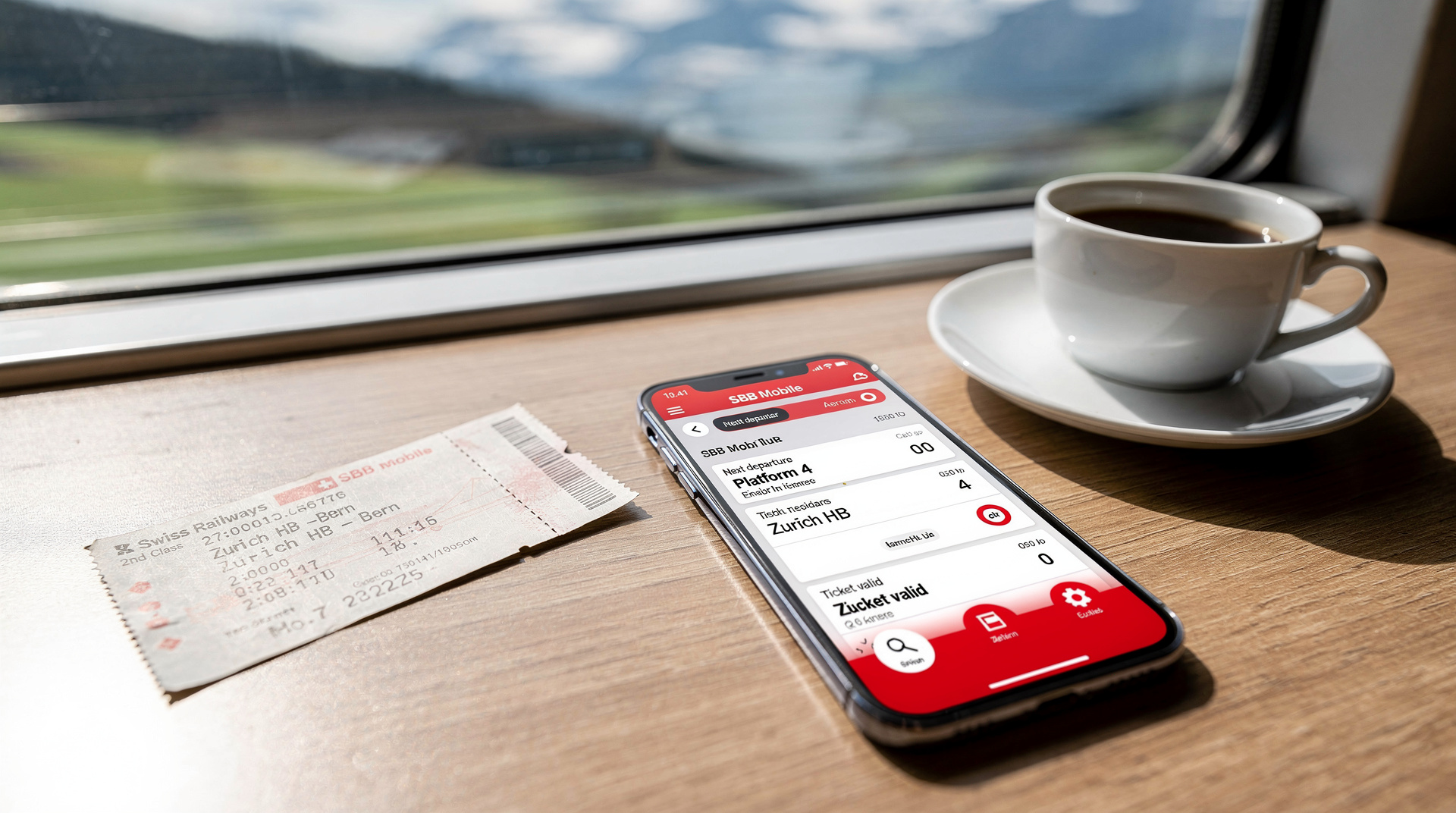
SBB app: Includes weather for stations and route conditions that might affect services.
Bergfex: Detailed mountain weather forecasting including snow reports and hiking condition ratings.
Windy.com: Good for visualizing weather systems across the Alps.
For planning when to visit based on weather and your activities, read our best time to visit Switzerland guide. For practical trip planning including what activities are available in each season, see our step-by-step planning guide.
Weather-related travel decisions
Swiss weather directly determines what’s possible on any given day. Here’s how to make weather-smart decisions:
Choosing your mountain excursion day
When staying at a base like Interlaken or Lucerne for multiple days, choose your mountain excursion day based on the forecast rather than a pre-fixed plan. A weather forecast showing clear morning skies for one day and cloud cover for another means you hike on the clear day and visit a museum or do valley activities on the cloudy one. A flexible multi-day pass such as the Swiss Travel Pass for unlimited train, bus and boat travel makes it easy to swap days without rebooking individual tickets.
The MeteoSwiss app gives mountain-specific forecasts. Look for:
- “CAPE” (Convective Available Potential Energy) — a measure of thunderstorm potential. Low CAPE = safe for extended mountain days.
- Cloud base altitude — if cloud base is above your summit altitude, expect clear views.
- Wind speed at summit altitude — strong winds at high altitude are dangerous on exposed ridges and cable cars sometimes close.
The fog layer advantage
The Hochnebel (high fog) phenomenon in autumn and winter creates an interesting opportunity. When valleys are grey and foggy below 800-1,000m, the areas above the fog layer are in brilliant sunshine with views over an unbroken white sea. Taking any mountain transport above the fog line on what looks like a grey day can result in some of the most memorable views in Switzerland — bright sun, blue sky, white ocean of cloud below, and peaks rising above it.
The Uetliberg in Zurich, Gurten in Bern, and Rigi near Lucerne all rise above typical fog levels. A “bad” day in Zurich can be spectacular from Rigi’s summit.
When to cancel a mountain excursion
Cancel or postpone if:
- The summit is forecast to be in cloud all day (views will be zero)
- Thunderstorms are forecast for before 2pm (risk on exposed peaks)
- Winds above 50 km/h are forecast at summit altitude (some cable cars close in high winds)
- It’s raining heavily in the valley (this usually means storms at altitude)
Don’t cancel if:
- It’s cool and overcast but no rain forecast (often perfectly fine for hiking)
- There’s morning mist that’s expected to clear (check the hourly forecast)
- There’s cloud cover but no precipitation (visibility may be good and crowds smaller)
Packing for specific Swiss activities
Mountain hiking in summer
The minimum kit for a comfortable mountain day hike:
- Lightweight waterproof jacket (not just water-resistant — actual waterproof with taped seams)
- Insulating mid-layer (thin fleece or light down)
- Moisture-wicking base layer
- Hiking shoes or boots with ankle support
- Sunscreen SPF 50 (mountain UV is 30-40% stronger than at sea level)
- Sunglasses rated UV400 or better
- Hat (sun protection and warmth above treeline)
- Gloves (for above 2,500m even in summer)
- 1-2 liters water (refill from mountain springs/streams above human habitation)
- Snacks and emergency layer in a daypack
- Charged phone with offline maps downloaded
Skiing in winter
If you’re renting ski equipment (recommended for most visitors — quality is excellent and rental is cheaper than transporting your own):
- Thermal base layers (top and bottom): essential
- Ski socks (ankle-length, merino or synthetic): bring from home, they’re expensive in resort shops
- Helmet: always wear one. Rental available at all resorts for CHF 10-15/day.
- Goggles: essential in snowfall. Rental with helmet is standard.
- Neck gaiter: warmer and more versatile than a scarf
- Sun protection: glacier and snow UV is extreme — sunscreen and lip balm with SPF essential
Urban sightseeing in spring/autumn
For Zurich, Geneva, or Bern city visits in transitional seasons:
- Light to medium weight jacket (10-18C is the typical spring/autumn range)
- Comfortable walking shoes (cobblestones are hard on thin-soled shoes)
- Light scarf (useful for morning/evening temperature drops)
- One packable layer (you can compress in your bag when warm)
Extreme weather events to be aware of
Foehn wind: The Foehn (German: Föhn) is a warm, dry wind that occurs on the northern Alpine slopes when pressure systems push air over the mountains from the south. Characteristics:
- Sudden temperature rises of 10-20C within hours
- Very dry air and exceptional clarity (distant mountains appear impossibly close)
- Can melt snow rapidly
- Associated with headaches and irritability (“Foehnkrankheit”) in some people
- Common in spring and autumn
During a Foehn event, wildfire risk in dry areas increases. Avalanche risk in mountain snow zones is elevated.
Thunderstorms: Swiss Alpine thunderstorms can be extremely intense — lightning density in the Alps is among the highest in Europe. On exposed ridges and summits, these are genuinely dangerous. The rule: be off exposed terrain before noon in summer.
Fog and black ice: In winter, Hochnebel combined with freezing temperatures creates black ice on roads and paths. If driving or walking in winter lowland areas, appropriate footwear and cautious speed matter.
Heatwaves: In recent years, Switzerland’s lowlands have experienced increasingly severe heat waves, with temperatures exceeding 35-38C in cities. This is uncomfortable for touring. Plan outdoor city activities for mornings and evenings. Swimming in lakes becomes the primary afternoon activity. Mountain areas are dramatically cooler.
Weather resources in detail
MeteoSwiss (meteoswiss.admin.ch and app): Switzerland’s official meteorological service. The most reliable source for Swiss-specific forecasts, with specialized mountain weather models, thunderstorm radar, and UV index. The app is free and available in English.
SRF Meteo: The Swiss national broadcaster’s weather service. Excellent visual presentation of Switzerland-specific forecasts. App and website available, but primarily in German.
Bergfex (bergfex.com): Specialized mountain weather. Excellent for high-altitude forecasts, snow reports, and avalanche bulletins. The app has good visualizations of wind at altitude.
Windy.com: Global service but excellent for seeing how Alpine weather systems develop. The wind animation layer shows Foehn events beautifully.
Avalanche Bulletin: If venturing off-piste or on backcountry ski routes in winter, check the avalanche bulletin at slf.ch (SLF: Institute for Snow and Avalanche Research). This is public safety information, not just for experts.
Climate change and Swiss weather
Switzerland’s glaciers are retreating significantly, and mountain conditions are changing. Practical implications for visitors:
- Snow levels in winter resorts are rising — high-altitude resorts (Zermatt, Saas-Fee, above 2,000m) have more reliable snow than lower ones
- Summer heat in cities is increasing — the July-August period in Zurich and Geneva can feel oppressively hot during heat waves
- Extreme weather events (heavy rain causing flooding, intense summer heat) are becoming more frequent
- Some lower ski resorts are investing in snowmaking infrastructure; others are pivoting to year-round Alpine tourism
This doesn’t change the basic calculus for planning a visit, but it’s worth being aware that conditions can be more variable than historical averages suggest. Always check current forecasts rather than relying entirely on seasonal expectations.
For trip timing advice that accounts for weather, see our complete best time to visit Switzerland guide. For what to do when weather closes mountain options, see our guide to free things to do in Switzerland.