Is Switzerland safe? A complete safety guide for tourists
Is Switzerland safe for tourists?
Yes. Switzerland consistently ranks among the safest countries in the world. Violent crime against tourists is extremely rare. The main risks are mountain-related: weather changes, overestimating ability on trails, and altitude. Know the emergency numbers: 112 (general), 117 (police), 144 (ambulance), 1414 (REGA air rescue).
Switzerland’s safety record
Switzerland is, by any objective measure, one of the safest countries in the world for tourists. It consistently ranks in the top tier of the Global Peace Index, has extremely low rates of violent crime, and is well-organised, well-policed, and well-lit. The vast majority of visitors travel through Switzerland without experiencing any safety incident whatsoever.
That said, no destination is entirely without risk, and Switzerland has specific hazards related to its alpine geography, mountain weather patterns, and — in certain tourist-heavy locations — petty theft. Understanding these risks and knowing what to do if something goes wrong makes a meaningful difference.
This guide covers urban safety, mountain and weather-related risks, the Swiss emergency services, and travel insurance — everything you need to travel Switzerland with confidence.
| At a glance | |
|---|---|
| Emergency number | 112 (general), 117 (police), 144 (ambulance), 1414 (REGA air rescue) |
| Main risk | Mountain weather changes and overestimating trail difficulty, not crime |
| Petty theft hotspots | Zurich Langstrasse, Geneva Cornavin, Lucerne Chapel Bridge/piers in summer |
| Insurance | Essential — confirm mountain rescue/helicopter evacuation is explicitly covered |
| Best precaution | Download the REGA app and check MeteoSwiss before any mountain day |
Urban and city safety
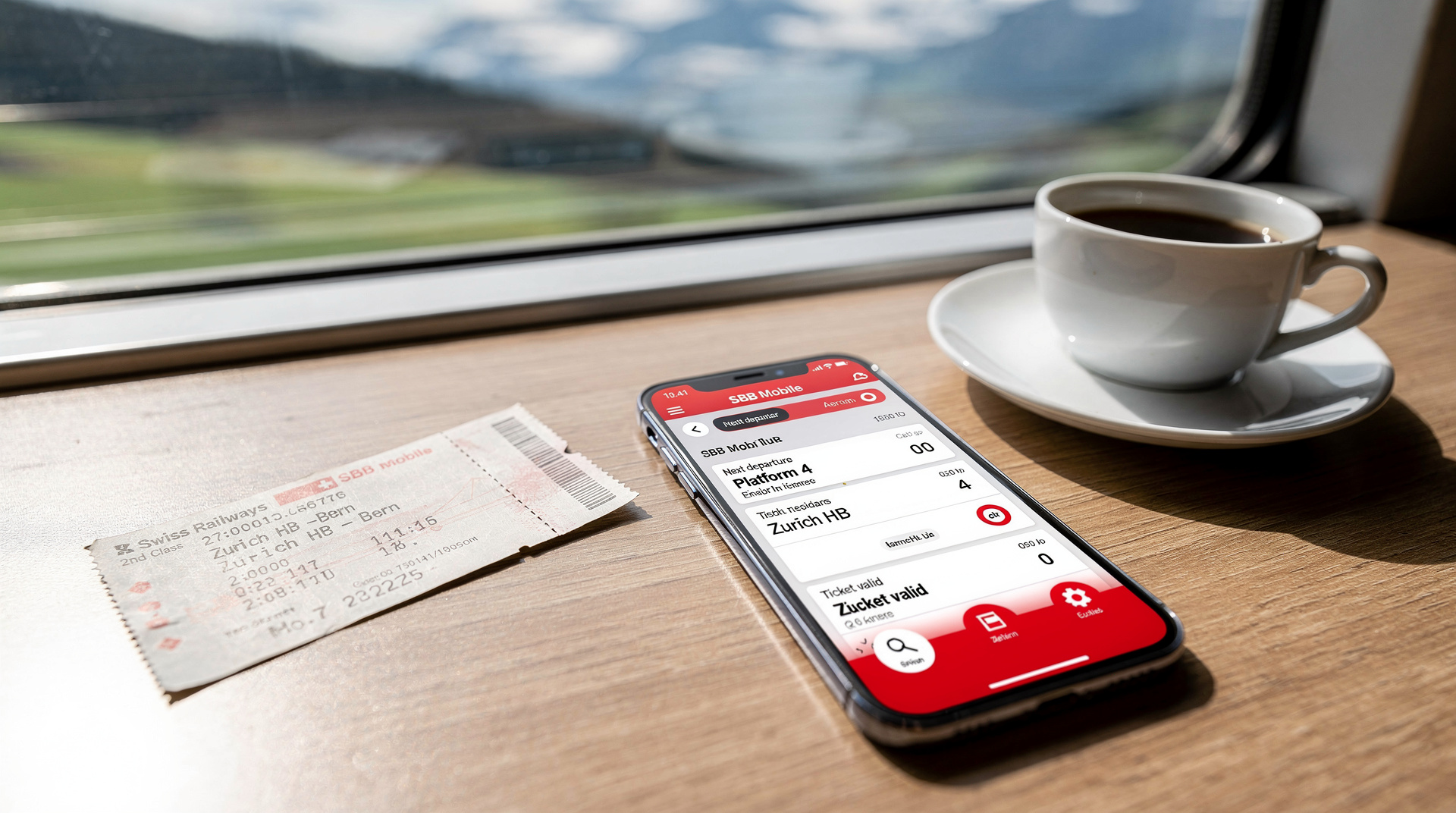
Swiss cities — Zurich, Geneva, Basel, Bern, Lucerne — are safe by any international comparison. Walking alone at night in city centres is generally safe for both men and women. Public transport runs reliably into the night and is safe to use, and a Swiss Travel Pass covers trains, buses and boats so you are never stranded late in the evening.
Petty theft is the most common issue tourists encounter. Zurich’s Langstrasse district, the area around Geneva’s main train station (Gare Cornavin), and popular tourist sites in Lucerne (the Chapel Bridge area, boat piers) have active pickpocket operations, particularly in summer when crowds are densest. These are not violent incidents — they are opportunistic bag and phone thefts targeting distracted tourists.
Standard precautions are effective:
- Use a cross-body bag or a money belt for passports, cash, and cards
- Keep phones in a front pocket, not a back pocket
- Do not leave bags on the backs of chairs in busy restaurants
- Be aware of your surroundings at ticket machines and ATMs, where shoulder-surfing is the most common scam
- Avoid leaving luggage unattended in train stations, even briefly
Needle exchange zones: Some Swiss cities have designated drug use areas (Zurich had the famous Needle Park, now relocated and managed differently). These areas are controlled and generally not a threat to tourists, but worth being aware of if you wander off the main tourist paths in certain city districts.
Scams: Switzerland has fewer tourist scams than many European capitals, but the most common ones include: people approaching you with a petition to sign who then demand money, “found ring” scams, and shell game operators at tourist sites. Walk past confidently.
Mountain and hiking safety
The mountains are Switzerland’s greatest attraction — and its most significant safety risk for tourists. The Swiss Alpine Club (SAC) and mountain rescue services respond to thousands of incidents every year, the majority involving: hikers who overestimated their fitness or ability on a trail, sudden weather changes, and falls on steep terrain.
Switzerland is not a destination where you can assume that any marked trail is easy. Swiss trails are colour-coded:
- Yellow sign, yellow markings: Hiking trails. Suitable for anyone in good walking shoes with a moderate fitness level. Well-maintained paths, some steepness.
- White-red-white markings: Mountain hiking trails. Require good physical fitness, surefootedness, and appropriate footwear (hiking boots). Can involve steep, narrow, rocky paths and exposure.
- White-blue-white markings: Alpine routes. Require mountaineering experience, appropriate equipment (harness, ropes in some cases), and navigation skills. Not suitable for casual hikers.
Many tourists underestimate yellow-red trails and arrive in trainers, discover the trail is much steeper and more demanding than expected, and find themselves in difficulty. Honest assessment of your fitness and footwear before you set out is the most important safety decision you can make. If you would rather not navigate alone, a guided outing such as a Grindelwald First day trip from Lucerne takes the route-finding off your hands.
Altitude: Switzerland has cable cars and mountain railways that take visitors to significant altitudes with no physical effort. Jungfraujoch is at 3,454 metres; Gornergrat above Zermatt is at 3,089 metres; Klein Matterhorn (Matterhorn Glacier Paradise) is at 3,883 metres. At these altitudes, some visitors experience mild altitude sickness (headache, nausea, dizziness, shortness of breath). This is normal, particularly if you go up quickly from low altitude.
To reduce the risk: stay hydrated, ascend gradually where possible, avoid heavy exercise immediately on arrival at altitude, and descend if symptoms are severe. Most mild symptoms resolve within an hour or two at altitude. If symptoms are severe (confusion, inability to walk straight, difficulty breathing at rest), descend immediately.
Glaciers: If you are walking on or near glaciers — which are accessible in several Swiss areas — do not step off marked paths. Glacial terrain has hidden crevasses. Stick to marked glacier walking routes and, for any independent glacier exploration, go with a certified mountain guide.
Mountain weather
Swiss mountain weather is the primary factor behind most alpine incidents involving tourists. Conditions change faster and more dramatically than in many other mountain ranges, and pleasant morning weather is no guarantee of what the afternoon brings.
Afternoon thunderstorms are extremely common in July and August, particularly on high ridges and peaks. A standard pattern: clear morning, clouds building from midday, storms arriving between 2pm and 5pm with lightning, strong wind, and rapid temperature drops. Starting hikes early and being below the treeline or at a hut before early afternoon is the standard precaution.
Lightning: On exposed ridges, mountain tops, and open alpine terrain, lightning is a genuine danger. If you see a storm approaching and are on an exposed ridge:
- Descend immediately if possible
- Avoid lone trees, metal structures, and ridgelines
- If caught in the open, crouch low (do not lie flat), keep feet together, and move away from peaks and summits
- Do not shelter in shallow caves or under overhangs — these can act as lightning conductors
Fog and low cloud: Mist can descend on mountain trails rapidly, reducing visibility to a few metres. Trail markings become harder to follow. Always carry a charged phone with an offline map, or use a GPS device. The SBB app works offline for transport but not for trail navigation — download maps.me or a dedicated hiking app with offline Swiss topography.
River and stream crossings: Heavy rainfall can cause normally gentle streams to flood rapidly. Never attempt to ford a swollen mountain stream. If a path is blocked by flooding, turn back.
Avalanche risk: Relevant primarily in winter and spring at altitude. Check the SLF (WSL Institute for Snow and Avalanche Research) daily avalanche bulletin at avalanche.report before any backcountry or off-piste winter activity. All ski resorts mark piste closures for avalanche risk — respect them without exception.
Emergency numbers
These are the essential numbers to save in your phone before you travel:
112 — European standard emergency number. Works from any mobile phone in Switzerland, including without a SIM. Connects to all emergency services. Use this if you are unsure which service you need.
117 — Swiss Police (Polizei / Police / Polizia). For crime, accidents, and public order incidents.
118 — Fire brigade.
144 — Swiss Ambulance (Sanität / Ambulance / Ambulanza). For medical emergencies at lower altitudes and in cities.
1414 — REGA (Swiss Air Rescue). Switzerland’s air rescue organisation, operated by helicopter. Essential for mountain emergencies where ground ambulance access is limited or impossible. REGA covers the entire Swiss territory and is typically on scene within 15 minutes in most of the country.
140 — TCS road assistance (Touring Club Switzerland). For vehicle breakdowns and road accidents.
When calling emergency services from a mountain location: state your location as precisely as possible. Use a what3words address if you know it (the REGA app supports this), a GPS coordinate from your phone, or describe landmarks. Swiss emergency operators speak German, French, Italian, and English.
REGA: the Swiss Air Rescue
REGA deserves particular mention. The Swiss Air Rescue (REGA) operates a fleet of helicopters and a medical jet service that covers the entire Swiss territory. In mountain emergencies — injured hikers, lost walkers, sudden medical episodes at altitude — REGA is typically the primary responder.
REGA operates a donor/supporter system: for an annual contribution of CHF 30–40 (individual) or CHF 70 (family), you become a REGA Gönner (supporter). In return, REGA waives any personal contribution not covered by your insurance for missions within Switzerland. For frequent visitors to Switzerland or those planning serious mountain activities, becoming a REGA supporter is a very reasonable investment.
Download the REGA app (iOS and Android) before you travel. It allows you to transmit your exact GPS coordinates with one touch directly to REGA rescue coordination when in an emergency. This can be life-saving in remote mountain terrain where describing your location verbally is difficult.
Travel insurance
Travel insurance is essential for Switzerland. The reasons are specific to Switzerland’s context:
Swiss healthcare is world-class but extremely expensive. A helicopter rescue by REGA, followed by emergency treatment at a Swiss hospital, can cost tens of thousands of Swiss francs. Without insurance, these costs fall entirely on you.
What your travel insurance should cover for Switzerland:
- Emergency medical treatment (minimum CHF 1 million recommended)
- Mountain rescue and helicopter evacuation (explicitly — some basic policies exclude “hazardous activities” which can be interpreted to include hiking)
- Repatriation to your home country
- Trip cancellation and delays
- Luggage loss (less critical, but useful)
Read the small print on “hazardous activities” exclusions. Standard hiking on marked yellow trails should be covered by virtually any travel insurance policy. Mountain hiking trails (white-red-white) and via ferrata may require specific coverage or adventure sports add-ons. Ski touring, glacier travel, and climbing require specialist policies.
EHIC/GHIC cards (EU/UK) provide some healthcare coverage in Switzerland but do not cover mountain rescue costs, helicopter evacuation, or repatriation. They are a supplement to, not a replacement for, travel insurance.
Road safety
Switzerland has strict traffic laws and an excellent road safety record. The main risks for driving visitors are:
- Speed limits are enforced by radar cameras (common and largely unmarked)
- The motorway vignette (CHF 40) is required before joining any Swiss motorway — failure to display one results in a significant fine. See the renting a car guide for details.
- Mountain pass roads can be narrow with sheer drops — drive slowly and use passing places
- Snow chains are required by law in some mountain conditions — rental companies can advise
- Drink-driving limits are lower than in some countries (0.5 per mille)
Women’s safety
Switzerland is generally very safe for women travelling alone. Unwanted approaches are uncommon by European standards. The same standard urban precautions that apply anywhere apply in Switzerland: be aware in crowded tourist areas, use well-lit streets at night, and trust your instincts in any situation that feels uncomfortable.
There are no specific areas of Swiss cities that women should avoid as a general rule, though the entertainment districts of major cities can be louder and more chaotic late at night.
LGBTQ+ safety
Switzerland is a tolerant, progressive country. Same-sex marriage has been legal since 2022. LGBTQ+ travellers will find Swiss cities welcoming and open, with established communities and LGBTQ+-friendly venues particularly in Zurich and Geneva. Public displays of affection are generally accepted in urban areas. Rural and more conservative areas are less visible in their LGBTQ+ scene but incidents of hostility are rare.
Water safety
Swiss lakes and rivers can be cold even in summer, particularly glacial-fed lakes and fast-flowing rivers. Lake swimming at designated areas (Badis) is safe and popular. Open-water swimming in rivers has specific risks — currents in the Rhine, Aare, and Rhone can be powerful and deceptive. The Aare river swim through Bern’s old town is a popular local tradition but requires knowing the current and the exit points. Do not attempt river swimming without local knowledge.
Animal hazards
Tick bites are a genuine consideration in Swiss forests and lower alpine meadows (below about 1,500 metres) from spring through autumn. Ticks in Switzerland can carry Lyme disease and, in some areas, TBE (tick-borne encephalitis). Wear long trousers tucked into socks in forested areas, use insect repellent, and check for ticks after walks in woodland. A TBE vaccination is worth considering for visitors planning extended time in forested alpine areas.
Wild animals: Switzerland has ibex, chamois, wolves (recently reintroduced), and marmots in mountain areas. Give wildlife space. Do not approach or feed any wild animals.
Summary: staying safe in Switzerland
Switzerland’s safety record is excellent. The most common issues affecting tourists are:
- Petty theft in tourist-heavy areas — mitigated by keeping valuables secure
- Mountain overconfidence — mitigated by honest assessment of trail difficulty and wearing appropriate footwear
- Weather changes — mitigated by starting hikes early, checking forecasts, and carrying a waterproof layer (see the Switzerland packing list)
- Lack of travel insurance — mitigated by purchasing adequate cover before you travel
The emergency number 112 will connect you to help anywhere in Switzerland. REGA (1414) is the specialist for mountain rescue. Download the REGA app. Buy travel insurance that covers mountain activities. And enjoy the mountains with appropriate respect for their conditions.
For more on planning your trip, see the getting around Switzerland guide and the best time to visit Switzerland.
Seasonal safety considerations
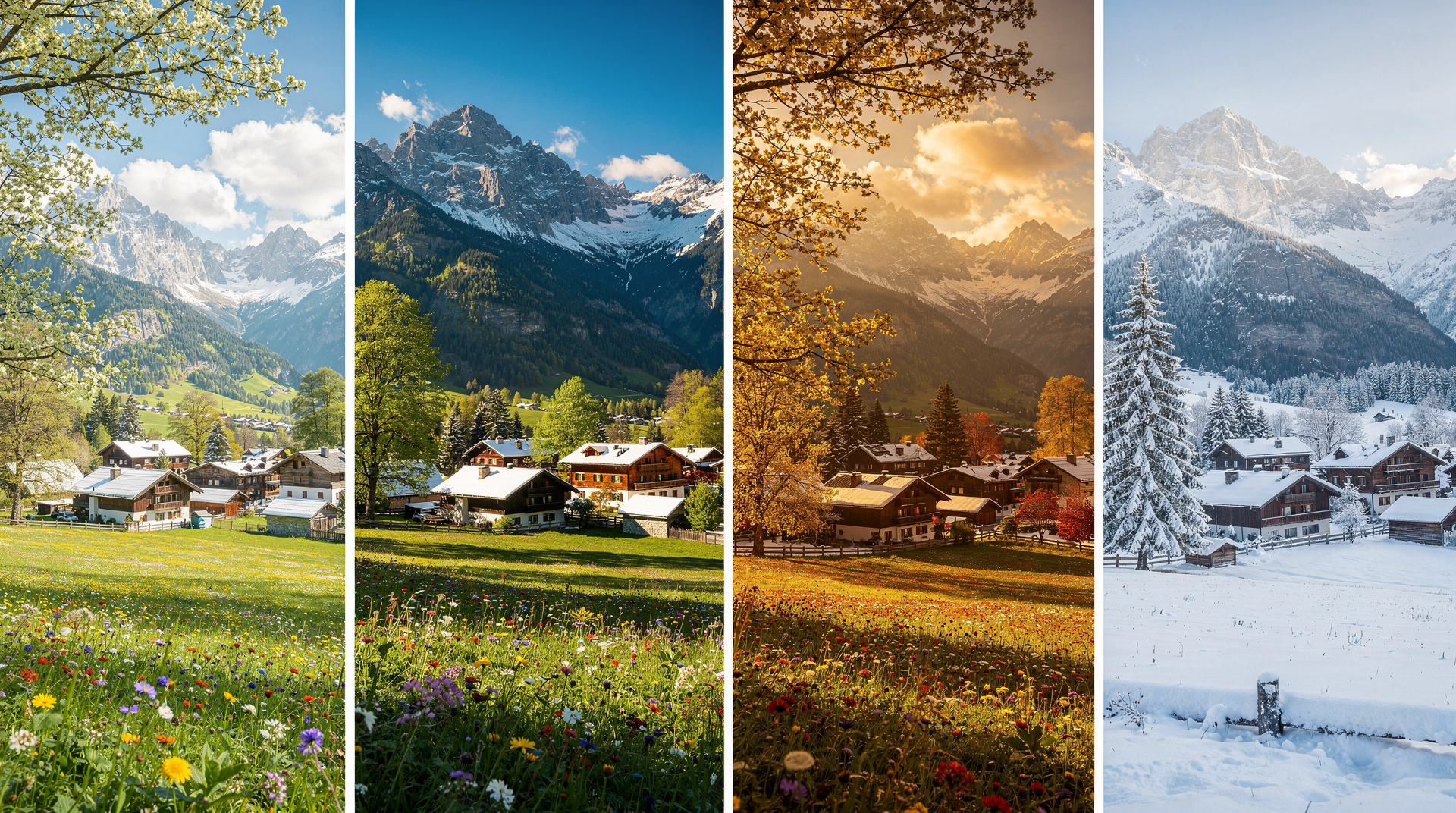
Switzerland’s risk profile shifts with the seasons. Understanding what is most relevant when you visit helps you prepare effectively.
Spring (March–May): The most dynamic season for mountain hazards. Snow bridges over mountain streams can be unstable. Avalanche risk on steeper terrain remains significant in March and April. Trails at higher altitudes may be icy or snow-covered early in the season even if conditions look fine from the valley. Check current trail status with the local tourist office before setting out on any mountain path above 1,500 metres in spring.
Flooding: Spring snowmelt can cause rivers and streams to rise rapidly, particularly in mid-April through May. Valley roads near fast-flowing rivers are occasionally closed after heavy rain.
Summer (June–August): The peak tourist season and generally the most straightforward for safety. The primary risks are thunderstorms (see the mountain weather section above) and UV overexposure at altitude. Lake swimming is popular and generally safe at designated bathing areas (Badis) — open water swimming in rivers requires knowledge of local currents. The Aare River swim in Bern is a specific local tradition with its own safety guidelines.
Autumn (September–October): Excellent conditions for hiking, but weather becomes more variable from mid-October. Some higher routes close. Hunting season in forested areas: walkers are generally not at risk, but wearing a bright colour layer in forested areas during October is sensible. Fog in valley areas can affect visibility on roads.
Winter (November–March): The avalanche risk becomes relevant for anyone doing off-piste skiing or winter mountain activities. Urban winter hazards include icy pavements in cities and towns — appropriate footwear (waterproof, grippy-soled) is essential. See the packing list guide for winter footwear recommendations.
Health hazards and medical preparation
No vaccinations are required for Switzerland from most western countries. However, some are recommended:
- TBE (tick-borne encephalitis): Vaccination recommended for extended stays in forested areas, particularly in spring and summer. Two doses before travel (with a third booster 9–12 months later) provide several years of protection. Check with your doctor 6–8 weeks before travel.
- Lyme disease: No vaccine available (in most countries); prevention through tick awareness and prompt tick removal is the approach.
- Hepatitis A/B: Standard travel vaccinations worth keeping up to date.
Prescriptions: Switzerland has excellent pharmacies (Apotheke/Pharmacie) in all towns, but prescription medications require a valid prescription to be dispensed. Bring adequate supplies of any regular medication and carry a copy of the prescription. Brand names may differ from your home country.
Altitude sickness (acute mountain sickness): As mentioned in the mountain safety section, some visitors experience symptoms at Jungfraujoch (3,454 m) and other high-altitude cable car destinations. Acetazolamide (Diamox) is sometimes prescribed by doctors for high-altitude trips. Discuss with your doctor if you have concerns, particularly if you have cardiovascular or respiratory conditions.
Food and water safety: Switzerland has some of the highest water quality standards in the world. Tap water and mountain fountain water are safe to drink everywhere. Food safety standards are equally high. Travellers’ diarrhoea from food or water is extremely rare.
Sun and heat: In summer, valley temperatures can exceed 35°C during heat waves. Stay hydrated, use shade during peak afternoon hours, and be aware that older buildings (including many Swiss hotels) may not have air conditioning. At altitude, the combination of heat from solar radiation and cold from wind means layering remains important even in hot weather.
Useful contacts and resources
SOS Europe (pan-European emergency app): Available for iOS and Android. Consolidates emergency numbers across European countries and works offline.
Swiss weather service (MeteoSwiss): meteoswiss.ch and the MeteoSwiss app. Essential for checking mountain weather forecasts before any outdoor day. The mountain-specific forecast by altitude zone is the most useful tool.
SLF avalanche bulletin: avalanche.report. Daily updated avalanche danger levels for all Swiss regions. Essential before any off-piste or backcountry winter activity.
Swiss Alpine Club (SAC): sac-cas.ch. Operates mountain huts across Switzerland and provides information on trail conditions. SAC hut wardens are often the best source of real-time local trail information.
REGA app (1414): The most important emergency app for mountain travel in Switzerland. Download it before your trip and ensure location services are enabled.
Switzerland’s safety infrastructure is among the best in the world. Knowing the risks, preparing appropriately (see the Switzerland packing list for gear), and having the right insurance coverage means you can focus on experiencing one of the world’s great travel destinations with confidence.
Safety on scenic trains and cable cars
Tourists rarely think of scenic rail and cable car journeys as a safety topic, but a few points are worth knowing. On the Glacier Express and Bernina Express, doors and windows are locked while in motion and staff enforce standard rail safety rules — the main risk is simply missing a tight connection, not anything physical.
Cable cars to summits like Jungfraujoch, the Schilthorn, and the Aletsch Glacier viewpoints close in high wind for passenger safety — check the operator’s website if wind is forecast, and build a backup day into your plan (see rainy day activities) rather than losing the whole day to a closure.
Money and card safety
Switzerland is largely a card- and mobile-payment society, which reduces cash-related theft risk, but carry a small amount of Swiss francs for rural mountain huts, PostBus tickets, and market stalls that may not take foreign cards. Use bank ATMs (attached to a bank branch) rather than freestanding machines in nightlife areas, and check for card skimmers on any machine that looks tampered with — rare in Switzerland, but not unheard of in heavily touristed spots.