Best family activities in Switzerland: top picks for all ages
What are the best family activities in Switzerland?
The Swiss Museum of Transport in Lucerne, Grindelwald First adventure park, Jungfraujoch Snow Fun Park, lake boat cruises, and the Alpamare water park near Zurich are Switzerland's top family activities. All ages from toddlers to teenagers are well-served.
Switzerland with children: better than you might expect
Switzerland is occasionally dismissed as a destination for families because of its reputation for expense and sophistication. The reality is considerably more welcoming: Swiss infrastructure for families — transport, trail networks, mountain facilities, and museums — is designed with children actively in mind, and many of the country’s most celebrated experiences work as well for a 9-year-old as for a 40-year-old.
The challenges are real (costs, altitude consideration, managing energy on long transport days) but the rewards are exceptional. Few countries can offer a child the experience of standing on a glacier, feeding a cow on an Alpine meadow, riding a cogwheel railway to 3,454m, or sliding down a mountain on a toboggan. Switzerland does all of this in combination, within a country compact enough that these experiences are accessible from multiple bases.
This guide covers the best family activities across Switzerland, with honest assessments of age suitability, cost, and how to combine experiences into practical day programmes.
At a glance
| Where | Nationwide; strongest clusters around Lucerne, Grindelwald/Interlaken, and Zurich |
| Cost | Roughly CHF 15-50 per person per activity; the Swiss Travel Pass covers most transport and many entries |
| Time needed | Most activities fill a half or full day; 3-4 days covers the highlights from one base |
| Getting there | Nearly everything below is reachable by train, bus, or cable car — a car is not required |
| Best time | Museums and water parks work year-round; the Jungfraujoch and Grindelwald First are best May-October |
| Activity | Age range |
| Swiss Museum of Transport, Lucerne | All ages |
| Jungfraujoch | 6+ (altitude care under 6) |
| Grindelwald First | 5+ (extras from 8) |
| Alpamare water park | All ages, strong swimmers for some slides |
| Lake boat cruises | All ages |
| Technorama, Winterthur | 7-15 best fit |
| Ballenberg open-air museum | All ages |
Grindelwald First — Switzerland's best family adventure mountain
Cable car, Cliff Walk, First Flyer zip wire, and the Bachalpsee hike: Grindelwald First packs more family fun into a single mountain than anywhere else in Switzerland. All ages from 5 upward.
- Free cancellation
Swiss Museum of Transport, Lucerne
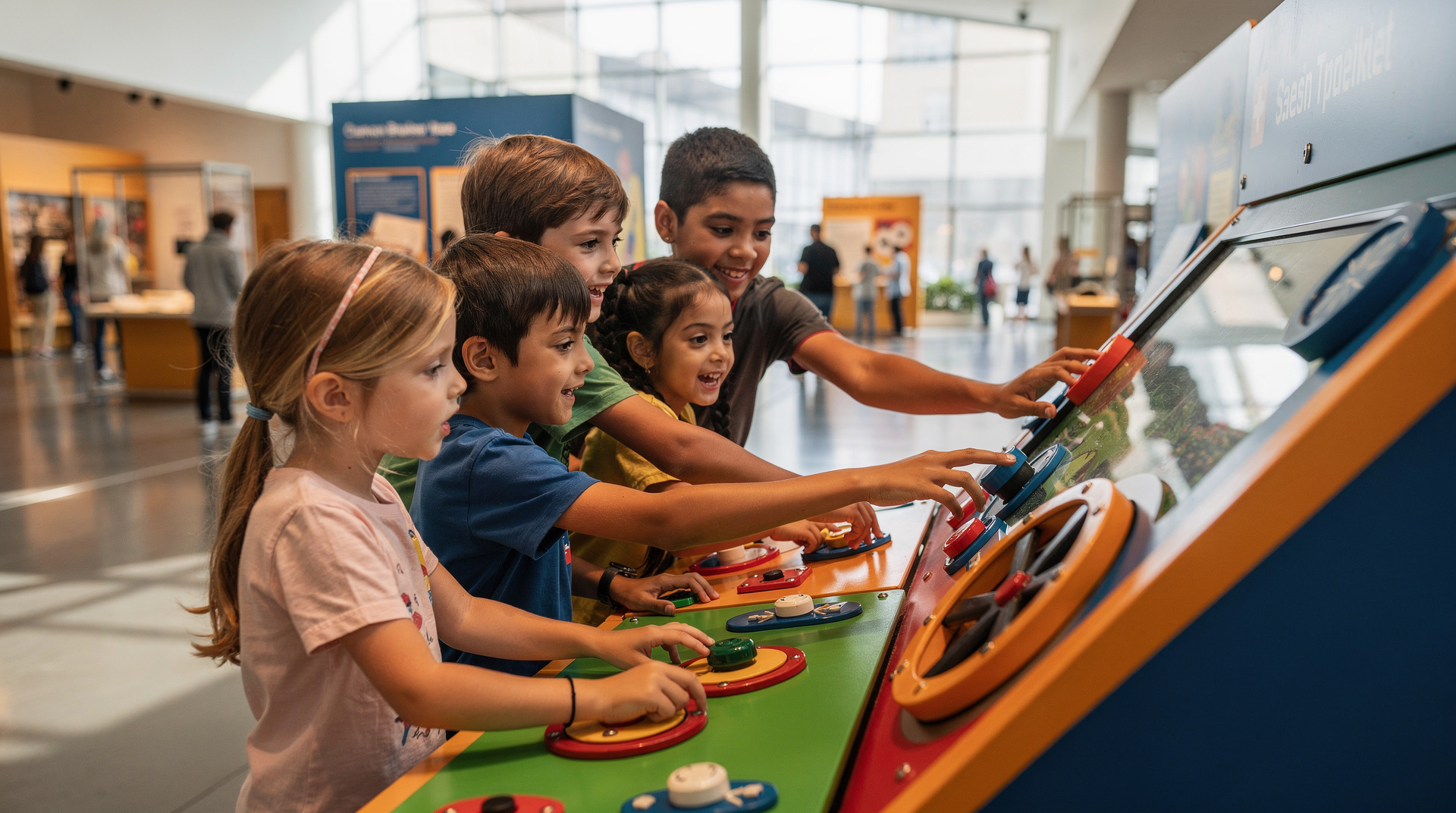
The Swiss Museum of Transport (Verkehrshaus der Schweiz) is the most visited museum in Switzerland and the undisputed first choice for families with children of any age from toddlers upward. The museum’s combination of real vehicles (trains, planes, boats, cable cars, classic cars), hands-on interactive exhibits, and multiple sub-attractions within the same complex makes it almost impossible to exhaust in a single day.
For younger children, the opportunity to climb into real vehicles — cockpits, locomotive cabs, car interiors — is the primary draw. For older children, the interactive exhibits on bridge engineering, tunnel construction, and Swiss aviation history provide genuine intellectual content. The planetarium programmes work well from about age 6 upward.
The Swiss Chocolate Adventure (a separate paid attraction within the museum) takes visitors on a sensory tour of Swiss chocolate history using ride-through displays with sound and scent — excellent for children aged 4 and above.
Practical details: Located on Lake Lucerne, 10 minutes from Lucerne old town by bus or boat. Open daily 10:00-18:00 (17:00 November-March). Adults CHF 32, children under 16 CHF 16. Free with the Swiss Travel Pass. Allow a full day minimum.
Jungfraujoch: the Top of Europe
The Jungfraujoch excursion — a rack railway journey from Grindelwald or Interlaken to the highest railway station in Europe at 3,454m — is Switzerland’s most celebrated family mountain experience. The journey itself, through the Eiger’s interior, is extraordinary: the train stops inside the mountain at viewpoints cut into the north face. The arrival at the Jungfraujoch reveals a world of ice and sky that astonishes children and adults equally.
The Jungfraujoch plateau has several family-specific attractions: the Snow Fun Park with sledges and zip lines on the glacier, the Ice Palace carved through the glacier interior, and the Sphinx observatory platform with 360-degree views. In summer, children can play in real snow while lower Switzerland basks in summer heat.
Practical details: Excursion by Wengernalpbahn from Grindelwald or Wengen, or by Jungfraubahn from Kleine Scheidegg. Journey takes approximately 2-2.5 hours each way from Interlaken. Adults approximately CHF 186 (standard price; Swiss Travel Pass provides discounts). Children 6-15 approximately CHF 52. Allow a full day. Book in advance, particularly in summer. Book the Jungfraujoch Top of Europe excursion from Interlaken — advance booking strongly recommended to secure your time slot.
The altitude (3,454m) means cold temperatures year-round — bring warm clothing even in July. Children under 6 should be monitored for altitude effects (headache, nausea); most children adapt well within an hour.
Grindelwald First: adventure park for all ages
Grindelwald First above Grindelwald is Switzerland’s best combined family adventure area. The cable car from the village delivers families to a plateau at 2,168m with multiple paid and included activities:
- First Cliff Walk (included in cable car): A spectacular cliff-hugging walkway with glass-floored sections. Accessible to all ages; some children find the glass sections thrilling, others nervous.
- First Flyer (paid extra): A seated zip wire covering 800m at up to 84km/h. Minimum age 8, minimum height 125cm. A genuinely exciting experience for children and adults.
- First Glider (paid extra): A four-person hang glider-style ride over the valley. Minimum age 5.
- Mountain Cart and Trottibike (paid extra): Self-propelled gravity carts for descending the mountain. Minimum age 8 for mountain cart.
Book your Grindelwald First cable car and Cliff Walk ticket online — prices are fixed and booking in advance avoids queuing.
The Bachalpsee hike from First (see the easy hikes guide) makes an excellent complement to the adventure activities, taking 2 hours return and suitable for children aged 6 and above.
Practical details: Cable car from Grindelwald village. Open year-round (reduced activities in winter). Swiss Travel Pass gives a 25 percent discount on the cable car. Adventure activities priced separately (CHF 30-45 each).
Alpamare water park, Pfäffikon
Alpamare near Pfäffikon on Lake Zurich is Switzerland’s largest water park, featuring both indoor and outdoor pools, water slides, and the unique thermal pools fed by natural mineral springs. The combination of indoor warm-water attractions (useful in any season) with outdoor summer pools makes it an all-weather family destination within easy reach of Zurich.
The water slides range from gentle family-sized flumes to high-speed enclosed slides appropriate for older children and teens. The outdoor pools open in summer. The thermal pools are popular with adults. Children need to be strong swimmers for some of the more demanding slides; the family areas are well-supervised and appropriate for younger children with adult supervision.
Book Alpamare day tickets online — significantly cheaper than at the gate and avoids queues at peak times.
Practical details: S-Bahn from Zurich Hauptbahnhof to Pfäffikon SZ (40 minutes), then 5-minute walk. Adults CHF 50, children CHF 42. Swiss Travel Pass covers transport. Open daily in school holidays; weekdays and weekends otherwise. Allow a full day.
Swiss lake boat cruises
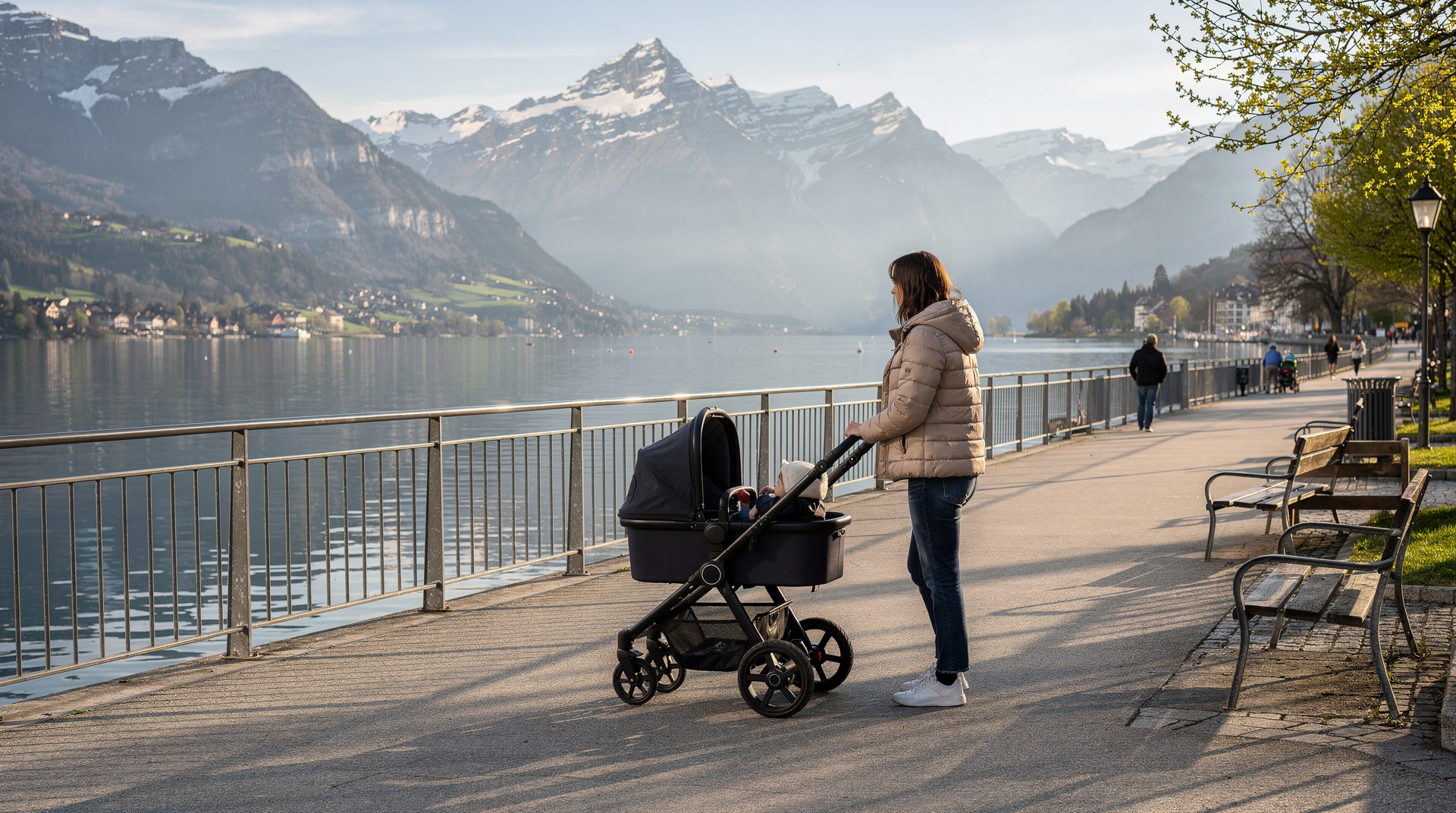
Switzerland’s network of lake cruise boats is one of the great family experiences in the country. The large paddle steamers on Lake Lucerne, the historic fleet on Lake Geneva, and the cruises on Lake Thun and Brienzersee all combine fresh air, views, and a gentle pace that works well for young children who struggle with sustained walking.
Lake Lucerne: The most extensive cruise network, operated by SGV. Regular services and timetabled departures from Lucerne to Flüelen (via the Rütli — Switzerland’s founding meadow), Vitznau (connection to Rigi rack railway), Beckenried, and Weggis. Covered by the Swiss Travel Pass. Book a 1-hour catamaran cruise on Lake Lucerne — a compact, fun option perfect for families with younger children.
Lake Thun and Brienzersee: The two-lake cruise from Interlaken is a wonderful day out — west on Lake Thun to Thun or east on Brienzersee to Brienz and the Ballenberg open-air museum. The pyrite-blue colour of Brienzersee is particularly striking. Covered by Swiss Travel Pass. Book the Lake Thun boat day pass from Interlaken for unlimited hop-on, hop-off lake travel.
Lake Geneva: Services between Geneva, Lausanne, Montreux, and intermediate villages on the full length of the lake. The Compagnie Générale de Navigation operates restored paddle steamers on some services. Covered by Swiss Travel Pass.
Technorama, Winterthur
The Technorama in Winterthur (30 minutes by train from Zurich) is Switzerland’s science museum and one of Europe’s best interactive science centres. Over 500 hands-on exhibits explore physics, chemistry, biology, and technology — every exhibit is designed to be manipulated by visitors. Children aged 7-15 get the most from the experience, but younger children enjoy many of the simpler physics demonstrations.
The lightning theatre (artificial lightning in a controlled demonstration) and the large outdoor science park are particular highlights. The museum earns consistent five-star reviews from families with school-age children.
Practical details: Train from Zurich to Winterthur (15 minutes), then 10-minute walk. Open daily 10:00-17:00. Adults CHF 30, children CHF 22. Free with Swiss Travel Pass.
Chaplin’s World, near Vevey
Chaplin’s World at the Manoir de Ban above Vevey is excellent for families with children aged 8 and above. Charlie Chaplin is a universally accessible cultural figure, and the museum’s combination of the preserved manor house (with wax figures recreating family scenes) and the Studio cinema experience (covering Chaplin’s films with costumes, sets, and interactive elements) keeps children and adults engaged throughout.
Book Chaplin’s World tickets in advance — the museum is one of the most popular attractions in the Lake Geneva region.
The beautiful gardens offer excellent free-roaming time for energetic children between the indoor sections.
Practical details: Train to Vevey, then taxi or bus. Adults CHF 28, children CHF 18. Allow 2-3 hours.
Ballenberg open-air museum
The Ballenberg open-air museum above Brienz in the Bernese Oberland is an extraordinary collection of over 100 original Swiss farmhouses and rural buildings transported from across the country and reassembled on a large wooded site. Costumed craftspeople demonstrate traditional skills — woodturning, cheese-making, lace-making, bread-baking — throughout the day.
For families, the combination of outdoor space to roam, animals (the museum has traditional farm breeds including the original landrace cows of different Swiss regions), and the tangible history of rural life makes Ballenberg consistently engaging. A full day is needed to see the main buildings. The on-site restaurants serve traditional Swiss regional food.
Practical details: Train from Interlaken to Brienz, then bus to Ballenberg. Adults CHF 30, children CHF 15. Swiss Travel Pass covers transport; entry is separate. Open May-October only. Allow a full day.
Planning a Switzerland family itinerary
Combining activities: The Lucerne day (Transport Museum plus lake boat cruise) is one of Switzerland’s best family travel combinations. The Grindelwald day (First adventure park plus Bachalpsee easy hike plus optional Grindelwald village activities) is another strong combination. The Interlaken base allows Jungfraujoch, Grindelwald, and the two-lake cruise in a three-day cluster.
Swiss Travel Pass for families: Children under 6 travel free on Swiss public transport. Children 6-15 receive a Youth Fare Card (issued with the family Swiss Travel Pass) that gives free travel. This significantly reduces the overall cost of a Swiss family trip when transport is included.
Altitude for children: Young children (under 5) should be monitored at very high altitudes (3,000m+). The Jungfraujoch and Titlis glacier experiences are at 3,454m and 3,028m respectively. Most children acclimatise well in the time of the visit, but allow rest and watch for headache or nausea symptoms.
Meal times: Swiss restaurants serve lunch primarily from 12:00-14:00 and dinner from 18:30-22:00. The afternoon gap (14:00-18:00) when children are most hungry is difficult — carry snacks, or stop at a bakery (Bäckerei) for afternoon provisions.
The family ski resorts guide covers winter-specific family activities. The museums for kids guide covers the full range of Swiss child-friendly museums in detail. The family itineraries guide provides day-by-day programme options for different ages and travel styles.
Switzerland for teenagers
Teenagers present a specific planning challenge in Switzerland: old enough to be bored by activities designed for younger children, demanding enough to require genuine excitement. Switzerland handles this demographic better than most countries:
Extreme sports near Interlaken: The Bernese Oberland adventure sports scene — canyoning, bungee jumping, canyon swing, skydiving — is one of Europe’s most concentrated. Minimum ages typically 14-16 for the most intense activities. These are covered in the adventure itineraries guide.
Freestyle skiing and snowboarding: The Laax resort is Switzerland’s snowboard capital, with one of Europe’s best superpipes and terrain parks. Teenagers with any interest in freestyle will find the level of riding on display at Laax genuinely impressive.
Urban exploration: Swiss cities — particularly Zurich and Geneva — have excellent street culture for teenagers. Zurich’s Langstrasse neighbourhood and Zürich West industrial quarter have street art, independent shops, and food culture that engage older teenagers independently.
Wildlife and sustainability: Switzerland’s clean rivers (the Rhine in Basel is swimmable), the visible wildlife (ibex and chamois are routinely seen from hiking trails), and the Swiss approach to environmental management are topics that engage teenagers with an environmental interest.
Social media-friendly landscapes: This is not cynical — the photographic opportunities in Switzerland (Matterhorn reflections, glacier walks, Eiger views) are genuinely extraordinary and motivate teenager engagement with activities that might otherwise be approached reluctantly.
Practical Swiss travel with children
Transport: Swiss trains are genuinely comfortable for families. The carriages are spacious, there are often family compartments (Familienwagen) on longer routes, and the reliability means itineraries work as planned. The Swiss Travel Pass for families gives free travel for children 6-15 and under-6s travel free regardless.
Food: Swiss supermarkets (Migros and Coop are the two main chains, present in every town) are excellent and affordable. Self-catering is easy with the supermarket quality. Restaurant children’s menus are standard and usually include classics like spaghetti bolognese, crêpes, and burgers alongside more Swiss options.
Language: In tourist areas, English is universally spoken. German, French, and Italian are the main regional languages. Children are universally welcomed and Swiss adults are notably patient with family travel logistics in public spaces.
Healthcare: Switzerland has excellent emergency healthcare accessible without insurance complications for EU/EFTA residents (EHIC card) or for visitors from other countries with travel insurance covering medical evacuation. The emergency number is 144 for an ambulance.
Weather planning: Switzerland’s mountain weather is genuinely variable. Building alternative indoor activities (museums, swimming pools, shopping streets) into each day’s plan prevents weather from derailing itineraries. The Technorama in Winterthur, the Transport Museum in Lucerne, and Alpamare water park are all excellent rain-day fallbacks.
For complete family itinerary planning across different ages and trip lengths, the dedicated guide covers week-by-week and day-by-day programmes tested with real family travel scenarios.
Getting around Switzerland with children: practical logistics
Swiss public transport with children is significantly easier than in most countries. The trains run on time, the carriages are spacious, and the platform culture is organised enough that managing children and luggage simultaneously is manageable.
Baby carriages and prams: Most Swiss trains and trams have dedicated pram spaces. Folding the pram is not typically required on inter-city trains. The large luggage areas at carriage ends accommodate prams, large bags, and bikes.
Child restraint in cable cars: Children under 3 should be held or in a carrier in cable cars and gondolas. Older children can sit independently. The swaying motion of gondolas can cause motion sickness in some children — keep the ride short if a child seems unwell.
Eating on Swiss trains: Swiss train carriages permit food consumption. Carrying a train picnic — cheese, bread, fruit, drinks from a supermarket — is standard practice and significantly cheaper than the dining car. Children generally enjoy picnic eating and it prevents the timing difficulties of Swiss restaurant meal hours.
Changing facilities: Swiss train stations have well-maintained family rooms (Familienraum or espace famille) with changing tables, small toilets, and play areas at major stations. These are free to use.
Local playgrounds: Every Swiss town and most villages have well-equipped, well-maintained public playgrounds that are free to enter. These are excellent for children’s energy release between activities and for impromptu rest stops on walking tours. Swiss playgrounds typically include equipment of a quality that surprises visitors used to more risk-averse international standards — tall climbing structures, real rope bridges, and water play features are standard.
Swiss food culture for families
Swiss food provides both pleasures and challenges for family travel:
Rösti: The national Swiss potato dish — pan-fried grated potatoes, served as a side or main — is almost universally popular with children. It is available in virtually every restaurant.
Fondue: Communal cheese fondue is a genuinely fun meal for families with children aged 5 and above. The interactive dipping format engages children effectively. Most mountain restaurants serve fondue for two or more people; it is difficult to order for one, making it naturally family-oriented.
Raclette: The other great Swiss cheese dish — heated cheese scraped onto potatoes, pickles, and bread — is similarly child-friendly in its simple flavours and interactive format.
Bratwurst: Swiss-style veal or pork sausage, served with bread and mustard, is available as a street food and restaurant staple throughout the country. Children almost universally enjoy it.
Supermarkets: Migros and Coop (Switzerland’s two major supermarket chains) are available in every town and many resort areas. They stock the full range of baby food, snack items, and family-oriented groceries at reasonable prices by Swiss standards. The deli sections of both chains have excellent prepared foods for picnic lunches.
Dietary requirements: Vegetarian and vegan options have improved significantly in Swiss restaurants over the past decade. Major cities (Zurich, Geneva, Basel, Bern) have dedicated vegetarian and vegan restaurants. Resort areas are improving but remain meat-focused. Advance notice to restaurants for dietary requirements is appreciated and usually accommodated.
The cultural guide covers Swiss food traditions in the context of cultural identity — useful background for families interested in understanding what they are eating and why it matters to local culture.
Rainy-day and low-energy alternatives
Switzerland’s weather does not always cooperate, and a family itinerary needs at least one flexible day built in. The rainy day activities guide covers indoor options beyond the ones listed here, but the strongest backups are the Swiss Museum of Transport (large enough to fill a full wet day), Technorama in Winterthur, and Alpamare’s indoor pools, which work regardless of season. For families based in Zermatt or St. Moritz, the indoor sports centres attached to most mountain resorts (climbing walls, indoor pools, bowling) are an underused fallback that avoids a long transfer on a bad-weather day.
Choosing a base for a family trip
Lucerne works best for families who want one city-based hub with the Transport Museum, lake cruises, and Rigi or Pilatus as day trips without changing hotels. Interlaken/Grindelwald suits families prioritising mountain experiences — Jungfraujoch, Grindelwald First, and the two-lake cruise are all reachable without repacking. Zurich is the practical choice for families combining a short city stay with Alpamare and Technorama as day trips, particularly useful if flying via Zurich Airport. See the family itineraries guide for day-by-day programmes built around each base, and the 10-day itinerary for combining more than one region with children.
Frequently asked questions about Best family activities in Switzerland
Is Switzerland expensive for families with children?
Switzerland is genuinely expensive by international standards, but the Swiss Travel Pass’s free travel for under-6s and discounted Youth Fare Card for 6-15s substantially reduce the transport cost, which is often the largest line item. Self-catering using Migros or Coop supermarkets for breakfasts and picnic lunches also meaningfully lowers food costs compared to restaurant dining three times a day.
What is the best number of days for a Switzerland family trip?
A minimum of 5-7 days allows one mountain-focused base (Interlaken or Grindelwald) plus one city/lake base (Lucerne or Zurich) without excessive packing and repacking. Shorter trips of 3-4 days work well focused on a single base, such as the Lucerne day combination of the Transport Museum and a lake cruise. See the 5-day itinerary for a compact family-friendly framework.