Switzerland family itinerary: 10 days with kids
Why Switzerland works for families
Switzerland is one of the best countries in Europe for family travel — clean, safe, extraordinarily well-connected by public transport, and full of experiences that genuinely delight children rather than just tolerate them. Cable cars, rack railways, paddle steamers, wildlife parks, chocolate factories, and mountains that children can walk on in summer — it covers the full range of child-friendly adventure without ever feeling like it has been designed down to the lowest common denominator.
This 10-day family itinerary is built around the reality of travelling with children: that you need flexibility, that some days will go differently than planned, that you need somewhere to run around, and that children often have stronger opinions about cable cars and ice caves than you might expect. It focuses on Lucerne and the Bernese Oberland — the most child-friendly region in Switzerland — with appropriate pacing and specific age-noted recommendations throughout.
The Swiss Travel Pass covers adults; children under 6 travel free, and children aged 6-15 travel free with a Family Card (issued free with an adult Swiss Travel Pass). This makes the pass extraordinary value for families.
At a glance
| Route | Zurich → Lucerne → Bern → Interlaken → Grindelwald → Geneva |
| Duration | 10 days |
| Total budget (family of four, excl. flights) | around CHF 4,800-6,200 |
| Key pass | Swiss Travel Pass with free Family Card |
| Best age range | works from toddlers to teens, ideal around ages 6-13 |
| Best time to go | June through August for long days and warm valleys |
Days 1-2: Zurich — science, chocolate, and the lake
Day 1 — arrival and Zurich Zoo
Zurich Zoo is one of the finest in Europe — the Masoala Rainforest Hall, the penguin enclosure, and the elephant facilities are all outstanding. It is 20 minutes from the Hauptbahnhof by tram. Allow a full afternoon. Children are typically exhausted and delighted in equal measure.
If the zoo feels too much for jet-lagged arrivals, the Zürichsee lakefront is ideal for an easy first afternoon: wide promenades, playgrounds, and the option of a short lake cruise (Swiss Travel Pass covers it). The Arboretum park on the western lakefront has large grassy areas for running around.
Book a Zurich city tour with lake cruise and chocolate tasting →Day 2 — Lindt Home of Chocolate and the Kunsthaus
The Lindt Home of Chocolate museum at Kilchberg (20 minutes by S-Bahn) is one of the best child-appropriate museum experiences in Switzerland. The 9-metre chocolate fountain at the entrance produces a genuine gasp from children. The interactive exhibits about chocolate production, the history of Swiss confectionery, and the tasting stations make it genuinely educational as well as delicious. Allow two hours; the gift shop is unavoidable.
Afternoon: the Swiss National Museum (Landesmuseum) in Zurich, directly beside the Hauptbahnhof, has excellent interactive displays for children including a recreated medieval knight’s hall with armour and weapons.
Book Lindt museum tickets — kids go wild for the 9-metre chocolate fountain →Accommodation: 2 nights Zurich — choose a hotel with a swimming pool if possible; several Zurich hotels have roof pools that children love.
Days 3-4: Lucerne — the transport museum and lake boats
Day 3 — Swiss Museum of Transport
Train to Lucerne (45 minutes). The Swiss Museum of Transport (Verkehrshaus) on the lakefront is the most visited museum in Switzerland, and for families with children aged 6 and above it is genuinely outstanding. The railway hall, the aviation hall, the road transport section, the space travel exhibit, and the IMAX cinema cover an enormous range in an accessible and interactive way. The Cosmorama planetarium is excellent for children aged 8 and above.
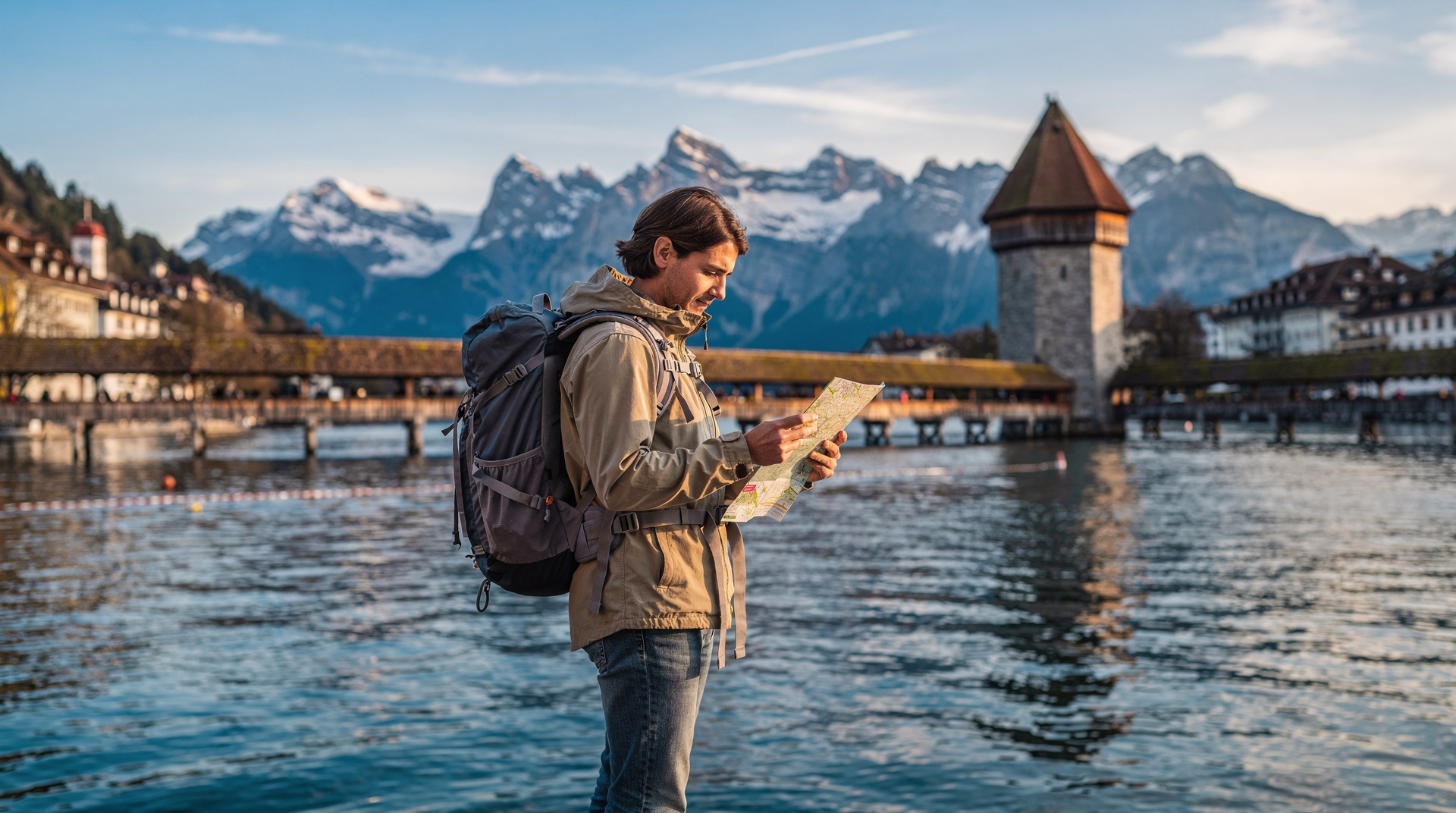
Allow a full morning. After lunch, walk to the Chapel Bridge for the classic Lucerne postcard (younger children love the swans that congregate under the bridge), then the Lion Monument — the sandstone dying lion carved into the cliff is genuinely moving and tends to prompt excellent questions from curious children.
Day 4 — Lake Lucerne boat trip
A full morning on the historic paddle steamers. The route from Lucerne to Brunnen or Flüelen passes the Rütli meadow (the founding place of Switzerland, relevant for older children studying European history), the Tell’s Platte (associated with the William Tell legend — tell the story before you board), and the cliffs and forests of the inner lake. The Swiss Travel Pass covers the boat. Children run freely on the upper deck.
Afternoon: either return to Lucerne, or stop at Weggis (20 minutes from Lucerne by boat) for the cable car to Rigi Kaltbad and a short walk on the “Queen of the Mountains.” The Rigi has a playground and open alpine meadows that children can run on freely.
Book a Lake Lucerne catamaran cruise — kids love the open deck views →Accommodation: 2 nights Lucerne.
Day 5: Bern — bears, fountains, and the old town
Train to Bern (1h 20min). Children enjoy Bern for three specific things: the Bear Park (real bears in a riverside enclosure, free entry), the animated Zytglogge clock (four minutes before each hour, mechanical figures perform — position yourself in front of the clock at H-5 minutes), and the covered arcades that allow unlimited exploration in any weather.
The Bern Natural History Museum has an excellent life-size African wildlife diorama and an impressive taxidermy collection, including Barry — the famous Saint Bernard mountain rescue dog who allegedly saved over 40 lives in the Alps in the early 19th century.
The Bern Museum of Art is less child-appropriate, but the Gurten funicular on the southern edge of the city takes children to the Gurten park — a large hilltop park with playgrounds, a miniature train, and views of the Alps.
Accommodation: 1 night Bern (or continue to Interlaken in the evening).
Days 6-7: Interlaken and Grindelwald First
Day 6 — arrival and Interlaken
Train to Interlaken (50 minutes from Bern). Interlaken itself has a relaxed pace that suits families — the broad Höheweg has open lawns where children can play, and the Eiger-Mönch-Jungfrau view at the end of the valley is one that even young children immediately understand as extraordinary.
The Interlaken Mystery Catacombs (an indoor adventure trail in a historic bunker system) is popular with children aged 7 and above. The horse-drawn carriage rides from the Höheweg are a gentler pace for younger children.
For older children and teens, Interlaken is the adventure sports capital of Switzerland — paragliding, canyoning, and river rafting are all available from age 12-14 depending on the operator. See the adventure itinerary for details, or the paragliding Interlaken page.
Day 7 — Grindelwald First and the Cliff Walk
This is the best family mountain excursion in the Bernese Oberland. Take the train to Grindelwald (35 minutes from Interlaken) and the First gondola to 2,168 metres. The Grindelwald First Cliff Walk — suspended walkways with open views of the Eiger — is appropriate for children of all ages (those prone to heights may find one section challenging). The walk to Bachalpsee lake (1 hour return from First) is flat enough for children aged 6 and above.
For younger children, the Mountain Cart on the First piste in summer (descend the ski run on a four-wheeled cart) and the First Flyer zip line (age 6+, weight limits apply) are big hits. The Trotti bikes (stand-up scooters) that can be rented at First for the descent are suitable for older children and adults.
Lunch at the First mountain restaurant. Return to Interlaken by late afternoon.
Book the Grindelwald First cableway and Cliff Walk — perfect for families →Accommodation: 3 nights Interlaken (central, easy logistics for families).
Day 8: Jungfraujoch — top of Europe with children
Children typically love the Jungfraujoch even more than adults — the novelty of a railway inside a mountain, the Ice Palace tunnels, the snow on the glacier in summer, and the simple fact of being at 3,454 metres above sea level. However, altitude sickness (mild headache, nausea) affects some children and some adults. Take it slowly at the top, stay hydrated, and descend if anyone feels unwell — the symptoms pass quickly at lower elevation.
Book the Jungfraujoch train well in advance. Children under 16 travel at a significantly reduced fare. The “Good Morning Ticket” is cheaper and the early timing means more space for children to run on the Plateau de Glace.
Descend via the Lauterbrunnen valley route (rather than retracing to Grindelwald). The valley — sheer cliffs, multiple waterfalls, the Staubbach Fall dropping 297 metres from the cliff edge — produces genuine wonder in children of all ages.
Book Jungfraujoch train tickets for the family — children under 16 at reduced fare →Day 9: Lake Thun boat trip and Thun castle
The Thunersee (Lake Thun) to the west of Interlaken is one of the most beautiful lakes in Switzerland, and the boat journey from Interlaken West to Thun (1 hour, Swiss Travel Pass covers it) is scenic without being demanding. Thun has a medieval castle (Schloss Thun) that dominates the town from a hill — it has a good history museum inside and the views from the tower are excellent. Children enjoy the castle for about an hour.
Walk the old town of Thun (the main street runs over the river on the roofs of the arcaded buildings below — a genuinely curious piece of medieval urban design) and return to Interlaken by train or boat in the afternoon.
Get the Lake Thun boat day pass — unlimited rides, kids love the paddle steamers →Accommodation: night 9 still in Interlaken, or move to Geneva for the final night.
Day 10: Travel to Geneva and departure
Train from Interlaken to Geneva via Bern (about 2 hours). Geneva Airport has direct connections to most European cities and many long-haul destinations.
If you have time before your flight, the Museum of Natural History in Geneva (free entry) has one of the best mineral and crystal collections in Europe and is excellent for children with an interest in geology. The Jet d’Eau on the lake is irresistible for children.
Practical information
Children’s discounts and the Family Card
Children under 6 travel free on all Swiss public transport. Children aged 6-15 travel free when accompanied by a parent with a Swiss Travel Pass, using the free Family Card (request it when buying the pass). This can make the Swiss Travel Pass extraordinary value for families — two adults and two children might travel for the cost of two adult passes plus a small registration fee.
The Swiss Travel Pass with Family Card is available for 10 consecutive days at approximately CHF 445 per adult. With two adults the effective cost for a family of four (two children under 16) is CHF 890 for all transport for 10 days.
Best time for families
June through August is ideal — long days, warm temperatures in the valleys, snow on the mountains for summer sledging and snowball fights at altitude. The summer school holiday weeks (mid-July through mid-August) are crowded and more expensive but have the liveliest atmosphere. Early June and September are less crowded and often have excellent stable weather.
Packing for the Jungfraujoch with children
The single most important item is warm layers for the Jungfraujoch. Even in August the summit is at 0°C with wind, and children feel the cold quickly. Bring a winter jacket, gloves, and hats for the whole family even if you pack light for the rest of the trip. Sunscreen at altitude is essential — UV intensity at 3,454 metres is dramatically higher than at sea level.
Budget estimate (for a family of four, 10 days)
- Swiss Travel Pass for 2 adults (10 days each): CHF 890
- Family Card: free (children travel free)
- Jungfraujoch for family (children at reduced rate): CHF 350-450
- Grindelwald First gondola (family): CHF 120-160
- Accommodation (10 nights, family rooms): CHF 2,200-3,500
- Food (CHF 120/day for family): CHF 1,200
Total family budget (4 people, excluding flights): CHF 4,800-6,200
See the budget Switzerland guide for tips on reducing costs. For child-specific adventure activities, see the adventure itinerary and paragliding in Interlaken.
Age-by-age Switzerland: what works at what age
Switzerland rewards families across a wide age range, but the ideal activities shift considerably depending on the age of your children. Here is a practical breakdown.
Ages 2-5: Focus on boats, trains, and playgrounds. Swiss playground culture is excellent — every village and most city parks have well-maintained play equipment. The Lucerne lake paddle steamers, the Lauterbrunnen valley walk (flat, pushchair-friendly), and the Interlaken Höheweg with its open lawns are all perfect for very young children. Avoid high-altitude excursions above 2,000 metres for children under 3.
Ages 6-9: The cable cars and mountain railways become genuinely exciting rather than merely tolerated. Grindelwald First, the Pilatus cable car, and the Harder Kulm funicular are all excellent. The Jungfraujoch is possible but cold and altitude symptoms are slightly more common in this age group — monitor carefully and have a plan to descend if needed. The Swiss Museum of Transport in Lucerne is ideal for this age range.
Ages 10-13: This is the golden age for Switzerland with children. Everything is accessible and exciting. The Jungfraujoch, the canyon activities in Interlaken (canyoning from age 12, via ferrata from age 10), the Grindelwald Cliff Walk, and longer valley walks all work beautifully. Older children in this range begin to appreciate the history — the William Tell legend, the Swiss Confederation founding, the 1865 Matterhorn ascent.
Ages 14 and above: Teenagers can participate in the full adventure programme in Interlaken. Tandem paragliding over the Bernese Alps is available from age 14 with parental consent and is consistently one of the experiences teenagers describe as transformative. Bungee jumping, canyon swings, and white-water rafting all have minimum ages in the 14-16 range.
Keeping kids entertained on train journeys
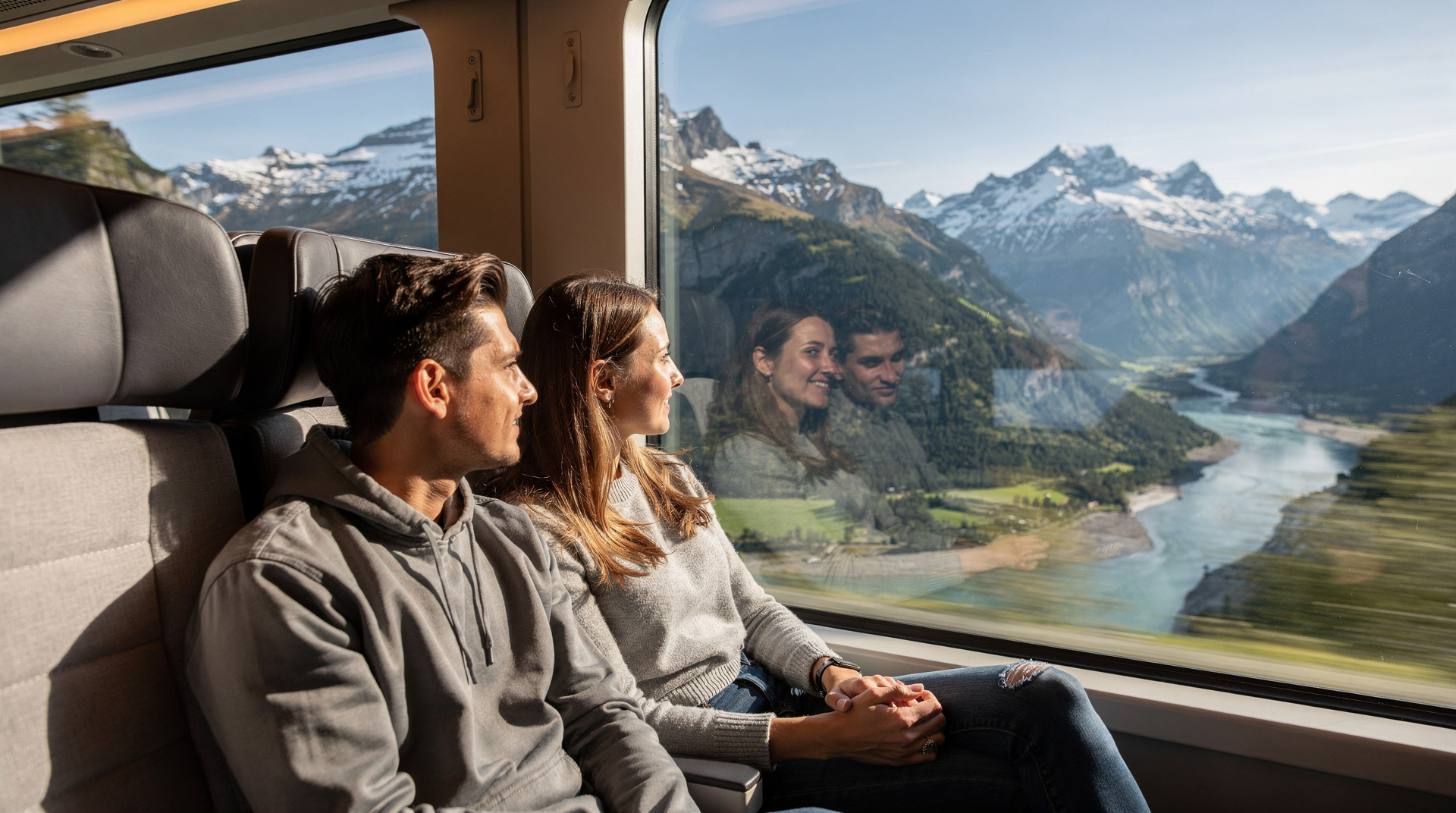
Switzerland’s train journeys are part of the experience, but long transits can challenge younger children. Strategies that work: window seats (always — the Swiss landscape from a train window is genuinely engaging), the SBB Junior app (available in Swiss German, French, and Italian — with simple train games for children), and the simple rule of planning the longest journeys during nap time. For children who love trains (and many do), the journey is the attraction rather than a means to an end — the rack railways in particular, with their visible cog wheels and steep angles, are endlessly fascinating.
The Pilatus rack railway and the Jungfraujoch train are the two most child-captivating rail journeys in Switzerland. Both involve technical novelty (steepest rack railway in the world, railway through a mountain), visible engineering (you can watch the cog engage on the Pilatus), and dramatic destinations. These are not just transport — they are experiences in their own right.
Frequently asked questions about Switzerland family itinerary
Is the Jungfraujoch safe for young children? Most children handle it well, but the altitude (3,454 metres) can cause mild headaches or nausea in some children and adults. Take the visit slowly, keep everyone hydrated, warmly dressed, and descend if anyone feels unwell — symptoms fade quickly at lower elevation. See the Jungfraujoch guide for more detail.
What is the best base for a family trip to the Bernese Oberland? Interlaken is the easiest base for families: central, flat, plenty of family accommodation, and short train rides to both Grindelwald and Lauterbrunnen. Staying in Grindelwald itself gives closer mountain access but fewer amenities for very young children.