Best museums in Switzerland: top picks by region
Which is the best museum in Switzerland?
The Swiss Museum of Transport in Lucerne is the most visited, while the Fondation Beyeler near Basel is widely considered the finest art museum. Both are free with the Swiss Travel Pass.
Why Switzerland punches above its weight in museums
A small country of nine million people, Switzerland maintains a museum network that rivals nations three times its size. There are more than 1,100 museums registered in the country — roughly one for every 8,000 inhabitants, one of the highest densities in the world. That statistic reflects a particular Swiss commitment to preserving and displaying culture, science, and history rather than burying it in archives.
The reasons are partly historical. Switzerland sat at the crossroads of European trade routes for centuries, accumulating wealth that was reinvested in civic institutions. It also escaped the destruction of two world wars that flattened or looted museum collections across the continent. The result is an exceptionally intact inheritance, from Roman-era artefacts in Basel to cutting-edge contemporary art in Basel’s galleries and a transport heritage collection in Lucerne that spans the entire history of Swiss mobility.
The Swiss Travel Pass gives free entry to more than 500 museums nationwide, making a museum-focused trip genuinely affordable. This guide covers the standout institutions by category, with practical advice on getting there, how long to allow, and what not to miss.
At a glance
| Where | Concentrated in Zurich, Basel, Lucerne, Geneva and Lausanne — all reachable by direct SBB train |
| Cost | Around CHF 10-32 per museum; free or reduced with the Swiss Travel Pass at more than 500 institutions |
| Time needed | Allow 90 minutes to 3 hours per museum; a full day for Ballenberg |
| Getting there | City trams/buses to most; a short train or PostBus ride for out-of-town sites like Ballenberg |
| Best time | Year-round — museums are an ideal rainy-day plan; book ahead for major temporary exhibitions |
Lindt Home of Chocolate — world's largest chocolate museum
Skip the queue with advance tickets to Zurich's most popular museum. The world's tallest chocolate fountain, immersive tasting stations, and the full story of Swiss chocolate from bean to bar.
- Free cancellation
Swiss Museum of Transport, Lucerne
The Swiss Museum of Transport (Verkehrshaus der Schweiz) is Switzerland’s most visited museum, attracting over a million visitors per year. Located on the shore of Lake Lucerne, a short bus ride or boat journey from the old town, it covers every form of Swiss transport from the first mail coaches of the 18th century to the SBB rail network, Swiss aviation, and the country’s Alpine road tunnels.
The scale is immediately impressive. Locomotives that weigh hundreds of tonnes sit in cavernous hangars alongside early automobiles, cable cars, and aeroplanes. Children can climb into a replica cockpit, walk through a real tunnel section, and operate interactive rail simulations. Adults will find the section on the St. Gotthard Rail Tunnel particularly well presented — the engineering challenges of boring through 57 kilometres of Alpine rock are explained through models, film, and original equipment.
The museum also contains a planetarium, a Swiss Chocolate Adventure attraction (a paid extra that traces the history of Swiss chocolate with sensory displays), and an IMAX-style Filmtheatre showing documentaries on natural and transport themes.
Practical details: Open daily 10:00-18:00 (17:00 November to March). Adults CHF 32, children CHF 16. Free with Swiss Travel Pass. Reached by bus 6, 8, or 24 from Lucerne city centre, or by boat from the Bahnhof landing stage in summer. Allow a minimum of three hours; a full day is not excessive. Book Swiss Museum of Transport entrance tickets.
Lucerne is an excellent base for exploring this part of Switzerland — the museum pairs well with a morning walk across the Chapel Bridge and an afternoon on Mount Pilatus.
Kunsthaus Zurich
The Kunsthaus Zurich is Switzerland’s largest art museum and one of the most significant in Europe. A major extension opened in 2021 doubled its exhibition space, making it now one of the ten largest art museums on the continent by floor area. The collection spans from the medieval period to the present day, but the Kunsthaus is most celebrated for three areas: its holdings of Alberto Giacometti sculpture (the largest in the world), its collection of Edvard Munch works outside Scandinavia, and its breadth of 20th-century Swiss and international art.
The original building and the Chipperfield Extension are connected by an underground passage and feel architecturally distinct — the new wing is cool, rectilinear, and flooded with northern light, while the older galleries have a more intimate, traditional feel. The Bührle Collection, housed in the new wing and controversial due to the wartime origins of some works, includes masterpieces by Monet, Van Gogh, Cézanne, and Renoir.
The museum café in the new extension is a pleasant place to break up a long visit. The Kunsthaus also runs an excellent programme of temporary exhibitions, typically featuring two or three major shows per year.
Practical details: Open Tuesday-Sunday 10:00-18:00, Wednesday and Thursday until 20:00. Adults CHF 26 (permanent collection only; higher with temporary exhibitions). Reduced admission with Swiss Travel Pass. Located at Heimplatz, directly behind the university in Zurich’s cultural quarter, a 15-minute walk from the main station or tram 3 or 5 to Kunsthaus. Allow two to four hours.
Zurich’s other major museums — including the Swiss National Museum (see below) — are within walking distance, making it possible to combine two institutions in a single day.
Fondation Beyeler, Riehen (Basel)
The Fondation Beyeler is routinely cited by art professionals as one of the finest small museums in the world. Housed in a low, light-filled building designed by Renzo Piano and set in the gardens of the Villa Berower in Riehen, a suburb of Basel, it holds approximately 200 works from the private collection assembled over decades by gallerist Ernst Beyeler and his wife Hildy.
The collection is extraordinary in its quality. Works by Picasso (one of the largest concentrations outside Spain and France), Giacometti, Mondrian, Monet’s late water lilies, Francis Bacon, Mark Rothko, and Andy Warhol sit in rooms where natural light changes the experience throughout the day. The architecture itself is integral — Piano designed the building so that north light filters through translucent roofing, eliminating the harsh artificial lighting that flattens other museum experiences.
Temporary exhibitions at the Beyeler are ambitious and draw international attention — recent years have featured retrospectives of Monet, Calder, Yayoi Kusama, Jean-Michel Basquiat, and Louise Bourgeois. The museum’s schedule is worth checking when planning a trip to the Basel region.
Practical details: Open daily 10:00-18:00, Wednesdays until 20:00. Adults CHF 30 (permanent collection; higher for special exhibitions). Free with Swiss Travel Pass. Reached by tram 6 from Basel city centre to Fondation Beyeler stop (20 minutes). Allow two to three hours.
Basel’s exceptional museum density — the city has over 40 museums in a compact area — makes it one of the best single-city museum destinations in Europe. The Kunstmuseum Basel, the Museum of Cultures, and the Vitra Design Museum across the German border are all within reach.
Olympic Museum, Lausanne
Lausanne is the world capital of sport. The International Olympic Committee has been headquartered here since 1915, and the city on the shores of Lake Geneva hosts the administrative bodies of more than 50 international sports federations. The Olympic Museum, reopened in its current form in 2013 after extensive renovation, is the definitive institution for understanding the history and spirit of the modern Olympic Games.
The permanent exhibition covers the origins of the Games in ancient Greece, the revival by Pierre de Coubertin in 1896, and every Summer and Winter Olympics since. Interactive galleries let visitors test their athletic reflexes against Olympic benchmarks, watch archive footage from Games stretching back to the silent film era, and examine original torches, medals, and competition equipment from across the history of the movement.
The setting enhances the experience: the museum sits in parkland above the lake, with the Savoy Alps visible across the water on clear days. The Olympic Park surrounding the building is free to enter and contains sculptures and monuments tracing sporting history.
Practical details: Open Tuesday-Sunday 09:00-18:00. Adults CHF 20, children CHF 10. Reduced with Swiss Travel Pass. Reached by metro M2 from Lausanne city centre to Ouchy, then a 10-minute walk along the lakefront. Allow two hours. Book Olympic Museum entry tickets with audio guide.
Lausanne is also the gateway to the Lavaux vineyards, a UNESCO World Heritage Site along the lake shore east of the city — an easy half-day extension to a museum visit.
Swiss National Museum, Zurich
The Swiss National Museum (Landesmuseum) occupies a neo-Gothic castle-like building directly next to Zurich’s main station — one of the most convenient museum locations in the country. A large modern extension opened in 2016 doubled the exhibition space and added light-filled galleries that contrast with the ornate Victorian architecture of the original building.
The permanent collection traces Swiss history from prehistory to the present day. Key highlights include reconstructed medieval rooms transported intact from Swiss houses and monasteries, exceptional collections of Swiss religious art and ecclesiastical objects, archaeological finds from Celtic and Roman Switzerland, and a comprehensive history of Swiss identity and confederation. The museum does an honest and nuanced job of examining difficult topics — Swiss relations with Nazi Germany and the complex history of Swiss banking and neutrality are addressed with academic rigour.
The museum is particularly strong on the decorative arts: furniture, ceramics, textiles, and silver from the medieval period through the 19th century. The armour and weapons collection is one of the finest in Central Europe.
Practical details: Open Tuesday-Sunday 10:00-17:00 (Thursday until 19:00). Adults CHF 10, free for under 16. Free with Swiss Travel Pass. Located at Museumstrasse 2, one minute from Zurich Hauptbahnhof. Allow two to three hours. Book Swiss National Museum entry tickets.
Patek Philippe Museum, Geneva
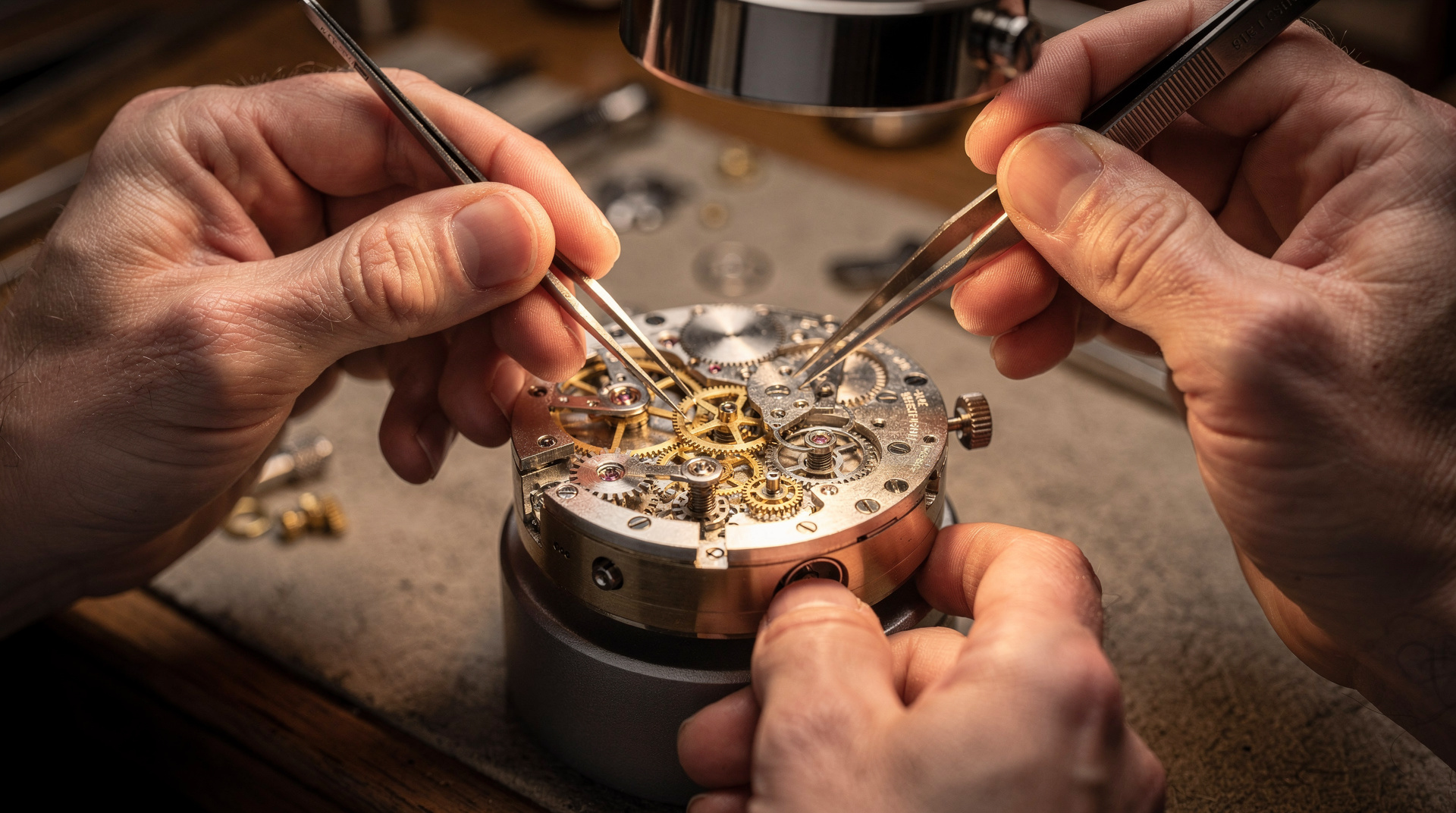
While covered in more depth in the Swiss watchmaking guide, the Patek Philippe Museum in Geneva deserves mention in any survey of Swiss museums. Housed across four floors of a renovated 19th-century building in the Plainpalais district, it holds one of the world’s finest collections of antique timepieces alongside a comprehensive history of Patek Philippe itself.
The first two floors display watches from the 16th to 19th centuries — enamel-painted pocket watches, automata, and astronomical complications that represent the absolute pinnacle of human miniaturisation before the Industrial Revolution. The upper floors trace Patek Philippe’s history from its founding in 1839, with prototypes, unique pieces made for historical figures, and the legendary Henry Graves Supercomplication (a replica; the original sold at auction for CHF 24 million).
Practical details: Open Tuesday-Friday 14:00-18:00, Saturday 10:00-18:00. Adults CHF 10. Not covered by Swiss Travel Pass. Tram 1 or 2 to Plainpalais. Allow 90 minutes to two hours.
Technorama, Winterthur
Switzerland’s science museum — and one of the finest in Europe for interactive engagement — Technorama in Winterthur is an essential visit for families and anyone with an interest in physics, chemistry, and technology. The museum contains more than 500 hands-on exhibits across 8,000 square metres, all designed so that visitors can directly manipulate and experience scientific principles rather than simply read about them.
Electricity, fluid dynamics, light, magnetism, acoustics, and human perception are all explored through exhibits that are calibrated to be genuinely engaging for both children and adults. The lightning theatre, which generates artificial lightning in a controlled environment, is a particular highlight. A large outdoor science park extends the experience into the grounds.
Practical details: Open daily 10:00-17:00. Adults CHF 30, children CHF 22. Free with Swiss Travel Pass. Direct train from Zurich to Winterthur (15 minutes), then 10-minute walk. Allow three to four hours minimum.
Chaplin’s World, Corsier-sur-Vevey
Charlie Chaplin spent the last 25 years of his life at the Manoir de Ban, a large estate above the town of Vevey on Lake Geneva. The property opened as a museum in 2016 and has rapidly become one of the most-visited cultural attractions in the Lake Geneva region.
The visit divides into two parts: the manor house itself, preserved and curated as it was during Chaplin’s residence, with costumed figures and film projections recreating moments from family life; and the Studio, a purpose-built building that explores Chaplin’s filmography through costumes, sets, archive footage, and interactive installations. The gardens are beautiful, with views across the lake to the French Alps.
Book skip-the-queue Chaplin’s World tickets on GetYourGuide — the museum is particularly busy on summer weekends and during school holidays.
Practical details: Open daily 10:00-18:00. Adults CHF 28, children CHF 18. Not covered by Swiss Travel Pass. Train to Vevey then taxi or local bus. Allow two to three hours.
FIFA Museum, Zurich
The FIFA Museum near Zurich’s Enge station is the definitive collection on the history of world football. Interactive exhibits cover the development of the game from its 19th-century British origins, every FIFA World Cup since 1930 (with original trophies and match-worn shirts), and deep dives into football’s cultural impact across different continents.
The museum is designed for fans of the sport but also works as a serious cultural history of global popular culture. It is a particularly good option on a rainy afternoon in Zurich and appeals to older children and teenagers.
Practical details: Open Tuesday-Sunday 10:00-18:00. Adults CHF 24, children CHF 15. Reduced with Swiss Travel Pass. S-Bahn to Enge station. Allow 90 minutes. Book FIFA Museum entry tickets.
Alimentarium, Vevey
The Alimentarium in Vevey is a food museum funded by Nestlé (whose global headquarters sit directly across the road) that explores the science, history, and culture of human nutrition. Despite its corporate sponsorship, the museum is genuinely rigorous and engaging — covering food production, digestion, world food cultures, and the politics of global hunger.
It is particularly good for families with children aged 7 and above, and the lakeside café serves above-average food that matches the museum’s subject matter. The waterfront location in Vevey, a charming lakeside town between Lausanne and Montreux, makes it easy to combine with a walk along the lake promenade.
Practical details: Open Tuesday-Sunday 10:00-18:00. Adults CHF 18, children CHF 8. Reduced with Swiss Travel Pass. Direct train from Lausanne or Montreux to Vevey, then 5-minute walk. Allow 90 minutes.
Ballenberg Swiss Open-Air Museum, Brienz
The Ballenberg Open-Air Museum near Brienz is one of the largest open-air museums in Europe, with over 100 historic Swiss buildings relocated from every region of the country to a 66-hectare wooded site. Farmhouses, barns, mills, and workshops from the medieval period through the 19th century are furnished with period objects and arranged in regional groupings. Live demonstrations of traditional crafts — woodcarving, weaving, cheese-making, blacksmithing — bring the buildings to life and make the museum genuinely engaging rather than merely archival.
The scale requires a full day, and the outdoor setting makes Ballenberg weather-dependent in a way that indoor museums are not. The combination of architecture, landscape, and craft demonstration is unlike anything else in Swiss museum culture. Open mid-April to late October.
Practical details: Located between Brienz and Meiringen; two entrances, one at each end. Adults CHF 32, children CHF 16. Train to Brienz from Interlaken (20 minutes), then PostBus or a 25-minute walk to the western entrance. Swiss Travel Pass covers transport; museum entry is separate. Allow a full day. Book Ballenberg Open-Air Museum tickets.
Lesser-known museums worth a detour
Beyond the headline institutions, a handful of smaller museums reward travellers with more time. The International Red Cross and Red Crescent Museum in Geneva traces the humanitarian movement founded by Henry Dunant, with a sobering permanent collection on conflict and relief work — a serious counterpoint to a city otherwise associated with diplomacy and luxury watches.
In Bern, the Zentrum Paul Klee, designed by Renzo Piano in a distinctive rolling-wave form on the eastern edge of the city, holds the world’s largest collection of Klee’s work (around 4,000 pieces, rotated in changing displays). In Basel, the Museum Tinguely on the Rhine celebrates Jean Tinguely’s kinetic sculpture — a genuinely playful counterpoint to the city’s more austere art institutions, with several machines visitors can set in motion themselves.
Museums for families with children
Not every museum on this list suits younger children, but several are built around hands-on engagement. The Technorama in Winterthur and the Swiss Museum of Transport in Lucerne are the two strongest choices for families, both combining scale with genuine interactivity. The dedicated museums for kids guide ranks the best options by age group and covers which major institutions have dedicated children’s trails or activity backpacks.
Museum type comparison
| Museum | Best for | Allow | Travel Pass |
|---|---|---|---|
| Swiss Museum of Transport | Families, engineering | 3+ hours | Free |
| Kunsthaus Zurich | Fine art, Giacometti | 2-4 hours | Reduced |
| Fondation Beyeler | Modern masters, architecture | 2-3 hours | Free |
| Swiss National Museum | Swiss history | 2-3 hours | Free |
| Technorama | Hands-on science, families | 3-4 hours | Free |
| Ballenberg | Open-air, crafts | Full day | Transport only |
Museum planning: practical tips
Use the Swiss Travel Pass. More than 500 Swiss museums give free entry to pass holders. For a week-long trip including several major institutions, this alone can justify a significant portion of the pass cost. The Swiss Travel Pass guide explains the options and how to choose the right pass duration.
Check opening days carefully. Most Swiss museums close on Mondays. A surprising number also close over the lunch hour (typically 12:00-14:00), especially smaller regional institutions. Major urban museums generally stay open all day.
Book temporary exhibitions in advance. The Fondation Beyeler, Kunsthaus Zurich, and Kunstmuseum Basel frequently sell out for blockbuster temporary shows. Check availability before visiting if a specific exhibition is your primary reason for going.
Museum passes for multiple visits. Several Swiss cities offer local museum passes valid across multiple institutions. The Basel Card (included with hotel stays) gives free museum entry across the city. Zurich’s ZüriCard covers transport and museums.
Consider timing. Most museum cafés serve lunch until 14:30. Arriving at 11:00 allows a couple of hours in the galleries before a break, then another two hours in the afternoon. Avoid arriving just before closing — security staff tend to shepherd visitors toward exits with 30 minutes remaining.
Combining museums with other Swiss experiences
Museums fit naturally into broader Switzerland itineraries. A day in Lucerne can combine the Transport Museum in the morning with a boat trip on Lake Lucerne in the afternoon. Basel pairs museum visits with the Rhine promenade and a boat crossing on the distinctive flat-bottomed ferries. Zurich’s museum quarter in the university district sits close to the old town and the lake, making it easy to mix gallery time with café culture.
For families, the combination of the Technorama in Winterthur and a Jungfraujoch excursion on the same trip covers both indoor and outdoor experiences at opposite ends of the interest spectrum. The family activities guide covers this in more detail.
Switzerland’s cultural calendar means that major festivals — Art Basel in June, the Lucerne Festival in August, the Zurich Film Festival in September — align with or directly involve museum institutions. Planning visits around these events adds another dimension to a museum-focused trip.
Getting around for museum visits
Switzerland’s train network makes museum-hopping between cities straightforward. The journey from Zurich to Basel takes under an hour; Zurich to Lucerne is 50 minutes; Lausanne to Geneva is 40 minutes. All major museum cities are served by direct SBB intercity trains running at least half-hourly.
Within cities, trams and buses reach most major museums directly. Zurich’s tram network is particularly comprehensive. Lucerne is compact enough that the Transport Museum (the only institution not in the old town) is the only one requiring a bus.
The best time to visit Switzerland for museums is largely weather-independent — rain makes museum visits feel particularly purposeful — but spring and autumn offer the advantage of fewer crowds at outdoor attractions, freeing up flexibility in a mixed itinerary. Summer school holidays bring more families to hands-on science museums like the Technorama; planning visits for weekday mornings during July and August reduces queuing.
Whether you approach Switzerland primarily as a mountain destination or a cultural one, its museums repay serious attention. The depth of the collections, the quality of the presentation, and the straightforward transport links between institutions make a dedicated museum itinerary genuinely rewarding.
Frequently asked questions about Best museums in Switzerland
Are Swiss museums free with the Swiss Travel Pass?
More than 500 museums nationwide give free entry to Swiss Travel Pass holders, including the Swiss National Museum, Fondation Beyeler, and Swiss Museum of Transport. A handful of major private collections — the Patek Philippe Museum and Chaplin’s World among them — are not covered and charge a separate ticket.
Which museums suit first-time visitors with limited time?
The Swiss Museum of Transport in Lucerne and the Kunsthaus Zurich are the two best choices for a first Switzerland trip, since both sit in cities that are easy first stops. The first-time visitors guide covers how to fit a museum into a broader introductory itinerary without overloading the schedule.
How many museums can you realistically visit in one day?
Two is a comfortable maximum if you want to spend real time in each — most visits run two to three hours, plus travel between them. Trying to fit three risks rushing the last one just as security starts shepherding people toward the exit.