Most beautiful old towns in Switzerland
Which is the most beautiful old town in Switzerland?
Bern's old town is a UNESCO World Heritage Site and widely considered the finest in Switzerland, with six kilometres of arcaded walkways and a remarkably intact medieval layout. Lucerne and Stein am Rhein are close rivals.
Why Swiss old towns endure
Switzerland’s escape from the systematic bombing of World War Two is the most obvious reason that its old towns survive in such remarkable condition. But the deeper explanation is structural: Swiss cities never experienced the 19th-century industrial expansions that bulldozed medieval fabric elsewhere in Europe, and 20th-century planning regulations protected historic cores with unusual rigour. The result is a collection of old towns that are not curated museum pieces but living urban centres — people shop, work, and live in buildings that were standing when Columbus crossed the Atlantic.
Each of Switzerland’s major old towns has a distinct character shaped by language region, geography, and history. Bern is Bernese German — solid, arcaded, unhurried. Lucerne is touristic but genuinely beautiful, straddling the point where the Reuss leaves the lake. Basel stands at the point where Switzerland, France, and Germany meet, and its architecture reflects centuries of cross-border influence. Stein am Rhein and Murten are smaller, quieter, and arguably more authentically medieval. Gruyeres sits on a hill above its valley like something from a fairy tale.
This guide covers them all, with walking suggestions, practical details, and advice on the best times to visit.
| Details | |
|---|---|
| Where | Bern, Lucerne, Zurich, Basel, Stein am Rhein, Gruyeres, Murten, Solothurn |
| Cost | Free to walk in every case; individual sights (towers, monastery museums, castles) typically CHF 6-12 |
| Time needed | 1-3 hours for the smaller towns (Murten, Solothurn, Gruyeres); a full day for Bern or Lucerne |
| Getting there | All reachable by direct or one-change train from Zurich, Bern, or Lausanne |
| Best time | Spring and early autumn for comfortable walking and thinner crowds; early morning or evening in Lucerne to avoid tour groups |
Comparing Switzerland’s old towns at a glance
| Old town | Character | Time needed | Best for |
|---|---|---|---|
| Bern | Arcaded, UNESCO, large-scale | Full day | First-time visitors, architecture |
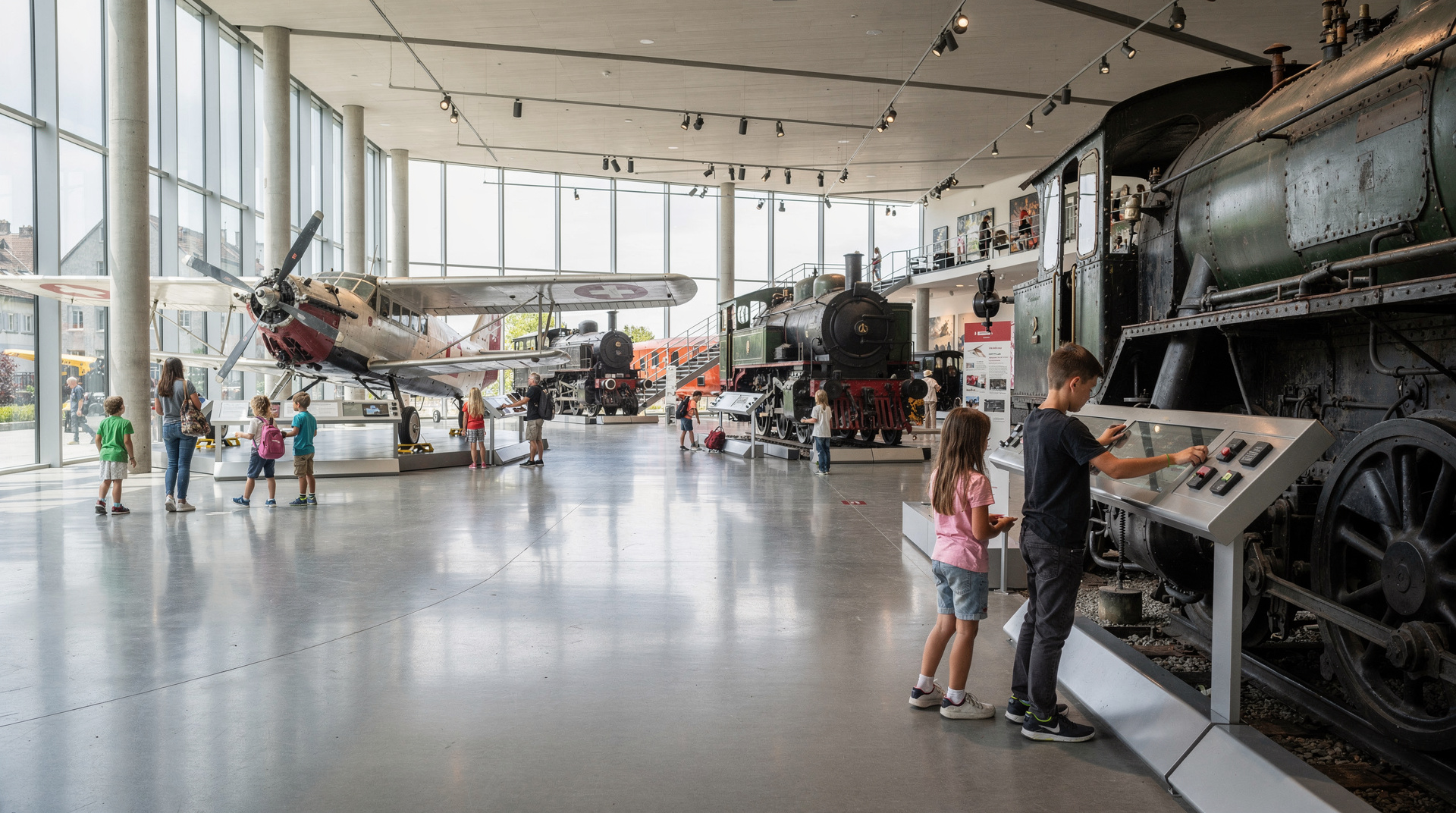
| Lucerne | Lakeside, photogenic, touristy | Half day | Photography, combining with the Transport Museum |
| Zurich Niederdorf | Compact, lively, hillside | 2-3 hours | An easy add-on to a Zurich day |
| Basel | Cosmopolitan, tri-border | Full day | Museum lovers, Rhine views |
| Stein am Rhein | Small, frescoed, riverside | 2-3 hours | Best-preserved medieval streetscape |
| Gruyeres | Hilltop, car-free, concentrated | 2-3 hours | Combining with cheese-tasting and the castle |
| Murten | Walled, bilingual, lakeside | 2 hours | Complete medieval walls, uncrowded |
| Solothurn | Baroque, undervisited | 1 hour | A quiet alternative off the main circuit |
Bern: the arcaded capital
Bern’s old town is the largest and most significant of Switzerland’s historic centres. Designated a UNESCO World Heritage Site in 1983, it occupies a peninsula in a loop of the Aare River and contains one of the best-preserved examples of medieval urban planning anywhere in Central Europe.
The defining feature of Bern is its Lauben — the six kilometres of continuous sandstone arcades that run along both sides of the main streets, sheltering pedestrians from rain and snow. Every building on the main axes has an arcade at ground level, creating covered walkways that have functioned as the city’s commercial and social infrastructure since the 12th century. You can walk from one end of the old town to the other without getting wet in a downpour — a practical genius that has never been bettered.
Key sights in Bern’s Altstadt:
The Zytglogge (Clock Tower) at the western end of Kramgasse is the most famous landmark — an astronomical clock that has been marking the hours since 1530, with mechanical figures rotating before each chime. Guided tours of the clock mechanism run daily at 16:30 in summer and are worth joining for the views from the tower.
The Münster (Cathedral) is the finest Gothic church in Switzerland, begun in 1421 and not completed until 1893. Its 100-metre tower is the highest in the country. Climb to the top (344 steps) for views over the Aare loop and the Alps beyond — the Bernese Oberland peaks including the Eiger, Mönch, and Jungfrau are visible on clear days.
The Bärenpark (Bear Park) on the far side of the Nydegg Bridge houses the city’s bear mascots — the bear has been Bern’s symbol since the city’s founding (supposedly from a bear hunt by Duke Berchtold V) and live bears have been kept in the city since at least 1513. The current enclosure is naturalistic and allows the bears to enter and swim in the Aare.
The Federal Palace (Bundeshaus), completed in 1902, dominates the western edge of the old town plateau. Public tours of the parliamentary chambers run on non-session days.
Practical details: Bern is a 100-minute train journey from Zurich, 60 minutes from Lausanne, and 45 minutes from Basel. The old town is compact and entirely walkable. Allow a full day; two days if combining with the Paul Klee Centre or the Historical Museum. Swiss Travel Pass covers transport. For a structured introduction, a guided walking tour of Bern’s old town covers the key sights and historical context in about two hours.
Lucerne: the picture-perfect lake town
Lucerne is Switzerland’s most photographed city, and it earns the distinction. The Chapel Bridge (Kapellbrücke), a covered wooden footbridge dating from 1333 that crosses the Reuss with the octagonal Water Tower alongside it, appears on more Swiss tourism images than any other single structure.
The old town sits on both banks of the Reuss, connected by the Kapellbrücke and the slightly older Spreuerbrücke (also covered and wooden, with a Dance of Death painting cycle inside). On the north bank, the Museggmauer — a remarkably complete section of 14th-century city wall with nine towers — still defines the edge of the medieval town.
The main square, Kornmarkt, is ringed with frescoed and painted facades. The Jesuit Church (1677) on the south bank is the finest Baroque church in Switzerland. The old town’s lanes between the river and the lake are dense with independent shops, restaurants, and the kind of visual incident — painted gables, flower boxes, views through archways to the water — that rewards slow walking.
Lucerne is unquestionably touristy. The Chapel Bridge is surrounded by tour groups at peak summer hours. The solution is simple: arrive early (before 09:00) or in the evening (after 18:00) when the light is better and the crowds have thinned. The old town’s side streets are quieter at any hour.
Practical details: 50 minutes from Zurich by direct train. The old town is entirely walkable from the station. Allow half a day for the old town alone; a full day includes the Transport Museum (see the museums guide). Swiss Travel Pass covers transport and gives free entry to the Transport Museum.
Zurich Niederdorf
Zurich’s old town (Altstadt) divides between two banks of the Limmat. The Niederdorf on the east bank is the more characterful — a maze of narrow lanes ascending from the Limmat to the ridge where the Grossmünster (Great Minster) and the university buildings stand. The streets are lined with bars, restaurants, independent shops, and galleries, and the area has an energy distinct from the corporate Zurich of the financial district.
The Grossmünster’s twin towers are Zurich’s defining skyline. According to legend (and Zwinglian hagiography), Charlemagne’s horse knelt on the site where the saints Felix and Regula were buried, prompting him to found the church. The Reformation in Zurich began from this church in 1519 when Ulrich Zwingli became its priest. Climb the tower (Karlsturm) for close-up views of the bronze modern doors by sculptor Otto Münch.
Across the river, the Lindenhügel (Linden Hill) and the Lindenhof — a raised terrace occupying the site of the Roman fort of Turicum, the origin point of Zurich — offers the best viewpoint over the Limmat and the spires of the old town.
Practical details: Zurich Hauptbahnhof is at the edge of the old town. The Niederdorf is a 10-minute walk from the station. Allow two to three hours for the old town.
Basel: the tri-border city
Basel sits where Switzerland meets France and Germany at the bend in the Rhine, and centuries of cross-border commerce have shaped an old town that feels more cosmopolitan and architecturally varied than other Swiss historic centres.
The Grossbasel (Great Basel) old town on the south bank of the Rhine is built on a gentle rise above the river, with the red sandstone Münster (Basel Minster) at its highest point. From the Münster terrace, the view down to the Rhine and across to Kleinbasel (Little Basel) on the north bank — technically a different medieval commune — is the finest urban viewpoint in northern Switzerland.
The market square (Marktplatz) below the Münster is one of the best-proportioned in Switzerland, surrounded by guild houses and overlooked by the red-painted Town Hall (Rathaus). The Rhine promenade running east from the Mittlere Brücke (Middle Bridge) is a favourite gathering point for locals in summer; the café terraces along the waterfront are consistently excellent.
Basel’s museum density is exceptional — over 40 institutions in a compact area, including the Kunstmuseum Basel (one of the most important art museums in Europe), the Museum of Cultures, and the Architecture Museum. The museums guide covers these in depth, including the Fondation Beyeler in suburban Riehen.
Practical details: Direct trains from Zurich (55 minutes), Bern (55 minutes), and Lausanne (90 minutes). The old town is a 15-minute walk from the SBB station. Swiss Travel Pass covers transport. A Basel old town walking tour is an excellent way to explore the Münster, Marktplatz, and Rhine promenade with local context.
Stein am Rhein
Stein am Rhein is frequently cited as the best-preserved small medieval town in Switzerland, and the claim is hard to dispute. The main street and market square are lined with timber-frame houses whose entire facades are covered in detailed fresco paintings — biblical scenes, hunting episodes, heraldic symbols, and narrative cycles rendered in vivid colour. Some of the paintings date from the 16th century; most have been carefully restored. The overall effect, particularly in morning light, is unlike anywhere else in the country.
The town grew around a Benedictine monastery (St. Georgen) founded in the early 11th century; the monastery, the Rathaus, and the ring of stone towers that once completed the medieval defences still define the town’s layout. Walking the full circuit of the old town takes about 45 minutes. A 10-minute walk from the centre reaches the Burg Hohenklingen, a well-preserved castle above the Rhine with views downstream.
Stein am Rhein sits on the Rhine, 20 kilometres east of Schaffhausen. River cruises from Schaffhausen reach the town in summer, and the combination of the Rhine Falls at Schaffhausen with an afternoon in Stein am Rhein makes for one of the best day trips in eastern Switzerland.
Getting there: Train from Zurich to Schaffhausen (50 minutes), then connecting train to Stein am Rhein (30 minutes). Swiss Travel Pass covers transport.
Practical details: The old town is free to walk. The monastery museum has an entry charge (adults CHF 6). Allow two to three hours.
Gruyeres
Gruyeres is Swiss medieval townscape at its most concentrated. The single main street climbs from the gatehouse to the castle at the top of the hill, flanked by stone buildings dating from the 15th to 18th centuries, with the mountains visible at the end of every cross-lane. The village is pedestrianised and car-free, which means the absence of traffic noise adds to the impression of stepping backward in time.
The cheese that carries the village’s name is produced in the surrounding valley (the proper name is Gruyère, the cheese; the town adds an ‘s’ to its name in French). The Maison du Gruyère fromagerie at the base of the hill offers a fascinating and surprisingly in-depth look at the cheese-making process, and tastings are available.
At the top of the village, Gruyeres Castle (covered in the castles guide) offers more of the panoramic views that make this corner of the pre-Alps so rewarding. The incongruous HR Giger Museum in the village is also worth a look — the contrast between Giger’s dark biomechanical art and the perfectly preserved medieval setting is a genuinely memorable experience.
Getting there: Train from Bulle (15 minutes), reached from Fribourg (25 minutes) or Lausanne (60 minutes via Bulle). Village is a 25-minute uphill walk from the station or local bus. Swiss Travel Pass covers transport.
Practical details: The village is free to enter. Castle adults CHF 12. Allow two to three hours.
Murten (Morat)
Murten is a bilingual town on the shore of Lake Murten between Fribourg and Bern, and its combination of a largely complete medieval circuit of walls and towers, a covered arcaded main street, and a lakeside setting makes it one of the most rewarding small old towns in Switzerland.
The walls, walkable along their entire length on a parapet path, date from the 13th and 14th centuries and remain almost fully intact — unusual even by Swiss standards. The views from the parapet across the lake to the Alps are exceptional. The main street beneath the walls is arcaded in the style of Bern (the town was under Bernese control for much of its history) with painted facades above the arcades.
Murten is associated with one of the decisive battles of Swiss history: the Battle of Murten in 1476, in which the Swiss Confederation and Burgundian Allies defeated Charles the Bold of Burgundy, effectively ending Burgundian power in the region. An annual commemorative run (the Murtenrennen) marks the event.
Getting there: Train from Bern (30 minutes) or Fribourg (20 minutes). Swiss Travel Pass covers transport.
Practical details: The walls and old town are free to explore. Allow two hours including the lakefront.
Solothurn
Solothurn calls itself the most beautiful Baroque town in Switzerland — a bold claim, but not without foundation. The city on the Aare is characterised by its Italian-influenced Baroque architecture, an inheritance from its role as the residence of the French ambassador to the Swiss Confederation from 1530 to 1792. The cathedral of St. Ursus (1773), one of the finest Baroque churches in Switzerland, stands at the end of the main street. Eleven fountains, eleven towers, and eleven altars in the cathedral — the city has an obsession with the number eleven reflected throughout its architecture.
The compact old town is walkable in an hour and undervisited by foreign tourists, making it a pleasantly uncrowded alternative to more famous Swiss historic centres.
Getting there: Train from Bern (30 minutes) or Zurich (65 minutes). Swiss Travel Pass covers transport.
What to look for in Swiss old towns
Several features recur across Switzerland’s best historic centres and reward attention:
Arcades (Lauben): The covered walkways at ground level that protect pedestrians from weather are a defining feature of Swiss German old towns. Bern has the most extensive and celebrated example, but Murten, Olten, and Aarau have fine examples too.
Frescoed facades: Particularly common in the Rhine region (Stein am Rhein, Schaffhausen) and in Romansh-speaking Graubunden. The tradition of painting building exteriors with narrative scenes dates from the 16th century.
Fountains: Renaissance-era fountain monuments stand in the main squares of most Swiss old towns, invariably brightly painted and decorated with heraldic or mythological figures.
City walls: Sections of medieval defensive walls survive in Murten (complete), Lucerne (largely complete), Bern (fragmentary), and Bellinzona (UNESCO-listed).
Guild houses: The Zunfthäuser — buildings owned by the medieval craft guilds — front many Swiss market squares. Basel, Zurich, and Lucerne have the finest collections.
Getting around Swiss old towns
All of Switzerland’s major old towns are compact and best explored on foot. The Swiss Travel Pass covers all inter-city rail and local transport, making it straightforward to visit several old towns in a single trip without needing a car.
Spring and early summer bring the most appealing conditions for old town walking — daylight is long, temperatures are comfortable for extended walking, and summer crowds have not yet peaked. Autumn is similarly good, with the added interest of harvest-season markets in many towns.
The cultural calendar adds value to old town visits: Bern’s Zibelemärit (Onion Market) in November, Lucerne’s Carnival in February, and the Christmas markets that occupy main squares throughout December transform these spaces beyond their everyday functions.
For planning a route that combines old towns with hiking or winter sports, the compactness of Switzerland means these combinations are genuinely practical. Gruyeres, for example, is within 30 minutes of pre-Alpine hiking trails; Lucerne is an hour from the Engelberg ski resort; Bern is 90 minutes from Grindelwald. The old town visit and the mountain experience can co-exist in a single day if you start early enough.
Building an old-town-focused itinerary
For visitors who want to prioritise historic architecture over mountains, a 5-7 day circuit works well: start in Zurich, take the train to Stein am Rhein and the Rhine Falls at Schaffhausen for a day, then move south to Bern for a full day, west to Murten and Gruyeres, and finish in Lausanne or Basel depending on onward plans. The 3-day itinerary and 7-day itinerary guides can be adapted around this old-town emphasis by swapping mountain excursions for the smaller towns covered here. Travellers with more time should see the 14-day itinerary for a fuller circuit that balances old towns with the Alps.
Frequently asked questions about Most beautiful old towns in Switzerland
How many old towns can I realistically fit into a one-week trip?
Comfortably three to four if you plan around train connections: Bern (full day), Lucerne (half day), and either Stein am Rhein or Murten as an add-on day trip. Trying to fit more risks reducing each visit to a rushed hour, which undersells towns like Bern that reward slower walking.
Are Swiss old towns wheelchair or pushchair accessible?
Most are manageable but not uniformly flat — Bern’s arcaded streets and Lucerne’s riverside lanes are largely level, while Gruyeres and Stein am Rhein have some cobbled inclines. Basel and Zurich’s old towns have the most varied terrain due to their hillside layouts. Check specific accessibility notes for individual sights like tower climbs, which are rarely lift-accessible.