Switzerland festivals and events: the complete annual calendar
What is the most famous festival in Switzerland?
The Montreux Jazz Festival in July is Switzerland's most internationally famous event. Basel Fasnacht (Carnival) in February is the most significant culturally, and the Swiss National Day on August 1 is the most universally celebrated nationwide.
Festivals as a window into Swiss culture
Switzerland’s festivals are more varied and more deeply rooted in local identity than most visitors expect. The stereotype of Swiss reserve breaks down spectacularly at Fasnacht in Basel, where the city transforms for 72 hours into a hypnotic, slightly unnerving alternative reality of masked figures and fifes. It dissolves differently at Montreux in July, where the lakefront fills with the best jazz and soul musicians in the world and the town’s normally staid restaurants stay open until dawn.
Understanding Swiss festivals means understanding that Switzerland is four distinct cultural regions — German, French, Italian, and Romansh — each with its own festive calendar overlaid on a shared national identity. Carnival is celebrated in Basel and Lucerne with German-Swiss intensity; the wine harvests are feted in Lavaux and Valais with Francophone warmth; the August fireworks that mark Swiss National Day burn equally bright across every region.
This calendar covers the major annual events, organised by season, with practical information on booking accommodation, buying tickets, and what to expect.
| At a glance | |
|---|---|
| Where | Nationwide — biggest names cluster in Basel, Montreux, Zurich, Geneva, Locarno, Bern, and Appenzell |
| Cost | Most street festivals (Fasnacht, Sechseläuten, Escalade) are free to watch; ticketed concerts and screenings range roughly CHF 25-200+ |
| Time needed | A single festival day works, but the biggest names (Fasnacht, Montreux Jazz) reward 2-3 days on site |
| Getting there | SBB rail direct to every host city; the Swiss Travel Pass covers travel and lets you change plans on the fly |
| Best time | Depends on the festival — see the seasonal calendar below |
Winter festivals (December to February)
Christmas markets: December throughout Switzerland
Switzerland’s Christmas markets (Weihnachtsmärkte in German, marchés de Noël in French) are among the most atmospheric in Europe. The best are:
Basel Weihnachtsmarkt: One of the oldest in Switzerland, occupying the Barfüsserplatz and Münsterplatz from late November to Christmas Eve. The setting in front of the Gothic Minster is exceptional.
Montreux Christmas Market: The self-styled “Christmas Capital of Switzerland” transforms its lakefront promenade into a spectacular market with over 160 chalets and a backdrop of the Alps across Lake Geneva. Runs from late November to Christmas Eve.
Zurich Weihnachtsmarkt: Multiple markets across the city, the largest at the main station (inside the hall) and a separate market at Bellevue. The station market is unusual for being under glass and running late into the evening.
Bern Weihnachtsmarkt: The arcaded streets of the old town provide natural shelter for market stalls. The combination of medieval architecture and market atmosphere is particularly strong.
Accommodation prices rise significantly around markets in December — book several months in advance for the Montreux market in particular.
Escalade, Geneva: December 11-12
Geneva’s Escalade is a local festival with deep civic roots, commemorating the failed Savoyard attack on the city on the night of December 11-12, 1602, when defenders repelled the besieging army partly through the legendary actions of Catherine Cheynel, who poured boiling soup on attackers from a window. The festival features a costumed historical procession through the old town, traditional singing, and the marmite — a chocolate cauldron filled with marzipan vegetables, ritually smashed by the youngest and oldest member of each family.
The Escalade is primarily a local celebration rather than a tourist event, which makes it particularly worth attending if you are in Geneva in early December.
Basel Fasnacht: the three days that shake the city
Basel Fasnacht is the defining Swiss carnival — and arguably the most intense carnival in Europe outside Venice and Cologne. It begins at exactly 04:00 on the Monday after Ash Wednesday (officially beginning Lent, making this a strange post-Lenten carnival) and ends 72 hours later. The timing, three days after the start of Lent rather than before it, is a Protestant city’s deliberate departure from Catholic carnival tradition.
The festival begins with the Morgestraich — at the stroke of four in the morning, all electric lights in the inner city are extinguished simultaneously. In the darkness, thousands of lantern-lit Cliques (carnival groups) move through the streets playing only fifes and drums. The sound is eerie, mesmerising, and unlike anything else. Spectators who are not prepared for the atmosphere often describe it as one of the most powerful sensory experiences of their travels.
The three days that follow involve continuous processions of masked figures in elaborate costumes — the Fasnacht costume tradition involves specific mask types (Schnitzelbängg satirists, the Waggis Alsatian caricatures), specific instruments (fife and drum only), and specific visual repertoires developed over centuries. Each Clique has its own theme for the year, typically satirising local and national political events.
Dates for 2026: The Morgestraich falls on March 2, with festivities running through March 4. Book accommodation in Basel six to nine months in advance — the city fills completely. The festival is free to attend.
Lucerne Carnival: February
Lucerne’s Fasnacht is smaller than Basel’s but more accessible for visitors unfamiliar with Swiss carnival tradition. The city transforms for five days from Schmutziger Donnerstag (Dirty Thursday) through the Tuesday before Ash Wednesday. Unlike Basel’s discipline, Lucerne Fasnacht encourages audience participation — costumes are available for hire, and the street festivities are open and welcoming.
The Saturday procession (Umzug) is the centrepiece, with floats, bands, and costume competitions through the old town. The combination of Lucerne’s beautiful medieval backdrop and the carnival colour makes for excellent photography.
Spring festivals (March to May)
Sechseläuten, Zurich: April
Sechseläuten (Six O’Clock Ringing) is Zurich’s spring festival, celebrating the end of winter and the return of longer working days — historically, the city’s bells rang at six in the evening rather than seven once daylight permitted. The festival culminates in the burning of the Böögg — a snowman-like effigy packed with firecrackers — atop a bonfire in the Sechseläutenplatz. The time it takes the Böögg’s head to explode is said to predict the quality of the coming summer: a quick explosion means a hot summer; a slow one means rain. The event draws tens of thousands of spectators.
The festival includes a parade of Zurich’s guilds in historical costume — the guild system was central to Zurich’s medieval economy and the Sechseläuten procession is one of the few events where that heritage is visibly commemorated.
Date: Third Monday of April.
Landsgemeinde, Appenzell: April
Appenzell’s Landsgemeinde is a direct democracy in its most visible form: on the last Sunday of April, the citizens of the canton of Appenzell Innerrhoden gather in the town square to vote on cantonal matters by a show of hands. Participants must be visibly armed — carrying a sword or bayonet — to demonstrate their status as free citizens, in accordance with a tradition dating back centuries.
The event is not performative — it is the actual democratic mechanism by which the canton is governed. Visitors are welcome to observe from the periphery. The combination of historical costume (many participants wear traditional Appenzell dress), the mountain setting, and the genuine democratic content makes this one of the most remarkable public events in Europe.
Date: Last Sunday of April.
Summer festivals (June to August)
Montreux Jazz Festival: July
The Montreux Jazz Festival is Switzerland’s most internationally celebrated cultural event. Founded in 1967 by Claude Nobs and running for 16 days each July around Lake Geneva, it has hosted virtually every major artist in jazz, blues, soul, rock, and pop — Miles Davis, Nina Simone, Ray Charles, David Bowie, Prince, Led Zeppelin, Ella Fitzgerald, and hundreds more have performed here. The festival’s archive, inscribed on UNESCO’s Memory of the World register, is the most comprehensive documentation of live popular music in history.
The festival today splits between free concerts on the lakefront (accessible without tickets, running daily throughout the festival) and ticketed shows in the two main venues — the Miles Davis Hall and the Auditorium Stravinski, the latter seating 4,000. The free lakefront stages are genuinely excellent and draw artists of real calibre.
Montreux becomes a different city during the festival. Every bar and restaurant extends its hours; impromptu jam sessions break out along the promenade; the lake itself, with the French Alps reflected in it, provides an incomparable backdrop for open-air music.
Practical details: 16 days in July (exact dates vary year to year; check the festival website for 2026). Free lakefront access throughout. Ticketed indoor shows from CHF 30 to CHF 200 and above. Book accommodation in Montreux and surrounding towns six months in advance.
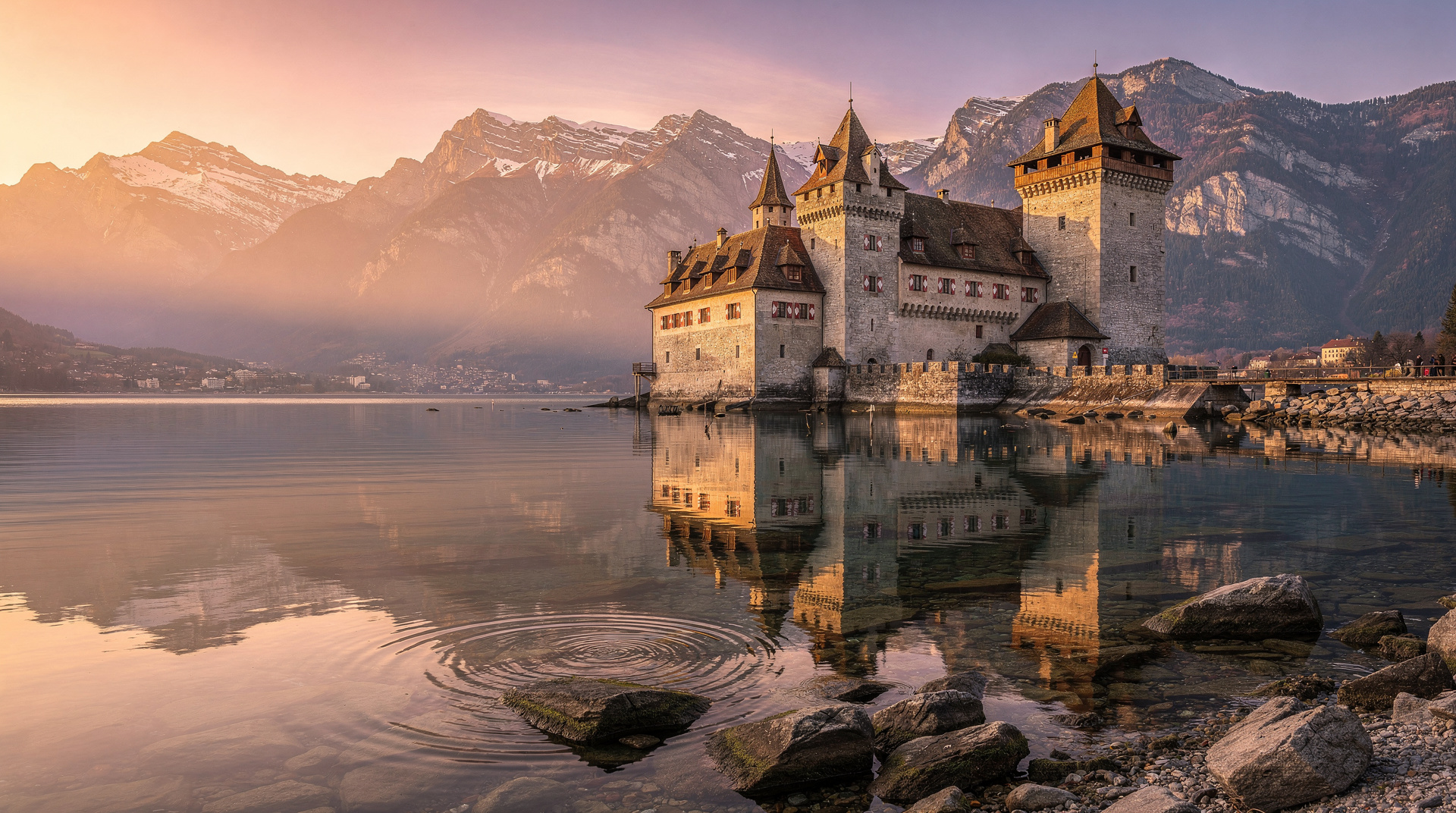
On non-concert days, a Lake Geneva cruise and a visit to nearby Chateau de Chillon make excellent complements to the festival.
Locarno Film Festival: August
The Locarno Film Festival is one of the oldest in the world, founded in 1946, and the largest outdoor film screening in the world by venue capacity — the Piazza Grande in Locarno accommodates 8,000 people for nightly screenings under the open sky. The festival has a particular focus on independent, arthouse, and experimental cinema, with its Golden Leopard award carrying genuine prestige in the film world.
Locarno itself — a palm-lined town on the north shore of Lake Maggiore in the Italian-speaking canton of Ticino — transforms during the 11 festival days. The Piazza Grande screenings (mostly mainstream films with Italian subtitles) are accessible with a relatively affordable ticket; competition films screen in dedicated venues and require separate tickets.
Practical details: 11 days in early August. Piazza Grande tickets CHF 25-40. Book accommodation in Locarno, Ascona, or Bellinzona (30 minutes by train) at least three months in advance. The Swiss Travel Pass covers rail travel to Locarno from all major Swiss cities.
Swiss National Day: August 1
August 1 is the Swiss national holiday, commemorating the founding pact signed (according to tradition) on the Rütli meadow above Lake Uri in 1291. The date was not officially recognised as a national holiday until 1994, but celebrations have been observed for much longer.
Across Switzerland on the evening of August 1, fireworks displays illuminate the sky simultaneously. The most spectacular settings are the lake resorts — fireworks over Lake Zurich, Lake Geneva, Lake Lucerne, and Lake Thun are all memorable. The Rütli meadow itself hosts an official ceremony attended by a Federal Councillor, reachable only by boat from Brunnen or Flüelen; it draws a crowd that must be seen to be believed.
Towns and villages throughout the country hold local celebrations: speeches, parades, barbecues, and community bonfire lighting on hilltops (the Höhenfeuer tradition). In rural areas, the night of August 1 turns the Alpine landscape into a constellation of signal fires.
If you are in Switzerland on August 1, find a lakeside position by 21:30. The displays typically begin around 22:00 and last 20-30 minutes.
Zürich Street Parade: August
Europe’s largest techno music festival, the Zürich Street Parade, draws around one million people to the lakefront each August for a procession of 30 “Love Mobiles” — truck-mounted sound systems accompanied by costumed dancers — followed by parties at dozens of venues across the city. The event is not typically recommended for visitors primarily interested in Swiss culture, but the scale and energy are undeniable.
Date: Second Saturday of August.
Alpabzug (Alpine cattle descents): September-October
One of the most authentic and visually remarkable Swiss folk events is the Alpabzug — the ceremonial descent of cattle from their summer Alpine pastures. Cows decorated with flowers and large bells make their way down from the high alp to the valley farms, often through village streets, accompanied by farmers in traditional dress.
The timing varies by region and by the weather of the particular summer. The best areas to witness an Alpabzug are the Bernese Oberland (around Grindelwald, Lauterbrunnen, and the Haslital), the canton of Appenzell, and the Valais above Zermatt. Local tourist offices publish dates each September when the descents are expected.
Autumn festivals (September to November)
Paléo Festival, Nyon: July (near Geneva)
Just outside Geneva, the Paléo Festival in Nyon is one of Europe’s largest open-air music festivals, running for six days each July. Unlike Montreux’s jazz focus, Paléo is an eclectic mix of rock, pop, world music, and electronic acts across multiple stages. The atmosphere is relaxed and family-friendly.
Wine festivals: October
The Valais and Vaud wine harvests in October are accompanied by a series of local festivals. The most significant is the Fête des Vendanges in Neuchâtel (late September), with a substantial procession through the old town and wine tastings throughout the city. The Lavaux wine villages east of Lausanne hold open cellar weekends in spring and autumn where producers open their cellars to visitors. The Swiss Travel Pass covers access to all these regions by rail.
Zibelemärit, Bern: November
The Zibelemärit (Onion Market) on the fourth Monday of November transforms Bern’s market square into one of Europe’s most unusual seasonal events: 600 producers from the surrounding countryside bring their braided onion garlands — some of extraordinary size and intricacy — to sell from dawn. The market is accompanied by a confetti battle that begins at noon and lasts the entire afternoon, leaving the old town ankle-deep in paper.
The Zibelemärit is a genuinely local event that has been running since the Middle Ages. It is not on the international tourist calendar, which makes it all the more worth attending.
Practical planning for Swiss festivals
Book accommodation early. Major festivals — Montreux Jazz, Basel Fasnacht, Locarno Film — fill the surrounding accommodation months in advance. For Fasnacht in particular, Basel hotels book out 6-9 months ahead. Consider staying in Mulhouse (France, 30 minutes by train) or Freiburg im Breisgau (Germany, 30 minutes) for Fasnacht if Basel accommodation is unavailable.
Check the festival website directly. Swiss festivals are well-organised and their official websites publish dates and ticket information 6-12 months ahead. Third-party ticket resellers for Swiss events are often unnecessary and sometimes fraudulent.
Public transport at festival times. The SBB rail network handles festival crowds well, typically running additional trains on major event days. The Swiss Travel Pass is ideal for festival travel, allowing spontaneous changes of plan without purchasing additional tickets.
Weather contingency. The National Day fireworks, the Locarno Piazza Grande screenings, and the Zürich Street Parade are all significantly affected by rain. Swiss festivals very rarely cancel in bad weather — they continue — but spectators need appropriate clothing.
For family-friendly festival experiences, the Christmas markets, the Sechseläuten in Zurich, and the Alpabzug cattle descents are the most accessible. Basel Fasnacht can work well for older children, particularly the daylight hours of the main processions.
The best time to visit Switzerland guide covers how festivals interact with seasonal weather and mountain conditions — useful context when deciding whether to plan around a specific event.
Regional festivals worth seeking out
Beyond the national calendar, each Swiss region has its own cycle of smaller festivals that reward the visitor who happens to be in the right place:
Graubunden: The Chalanda Marz (first of March) is a Romansh spring festival celebrated in the Engadin valleys. Children in traditional costume walk through villages ringing cowbells to drive away winter. The festival is entirely local and uncommercialised. If you are in St. Moritz or Pontresina on the first of March, the Chalanda Marz procession through the villages is one of the most authentic Swiss folk experiences.
Valais: The Evolène area in the Val d’Hérens maintains some of the most complete Valais folk traditions, including the Rois des Alpes (Battle of the Queens) — the traditional competition between Hérens cows to establish the herd hierarchy on the Alpine pasture. The cow battles draw local crowds and represent a genuinely ancient agricultural tradition.
Ticino: The Rabadan carnival in Bellinzona in February is the Italian-speaking equivalent of Fasnacht — colourful, musical, and focused on the masked procession tradition of northern Italian carnival culture.
Appenzell: Beyond the Landsgemeinde (covered above), the Silvester Klausen in Urnäsch on January 13 (Old New Year in the Julian calendar, still observed in some alpine areas) involves groups in elaborate hairy costumes moving between farmhouses making extraordinary noise with cowbells. This is arguably the most archaic surviving Swiss folk tradition.
Swiss folk music and traditional culture at festivals
Swiss folk music (Volksmusik) is often misunderstood by outsiders as kitsch. At its best — performed by genuinely skilled musicians at festivals — it represents a sophisticated and regionally specific musical tradition:
Yodelling (Jodeln): A technique of vocal switching between chest and head register, developed in Alpine communication before mechanical means existed. The Swiss Yodel Festival (Eidgenössisches Jodlerfest) rotates between Swiss towns every three years and is the world’s largest gathering of yodellers. The next edition — check the Swiss Yodel Association website for dates — draws tens of thousands of participants and spectators.
Alphorn: The long wooden horn whose resonant bass drone carries across mountain valleys. Alphorn concerts and competitions occur at festivals throughout the summer. The Nendaz International Alphorn Festival in July in the Valais is the largest dedicated event.
Schwingen (Swiss wrestling): A folk wrestling style using short canvas shorts over regular clothing, with the goal of throwing the opponent to land squarely on their back in the sawdust ring. The Eidgenössisches Schwing- und Ältlerfest (Federal Wrestling and Alpine Games Festival) every three years is the pinnacle of the sport.
Flag throwing: An acrobatic discipline involving the throwing and catching of large, heavy cantonal flags in elaborate patterns. Competitions occur at most large Swiss summer festivals alongside yodelling and Schwingen.
Planning around Swiss public holidays
Switzerland has both national public holidays and cantonal holidays that differ by region. Key national holidays when banks, many shops, and some attractions close:
- January 1: New Year’s Day
- Good Friday and Easter Monday (moveable)
- Ascension Day (40 days after Easter)
- Whit Monday (50 days after Easter)
- August 1: Swiss National Day
- Christmas Day (December 25) and Boxing Day (December 26)
Cantonal holidays add to this list in different regions. August 15 (Assumption) is a holiday in Catholic cantons. The Sechseläuten in Zurich (April) and the Escalade in Geneva (December) are local but widely observed.
For festival visits, these public holidays mean increased crowds on otherwise-quiet dates and reduced service availability. The Swiss Travel Pass covers transport throughout — public holidays do not typically affect SBB rail services, which run near-normal timetables on national holidays.
Festival season at a glance
| Season | Signature events | Weather | Crowds & booking |
|---|---|---|---|
| Winter (Dec-Feb) | Christmas markets, Escalade, Basel Fasnacht, Lucerne Carnival | Cold, often snow in the mountains, mild in the lowlands | Christmas markets get busy on weekends; Fasnacht fills Basel completely 6-9 months out |
| Spring (Mar-May) | Sechseläuten, Landsgemeinde, Chalanda Marz | Mild, unpredictable, snow lingers at altitude | Low tourist crowds outside the events themselves; easy to book accommodation |
| Summer (Jun-Aug) | Montreux Jazz, Paléo, Locarno Film Festival, Swiss National Day, Street Parade | Warm, afternoon thunderstorms common | Peak season overall — book Montreux and Locarno lodging months ahead regardless of the festival |
| Autumn (Sep-Nov) | Alpabzug cattle descents, wine festivals, Zibelemärit | Cool, clear spells, first snow at altitude late in the season | Quietest festival season outside the events; good value on accommodation |
Choosing a festival that matches your trip
If you only have one shot at a Swiss festival, match it to what you actually want from the trip rather than chasing the biggest name. Fasnacht and the Zibelemärit reward travelers who want an intense, specifically Swiss cultural immersion and don’t mind cold weather and crowds. Montreux Jazz and Paléo suit anyone building a summer trip around Lake Geneva who also wants world-class live music.
The Alpabzug and the Landsgemeinde are the best choices for travelers who want an authentic rural experience without a single ticket to buy. Families tend to do best with the Christmas markets, Sechseläuten, or a well-timed Alpabzug — see the best family activities guide for how to build a festival visit around children.
For a broader sense of how festival dates interact with weather, hiking conditions, and mountain railway operating seasons across the year, the Switzerland in summer and Switzerland in winter guides go deeper on what else to expect from each stretch of the calendar.
Frequently asked questions about Switzerland festivals and events
Do I need tickets for Basel Fasnacht or Montreux’s lakefront stages? No — Fasnacht’s street processions and the Morgestraich are free to watch, and Montreux Jazz’s lakefront stages are open access throughout the festival. Only the indoor/competition venues (Montreux’s Auditorium Stravinski, Locarno’s non-Piazza screenings) require tickets.
What is the best single festival for a first-time visitor? Montreux Jazz Festival is the easiest entry point: it combines free lakefront concerts, a beautiful setting on Lake Geneva, and a well-organised infrastructure aimed at international visitors. Basel Fasnacht is more rewarding culturally but more intense and requires earlier booking.