Best day trips from Lucerne: the complete guide
What are the best day trips from Lucerne?
The best day trips from Lucerne include Mount Pilatus Golden Round Trip (cable car, cogwheel railway), Mount Rigi (first mountain railway in Europe), Mount Titlis, Interlaken, and Bern. Most are easy by train or lake steamer on a Swiss Travel Pass.
Lucerne as a base for Swiss day trips
Lucerne may be a compact city — population around 80,000 — but its position at the heart of central Switzerland, on the shores of Lake Lucerne and surrounded by the pre-Alpine foothills, makes it one of the most richly placed bases for day trips in the country. Three classic mountain excursions depart directly from or within easy reach of the city. The Swiss rail network fans out in every direction, reaching Bern, Zurich, Interlaken, and the Graubunden within 1-2 hours.
For mountain experiences, Lucerne surpasses even Zurich in convenience. Mount Pilatus is accessed by boat directly from the city’s lakefront. Mount Rigi is accessible by boat and the oldest mountain railway in Europe. Mount Titlis is 45 minutes by train from Lucerne. The Lake Lucerne itself, with its dramatic fjord-like arms reaching into the mountains, provides the setting for steamboat journeys that are themselves a destination.
This guide covers all the main day trips from Lucerne, ranked by effort and with honest practical information for planning.
| At a glance | |
|---|---|
| Where | Central Switzerland, on Lake Lucerne, 45-50 min from Zurich by train |
| Cost | Free with rail travel included in Swiss Travel Pass; mountain surcharges typically CHF 70-100 per peak |
| Time needed | 1 day per mountain excursion; 3-4 days to cover Pilatus, Rigi, Titlis and one Bernese Oberland trip |
| Getting there | Lake steamer or cogwheel/cable car from Lucerne; most connections start at the main station lakefront |
| Best time | June-October for the cogwheel railways; Rigi and Titlis also work well in winter |
Mount Pilatus Golden Round Trip from Lucerne
Lake steamer, world's steepest cogwheel railway, aerial cable car, and panoramic gondola — the complete Lucerne classic in one unforgettable circuit.
- Free cancellation
The Swiss Travel Pass from Lucerne
The Swiss Travel Pass is particularly valuable from Lucerne. It covers:
- Lake Lucerne steamers (the historic paddle steamers are a Swiss institution)
- The Zentralbahn to Engelberg (access to Titlis)
- Regional buses in the Lucerne area
- Trains to Bern, Zurich, Interlaken, and Basel
It applies discounts (typically 25-50%) to:
- Pilatus cogwheel railway and cable cars
- Rigi railway (various lines)
- Titlis cable cars
If you are spending 3+ days on day trips from Lucerne, the pass very likely saves money compared to buying individual tickets.
1. Mount Pilatus Golden Round Trip
The flagship Lucerne day trip. The Golden Round Trip is a circuit combining four forms of transport: lake steamer from Lucerne across to Alpnachstad, the world’s steepest cogwheel railway to the 2,132-metre summit, an aerial cable car back down to Fräkmüntegg, and a gondola to Kriens followed by bus back to Lucerne.
This classic loop is unique to Pilatus — no other mountain in Switzerland offers this variety of transport options in a single excursion. The cogwheel railway (gradient up to 48 degrees) is genuinely vertiginous and runs only May to November. In winter, the mountain is accessed by the cable car side only.
The summit has two hotels, a restaurant, walking paths on the ridge, and at the Esel peak (2,119 m) — views across six cantons. On very clear days, the Black Forest in Germany is visible.
Book the Mount Pilatus Golden Round Trip from Lucerne — the guided version with English commentary handles all the logistics and provides context for the dragon mythology and engineering history.
Read the full guide: Lucerne to Pilatus
2. Mount Rigi
Mount Rigi (1,797 m) is the “Queen of the Mountains” — the name given by 19th-century Romantics who climbed it before the railway existed. The view from the summit covers a panorama of over 13 Alpine peaks, Lake Lucerne below, and the Mittelland stretching north toward the German border.
Rigi has the additional distinction of the oldest mountain railway in Europe (the Rigi Vitznau-Rigi Bahn, opened 1871) and one of the oldest cable car systems in Switzerland. The mountain is reached from two lakeside villages — Vitznau and Weggis — by lake steamer from Lucerne, then rack railway or cable car. The Swiss Travel Pass covers more of the Rigi infrastructure than Pilatus — making it the better-value excursion if budget is the primary consideration.
Rigi is also excellent for hiking. The summit ridge has well-marked paths of varying difficulty, and a traverse from Rigi Kulm to Rigi Scheidegg (1.5-2 hours on foot) gives excellent views in both directions. Book the classic Rigi round trip from Lucerne — boat, rack railway, and panoramic views included.
Read the full guide: Lucerne to Rigi
3. Mount Titlis and Engelberg
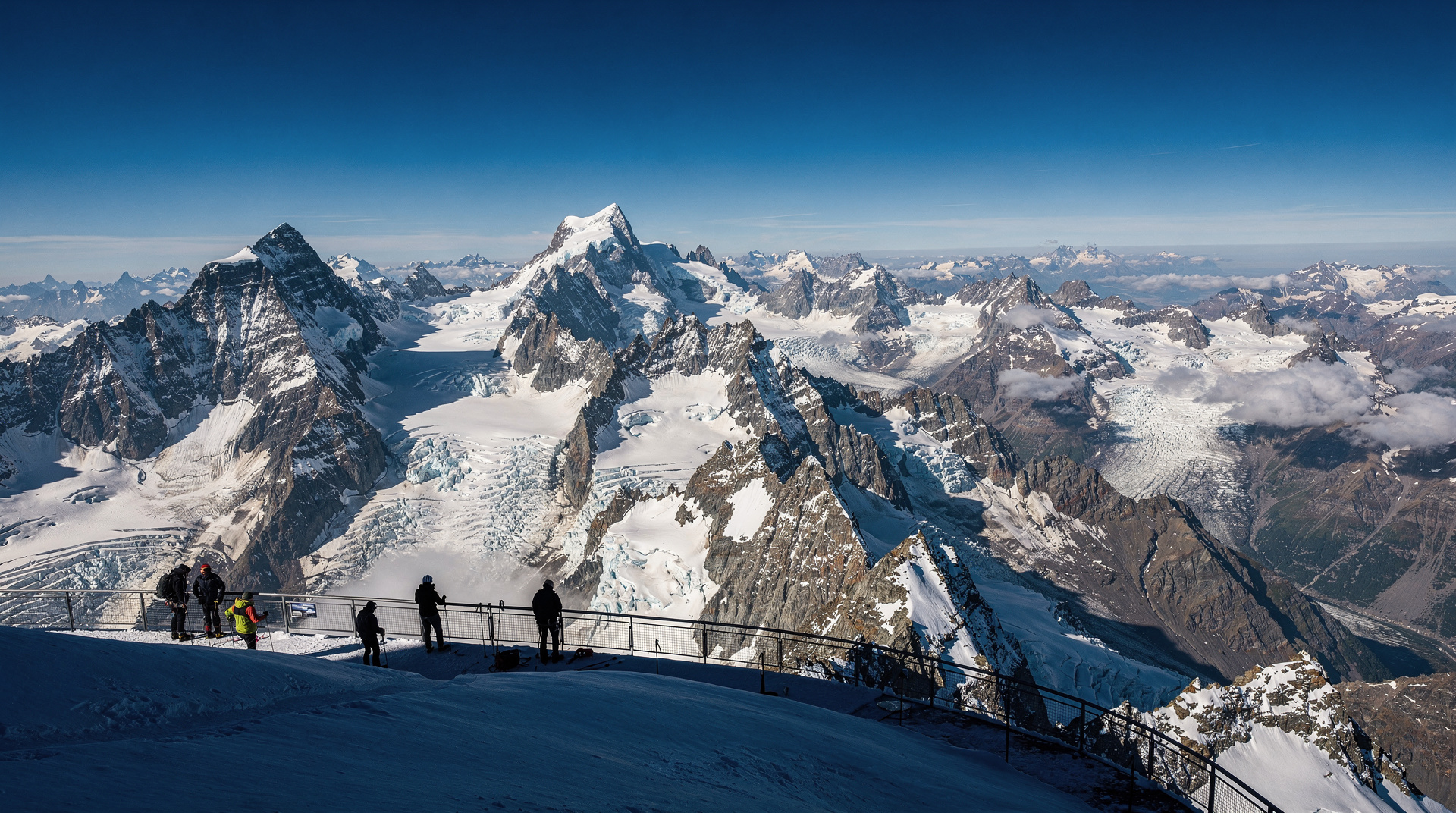
The train from Lucerne to Engelberg takes 45 minutes on the Zentralbahn — the most direct access to this destination from any Swiss city. From Engelberg, the Titlis cable car system (including the world’s first rotating gondola, the Rotair) ascends to 3,238 metres — higher than both Pilatus and Rigi, with a glacier cave, a suspended cliff walk, and a snow park.
The Engelberg monastery (Benedictine, founded 1120) adds a cultural dimension to the day. The monastery church is one of the finest Baroque interiors in central Switzerland, and the cheese dairy in the monastery buildings still produces Klosterkäse.
Book the Mount Titlis ticket from Lucerne including the train to Engelberg — the most convenient combined package.
Read the full guide: Lucerne to Titlis
4. Interlaken and the Bernese Oberland
Interlaken is 1 hour 50 minutes from Lucerne by train via Brienz and the Brünig Pass — a scenic mountain railway in its own right. Interlaken sits between two lakes (Thunersee and Brienzersee) in the Bernese Oberland, and is the gateway to Grindelwald, Lauterbrunnen, and Jungfraujoch.
Using Lucerne as a base for Bernese Oberland day trips is entirely viable, though it requires an earlier start than from Zurich or Interlaken itself. The Brünig Pass railway is covered by the Swiss Travel Pass and is one of the nicest routes in the Lucerne region. Book a guided day trip from Lucerne to Grindelwald and Lauterbrunnen to make the most of the Bernese Oberland with expert guidance.
Read the full guide: Lucerne to Interlaken
5. Bern: the federal capital
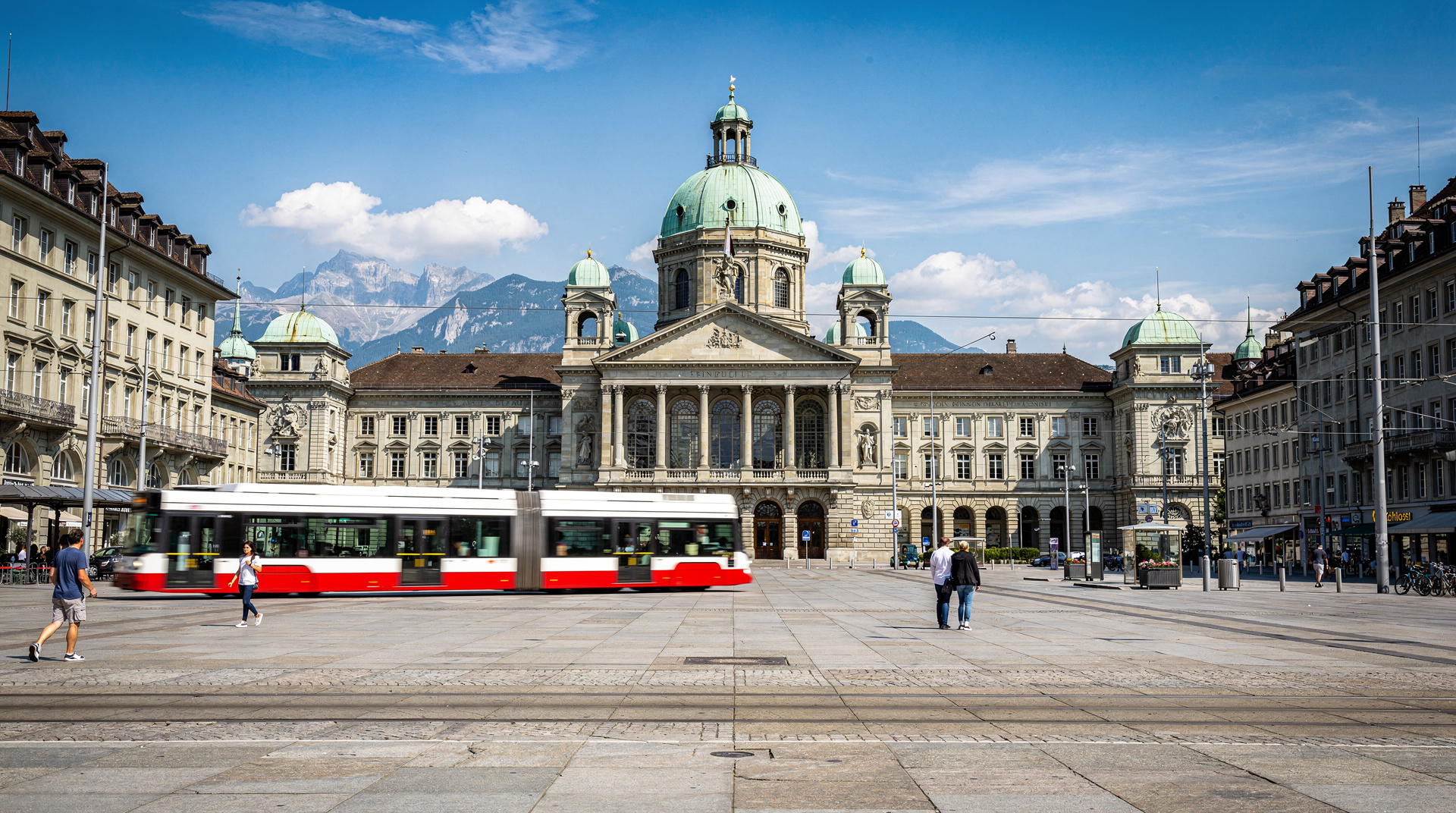
Switzerland’s capital is 1 hour 20 minutes from Lucerne by InterCity train. Bern is a UNESCO World Heritage Site for its 6-kilometre arcade walkways (Lauben), a compact and pleasant old town on a loop of the Aare river, and an excellent selection of museums including the Paul Klee Centre, the Kunstmuseum, and the Swiss Alpine Club museum.
Key sights: the Zytglogge clock tower (astronomical display on the hour), the Federal Palace (open for guided tours most days), the Bear Park (free, adjacent to the Nydeggbrücke), and the rose garden above the old town with panoramic views of the Bernese Alps on clear days.
The Swiss Travel Pass covers the journey and all public transport in Bern. A guided walking tour of Bern is one of the best ways to orient yourself quickly in the capital.
6. Zurich
Zurich is 50 minutes from Lucerne by direct InterCity train — close enough for a half-day excursion or a full day if you want to explore the city properly. The Zürich old town (Altstadt), the Kunsthaus (one of Switzerland’s major art museums), the Bahnhofstrasse shopping district, and the lakefront are all excellent. Zurich functions more as a city break than a nature destination.
Covered entirely by Swiss Travel Pass.
7. Lake Lucerne steamer journeys
The Lake Lucerne (Vierwaldstättersee) is a complex, fjord-like lake with five arms reaching into the mountains. The CGN paddle steamers that run on the lake are themselves a major tourist attraction — wood-panelled saloons, outdoor decks, and a route that passes the Rütli meadow (birthplace of the Swiss Confederation), the Wilhelm Tell landscape, and the dramatically steep shores of the southern arms.
A full lake circuit by steamer takes around 4 hours. A shorter steamer to Vitznau (for Rigi) or Alpnachstad (for Pilatus) is 1-1.5 hours. Swiss Travel Pass covers all regular steamer services.
The Rütli landing, where the three founding cantons of Switzerland are said to have sworn their oath in 1291, is reachable only by steamer — a genuinely historic spot with a powerful setting. Free to visit if you have a Swiss Travel Pass covering the steamer.
Bürgenstock: a quieter clifftop half-day
For a shorter excursion than the three big mountains, the clifftop resort of Bürgenstock is reached directly from Lucerne’s lakefront by ferry and funicular. The Hammetschwand Lift — Europe’s highest exterior elevator — completes the ascent to a panoramic ridge path above the lake. Book the Bürgenstock excursion by ferry and funicular from Lucerne for a half-day that leaves the afternoon free for the old town.
Suggested multi-day programme from Lucerne
Day 1: Mount Pilatus Golden Round Trip (full day — boat, cogwheel railway, cable car, gondola). Depart Lucerne lakefront by 09:00-09:30 steamer.
Day 2: Mount Rigi round trip (half day) + afternoon exploring Lucerne city (Chapel Bridge, old town, Lion Monument, Rosengart Collection).
Day 3: Mount Titlis and Engelberg. Depart 08:30-09:00 from Lucerne by Zentralbahn, arrive Engelberg 09:15-10:00. Full morning and afternoon on Titlis.
Day 4: Interlaken and Lauterbrunnen or Grindelwald — early departure required (before 08:00 from Lucerne for comfortable day in the Bernese Oberland).
Tips for mountain excursions from Lucerne
Best season: June to October for all three mountains (Pilatus cogwheel railway closes approximately mid-November to mid-May). May can be excellent with fewer crowds and good snow on Titlis. Winter works well for Titlis (skiing available) and Rigi (snowshoe trails, snow landscape).
Weather: The mountains around Lucerne create their own weather. The city can be overcast while summits are above cloud, and vice versa. Check individual webcams (pilatus.ch, rigi.ch, titlis.ch) the morning of your trip. If two out of three peaks are clear, choose accordingly.
Avoiding queues: The Pilatus boat to Alpnachstad at 09:20 is considerably less crowded than the 11:20. Rigi on Tuesday-Thursday is quieter than weekends. Titlis in the first departure (around 08:30 from Engelberg) beats the coach tour groups that arrive from 10:00.
Combining in one day: Do not try to combine Pilatus Golden Round Trip with Rigi or Titlis in the same day — each requires a full day. Two mountains in two days is ideal.
Lake Lucerne itself: often overlooked, never disappointing
Many visitors to Lucerne focus entirely on the mountain excursions and miss what is immediately in front of them: Lake Lucerne (Vierwaldstättersee, meaning the Lake of the Four Forest Cantons) is one of the most beautiful lakes in Switzerland and the steamer service across it is a major attraction in its own right.
The lake is not a simple oval — it has five distinct arms reaching into the pre-Alps in different directions, creating a fjord-like geography that means every steamer route shows a different landscape. The southern arm, the Urnersee, leads toward the Rütli meadow (birthplace of the Swiss Confederation, where the three founding cantons swore their oath in 1291) and the Schiller Stone, and is the most historically significant section of the lake.
A full lake circuit by historic paddle steamer takes approximately 4 hours and costs nothing extra on the Swiss Travel Pass. This is worth considering as a half-day activity in addition to a mountain excursion — board the first morning steamer (around 09:00), make the full circuit, and be back in Lucerne for lunch. The paddle steamers themselves (Stadt Luzern, Schiller, Unterwalden, Uri) are beautiful historic vessels from the early 20th century, kept in excellent working condition.
Lucerne old town: the essential sights
If you are spending multiple days in Lucerne and making day trips between the mountains, the city itself deserves at least half a day of exploration:
Chapel Bridge (Kapellbrücke): The 14th-century covered wooden bridge is Switzerland’s most photographed structure. The interior has triangular painted panels from the 17th century depicting Swiss history. Walk it in both directions — the views from the middle of the bridge cover the old town on one side and the lake on the other.
Spreuer Bridge: Parallel to Chapel Bridge but less visited. The painted panels inside depict a medieval Dance of Death — macabre, beautiful, and much less crowded than the Chapel Bridge.
Old town lanes: The north bank of the Reuss (Weinmarkt, Kornmarkt, and surrounding lanes) contains some of the finest medieval urban architecture in Switzerland. The painted fountains and facades are at their best in morning light before coach tours arrive.
Rosengart Collection: A private museum of extraordinary quality — 223 works by Picasso, including paintings, drawings, and ceramics donated by his personal photographer and friend Angela Rosengart, alongside works by Klee, Cézanne, Matisse, and Monet. Entry CHF 18. One of the best small art museums in Switzerland.
Swiss Museum of Transport: 15 minutes from the station by tram, this is the most comprehensive transport museum in Europe — full-scale locomotives, the Gotthard Tunnel simulation, historic aircraft, and a film theatre showing the SwissView film (a 360-degree aerial journey across Switzerland). Entry CHF 32, Swiss Travel Pass discount applies. Allow 2-3 hours. Excellent for families.
Visiting Lucerne in different seasons
The city and its mountain excursions have distinct seasonal characters:
Spring (April-June): The city is green and quiet before peak tourist season. Pilatus cogwheel railway opens from approximately mid-May. Rigi is accessible year-round. Views can be exceptional after winter fronts clear. Hotels are cheaper than summer.
Summer (July-August): Peak season — maximum boat services, all cable cars running, summer events on the lakefront. Also maximum crowds at Pilatus and Titlis. The city’s lake swimming pools (Lido) are excellent in the heat.
Autumn (September-October): The best season for valley fog — the mountains rise above a sea of cloud, giving the most dramatic summit views. Harvest season in surrounding wine regions. Crowds thin noticeably after mid-September.
Winter (November-March): Pilatus cogwheel railway closed, but the cable car side is open. Titlis skiing season starts. Rigi snow-shoeing and winter hiking. The Lucerne Christmas market (late November to December 24) is one of the most atmospheric in Switzerland. Hotel rates at their lowest.
Food and practicalities
Summit restaurants: All three mountains have sit-down restaurants. Prices are broadly similar — main courses CHF 25-42, soup CHF 10-14, hot drinks CHF 5-8. Bringing your own lunch is entirely acceptable and saves CHF 15-25.
Lucerne food before or after: The lakefront area around the KKL and Bahnhofstrasse has good bakeries and cafés. The old town has excellent traditional restaurants (fondue, Rösti, lake fish). Prices are significantly lower than summit restaurants.
Getting to the boat: The CGN lake steamer landing is adjacent to Lucerne main station — the lakefront quays are 3-5 minutes walk from the main exit. Signs are clearly marked.
Children on the excursions: All three mountains are child-friendly. Pilatus has the dragon mythology theme. Rigi has wide open summit meadows ideal for running around. Titlis has the snow park and glacier cave. Minimum comfortable age for a full mountain day: around 4-5 years old.
Comparing the three classic Lucerne mountains
| Mountain | Height | Access from Lucerne | Signature feature | Best for |
|---|---|---|---|---|
| Mount Pilatus | 2,132m | Boat + world’s steepest cogwheel railway | Golden Round Trip loop | First-time visitors, dramatic engineering |
| Mount Rigi | 1,797m | Boat + oldest mountain railway in Europe | Widest panorama, best value with pass | Hikers, budget-conscious travellers |
| Mount Titlis | 3,238m | Train to Engelberg + Rotair cable car | Glacier cave, highest of the three | Snow lovers, glacier scenery |
If you can only manage one, Rigi gives the best value on a Swiss Travel Pass, Pilatus gives the most memorable transport experience, and Titlis gives genuine high-alpine glacier scenery closest to Lucerne.
More from Lucerne
- Lucerne to Pilatus — the Golden Round Trip in detail
- Lucerne to Rigi — round trip guide
- Lucerne to Titlis — full Titlis guide from Lucerne
- Lucerne to Interlaken — Bernese Oberland via Brünig
- Mount Pilatus — full mountain guide
- Mount Rigi — full mountain guide
- Mount Titlis — full mountain guide
- Swiss Travel Pass — coverage from Lucerne
- 7-day Switzerland itinerary — building a longer trip around Lucerne