Best day trips from Bern: mountains, cheese, and medieval towns
What are the best day trips from Bern?
The best day trips from Bern include Gruyeres and the Cailler chocolate factory (1.5 hours), Lauterbrunnen and the Jungfrau mountains (1 hour 10 minutes), Lake Thun with Thun castle (30 minutes), medieval Fribourg (25 minutes), and the Emmental cheese valley (40 minutes).
Bern as a base for day trips
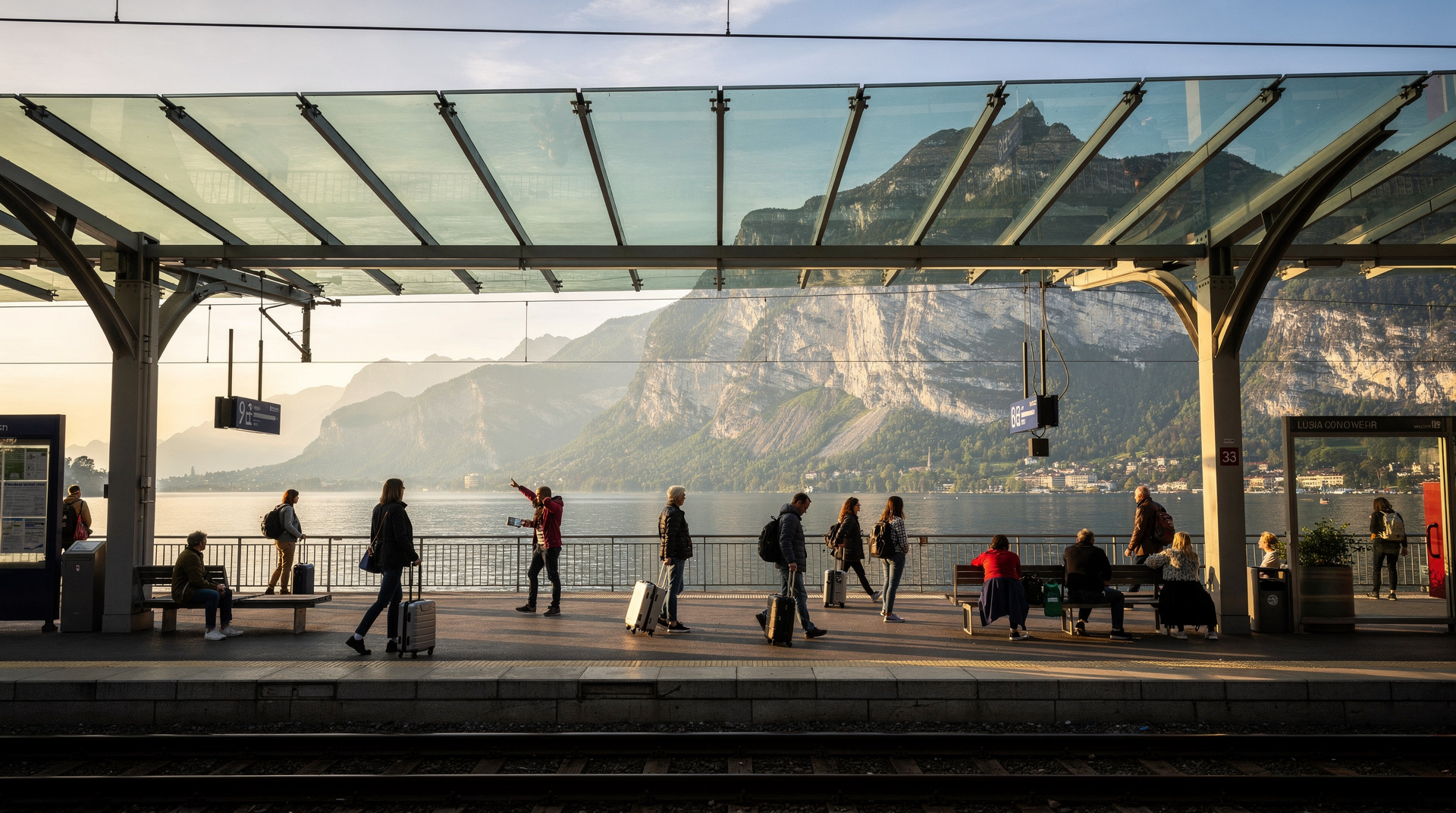
Bern is the Swiss federal capital and sits at the geographical heart of the country — a position that makes it one of Switzerland’s best bases for day trips. From Bern’s handsome sandstone railway station, the national rail network radiates in every direction: west toward the cheese and chocolate country of Fribourg and Gruyères, south toward the great mountains of the Bernese Oberland, east toward the Emmental valley, and north toward Basel and the Rhine.
The city itself — with its extraordinary six kilometres of medieval arcaded walkways, UNESCO World Heritage old town, rose gardens above the river, and the view of the snow-capped Bernese Alps on a clear day — is worth at least a full day before you start exploring. But for visitors with several days in Bern, the day trip options are exceptional in variety and quality.
All day trips described in this guide are accessible by Swiss Federal Railways (SBB) and are covered by the Swiss Travel Pass or significantly discounted by the Swiss Half Fare Card. Download the SBB app to plan journey times and buy tickets.
| At a glance | |
|---|---|
| Where | Bern, central Switzerland — radiating rail lines in every direction |
| Cost | Mostly covered by Swiss Travel Pass; separate entry fees for museums and dairies (around CHF 8-20) |
| Time needed | 25 minutes (Fribourg) to 1 hour 30 minutes (Gruyeres) each way |
| Getting there | Direct SBB trains from Bern’s main station |
| Best time | June-September for Lauterbrunnen waterfalls and lake swimming; year-round for Fribourg and Gruyeres |
Gruyères and Maison Cailler day trip from Bern
The quintessential Bern day trip: the Gruyères medieval village, the cheese dairy, and the legendary Cailler chocolate factory — all in one guided excursion.
- Free cancellation
1. Gruyères and the Cailler chocolate factory
This is the quintessential day trip from Bern, combining two of Switzerland’s greatest culinary exports — Gruyère cheese and Cailler chocolate — with a genuinely beautiful medieval village and a pastoral alpine landscape.
The village of Gruyères sits on a promontory above the valley, its single main street flanked by medieval houses and culminating in a 13th-century castle (Château de Gruyères). The village is car-free, entirely given over to tourism in the nicest possible sense, and extraordinarily photogenic. The backdrop — green hills, dairy farms, the Fribourg Alps in the distance — is classic Switzerland.
At the foot of the hill, the Maison du Gruyère cheese dairy demonstrates the traditional production process with a well-designed visitor circuit. You can watch the cheesemaking (most active in the mornings), learn about the affinage (ageing) process, and taste cheeses at different ages from 5 months (mild, creamy) to 18 months (sharp, crystalline). The shop sells directly at source — prices are reasonable and quality is excellent.
In nearby Broc, the Maison Cailler is one of Switzerland’s oldest chocolate factories (founded 1898) and offers an outstanding visitor experience. The tour ends with an extensive tasting room where you can try the full Cailler range at your leisure.
Getting there from Bern: Take the train from Bern to Bulle (about 1 hour 10 minutes, direct or change at Fribourg), then a local train or bus from Bulle to Gruyères (10–15 minutes) and onward to Broc (another 10 minutes). Total journey time approximately 1 hour 20–40 minutes depending on connection.
Swiss Travel Pass: Covers trains to Gruyères and the local bus. Maison du Gruyère and Maison Cailler charge separate entry fees.
Book a guided day trip from Bern to Gruyères and Maison Cailler — a guided tour handles the logistics and adds context to the cheese and chocolate experiences, ideal if you prefer not to navigate the bus connections independently.
Maison du Gruyère: Entry CHF 8 adults, CHF 4 children. Open daily.
Maison Cailler: Entry CHF 15 adults, CHF 8 children. Booking recommended in summer.
Read the cheese-making guide for more on Swiss cheese culture.
2. Lauterbrunnen and the Jungfrau region
The Lauterbrunnen valley is one of the most dramatic landscapes in the Alps: a sheer-sided glacial valley with 72 waterfalls tumbling from cliffs up to 300 metres high, flanked by the villages of Wengen (above the right valley wall) and Mürren (above the left), and backed by the great summits of the Eiger, Mönch, and Jungfrau.
As a day trip from Bern, Lauterbrunnen is completely feasible and intensely rewarding. The core experience — arriving in the valley and experiencing the waterfalls, especially Staubbachfall (the most famous, falling 297 metres directly from the cliff face above the village) — requires no particular effort. From Lauterbrunnen you can take the cable car to Grütschalp and the narrow-gauge railway along the cliff top to Mürren (a car-free village with extraordinary views), or the rack railway to Wengen and onward to Kleine Scheidegg.
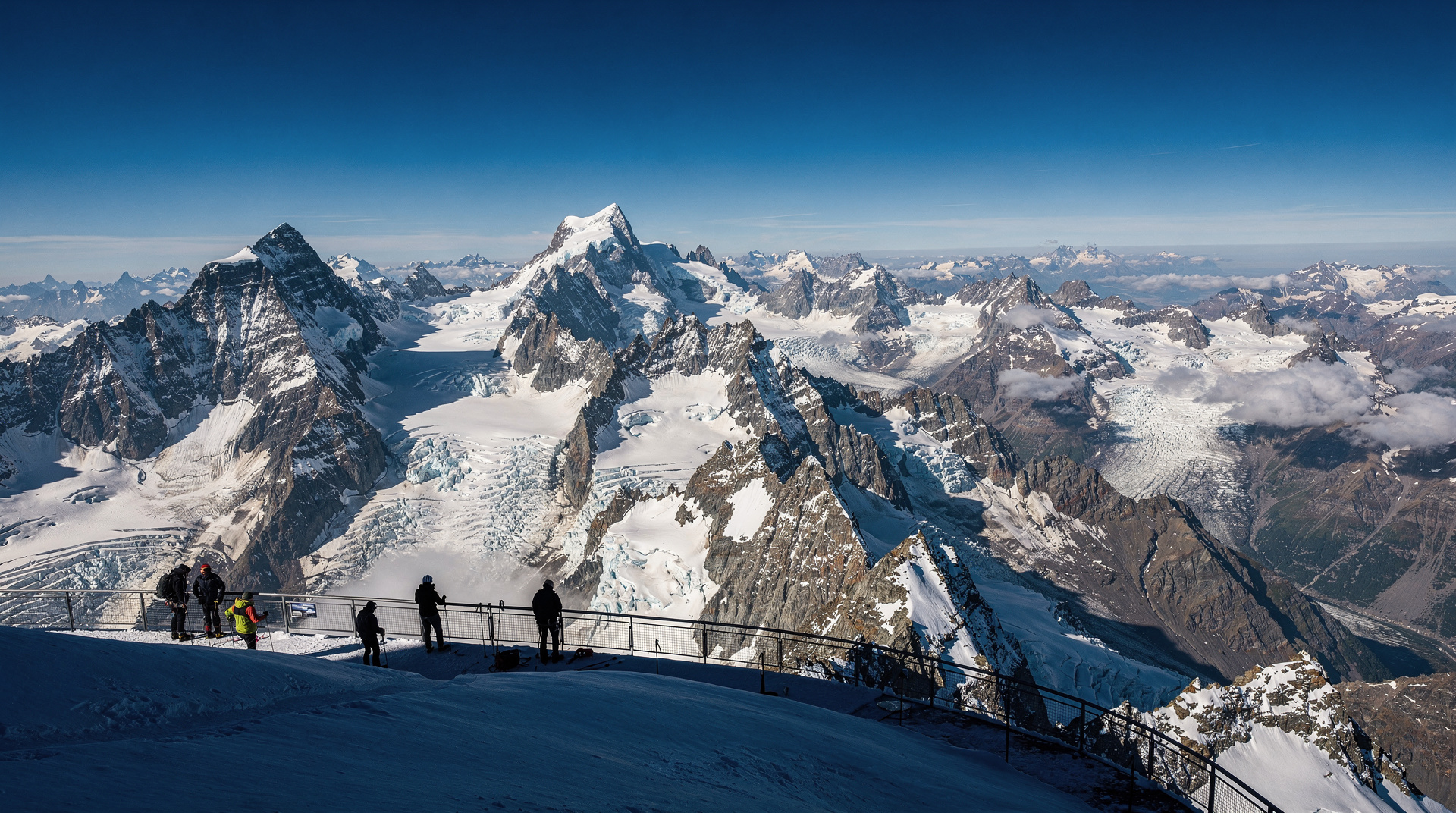
The full Jungfraujoch summit experience — the highest railway station in Europe at 3,454 metres — is technically doable as a day trip from Bern but makes for a very long day. Allow at least 6 hours on the mountain (travel, time at summit, travel back) on top of 1 hour 10 minutes each way from Bern. Plan this as an early start.
Book a small-group day trip from Bern to Lauterbrunnen and Mürren — this guided tour covers the valley, Mürren village, and mountain views with a knowledgeable guide explaining the geology, local life, and best viewpoints.
Getting there from Bern: Direct train from Bern to Interlaken Ost (50 minutes), then the BOB mountain railway to Lauterbrunnen (25 minutes). Total: about 1 hour 10–15 minutes.
Swiss Travel Pass: Covers the Bern–Interlaken Ost SBB train. Gives 50% discount on BOB and WAB mountain railways. If you are making multiple mountain journeys, consider the Berner Oberland Pass.
Best months: June to September for waterfalls at maximum flow and all trails open. February to April for winter landscapes and ski access.
3. Lake Thun and Thun town
Lake Thun (Thunersee) is one of Switzerland’s most beautiful lakes — a deep turquoise body of water at the foot of the Bernese Alps, with the rocky summits of Niesen and Stockhorn rising behind its southern shore and the town of Thun at its northern tip.
Thun town has a well-preserved medieval old town with an unusual feature: a raised arcaded walkway running along the tops of the ground-floor shop awnings, a level above the street, connecting the old town to the riverside market. The Schloss Thun (Thun Castle) sits on a hill above the old town and houses a historical museum with views across the lake on a clear day.
A boat trip on Lake Thun is one of the region’s great pleasures. The BLS lake boats connect Thun, Spiez, Oberhofen, Beatenbucht, and Interlaken West. The classic combination is: train from Bern to Thun (30 minutes), boat along the lake to Spiez or Interlaken (70–90 minutes with the full boat) or to Beatenbucht for the Beatushöhlen stalactite caves, then return by train.
The Beatushöhlen (St Beatus Caves) are directly accessible from the lakeshore at Beatenbucht. The guided cave tour takes about 50 minutes through dramatic stalactite and stalagmite formations with an interesting legend attached (St Beatus, a Celtic missionary, allegedly drove a dragon from the cave in the 6th century).
Getting there from Bern: Train from Bern to Thun takes 30 minutes. Direct trains every 30 minutes.
Swiss Travel Pass: Covers Bern–Thun train and the BLS lake boats on Lake Thun. Beatushöhlen charges separate entry (CHF 18 adults).
Best for: Families, leisurely sightseeing, anyone who wants a mountain lake experience without the full mountain commitment. Excellent in summer for swimming at the lake’s public bathing areas (Badis). Book a Lake Thun boat day pass from Interlaken to explore the lake’s shores at your own pace.
4. Emmental: the cheese valley
The Emmental valley gave the world Emmentaler cheese — the one with the large holes that has become the global shorthand for “Swiss cheese.” The valley itself is beautiful pastoral country: rolling green hills, old farmhouses with enormous sweeping roofs, and dairy farms where the actual cheese is still made in traditional small dairies.
Affoltern im Emmental has a show dairy (Schaukäserei) that demonstrates the traditional Emmentaler production process with an observation gallery above the production floor. Unlike the Gruyères dairy, this operation uses the large copper vats of traditional Emmentaler production, and the scale — the huge wheels, each weighing 80–130 kg — is impressive. There is a restaurant serving local specialities and a shop.
The village of Langnau im Emmental is the main market town of the valley, with a weekly market, old farmhouses, and good walking. The area has an extensive network of footpaths through the farming landscape.
Getting there from Bern: Regional train from Bern to Langnau im Emmental (40 minutes). For Affoltern im Emmental, take the train to Hasle-Rüegsau (35 minutes) and then bus.
Swiss Travel Pass: Covers regional trains throughout the Emmental.
Best for: Visitors interested in genuine Swiss rural life and traditional food production, or anyone who wants a low-key country day away from the tourist circuit. The Gruyères and cheese factory tour from Bern is the best-organised alternative for cheese lovers who prefer a guided experience.
5. Fribourg: the bilingual medieval city
Fribourg is one of Switzerland’s most underappreciated cities — a perfectly preserved medieval town built dramatically on a sandstone peninsula above the Sarine/Saane river gorge, with a Gothic cathedral, numerous medieval towers, and the country’s last fully operational funicular in regular use (running on wastewater from the old town’s sewage system — a Swiss engineering curiosity from 1899).
The city is officially bilingual: German-speaking in the upper town, French-speaking in the lower town, with the linguistic boundary running roughly along the river. This linguistic duality gives Fribourg a different character from either purely German or French Swiss cities — more layered, slightly less polished, and more interesting for it.
The Cathédrale Saint-Nicolas has a particularly fine Gothic nave and excellent stained glass. The Musée d’Art et d’Histoire occupies a former slaughterhouse and covers local history with some excellent collection pieces. The old town’s streets — particularly around the Bourg district — are genuinely medieval in atmosphere.
Getting there from Bern: Direct train from Bern, 25 minutes. Services every 30 minutes.
Swiss Travel Pass: Fully covered.
Best for: Culture-focused day trips, history lovers, architecture enthusiasts. Pairs well with Gruyères (take the train from Fribourg to Bulle and onward to Gruyères after a morning in Fribourg). Bern art and culture tours with a local guide also cover the city’s best museums if you want a cultural day closer to home.
6. Interlaken as a day trip gateway
Interlaken itself — the twin-lake town sitting on a narrow strip of land between Lake Thun and Lake Brienz, flanked by the Bernese Alps — is worth a half-day visit from Bern. The Höheweg (high path) connecting Interlaken West and East has one of the most famous mountain views in Switzerland: on a clear day, the Jungfrau (4,158 m) appears framed at the end of the promenade in almost impossible perfection.
From Interlaken you can continue by boat on Lake Brienz (to Giessbach Falls, one of Switzerland’s most beautiful — a 14-stage waterfall beside a Victorian-era grand hotel) or by cable car to Harder Kulm (1,322 m) for the aerial view over both lakes and the mountain panorama.
Getting there from Bern: 50 minutes by direct train to Interlaken Ost.
For visitors spending multiple days in the Bernese Oberland, see the Berner Oberland Pass guide and the Jungfrau Travel Pass guide for the best transport options.
Planning your day trips from Bern
Swiss Travel Pass holders can take all the SBB trains from Bern to these destinations free. Mountain railways and regional operators offer 50% discounts. The pass also covers the Lake Thun boats and the Brünig line to Lucerne.
Day trip timing from Bern:
- Fribourg: 25 minutes (easy half-day)
- Thun: 30 minutes (lake boat day or town visit)
- Emmental (Langnau): 40 minutes (full day for valley exploration)
- Lauterbrunnen: 1 hour 15 minutes (full mountain day)
- Gruyères: 1 hour 30 minutes (cheese and chocolate full day)
Best combination: Fribourg in the morning (arrive by 9:30am, explore the cathedral and old town until noon), then train to Bulle and onward to Gruyères for lunch and the cheese dairy in the afternoon, finishing at Maison Cailler in Broc before returning to Bern by early evening.
See the budget guide for a breakdown of day trip costs from Bern, and the 7-day Switzerland itinerary for how a Bern base fits into a wider Swiss circuit.
Bern itself: exploring before your day trips
Before diving into day trips, it is worth spending at least a full day in Bern itself. The Swiss capital is compact and walkable, and its UNESCO World Heritage old town deserves proper time.
The Lauben — the arcaded walkways running for six kilometres under the buildings of the old town — are the defining feature of the city. They are genuinely remarkable: a medieval urban design solution that keeps pedestrians sheltered from Bern’s considerable rainfall year-round. Walking the full length of the Lauben from Bundesplatz to the Zytglogge and beyond takes about 45 minutes at a comfortable pace.
The Zytglogge astronomical clock tower (13th century) is the geographical and symbolic centre of Bern. Its elaborate animated figures perform at the top of each hour — mechanical knights, bears (the city’s heraldic animal), jesters, and Father Time. The five minutes before the hour strike are when the show happens.
The Bundeshaus (Parliament building) is open for free guided tours when parliament is not in session. The dome, the political chamber interiors, and the views over the Aar river bend from the terrace are all worthwhile. Book tours in advance online.
The Rosengarten (Rose Garden) above the old town provides the best elevated view of Bern: the red-tiled rooftops, the cathedral spire, the river bend below, and — on clear days — the white line of the Bernese Alps including the Jungfrau to the south. Best visited in June when approximately 200 varieties of rose are in bloom.
Bear Park (Bern BärenPark): The city of Bern has kept bears (for whom it is named) since at least 1513. The modern bear park is a riverside enclosure where a small family of brown bears live with access to the river. Free admission; open year-round.
Day trips by season from Bern
The practicality and experience of each day trip varies significantly by season:
Spring (March–May): Fribourg and the Emmental are excellent in spring — the countryside is fresh, the farmhouses photogenic, and crowds are thin. Lauterbrunnen in April has extraordinary waterfalls fed by snowmelt — arguably even more impressive than summer. The mountain trails above Lauterbrunnen may still be snow-covered, so valley walks are the safer choice in early spring.
Summer (June–August): Peak season. All destinations are fully accessible. Lake Thun swimming is superb from late June. Gruyères gets busy on weekends — visit on a weekday if possible. Jungfraujoch visits from Bern work best with advance ticket booking in summer. The views from Kleine Scheidegg are most consistent in the mornings before afternoon cloud builds.
Autumn (September–October): The best season for Lauterbrunnen and the mountain valleys. Fewer crowds, excellent light, golden larch forests in October above the treeline. Gruyères is beautiful in autumn and the cheese dairy is quieter. The Emmental valley is particularly picturesque in October. Some high trails close from mid-October.
Winter (December–February): Wengen and Mürren above Lauterbrunnen become ski resorts with some of the best pisted skiing in the Bernese Oberland. Gruyères has a Christmas market. Fribourg has the Carnaval de Fribourg (February), one of the liveliest in French Switzerland. Interlaken’s Christmas markets are popular with domestic tourists.
Where to eat on your day trips
Gruyères: Restaurant Le Chalet de Gruyères at the foot of the village serves traditional raclette and fondue in generous portions. The Maison du Gruyère has a café-restaurant with cheese-based menus. Maison Cailler’s café offers chocolate-themed pastries.
Lauterbrunnen: Small restaurants in the village cover basic Swiss lunch food — rösti, wurst, soups. For a proper mountain meal, the Kleine Scheidegg restaurant (Berghotel Bellevue des Alpes) or the mountain huts on trails above Wengen and Mürren offer excellent views with good food.
Thun: The waterfront restaurants in Thun offer lake views. The old town has a good range of cafés in the arcaded streets. The Schloss Schadau restaurant in the lakeside park is particularly pleasant.
Fribourg: The French-speaking part of Fribourg has particularly good restaurants for fondue (the local version uses a specific Fribourgeois cheese blend). Restaurant du Gothard and Restaurant de la Fleur de Lys in the lower town are well-regarded for traditional Fribourgeois cuisine.
Emmental: Small farm restaurants (Bauernhöfe) in the valley sometimes serve meals to visitors — look for signs saying “Mittagessen” or “Zvieri.” Local specialities include Berner Platte (a meat and sauerkraut plate) and fresh Emmentaler on good bread.
Extending beyond a day trip
Two of these destinations reward more than a single day if your schedule allows it. Lauterbrunnen and the wider Jungfrau region are worth a two- or three-night stay if you want to do the Jungfraujoch properly, hike between Mürren and Wengen, or catch sunrise light on the Eiger north face without rushing back to Bern in the evening — see the Berner Oberland Pass guide for the transport logic of a longer stay. If you decide to base yourself in the mountains rather than Bern, compare Interlaken versus Lucerne as onward bases, and check where to stay in Interlaken for neighbourhood advice.
Gruyeres, similarly, can anchor an overnight in the Fribourg region if you want to add a second cheese-country day (the Vallée de la Jogne or a longer walk around the reservoir) rather than rushing cheese, chocolate, and the castle into a single afternoon.
Transport from Bern: what to buy
For a week of day trips based in Bern, the Swiss Travel Pass is almost certainly the right choice if you have not already purchased one. It covers all SBB trains from Bern to every destination in this guide, plus the BLS Lake Thun boats, plus gives 50% off mountain railways above Lauterbrunnen. One consecutive-week pass eliminates all fare calculations.
If you are doing just one or two day trips from Bern, individual SBB tickets are straightforward to purchase through the SBB app. The Swiss Half Fare Card (CHF 120/year) is worth it if you are visiting Switzerland for more than a week or returning within the year.
For day trips specifically to the Lauterbrunnen and Jungfrau area, see the Berner Oberland Pass guide and the Jungfrau Travel Pass guide for the regional pass options that cover the mountain railway network at better rates than individual tickets.
Frequently asked questions about Best day trips from Bern
Can I do both Fribourg and Gruyeres in one day from Bern? Yes — this is the suggested combination above. Take the early direct train to Fribourg (25 minutes), spend the morning in the old town and cathedral, then continue via Bulle to Gruyeres for lunch and the cheese/chocolate factories, returning to Bern by early evening.
Is Lauterbrunnen worth it if I can’t do the full Jungfraujoch? Yes. The valley floor itself — the waterfalls, particularly Staubbachfall, and the view up to Mürren and Wengen on the cliffs — is a complete experience without spending on the Jungfraujoch ticket. Many visitors find the valley more memorable than the summit.