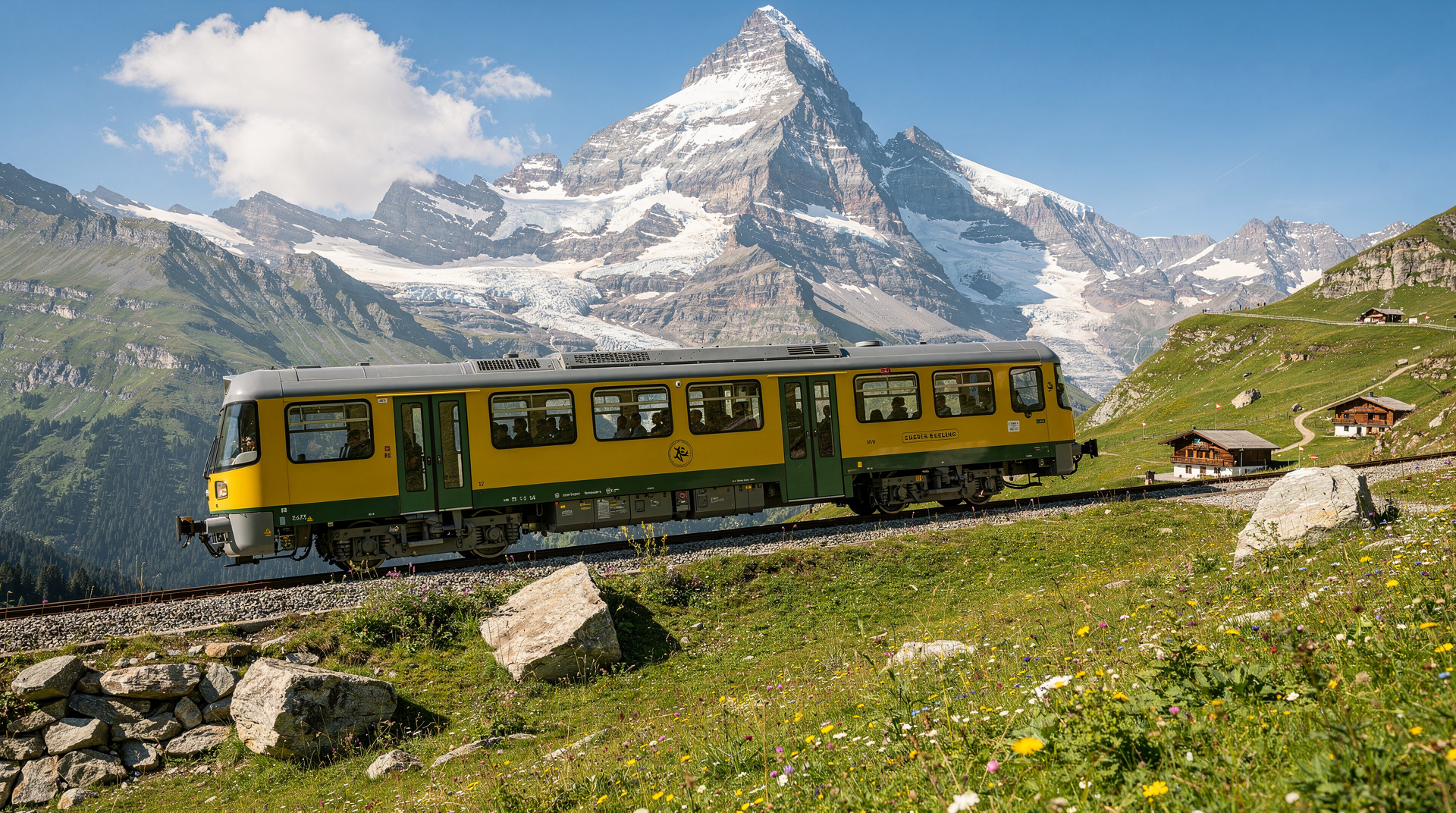
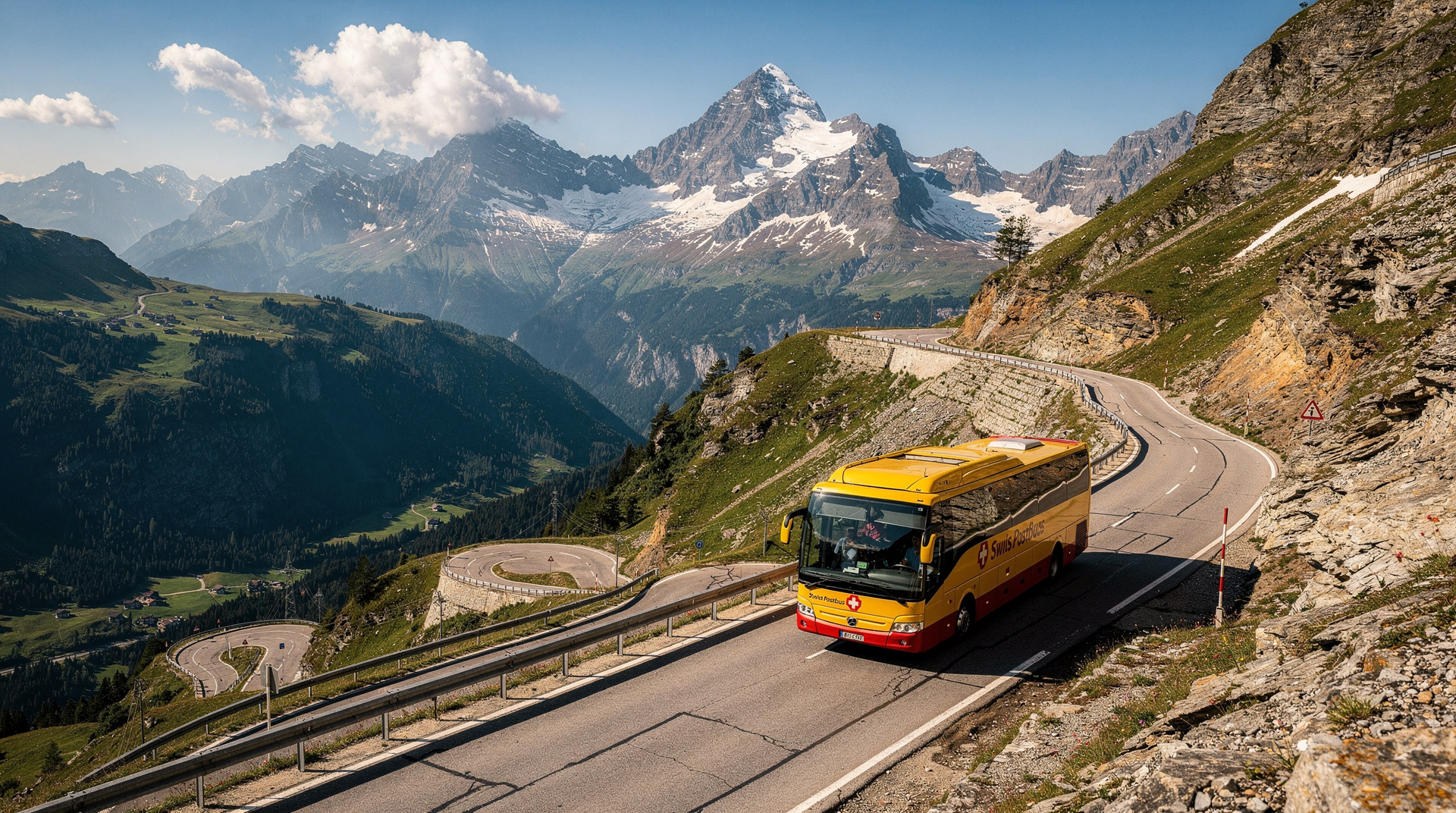
Jungfrau Travel Pass: coverage, prices, and honest comparisons
What is the Jungfrau Travel Pass and is it worth buying?
The Jungfrau Travel Pass gives unlimited travel on the Jungfrau Railways network for 3 or 6 days, including trains to Kleine Scheidegg, Grindelwald First gondola, and discounts on Jungfraujoch. It is best for visitors spending 3+ days specifically in the Grindelwald and Lauterbrunnen area.
What is the Jungfrau Travel Pass?
| Details | |
|---|---|
| Where it’s valid | Jungfrau Railways network: Interlaken Ost-Grindelwald-Lauterbrunnen-Wengen-Kleine Scheidegg-Mürren area |
| Cost | From CHF 165, adult 2nd class (current price for each duration: jungfrau.ch) |
| Best for | Visitors spending 3+ days based in Grindelwald or Lauterbrunnen |
| Buy it | Online at jungfrau.ch, or at Interlaken Ost/Grindelwald/Lauterbrunnen/Wengen stations |
| Jungfraujoch | Only a 25% discount, not fully included — factor this in separately |
The Jungfrau Travel Pass is the regional unlimited travel pass issued directly by Jungfrau Railways — the private operator that runs the high-altitude mountain railway network in the eastern Bernese Oberland, the area immediately surrounding Grindelwald, Lauterbrunnen, Wengen, and Kleine Scheidegg.
Where the Berner Oberland Pass covers the broader regional network including Lake Thun, Lake Brienz boats, Schynige Platte, and the BLS network, the Jungfrau Travel Pass is narrower in geographical scope but deeper within the Jungfrau Railways infrastructure specifically. It is designed for visitors who are staying in the Grindelwald or Lauterbrunnen area and whose primary activities centre on the mountain railways of the Jungfrau group.
Understanding the difference between the Jungfrau Travel Pass, the Berner Oberland Pass, and the Swiss Travel Pass is important before you spend money on any of them — each suits a different travel pattern, and choosing the wrong one can mean either paying for coverage you do not use or missing discounts you would have benefited from.
What the Jungfrau Travel Pass covers
The Jungfrau Travel Pass provides unlimited travel on the following Jungfrau Railways-operated transport:
Included fully:
- Berner Oberland Bahn (BOB): Interlaken Ost to Grindelwald, and Interlaken Ost to Lauterbrunnen
- Wengernalpbahn (WAB): Lauterbrunnen to Kleine Scheidegg (via Wengen), and Grindelwald to Kleine Scheidegg
- Grindelwald First gondola: from Grindelwald village to First (2,168 m)
- Männlichen gondola: from Grindelwald to Männlichen (2,230 m)
- Wengen–Männlichen cable car
- Mürren access: Lauterbrunnen–Grütschalp cable car and Grütschalp–Mürren railway
- Schilthorn cable car stages below Mürren (Stechelberg–Gimmelwald–Mürren section)
Discounted (not fully included):
- Jungfraujoch (Top of Europe): 25% discount on the Jungfraubahn ticket from Kleine Scheidegg to Jungfraujoch (the most significant individual ticket in the region, from CHF 129.60 return from Grindelwald Terminal)
- Schilthorn summit (Piz Gloria): 25% discount from Mürren
Not included:
- Harder Kulm funicular (Interlaken)
- Heimwehfluh cable car (Interlaken)
- SBB trains to/from Interlaken from Swiss cities (Bern, Zurich, etc.)
- Lake Thun or Lake Brienz boats
- Schynige Platte rack railway (these are in the Berner Oberland Pass but not Jungfrau Travel Pass)
2026 prices
The Jungfrau Travel Pass is available in two durations only: 3 days and 6 days, both consecutive.
The Jungfrau Travel Pass starts from CHF 165 (adult, 2nd class). Prices for each duration, youth and child fares, and Swiss Half Fare Card rates change by season, so check the current figures on jungfrau.ch before buying.
Children under 6 travel free. The Family Card benefit (children travel free with paying adult) may apply — confirm at point of purchase, as terms can change seasonally.
The pass is available at Jungfrau Railways ticket offices in Interlaken Ost, Grindelwald, Lauterbrunnen, and Wengen stations, and online through the Jungfrau Railways website (jungfrau.ch).
Compare the Swiss Travel Pass — if you are visiting the Jungfrau region as part of a wider Swiss trip rather than spending your entire holiday there, the Swiss Travel Pass may provide better overall value with the 50% mountain railway discount.
Is the Jungfrau Travel Pass worth it? Cost analysis
To evaluate the pass, compare it with the individual tickets for the main experiences in the region: the Interlaken Ost–Grindelwald and Lauterbrunnen return trains (BOB), the Wengernalpbahn (WAB) to Kleine Scheidegg, the Grindelwald First and Männlichen gondolas, the Lauterbrunnen–Mürren link, and Jungfraujoch (from CHF 129.60 return from Grindelwald Terminal). Current prices for each are in the price calculator at jungfrau.ch.
A 3-day scenario:
Day 1: Interlaken Ost → Lauterbrunnen (BOB) → Kleine Scheidegg (WAB) → Grindelwald (WAB) → Interlaken (BOB)
Day 2: Interlaken → Grindelwald → Grindelwald First gondola → walk → Männlichen gondola → Wengen → Lauterbrunnen → Interlaken
Day 3: Interlaken → Lauterbrunnen → Mürren (cable car + train) → day hiking → return
Add up the individual tickets for these three days in the jungfrau.ch calculator and compare the total with the pass price (from CHF 165). If you add Jungfraujoch on one of those days, the 25% pass discount on that ticket also counts in the pass’s favour.
The clearest conclusion: if you plan to visit Jungfraujoch and make multiple other mountain railway journeys over 3 days, the Jungfrau Travel Pass pays for itself.
Jungfrau Travel Pass vs. Berner Oberland Pass
These two passes overlap significantly in their Jungfrau Railways coverage. The key differences:
Jungfrau Travel Pass includes but Berner Oberland Pass does not:
- The Männlichen gondola from Grindelwald (Berner Oberland Pass includes Männlichen cable car from Wengen/WAB connection, but the direct Grindelwald gondola is Jungfrau Railways)
- A 25% discount on Jungfraujoch (the Berner Oberland Pass gives no Jungfraujoch discount)
- A 25% discount on the full Schilthorn cable car
Berner Oberland Pass includes but Jungfrau Travel Pass does not:
- Lake Thun boats
- Lake Brienz boats
- Schynige Platte rack railway
- BLS regional trains (Spiez, Zweisimmen corridor)
- Niederhorn cable car
- Stoos funicular
In summary: If your days in the Bernese Oberland will be primarily on the Jungfrau Railways network (Grindelwald, Lauterbrunnen, Kleine Scheidegg, First, Männlichen, Mürren) with a Jungfraujoch visit, the Jungfrau Travel Pass is the more focused and better-value option. If you want to add Lake Thun, Lake Brienz, Schynige Platte, and the broader BLS network, the Berner Oberland Pass covers more ground.
See the full Berner Oberland Pass guide for detailed coverage, pricing, and itinerary suggestions.
Jungfrau Travel Pass vs. Swiss Travel Pass
The Swiss Travel Pass is the national unlimited travel pass covering SBB trains, most regional networks, lake boats across Switzerland, and free museum admission. Its relationship to the Jungfrau Railways is specific and important to understand:
What the Swiss Travel Pass gives in the Jungfrau region:
- Free travel on SBB trains from Swiss cities to Interlaken (Bern–Interlaken, Zurich–Interlaken, etc.)
- 50% discount on the Jungfrau Railways (BOB, WAB, Grindelwald First, Männlichen) and 25% off Jungfraujoch
- Free museum admissions across Switzerland
What the Jungfrau Travel Pass gives (that the STP does not):
- Unlimited (not 50% off) on the Jungfrau Railways
- The same 25% off Jungfraujoch as the Swiss Travel Pass, but unlimited rides on the rest of the network
Important detail: Both passes give a 25% discount on Jungfraujoch (Half Fare Card holders pay half price), so neither is a Jungfraujoch pass: the saving comes from the rest of the network.
The full cost comparison — STP vs. Jungfrau Travel Pass for 3 days in the region:
Scenario: Visitor arrives in Bern, spends 3 days in the Grindelwald/Lauterbrunnen area, visits Jungfraujoch once
- With the 3-day Swiss Travel Pass (CHF 254): Bern–Interlaken train free, 50% off the Jungfrau mountain railways, 25% off Jungfraujoch, museums included.
- With the Jungfrau Travel Pass (from CHF 165) plus separate SBB tickets: mountain railways in the network free, 25% off Jungfraujoch, Bern–Interlaken return paid separately.
Add up your own itinerary in the calculator at jungfrau.ch to see which is cheaper. In general, the Jungfrau Travel Pass combination tends to win for a trip focused on the Bernese Oberland. However, the Swiss Travel Pass wins if you are moving between Swiss cities.
The practical rule: If the Jungfrau region is your entire Switzerland trip, combine the Jungfrau Travel Pass with SBB tickets for transfers. If you are touring Switzerland broadly, the Swiss Travel Pass with its 50% mountain discounts is the more flexible and often better-value option.
How to visit Jungfraujoch with the Jungfrau Travel Pass
Jungfraujoch — the “Top of Europe” at 3,454 metres — is the most popular mountain excursion in Switzerland and requires advance booking in peak season (July, August, and school holidays). With the Jungfrau Travel Pass:
- Book your Jungfraujoch ticket online in advance at jungfrau.ch (booking opens several months ahead)
- Select the “Jungfrau Travel Pass holder” fare category for the 25% discount
- Travel from Interlaken or Grindelwald using your pass (all steps to Kleine Scheidegg are included)
- Purchase only the Jungfraubahn portion (Kleine Scheidegg to Jungfraujoch) at the discounted rate
Journey time from Interlaken to Jungfraujoch: Allow approximately 2 hours from Interlaken Ost to the summit. Plan for at least 2–3 hours at the summit (ice palace, Sphinx observatory, Aletsch Glacier views, Top of Europe restaurant). Full day excursion recommended. If you would rather lock in the summit leg ahead of time, you can book a Jungfraujoch round-trip railway ticket from Grindelwald separately.
Weather: Check the Jungfrau weather forecast at jungfrau.ch the night before. Summit is often above cloud, but the train journey through rock tunnels means even misty days can result in clear summit views. Jungfrau Railways runs a “good weather guarantee” system — check terms when booking.
Planning a 3-day itinerary with the Jungfrau Travel Pass
Here is a practical 3-day itinerary designed to use the pass effectively:
Day 1 — Grindelwald valley and First: Arrive in Grindelwald by BOB from Interlaken. Take the Grindelwald First gondola to First (2,168 m) — summer activities include the First Cliff Walk, the First Flyer zip-line, and hiking trails with Eiger views. Walk down (or gondola back) and explore Grindelwald village in the afternoon.
Day 2 — Jungfraujoch (pre-booked): Early train from Interlaken or Grindelwald → Kleine Scheidegg (all covered by pass) → Jungfraujoch (25% discount). Allow a full day. Return to valley in late afternoon.
Day 3 — Lauterbrunnen valley and Mürren: BOB to Lauterbrunnen. Cable car to Grütschalp and narrow-gauge railway to Mürren — a car-free cliff-side village with one of the finest mountain panoramas in Switzerland. Walk the Allmendhubel flower path, explore Mürren, and optionally take the lower Schilthorn cable car stages (included) toward Piz Gloria (summit cable car stage has separate cost at 25% discount).
Getting to the Jungfrau region from Swiss cities
The Jungfrau Travel Pass does not cover SBB trains to Interlaken. Travel to the region:
- From Bern: 50 minutes to Interlaken Ost (SBB InterRegio, approximately CHF 30 return at full price, CHF 15 with Half Fare Card)
- From Lucerne: 1 hour 55 minutes via Bern
- From Zurich: 2 hours via Bern
- From Basel: 2 hours 30 minutes via Bern
If you have a Swiss Travel Pass, SBB travel to Interlaken is covered. If you have only the Jungfrau Travel Pass, budget for SBB transit costs separately.
For more on regional pass options, see the Tell-Pass guide for Central Switzerland, the Berner Oberland Pass guide for the broader regional network, and the Swiss Travel Pass guide for the national option. For the full Jungfraujoch experience, see the Jungfraujoch guide.
Who should skip the pass entirely
The Jungfrau Travel Pass is not the right choice for everyone. If you are spending only 1-2 days in the region, the per-journey savings rarely outweigh the upfront cost — buy individual tickets or a single BOB/WAB return instead. If your Switzerland trip covers multiple regions (say, Zermatt, Lucerne, and the Bernese Oberland) rather than being Jungfrau-focused, the Swiss Travel Pass is almost always the better overall value, since it also covers your inter-city trains and gives free museum entry.
And if Jungfraujoch is genuinely your only goal and you’re not planning to ride First, Männlichen, or the Mürren cable cars more than once, buying that single ticket directly (with the Good Morning discount) is simpler and cheaper than any pass.
The key mountain experiences covered
Here is a more detailed picture of the main experiences the Jungfrau Travel Pass gives access to:
Kleine Scheidegg and the Eiger north face
Kleine Scheidegg (2,061 m) is the high mountain saddle between Grindelwald and Lauterbrunnen, served by the WAB rack railway from both valleys. It is the midpoint of the Jungfraujoch railway journey and one of the most photographed viewpoints in the Alps.
The north face of the Eiger rises directly above Kleine Scheidegg — 1,800 metres of near-vertical limestone that was first climbed in 1938 after several previous attempts ended in fatalities. The wall’s shadow falls across the Scheidegg in the afternoon, and the scale is genuinely difficult to process. Sitting on the Kleine Scheidegg station platform with coffee and a view of the face is one of the great simple pleasures in Swiss alpine tourism.
The Eiger Trail (Eigerweg) from Eigergletscher station down to Grindelwald Grund follows the base of the north face for approximately 3–4 hours. It is one of the finest low-technical alpine walks in Switzerland and completely feasible for walkers in good hiking boots. The WAB covers Eigergletscher (one stop above Kleine Scheidegg toward Jungfraujoch, included in the pass), making the walk easily accessible.
Grindelwald First: the summer activity hub
Grindelwald First (2,168 m) is the main summer mountain activity area above Grindelwald village, reached by gondola (fully included in the Jungfrau Travel Pass). At the First summit station:
First Cliff Walk: A series of suspended walkways and viewing platforms extending along the cliff edge. Dramatic but accessible — the walkways have solid railings and are suitable for anyone without a serious fear of heights.
Bachalpsee: A 45-minute walk from First leads to this high alpine lake (2,265 m) where on calm days the lake surface mirrors the Eiger, Mönch, and Jungfrau. One of the most photographed views in the Bernese Oberland and achievable by any reasonably fit walker.
First Flyer: A zip-line covering 800 metres at up to 84 km/h — separately priced, approximately CHF 29 per person.
Mountain carts: Four-wheeled downhill carts on the trail from First to Bort — separately priced, approximately CHF 20.
Männlichen: the panoramic ridge
The Männlichen (2,230 m) is a broad ridge above Grindelwald and Wengen with exceptional panoramic views — the Jungfrau group in one direction, the Bernese Oberland lowlands in the other. Two cable cars serve it (both included in the pass):
- The Grindelwald–Männlichen gondola (the world’s longest gondola system at 6.2 km)
- The Wengen–Männlichen cable car (from Wengen, accessible from Lauterbrunnen via WAB)
From Männlichen, the Royal Walk (Königliche Route) to Kleine Scheidegg takes about 1 hour on a gentle, broad path with consistent mountain views — one of the most straightforward alpine ridge walks in Switzerland and ideal for walkers who want dramatic scenery without steep terrain.
Mürren and the Schilthorn area
Mürren (1,638 m) is the car-free village perched on a cliff above the Lauterbrunnen valley with a front-row view of Eiger (3,970 m), Mönch (4,107 m), and Jungfrau (4,158 m). Access via the Lauterbrunnen cable car to Grütschalp and the narrow-gauge railway along the cliff edge is fully included.
The Allmendhubel flower path from Mürren is a circular walking trail at 1,907 m through alpine meadows with Eiger views — ideal in June and July when alpine wildflowers are at their best.
The Schilthorn (2,970 m) sits above Mürren and is home to the revolving Piz Gloria restaurant, famous as the location for the James Bond film “On Her Majesty’s Secret Service” (1969). The cable car from Stechelberg and Mürren to the Schilthorn offers the 25% discount with the Jungfrau Travel Pass — the official full-price return from Stechelberg is CHF 115 (CHF 91.40 from Mürren), valid until 12 December 2026.
Lauterbrunnen valley: the waterfalls
The Lauterbrunnen valley itself — independent of any mountain railways — is one of the most dramatic landscapes in the Alps. Seventy-two waterfalls fall from the 300-metre cliffs on both sides of the glacially-carved valley. The most famous:
Staubbachfall: 297 metres, falling directly from the cliff face above Lauterbrunnen village, visible from the train and from anywhere in the centre of the village. Free to approach.
Trümmelbachfälle: The 10 glacial falls thundering through a gorge inside the cliff face, accessible by tunnel-lift (admission CHF 14, separately priced). Europe’s only accessible glacial falls inside a mountain — impressive in spring and summer when glacial meltwater maximises volume.
Mürrenbach Falls: One of the highest in Europe at 417 metres, visible from the Lauterbrunnen valley floor above Stechelberg.
Access to the valley floor and the waterfalls does not require the Jungfrau Travel Pass — it is free. The pass adds value by covering the mountain railways above the valley and the cable cars to the cliff-top villages.
Where to stay in the Jungfrau region
The Jungfrau Travel Pass does not include accommodation, but understanding the accommodation options helps you make the most of the pass:
Interlaken: The largest base, with the widest accommodation range and best transport connections. BOB from Interlaken Ost puts you in Grindelwald (35 min) or Lauterbrunnen (20 min). Good choice for visitors combining the region with other Swiss cities.
Grindelwald: The mountain village closest to the First gondola and the WAB connections toward Kleine Scheidegg. Hotels and apartment options at various price points. A good choice if mountain hiking is your primary focus.
Wengen: Car-free, quiet, extraordinarily positioned. Primarily accessed from Lauterbrunnen by WAB. Popular with British visitors, with a long tradition of ski and walking holidays. More expensive than Grindelwald.
Lauterbrunnen: The valley floor village — lower cost than the mountain villages, excellent transport connections to all railway lines. A practical budget base.
Mürren: Car-free cliff-edge village, accessible by cable car and cliff railway only. The most dramatically positioned, with direct access to the Allmendhubel and Schilthorn area. Fewer accommodation options but a genuinely memorable location for those who make the effort.
Buying the Jungfrau Travel Pass: tips
Purchase online at jungfrau.ch or through authorised agents for best availability, particularly in July and August when the pass can sell out at local offices. The pass is issued as either a card or a QR code depending on the channel.
If you are purchasing at the same time as a Jungfraujoch ticket, coordinate the dates so your Jungfraujoch visit falls within your pass validity period for the 25% discount to apply.
The pass is not refundable once activated. If you purchase a 6-day pass and bad weather curtails your plans, there is no refund for unused days. The 3-day pass is therefore the safer starting option for first-time visitors — it covers the essential mountain circuit and can be extended with individual tickets if you decide to stay longer.
For planning the rest of your Switzerland trip around the Jungfrau region, see the day trips from Bern guide, the best time to visit Switzerland for seasonal mountain conditions, and the 7-day Switzerland itinerary for a complete trip framework.
Frequently asked questions about Jungfrau Travel Pass
Does the Jungfrau Travel Pass include Jungfraujoch?
No, not fully. It gives only a 25% discount on the Jungfraujoch ticket from Kleine Scheidegg, as does the Swiss Travel Pass. If you’re touring more of Switzerland, the Swiss Travel Pass is usually the better choice.
Is the Jungfrau Travel Pass worth it for a 2-day visit?
Usually not. The savings from unlimited travel only clearly beat individual tickets once you’re making several separate journeys over 3 or more days. For a 2-day visit, compare the cost of your planned individual tickets (BOB, WAB, First, Männlichen, Mürren) against the 3-day pass price before buying — for most 2-day itineraries, individual tickets work out similar or cheaper.