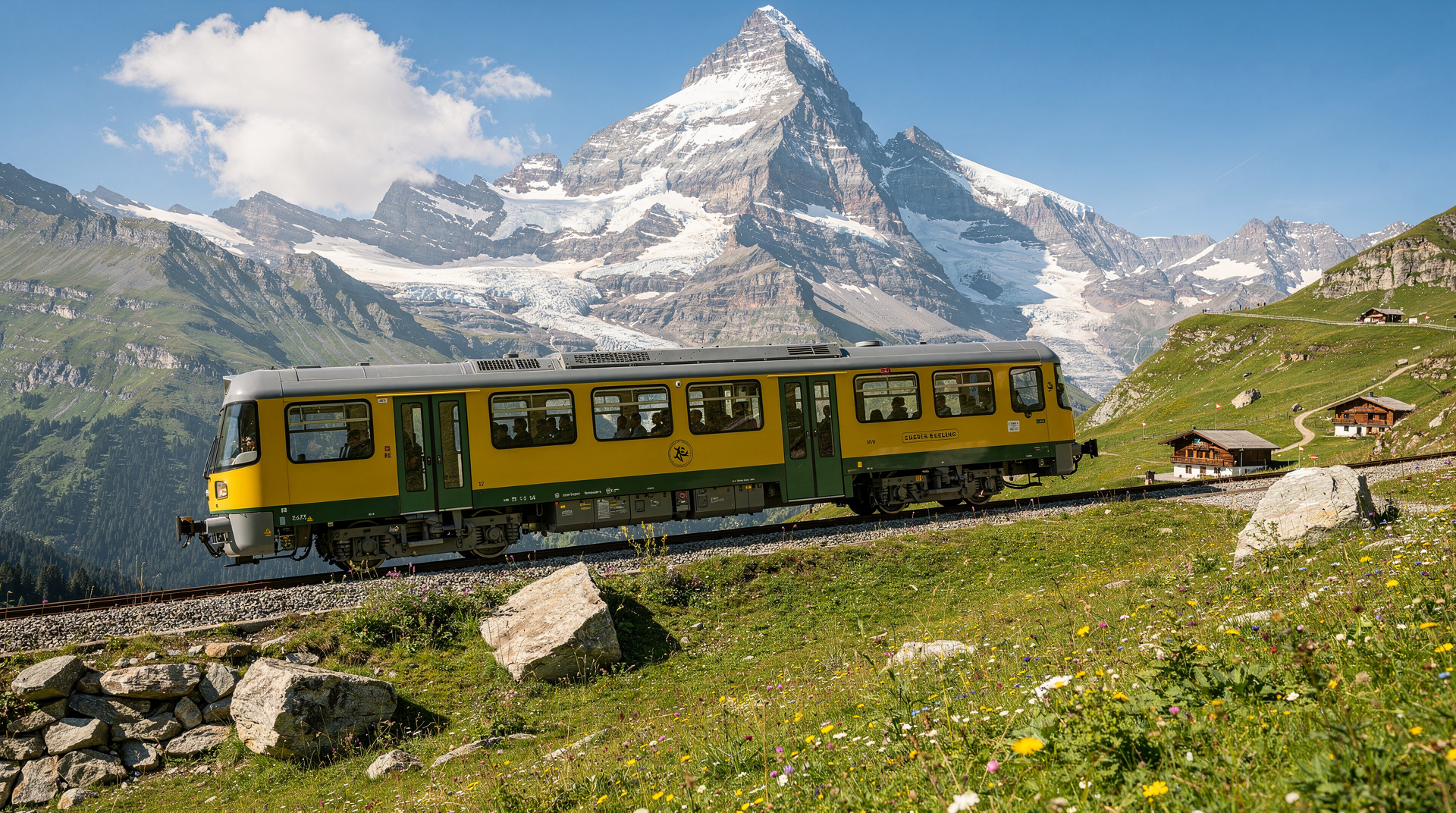
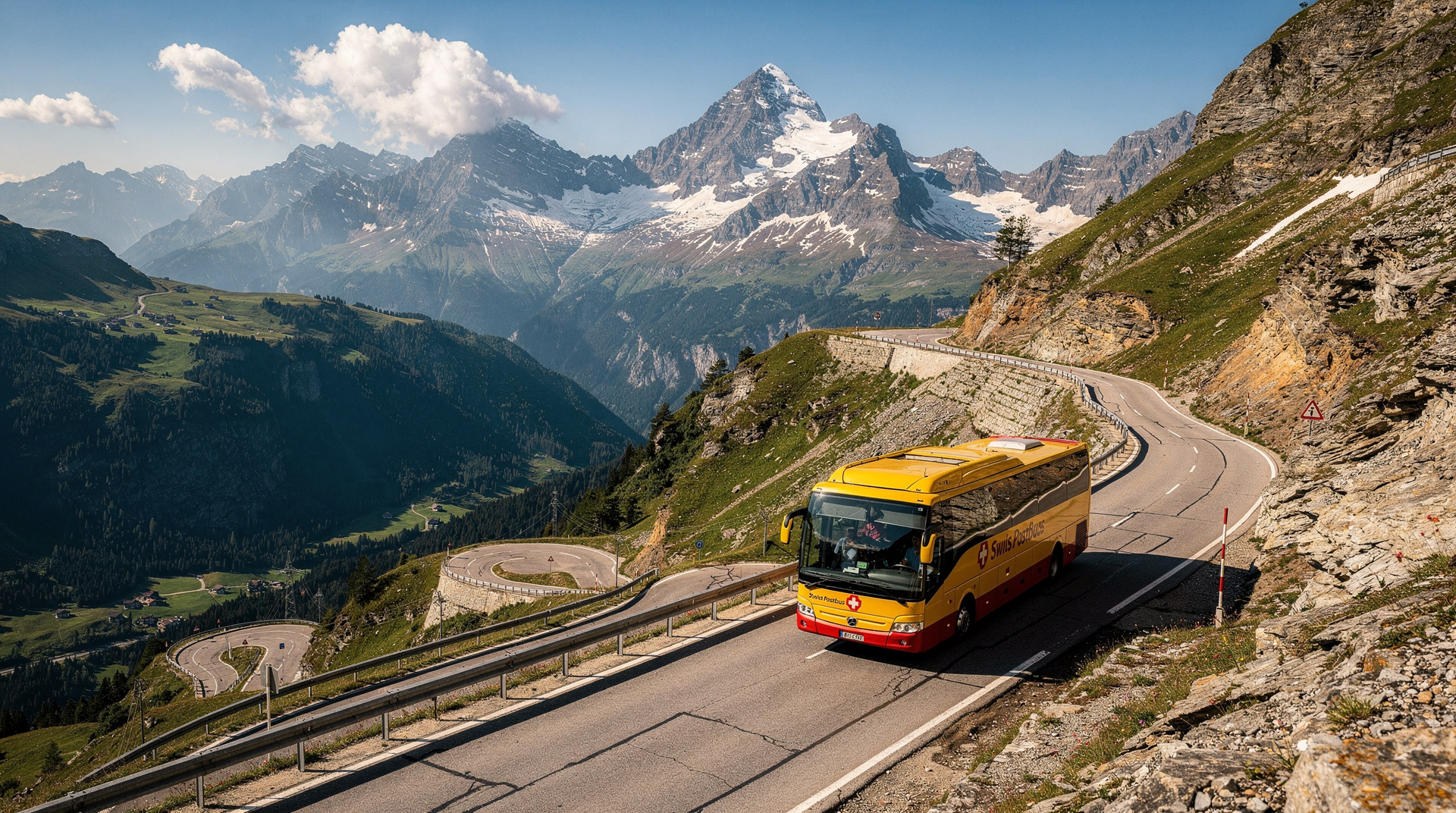
© Swiss Travel System AG, 2018, Fotograf: Daniel Ammann
How to use Swiss trains: a complete guide
How do Swiss trains work?
Swiss trains are punctual, frequent (every 30 min on major routes), and easy to use. Buy tickets via the SBB app, check timetables at sbb.ch, and look for platform numbers on departure boards.
How to use Swiss trains: everything you need to know
| At a glance | |
|---|---|
| Network | SBB (national) + BLS, RhB, MOB, Zentralbahn, Appenzeller Bahnen (private, all on one timetable) |
| Ticket cost | Point-to-point fares vary widely; Super Saver fares in the app can be 50-70% off |
| Booking window | Buy same-day via the SBB app, or months ahead for Glacier Express/Bernina Express seat reservations |
| Best pass | See our Swiss Travel Pass guide or Swiss Travel Pass vs Half Fare Card comparison |
| App to install | SBB Mobile, before you land if possible |
Swiss trains are famous for two things: punctuality and complexity. The punctuality is real — Switzerland’s national railway operator (SBB) consistently achieves on-time rates above 90%, with trains arriving to within seconds of their scheduled time. The complexity is mostly a myth: once you understand a few basic rules, the Swiss rail network is one of the easiest to use in the world.
This guide covers everything from buying your first ticket to navigating connections, understanding the different train types, and using the SBB app like a local.
The Swiss railway operator: SBB
SBB stands for Schweizerische Bundesbahnen (Swiss Federal Railways). In French it’s CFF, in Italian FFS. These all refer to the same national operator that runs most of Switzerland’s main rail network.
Beyond SBB, Switzerland has several private railways that operate regional networks:
- BLS: Bern-Lötschberg-Simplon. Operates in the Bernese Oberland and Valais.
- Rhaetian Railway (RhB): Graubünden region. Operates the famous Glacier Express and Bernina Express routes.
- MOB: Montreux-Oberland-Bernois. The Golden Pass route.
- Zentralbahn: Central Switzerland. Connects Lucerne to Interlaken via Brünig Pass.
- Appenzeller Bahnen: Northeast Switzerland.
All private railways are integrated into the same national timetable at sbb.ch and are covered by the Swiss Travel Pass.
Train types explained
Swiss trains have different designations that tell you their speed and frequency of stops:
IC (InterCity): Fast direct trains between major cities. Minimum stops. Zurich to Bern IC takes 55-58 minutes.
ICN (InterCity tilting train): Similar to IC but uses special rolling stock that tilts on curves for faster cornering. Recognizable by the distinctive Swiss arrow design.
IR (InterRegio): Faster regional trains making fewer stops than regional services. Cover medium-distance routes.
S (S-Bahn): Suburban rail networks in major cities. Frequent (every 15-30 minutes), stop at all stations in the network.
R (Regional/Regio): Slow trains stopping at all stations. The workhorse of rural lines.
EC (EuroCity): International trains connecting Switzerland to neighboring countries. Require a Eurail/Interrail pass or separate international ticket if not covered by Swiss pass.
Reading the timetable
The SBB timetable at sbb.ch and in the SBB app is your primary resource. Here’s what a timetable entry shows:
Departure time: Always the time the train leaves the first or key boarding station. Check your specific station’s departure time.
Train number: A 4-5 digit number (e.g., IC 710). Useful for identifying your specific service on departure boards.
Platform (Gleis/Voie): The platform number. This appears on departure boards at stations, usually confirmed 10-30 minutes before departure. Platform numbers can change — always check the board.
Via: Intermediate stops listed on the display board. Check that your destination or connection point is listed.
Connection information: The app shows your full journey including connections, with how many minutes between each leg.
Buying tickets
SBB Mobile app (recommended)
The official SBB app is free and excellent. To use it:
- Download “SBB Mobile” (available iOS and Android)
- Set up an account (allows ticket storage and Half Fare Card/Travel Pass linking)
- Enter your “From” and “To” stations and travel date/time
- Select your ticket type (single, return, day pass)
- If you have a Half Fare Card or Swiss Travel Pass, link it in the profile section for automatic discounts
- Pay by card and receive your ticket digitally
- Show the screen to the conductor — no printing needed
Super Saver tickets in the app offer discounts of 50-70% on specific departure times. These are fixed (non-flexible) tickets for a specific train. Excellent for price-sensitive travelers who can plan ahead.
Ticket machines at stations
Every Swiss station has at least one self-service ticket machine. They’re green and grey with a large touchscreen. Language options include English (tap the flag icon in the top right).
To buy a standard ticket:
- Select “Tickets” then “Point-to-point tickets”
- Enter your destination (type the first letters, then select from the list)
- Choose the number of passengers and class
- If you have a Half Fare Card, select “with subscription” when prompted
- Select your preferred departure time
- Pay by card or cash
- Take your ticket — keep it with you throughout the journey
At the ticket counter
Major stations have staffed ticket counters. Useful for complex bookings, scenic train seat reservations, and purchasing Swiss Travel Pass or Half Fare Card. Wait times can be significant at busy tourist stations in peak season.
Buying on the train
You can buy a ticket from the conductor on the train, but only if the station you boarded from had no ticket machine or counter — which is very rare in Switzerland. Boarding without a ticket when machines were available can result in a fine (CHF 100+) even if you try to pay on the train.
Passes and how to use them
Swiss Travel Pass: Digital or physical card. If digital (via SBB app or the Swiss Travel Pass app), activate it on your first travel day and show the screen when asked by conductors. If physical, sign the card and show it. No separate ticket needed for SBB trains, PostBus, and lake boats.
Half Fare Card: Show the card alongside each ticket you purchase. The card itself is not a ticket — you still need to buy a ticket for each journey, but at half price. In the SBB app, link the card to your profile for automatic discounts.
Both passes are available through GetYourGuide.
Read our Half Fare Card guide and our Swiss Travel Pass vs Half Fare Card comparison to choose the right option.
Boarding your train
Find the platform: Check the departure board for your train’s platform number (Gleis in German, Voie in French, Binario in Italian). Platform numbers are usually confirmed 10-30 minutes before departure and can change.
Check the car diagram: At many stations, yellow boards on the platform show where each car will stop (1st class, 2nd class, restaurant car). Line up near the correct door to avoid rushing when the train arrives.
Board promptly: Swiss trains stop for exactly their scheduled dwell time — usually 1-3 minutes. Board quickly once the doors open. Doors close automatically.
Validate if required: On SBB intercity trains, your digital ticket activates automatically when you check in via the app or show it. On some regional services and city transport, you may need to manually validate a paper ticket by inserting it into an orange or red machine on the platform or inside the vehicle.
Find your seat: On IC and ICN trains, first and second class sections are well-marked. Window numbers are posted above seats if you’ve reserved. Reservations are only mandatory on a few services (Glacier Express, some international trains).
Seat reservations
Most Swiss domestic trains do NOT require seat reservations. You buy a ticket and sit in any unreserved seat.
Seat reservations ARE required on:
- Glacier Express (CHF 13-33 depending on season)
- Bernina Express (fee: see rhb.ch)
- Golden Pass Express Montreux-Zweisimmen (CHF 10-15)
- William Tell Express (boat section)
- Some international trains (EC/ICE trains to Germany, Austria, Italy)
Seat reservations are recommended but not required on:
- Regular IC trains in high summer
- PostBus services in busy tourist areas at peak times
Book mandatory reservations through sbb.ch, the SBB app, or at ticket counters. For the Glacier Express in particular, book 1-2 months ahead in peak summer. The scenic seats (window-facing toward the mountains) sell out first.
Connections and transfers
Swiss connections work because the whole timetable is coordinated. At major hubs (Bern, Zurich HB, Basel SBB, Lucerne, Zurich Flughafen), arriving trains and departing trains are scheduled to allow transfers of 4-10 minutes.
4-minute connections are real: This is the most common point of confusion for first-timers. If the app shows a 4-minute connection at a major hub, take it. The platforms at Swiss stations are designed for fast connections. Escalators and clear signage mean 4 minutes is usually comfortable.
The “clock-face” timetable: Switzerland uses a “takt” system where trains depart at the same minutes past the hour, every hour. This means connections are always at the same time. Once you’ve made a connection at Bern at :32 past the hour, you know that connection always works at :32.
Missed connections: If your incoming train is delayed and you miss a connection, the SBB app will automatically show you the next connection. At most major stations, information staff can direct you. There’s always a next train within 30-60 minutes on main routes.
Key stations explained
Zurich HB (Hauptbahnhof): Switzerland’s largest and busiest station. Connections in every direction, every few minutes. The underground concourse connects to the Zurich city S-Bahn and the Zurich tram network. Multiple shopping areas and services inside.
Bern HB: The central hub for the Bernese Oberland and connections south. Clean, well-organized. Direct tram connections to the old town.
Lucerne: Terminus station right on the lakefront. All mountain railways to Pilatus, Rigi, and Titlis start from connections here. One of Switzerland’s most beautiful stations to arrive at.
Geneva Cornavin: Geneva’s main station. Connections to Lausanne, Bern, and the airport. The free airport shuttle arrives at a separate level.
Basel SBB: Unique situation — Switzerland’s gateway to Germany and France. The SBB station connects to the SNCF and DB station for international departures.
Interlaken Ost: Eastern terminus of the Bernese Oberland railway network. All Jungfraujoch, Grindelwald, and Lauterbrunnen trains depart from here. If staying in Interlaken and planning mountain excursions, you’ll use Interlaken Ost constantly. If the Jungfraujoch is on your list, you can pre-book a self-guided Jungfraujoch trip from Interlaken and ride the rail connections from this station.
Luggage, bikes, and storage
Luggage: No limits on the main SBB network for hand luggage. Large items should be in the overhead racks or the space at the end of each car. Don’t block the aisle.
Bikes: Allowed on most trains with a reservation (CHF 6-18 per journey). Book the bike space when buying your ticket. Folding bikes are free without reservation.
Left luggage: Automatic luggage lockers are available at major stations (CHF 5-9/day). At some stations, staffed left luggage offices offer the same service.
Luggage shipping: SBB’s registered luggage service lets you send bags between stations (CHF 12/bag) or directly to/from airports (CHF 22/bag via “Fly Luggage”). Excellent for multi-city trips without dragging suitcases.
WiFi and charging
Free WiFi is available at all major stations (SBB Free WiFi). The WiFi on trains themselves is available on many IC and long-distance services, though quality varies.
Power outlets (Swiss Type J, 3-pin) are available in first-class carriages and on panoramic trains. Second class carriages on regional trains typically don’t have outlets. Bring a powerbank if you depend on phone navigation and photography.
Practical tips from regular users
Always check the platform: Even if you know your usual platform for a route, check the departure board every time. Platform changes happen.
Get the SBB app before you arrive: It works offline for downloaded timetables and you can plan your first journeys before leaving home.
First class is worth it on mountain routes: The difference in comfort on a scenic 2-hour mountain train is significant. First class on Swiss trains is also usually less than double the second-class price on shorter routes.
Night trains have their own rules: The Nightjet international night trains (to Vienna, Amsterdam, Hamburg) require separate reservations and tickets. They’re excellent but not covered by standard SBB tickets.
Keep your ticket until you leave the platform: Conductors check tickets at unpredictable times — sometimes after your destination station while you’re still walking out. Don’t put your ticket away too early.
For broader transport planning, see our getting around Switzerland guide and our guide to choosing between the Swiss Travel Pass and Half Fare Card. For first-time visitors, our essential guide covers everything else you need to know before arriving.
Scenic train routes to prioritize
Switzerland’s geography means that many ordinary train journeys are also beautiful. Some specific routes stand out:
Zurich to Lucerne: 45 minutes through green Swiss farmland with glimpses of the Alps. Included in the Swiss Travel Pass. Take the S3 Voralpen-Express for the most scenic routing.
Lucerne to Interlaken (Zentralbahn): About 2 hours via the Brünig Pass. This cross-Alpine route climbs from Lucerne through mountain tunnels and valleys before descending to the Bernese Oberland. Spectacular from Lake Brienz onward.
The Bernina Express route (Chur to Tirano): The Rhaetian Railway’s route over the Bernina Pass is a UNESCO World Heritage Site. The train climbs to 2,253m on a regular scheduled service. With the Swiss Travel Pass, this extraordinary journey is included.
Zurich to Davos: About 2.5 hours through the Rhine valley and into Graubünden. The approach to Davos through narrow Alpine valleys is striking.
Any regional train along a lake: The S-Bahn along Lake Zurich, the train along Lake Thun, and the route along Lake Geneva from Lausanne to Montreux are all outstanding on ordinary regional services.
Train delays and disruptions
Swiss trains are punctual by global standards, but delays do happen. Here’s how to handle them:
SBB app notifications: If you’ve saved your journey in the SBB app, you’ll receive automatic notifications about delays and alternative connections.
The 3-minute rule: If your incoming train is 3 or more minutes late and you’ll miss a connection, SBB’s system automatically calculates and shows the next available connection. Sometimes they hold connecting trains — particularly at major hubs.
Compensation: SBB’s rules require compensation for delays over 60 minutes at your final destination. Claims can be made at ticket counters or online.
Track works and replacements: Swiss rail infrastructure is continuously upgraded, which means periodic track works, particularly on weekends. Some services run with bus replacements during these works. Check sbb.ch for planned disruptions if traveling on weekends.
Weather delays: Heavy snowfall, rockfalls, and flooding can cause delays or service cancellations, particularly on mountain routes. The SBB app’s real-time information is the best source during weather events.
Understanding Swiss station names
Swiss stations have names in the local language of the region:
- Geneva: In French, “Genève.” The main station is “Genève Cornavin.”
- Zurich: In German, “Zürich.” The main station is “Zürich HB” (Hauptbahnhof).
- Biel/Bienne: A bilingual city on the German-French language border. Listed as “Biel/Bienne” on timetables.
The SBB app handles station names correctly in all languages. When in doubt, type the commonly known English name and the app will find the right station.
Night trains from Switzerland
Switzerland connects to Europe’s growing network of overnight trains:
Nightjet (ÖBB): Austria’s overnight trains connect Basel and Zurich with Vienna, Hamburg, Berlin, and Amsterdam. A couchette berth costs EUR 40-80; private sleeper compartments EUR 100-200+. Book months ahead for the best prices.
These are generally not covered by the Swiss Travel Pass for international legs but are included within Switzerland.
Rail passes for longer stays
If you’re staying in Switzerland for more than a month or two:
GA Travelcard (Generalabonnement): The Swiss annual pass for residents. CHF 3,860/year (second class) gives unlimited travel on virtually all Swiss public transport for one year. Used by about 6% of the Swiss population.
Half Fare Card (resident version): CHF 185/year versus CHF 150/month for the tourist version. For stays over 1-2 months, the annual resident version is better value.
These resident passes require a Swiss address to purchase. Tourists use the tourist versions described throughout this guide.
Swiss trains are more than transport infrastructure. They’re a daily experience that residents and visitors use for commuting, hiking, skiing, and traveling for pleasure. Understanding the system well transforms Switzerland from a destination you see to one you move through with ease and confidence. For specific route planning, visit sbb.ch or see our getting around Switzerland guide.
Should you buy a pass or pay as you go?
Most visitors doing more than a couple of long journeys are better off with a pass than buying individual tickets. The Swiss Travel Pass covers unlimited travel plus boats, city transport, and museum entry, while the Half Fare Card halves every fare you buy without committing you to specific travel days. If you’re not sure which suits your itinerary, our Swiss Travel Pass vs Half Fare Card comparison walks through real scenarios, and travellers arriving with a Eurail pass should read Swiss Travel Pass vs Eurail before assuming Eurail covers everything it appears to.
Riding the scenic routes
Several named scenic trains — the Bernina Express chief among them — run on the same network described above, just with mandatory seat reservations and, often, panoramic carriages. If you’re building a trip around them, our guide to booking Swiss scenic trains and the dedicated scenic trains itinerary cover reservation windows and seat-facing tips in more depth than this general guide can.
Frequently asked questions about How to use Swiss trains
Do I need to reserve a seat on regular Swiss trains?
No. Seat reservations are not required on standard IC, IR, or S-Bahn services — you simply buy a ticket and sit in any unreserved seat. Reservations are only mandatory on a handful of named scenic trains such as the Glacier Express and Bernina Express.
Is it cheaper to buy tickets in advance or on the day?
Both are possible. Super Saver fares in the SBB app, released for specific fixed departures, can be 50-70% cheaper than the standard flexible fare, but they lock you into that exact train. Standard flexible tickets can be bought right up to departure at the same price.