Geneva to Chamonix and Mont Blanc: day trip guide
How do you get from Geneva to Chamonix?
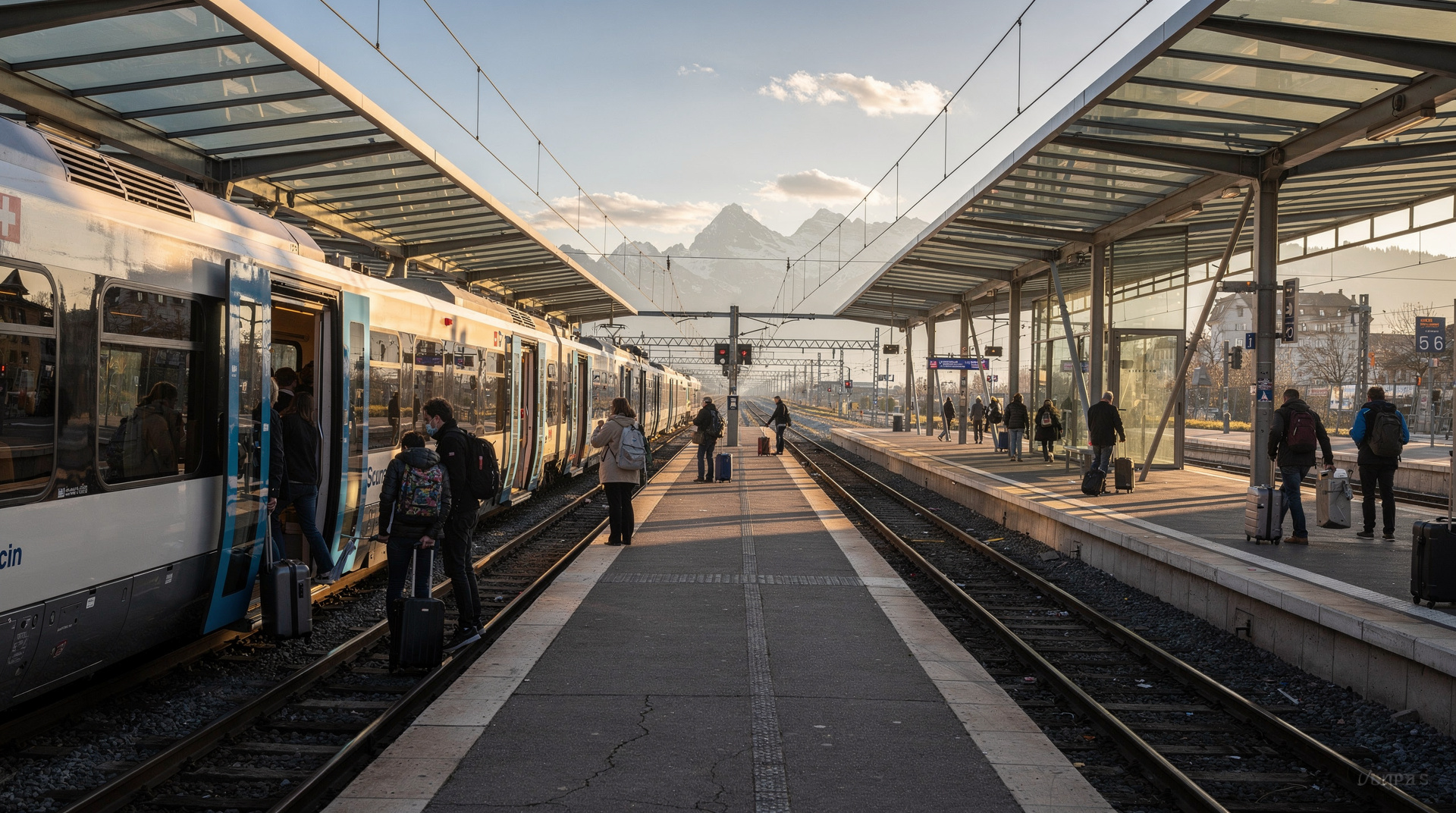
By bus: direct shuttles from Geneva airport or city take 1.5-2 hours to Chamonix. By train: Geneva to Martigny (1 hour), then the Mont Blanc Express narrow-gauge train to Chamonix (1.5 hours). Total journey: about 2.5 hours by train.
Chamonix from Geneva: Mont Blanc on your doorstep
Chamonix-Mont-Blanc is one of the most famous mountain towns in the world, sitting in a deep valley at the foot of the highest peak in the Alps. From Geneva, it is under 90 minutes by shuttle bus — a remarkably short distance for the scale of the destination. The Aiguille du Midi cable car rises 2,800 metres in vertical height from the valley floor to 3,842 metres, offering some of the most dramatic high-altitude views in Europe. The town below has world-class climbing history, excellent restaurants, and an energy generated by being at the centre of the most ambitious outdoor culture in the Alps.
This is a cross-border day trip — Chamonix is in France, in the Haute-Savoie department. You need a valid passport (no visa for EU, US, UK, Australian, Canadian, and most other nationalities). The currency is euros. French is spoken (English is widely understood in the tourist areas).
For visitors with an interest in mountains — even without any intention of climbing — Chamonix is an extraordinary experience. Standing beneath the north face of the Aiguille du Midi, watching guides rope up for routes on the Grands Montets, or simply sitting at a café terrace with Mont Blanc (4,808 m) filling the sky above is genuinely unlike anything Switzerland offers.
| Where | Chamonix-Mont-Blanc, Haute-Savoie, France (cross-border from Geneva) |
| Cost | Shuttle around EUR 30-40 one way; Aiguille du Midi around EUR 60-70 return |
| Time needed | A full day; around 1.5-2.5 hours travel each way |
| Getting there | Shuttle bus (fastest) or train via Martigny on the Mont Blanc Express |
| Best time | Clear mornings, June-September for hiking; January-April for the Vallée Blanche ski descent |
Prefer Switzerland? Lavaux and Montreux scenic day trip from Geneva
If you'd rather stay in Switzerland, this full-day tour from Geneva covers the UNESCO Lavaux vineyards and the beautiful Montreux lakefront — equally stunning scenery.
- Free cancellation
Getting from Geneva to Chamonix
By shuttle bus (recommended)
Direct shuttle buses run from Geneva Airport and Geneva city centre to Chamonix. This is the most convenient option for most visitors.
From Geneva Airport:
- Sat-Nav Shuttle, Chamonix Express, and several other operators run direct transfers
- Journey time: approximately 1 hour 20-30 minutes (border crossing + tunnel)
- Frequency: multiple departures daily, year-round
- Price: approximately EUR 30-40 one way, EUR 55-70 return
From Geneva city centre:
- Some operators offer city centre pickup
- Journey time: approximately 1 hour 40 minutes
Booking: Book online at least a few days in advance in summer — capacity is limited and prices rise sharply with demand. Compare Chamonix Shuttle, Alpybus, and Ben’s Bus for current prices.
By train (via Martigny)
The train route to Chamonix is scenic but slower:
- Geneva Cornavin → Martigny: 1 hour by Swiss Federal Railways (covered by Swiss Travel Pass)
- Martigny → Chamonix: 1 hour 30 minutes by the Mont Blanc Express (narrow-gauge metre-gauge railway operated jointly by Swiss and French rail)
Total journey time: approximately 2.5 hours each way.
Mont Blanc Express ticket: The section from Martigny to Vallorcine (Swiss-French border) is covered by the Swiss Travel Pass. The French section (Vallorcine to Chamonix) requires a separate French ticket — approximately EUR 10 one way. Buy at the Martigny station or online at sncf.com.
The Mont Blanc Express is a beautiful journey through the Val d’Arpette and the dramatic Vallée de Chamonix — worth taking at least one-way if you value the journey itself.
By car
Geneva to Chamonix by road is about 90 kilometres via the A40 motorway through France (passing through the Mont Blanc tunnel approach) or via the A40 and Col des Montets pass (closed in winter, snow-dependent in spring).
Driving gives maximum flexibility for getting to the cable car bases and satellite valley attractions. Parking in Chamonix is available but congested in peak summer — arrive early or park in the lower lots and take the bus.
What to do in Chamonix
Aiguille du Midi cable car (3,842 m)
The most dramatic experience in Chamonix and one of the most dramatic high-altitude cable car ascents in the world. The journey from Chamonix (1,035 m) to the Aiguille du Midi summit (3,842 m) covers 2,807 metres of vertical height in two stages — the steepest cable car ascent in the world by some measures.
At the summit, a network of metal platforms and catwalks leads to viewing terraces on the snow arête, a glass-floor “Step into the Void” installation, and views across the entire Mont Blanc massif including the summit of Mont Blanc itself, the Matterhorn (visible on clear days 90 km to the east), and the Grand Combin.
Price: Approximately EUR 60-70 return (2026 price — verify at montblancnaturalresort.com). Not covered by Swiss Travel Pass.
Booking: Essential in summer. Book online at chamonix.com or montblancnaturalresort.com at least 3-7 days ahead. July and August departures fill completely. Take a specific departure time — the cable car uses timed-entry tickets. If cable car slots are sold out, the Gruyères cheese and chocolate tour from Geneva is an excellent Switzerland-based alternative for the same day.
Weather dependency: The summit is above the cloud line on most clear-weather days. If Chamonix valley is sunny, the Aiguille du Midi is usually clear. In stormy weather the cable car closes. Check the webcam at chamonix.com before departing Geneva.
Altitude: 3,842 metres. Most visitors feel breathless and should move slowly. Altitude sickness symptoms (headache, nausea, dizziness) resolve quickly for most people on descent. Children under 8 may find the altitude uncomfortable.
Mer de Glace and Montenvers rack railway
The Montenvers rack railway climbs from Chamonix (1,035 m) to the Montenvers station (1,913 m) in 20 minutes, with a view across the Mer de Glace — the largest glacier in France, 7 kilometres long and up to 400 metres deep. The glacier has retreated dramatically in the 21st century and the scale of the retreat is documented at the grotto on the ice.
Rack railway ticket: approximately EUR 40 return. Includes the grotto access. For visitors who prefer to stay in Switzerland, the 2-hour grand cruise on Lake Geneva offers a completely different Alpine perspective from the water.
Ice grotto: Each year a new grotto is carved into the glacier. Entry is via a steel ladder (about 400 steps down to the current ice surface, the depth increasing annually as the glacier retreats). The grotto walls are brilliant blue-green ice. This is one of the more accessible glacier experiences in the Alps.
Chamonix town and the valley
Chamonix itself is a lively, attractive mountain town with a good mix of outdoor equipment shops, restaurants, cheese shops, and the Maison de la Montagne (mountain information centre where you can book guides and check route conditions). The pedestrian main street has excellent café terraces with views up toward Mont Blanc.
The valley floor between Chamonix and Argentière (10 km north) is worth exploring by the free electric bus that runs along the valley. Les Praz and Argentière have quieter, more village-like atmospheres than Chamonix centre.
Hiking above Chamonix
The most popular walking trails from Chamonix include:
Le Tour du Mont Blanc (Grand Balcon Nord): The high trail above the valley linking Planpraz (above Chamonix) to La Flégère, with views of the Mont Blanc massif throughout. The cable car to Planpraz (approximately EUR 25 return) accesses this route; the descent from La Flégère is by cable car or on foot.
Lac Blanc: From La Flégère, a further 1.5-2 hours on foot to the famous Alpine lake at 2,352 metres. The lake reflects the Mont Blanc massif and is one of the most photographed spots in the Alps. Moderate difficulty, well-marked path.
Balcon Sud: An easier valley-level walk on the south side of the valley with constant views north toward Mont Blanc and the glaciers.
Suggested itinerary: Geneva to Chamonix full day
Option A (shuttle bus + Aiguille du Midi):
- 07:00 — Shuttle bus departs Geneva airport
- 08:30 — Arrive Chamonix, coffee and pastry on the main street
- 09:00 — Aiguille du Midi cable car (book timed-entry departure)
- 09:20-12:30 — Summit: platforms, views, Step into the Void, lunch at summit café
- 12:30 — Return cable car to Chamonix
- 13:00-15:30 — Town walk, lunch (or late lunch), Montenvers rack railway (optional)
- 16:00 — Return shuttle bus to Geneva
- 17:30-18:00 — Arrive Geneva
Option B (train via Martigny + Montenvers):
- 07:30 — Train from Geneva to Martigny
- 08:30 — Mont Blanc Express from Martigny toward Chamonix
- 10:00 — Arrive Chamonix
- 10:15-12:00 — Montenvers rack railway and Mer de Glace grotto
- 12:30 — Lunch in Chamonix
- 14:00-16:30 — Aiguille du Midi (if booked in advance)
- 17:30 — Mont Blanc Express from Chamonix to Martigny
- 19:00 — Arrive Martigny, train to Geneva
- 20:00 — Arrive Geneva
Chamonix food and drink
Raclette and Tartiflette: Haute-Savoie cuisine at its best — melted cheese (Reblochon in the case of Tartiflette) is central to the local food identity. Both are widely available in Chamonix restaurants.
Fondue savoyarde: The local version uses Beaufort and Emmental cheeses with white wine. Different from Swiss fondue — slightly sharper and richer.
Cafés: Le Chambre Neuf (good breakfast) and the Maison Carrier (traditional Savoyard) are both reliably good. For views, any terrace on Rue du Dr Paccard with Mont Blanc in sight.
Cheese: Local Beaufort, Reblochon, and Tomme de Savoie are all excellent. The fromagerie on the main street sells all three.
Price level: Chamonix is expensive by French standards but slightly cheaper than Switzerland. A main course at a sit-down restaurant: EUR 18-28. Coffee: EUR 2.50-4.
Practical tips for the border crossing
Passport: Required. Keep it accessible for the border crossing — even though there is rarely a formal check, you may be stopped.
Currency: Euros. Some Swiss francs are accepted at tourist businesses but at poor exchange rates. Use a card (contactless works everywhere) or bring euros.
Language: French. English is well understood in all tourist-facing businesses. Italian is also widely spoken in Chamonix due to the proximity to the Mont Blanc tunnel (Italy is 20 minutes by road).
Phone: EU roaming rules may not apply to your Swiss or non-EU phone plan. Check your provider’s France data rates — this can be an unexpected cost on a cross-border day trip.
Weather: Mountain weather in Chamonix is highly variable. The window of visibility at the Aiguille du Midi can be minutes. If clouds are developing by mid-morning, take the cable car first before doing anything else at valley level.
Mont Blanc: the mountain in context
Mont Blanc (4,808 m) is the highest peak in the Alps and the highest in Western Europe, depending on where you draw the boundary. It sits on the border between France and Italy, with the summit ridge forming the cantonal boundary. The first ascent was made in 1786 by Michel Paccard and Jacques Balmat — a landmark event in Alpine and in European exploration that established mountaineering as an activity and made Chamonix internationally famous.
Today, Mont Blanc is one of the most climbed high peaks in the world — typically 20,000 ascents per year by the standard Voie Royale route. Despite this, it is a serious and sometimes lethal mountain. The altitude, weather exposure, and objective dangers (rockfall, crevasses, weather deterioration) mean that inexperienced climbers die here every year. The route requires two to three days minimum with acclimatisation, professional guidance, proper equipment, and good conditions.
For day visitors, the mountain is an object of contemplation and wonder rather than an ascent objective. The Aiguille du Midi cable car places you at 3,842 metres — close enough to the summit zone to feel the altitude and see the mountain in extraordinary detail without any of the climbing challenge. From the summit platform, Mont Blanc itself is visible some 5 kilometres away across the Vallée Blanche glacier — the views encompass the full complexity of the massif in a way that photographs never entirely capture.
Chamonix’s cultural history
Chamonix has been a pilgrimage for adventurous Europeans since the 18th century — Horace Bénédict de Saussure, the Genevan naturalist who organised the first Mont Blanc ascent, visited in 1760 and was so struck by the landscape that he spent the rest of his career studying the Alps. The town’s subsequent development as a resort followed the pattern established by British Alpine Club members from the 1850s onward: the infrastructure of guides, huts, and hotels was created to serve an initially aristocratic clientele.
The Compagnie des Guides de Chamonix, founded in 1821, is the oldest mountain guide association in the world. Membership is highly competitive and the guides are among the most technically accomplished in global mountaineering. If you are interested in any guided activity — from the relatively straightforward Vallée Blanche ski descent to serious mixed climbing — the guide company bureau on the main street is the starting point.
The Musée Alpin in Chamonix (small, well-curated, entry around EUR 5) covers this history — from the earliest known inhabitants of the valley through the Golden Age of Alpinism in the 1850s-1870s to the development of skiing and modern extreme sports. Worth 45 minutes for context about what you are looking at from the summit.
Vallée Blanche: off-piste skiing for the adventurous
The Vallée Blanche is a 20-kilometre off-piste glacier descent from the Aiguille du Midi (3,842 m) back down to Chamonix (1,035 m) — one of the most famous ski routes in the world. It is accessible only with a guide (the guides association on Place du Mont-Blanc organises groups daily in season) and requires ski equipment, though no extreme technical skill.
The descent takes 3-4 hours and crosses the Mer de Glace glacier. The crevasse hazard means it should never be attempted without a professional guide, even by experienced skiers. In good conditions (January to April), it is an extraordinary experience — skiing a glacier route used by mountaineers since the 1920s, with the summit of Mont Blanc visible throughout.
In summer, the Mer de Glace section of the route is crossed by guided glacier walks from the Montenvers station. These are accessible to non-skiers and give a genuine glacier experience at 1,913 metres — the contrast with the city below is striking.
Comparison: Chamonix vs Swiss mountain excursions
| Feature | Chamonix Aiguille du Midi | Jungfraujoch | Mount Titlis |
|---|---|---|---|
| Summit altitude | 3,842 m | 3,454 m | 3,028 m |
| From Geneva travel time | 1.5-2.5 hours | 3+ hours | 3+ hours |
| Cable car cost | EUR 60-70 | CHF 145 (with pass) | CHF 96 |
| Country | France | Switzerland | Switzerland |
| Glacier access | Yes (Mer de Glace separate) | Yes (Aletsch) | Yes |
Chamonix is the best high-altitude option for visitors based in Geneva, combining shorter travel time with arguably the most dramatic summit views in the Alps.
Related guides
- Day trips from Geneva — full overview and comparison
- Geneva to Montreux and Chateau Chillon — lake and castle
- Geneva to Gruyeres — cheese and chocolate
- Geneva to Lavaux — UNESCO vineyards
- Swiss Travel Pass — what it covers on this trip
- Jungfraujoch — alternative high-altitude option in Switzerland
If you have time before or after Chamonix, a Lake Geneva cruise from the Geneva waterfront is an excellent way to see the Alpine panorama from the water.
- Budget travel in Switzerland — managing costs on Swiss day trips
Is Chamonix worth it if you only have one Geneva day trip in you?
Chamonix competes for the same single free day against Gruyeres, Lavaux, and Montreux and Chillon. Chamonix wins on sheer altitude and drama — nothing near Geneva matches the Aiguille du Midi’s 3,842 m summit platform. It loses on convenience: it is the only one of the four that crosses an international border, needs a passport, and runs on euros rather than francs. If your priority is scenery with zero logistics, Lavaux or Gruyeres is simpler. If you want the single most dramatic view available from Geneva, Chamonix is the answer, weather permitting.
What to pack for the altitude jump
Chamonix town sits at 1,035 m but the Aiguille du Midi summit is at 3,842 m, a jump of nearly 2,800 m in under 20 minutes. Temperatures at the top run 15-20°C colder than the valley floor, with wind chill making it feel colder still even in summer. Pack a warm layer and windproof jacket regardless of the season, plus sunglasses — UV exposure at altitude on snow is intense. Sturdy shoes help on the metal platforms, which can be icy even in summer mornings.
Frequently asked questions about Geneva to Chamonix and Mont Blanc
Do you need a visa to go from Geneva to Chamonix?
No visa is required for EU, US, UK, Australian, and Canadian passport holders crossing from Switzerland into France for a day trip — a valid passport is sufficient. Switzerland and France are both in the Schengen area, so there is normally no formal border check, though carrying your passport is still required.
Can you visit Chamonix without booking the Aiguille du Midi in advance?
In July and August, same-day tickets are frequently sold out by mid-morning, so booking online 3-7 days ahead is strongly recommended. Outside peak summer, walk-up availability is more realistic, but checking the webcam and ticket page at chamonix.com before leaving Geneva avoids a wasted trip in poor weather.