Geneva to Montreux and Chateau Chillon: day trip guide
How do you get from Geneva to Montreux and Chateau Chillon?
Take the direct train from Geneva to Montreux (about 1 hour). Chateau Chillon is 3km east of Montreux, reachable by local bus (5 min) or a pleasant 40-minute lakefront walk. Both are covered by Swiss Travel Pass.
Montreux and Chateau Chillon from Geneva
The journey from Geneva to Montreux is one of the most scenic short train rides in Switzerland. The line follows the northern shore of Lake Geneva through the UNESCO-listed Lavaux vineyard terraces, with the lake visible to the south and the Alps of the French Savoy on the opposite shore. Even without a destination, the 1-hour ride would be worth taking.
But the destination is very much worth it. Montreux is the most famous resort town on Lake Geneva — a Belle Epoque lakeside promenade lined with palm trees and flower beds, a mild microclimate that earns it the nickname “Swiss Riviera,” the site of the world’s most famous jazz festival, and proximity to Chateau Chillon, the most visited historic monument in Switzerland.
A day combining Montreux and Chateau Chillon makes a relaxed, beautiful, and culturally rich day out from Geneva. The two sites are 3 kilometres apart and connected by a lakefront walk that is easy and pleasant.
| At a glance | |
|---|---|
| Where | Montreux, 1 hour from Geneva by train; Chateau Chillon, 3km further east |
| Cost | Around CHF 46 return train fare, plus around CHF 14.50 castle entry (covered by Swiss Travel Pass) |
| Time needed | A full day (around 8-9 hours door to door with the castle and lakefront) |
| Getting there | Direct RegioExpress from Geneva Cornavin, roughly twice per hour |
| Best time | May-September for the lakefront and boats; early July for the Jazz Festival; April/October for a quieter castle visit |
Getting from Geneva to Montreux
By train:
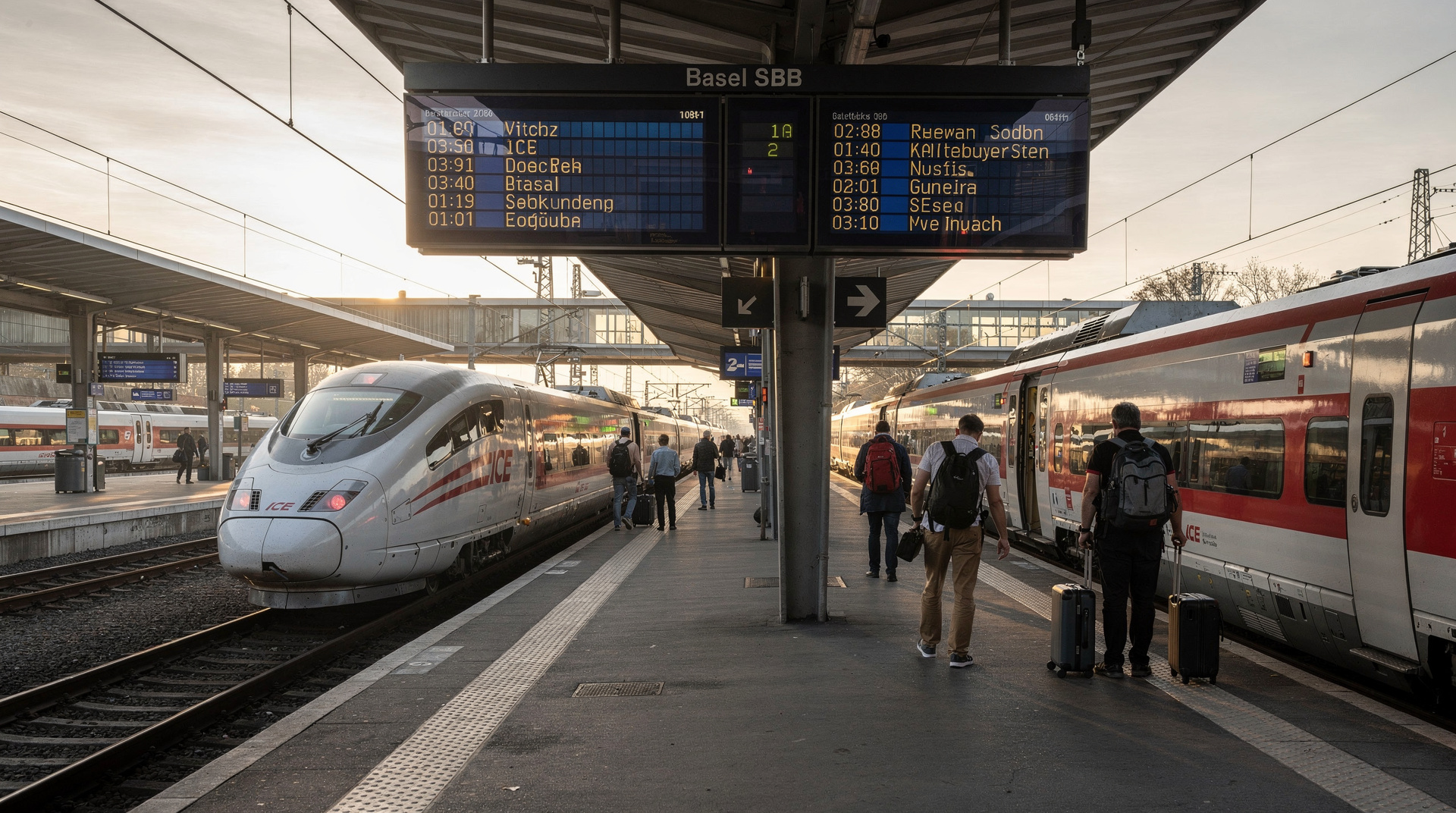
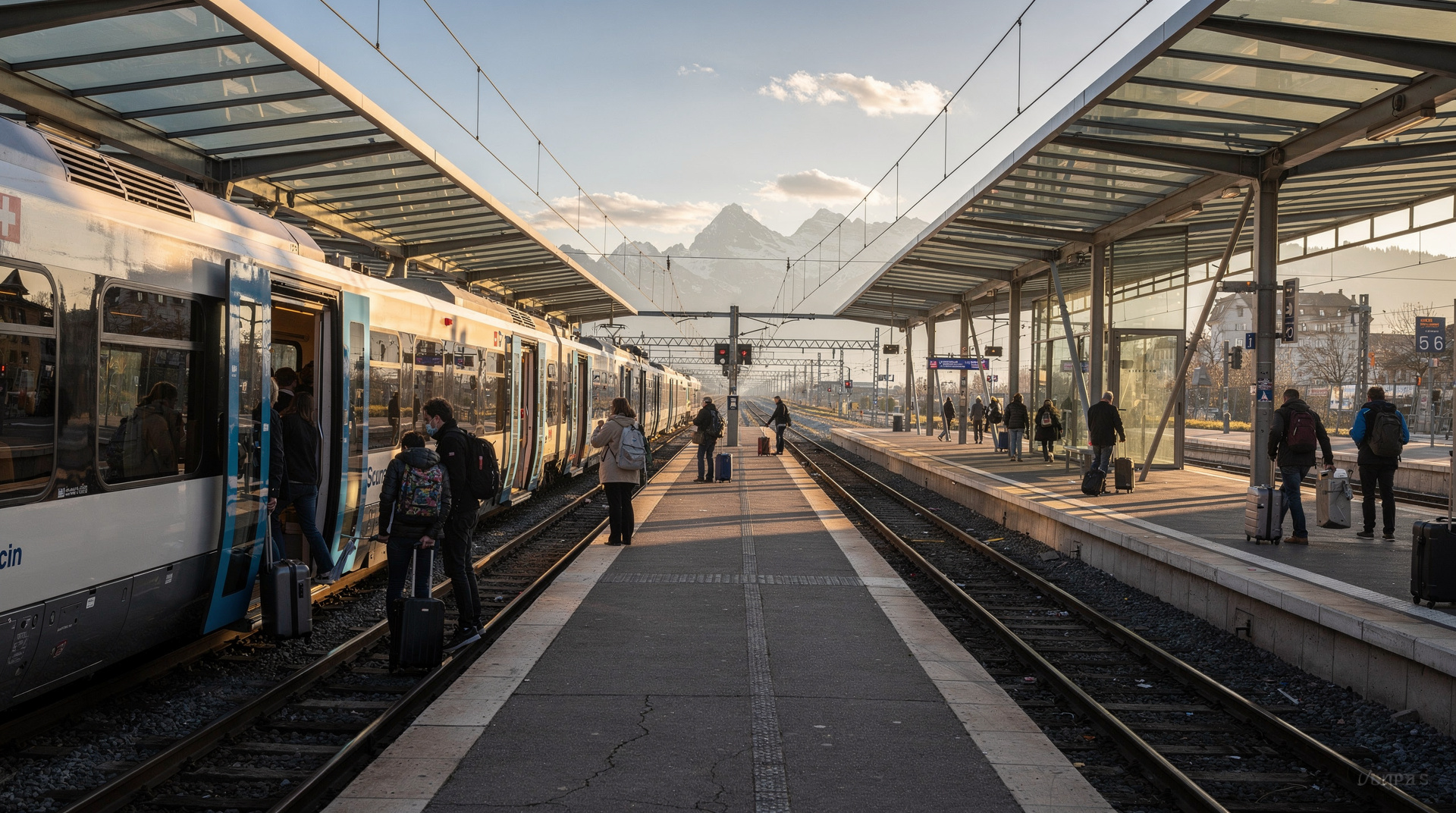
- Geneva Cornavin → Montreux: direct RegioExpress, approximately 1 hour. Trains run twice per hour.
- The train passes through Lausanne (35 minutes from Geneva) and continues along the lake through Vevey.
- Swiss Travel Pass: covers the full journey. Individual return: approximately CHF 46.
By lake steamer: In summer (typically May to October), CGN (Compagnie Générale de Navigation) runs historic Belle Epoque steamers across Lake Geneva from Geneva to Montreux. The journey takes approximately 3.5-4 hours each way — scenic but impractical as a round trip for a day visit. Best strategy: take the steamer one-way (morning, Geneva to Montreux or Chillon landing) and return by train.
Swiss Travel Pass covers the lake steamers fully.
By guided tour: Book a full-day guided tour from Geneva to Lavaux and Montreux — includes the Lavaux vineyard landscape, Montreux lakefront, and guide commentary on the history of the Swiss Riviera.
Montreux: what to see and do
The lakefront promenade
The Quai de la Paix and the Quai des Fleurs stretch along the lakefront for approximately 2 kilometres between the Casino and the Vevey direction. The path is lined with rose gardens, subtropical shrubs (camellias, magnolias, palms), and benches overlooking the lake with the French Alps visible across the water.
This is genuinely one of the most beautiful lakefront promenades in Europe. Allow 30-45 minutes for a leisurely walk. In spring, the flower displays are at their most extravagant. In summer, the gardens are at full peak and the outdoor cafés along the route are all open.
Freddie Mercury statue
The bronze statue of Freddie Mercury — arms outstretched, face tilted up — stands on the lakefront near the Casino and has become Montreux’s second-most-photographed subject after Chateau Chillon. Queen famously recorded at the Mountain Studios in Montreux from 1978 onward, and Mercury spent much of his final years here.
The Mercury Bar in the Casino has memorabilia from the recording sessions. The original Mountain Studios are now a small museum called Freddie’s, open to visitors (entry around CHF 10).
Montreux Jazz Festival (early July)
If your visit coincides with early July, the Montreux Jazz Festival transforms the town. Founded in 1967, it is one of the most prestigious music festivals in the world and has expanded far beyond jazz to include all genres. The lakefront stages are free in the evenings (headline indoor shows require tickets). The atmosphere during the festival is extraordinary — worth planning a trip specifically around.
Tickets for indoor shows: CHF 40-120 depending on act and category. Book months in advance at montreuxjazzfestival.com.
The old town (Le Vieux Montreux)
Above the lakefront, a network of steep lanes leads up through the old town, past the St-Vincent church (Romanesque bell tower, medieval interior), and into residential Montreux. The views from the upper streets back across the lake are excellent. This is a 20-30 minute walk from the station and is rarely crowded — most tourists stay on the flat lakefront.
Vevey: a brief detour (30 minutes from Montreux)
Vevey, 4 kilometres west of Montreux (5 minutes by train), is the hometown of Charlie Chaplin (a statue and the excellent Chaplin’s World museum 3 km from the station) and the global headquarters of Nestlé. The town has a more residential atmosphere than Montreux and a beautiful main market square (Grande Place) used on Tuesday and Saturday mornings for the largest market in the Lake Geneva region. Worth a stop if you have time.
Chateau Chillon
Overview
Chateau Chillon is built on a small rocky island connected to the lakeside path by a wooden bridge. The castle is visible from 10 kilometres in either direction along the lake — a classic turreted medieval silhouette against the water and mountains. It is Switzerland’s most visited historical monument, attracting around 400,000 visitors per year.
The castle has been documented since 1150 and reached its current form largely during the 13th and 14th centuries under the Counts of Savoy. It served variously as a military garrison, a toll collection point for Alpine passes, a treasury, and (notoriously) a prison.
Getting there from Montreux
On foot: The lakefront walk from Montreux to Chateau Chillon is 3 kilometres, flat, and beautiful. Allow 40 minutes. The path runs directly along the water’s edge for the entire distance. Highly recommended on a clear day.
By bus: Local bus runs between Montreux station and Chillon every few minutes. Journey time: 5 minutes. Covered by Swiss Travel Pass.
By boat: In summer, CGN boats stop at the Chillon landing stage.
What to see inside the castle
Entry costs CHF 14.50 for adults. Audio guides are included in the ticket price and available in 10 languages. The castle takes 1.5-2 hours to explore thoroughly.
Underground vaults: The basement includes the famous dungeon where François Bonivard, a Genevois patriot, was imprisoned for four years by the Duke of Savoy. Lord Byron visited in 1816, saw the pillar to which Bonivard was chained, carved his name into it (visible to this day), and wrote “The Prisoner of Chillon” — one of the most widely read narrative poems of the Romantic era.
Great Halls: The upper floors contain remarkable late medieval secular frescoes — one of the largest surviving collections in Switzerland — depicting hunting scenes, heraldry, and architectural fantasies. The Great Hall (Aula Magna) where the Count held court is largely intact with its original timber ceiling.
Chapel of St. George: A small painted chapel with 13th-century frescoes, rarely crowded and genuinely atmospheric.
The towers and battlements: Accessible via stairs, the towers give views across the lake and along the battlements. The water level is just below the outer walls in places — the castle feels genuinely surrounded by the lake from the walkways.
Book your Chateau Chillon entrance ticket online — advance booking avoids queuing at the ticket desk, which can have waits of 20-30 minutes in July and August.
The Lavaux vineyards en route
Between Lausanne and Montreux, the train passes through the Lavaux — 830 hectares of UNESCO-listed terraced vineyards rising steeply from the lake. The vineyards are visible from the train window: row upon row of Chasselas vines on stone-walled terraces, with the lake glittering below.
Getting off the train at Epesses, Riex, or Cully for an hour’s walk through the vines adds considerably to the day without significant extra cost or complexity. The path along the wine route (Chemin Viticole) runs between the villages and takes 3-4 hours for the full Lausanne-to-Vevey traverse. For a shorter tasting, take the train to Lutry or Cully, walk 45 minutes through the vineyards, and catch the next train to Montreux.
Lavaux wines are mostly Chasselas — light, dry, mineral-rich whites that pair beautifully with lake fish. The small cave cooperatives in the vineyard villages sell wine by the glass or bottle. In season (September-October), during the harvest, some cellars offer tastings and tours.
See also: Geneva to Lavaux for a dedicated Lavaux guide.
Suggested itinerary: Geneva to Montreux and Chillon
- 08:30 — Depart Geneva Cornavin by RegioExpress toward Montreux
- 09:30 — Arrive Montreux. Walk to the lakefront (5 minutes from station)
- 09:30-11:00 — Montreux lakefront: promenade, Freddie Mercury statue, flower gardens, coffee at lakeside café
- 11:00 — Walk or bus to Chateau Chillon (40-minute walk or 5-minute bus)
- 11:45-13:30 — Chateau Chillon: full castle tour with audio guide
- 13:30 — Lunch near the castle (Restaurant du Château) or walk back toward Montreux for more choice
- 14:00-15:00 — Old town walk in Montreux, or wine tasting in a lakefront cave
- 15:00 — Train from Montreux toward Lausanne — disembark at Cully or Epesses for vineyard walk (optional)
- 17:00 — Train from Cully or Vevey back to Geneva
- 18:00 — Arrive Geneva Cornavin
Alternative: lake steamer return If time allows, return from Montreux to Geneva by CGN lake steamer (departs Montreux around 15:00-16:00, arrives Geneva 18:30-19:00). This is a romantic end to the day.
Food and dining
Montreux lakefront:
- Café du Lac (lakefront, excellent coffee, moderate prices)
- Several restaurant terraces along the Quai de la Paix (fish from the lake — perch fillets, fera, pike)
Near Chateau Chillon:
- Restaurant du Château is the obvious choice — Swiss food, terrace with lake views, CHF 25-45 for a main course
- Bring a picnic to eat on the lakefront path between Montreux and Chillon — there are benches and lawns along the whole route
In Vevey:
- Market on Tuesday and Saturday mornings — local cheese, bread, vegetables
- Several good boulangeries in the old town
Lord Byron and the Prisoner of Chillon
The literary fame of Chateau Chillon derives substantially from a short narrative poem written in 1816 by Lord Byron after visiting the castle during his self-imposed exile in Switzerland. “The Prisoner of Chillon” dramatises the imprisonment of François Bonivard — a prior of Geneva who was chained to a pillar in the castle’s dungeon for four years (1532-1536) for his opposition to the Duke of Savoy.
Byron wrote the 392-line poem in two days at the Villa Diodati by Lake Geneva, using Bonivard’s story as a meditation on liberty and confinement. The poem was immediately successful and transformed Chillon from a regional curiosity into an internationally known monument. Within years of publication, English aristocrats on the Grand Tour were making Chillon a required stop — and Byron’s name, scratched into the dungeon pillar during his visit, became itself a tourist attraction.
Bonivard’s actual pillar (the sixth from the entrance) and Byron’s carved name are both still visible. The dungeon — a vaulted Gothic space at lake level, with the water lapping directly against the foundations — retains its atmosphere entirely intact. It is one of the more genuinely atmospheric medieval spaces in Switzerland, not sanitised for tourism but presented as found.
The Swiss Riviera microclimate
Montreux and the stretch of lake shore between Lausanne and the Rhone delta at the eastern end (where the lake flows into the Valais) has the mildest climate in Switzerland north of the Ticino. The lake, the mountains sheltering it from north winds, and the south-facing orientation create conditions where palm trees, camellia, and even olive trees grow outdoors — impossible in most of Switzerland.
This microclimate has been attracting wealthy European visitors since the 18th century. The grand hotels that line the Montreux lakefront — the Fairmont Montreux Palace, the Hôtel des Alpes, the Grand Hôtel Suisse-Majestic — were built in the Belle Epoque period (1880-1914) for the European aristocracy and upper bourgeoisie who came for the mild winters and the mountain views. The tradition continues, though the clientele has broadened.
The microclimate is measurable: Montreux averages 2,100 hours of sunshine per year (compared to 1,630 in Zurich and 1,600 in Bern). The winter temperature rarely drops below freezing at lake level. This is why the Montreux lakefront promenade is lined with subtropical plants that would freeze in the Swiss Mittelland.
Vevey’s cultural significance
Vevey, 4 kilometres west of Montreux, has a cultural significance that extends well beyond its role as a Montreux suburb. It is the birthplace of the Nestlé company (Henri Nestlé founded his condensed milk business here in 1867, and the global headquarters remain in Vevey to this day), the adopted home of Charlie Chaplin (who lived at the Villa Manoir in Corsier-sur-Vevey from 1952 until his death in 1977), and the setting for several scenes in Jean-Jacques Rousseau’s landmark novel Julie, ou la Nouvelle Héloïse (1761) — one of the most widely read books of the 18th century.
Chaplin’s World, the museum dedicated to his life and work in the villa where he lived, is 3 kilometres from Vevey station (accessible by shuttle bus). The museum occupies the original villa and adjacent studio buildings and is exceptionally well-designed — one of the best biographical museums in Switzerland. Entry around CHF 27. Allow 2-3 hours.
The Alimentarium — Nestlé’s museum of food and nutrition — is located on the Vevey lakefront and is genuinely good, covering the history, science, and cultural anthropology of food. Free on the first Sunday of each month, otherwise CHF 13. Well worth a visit, particularly for families.
Practical tips
Best time to visit: May to September for the lakefront atmosphere and full boat services. July for the Jazz Festival. April and October are quieter and the castle is never closed.
Avoid in peak season: The Chateau Chillon entrance can have 20-30 minute queues on busy summer days. Book online and arrive by 10:00 to beat the coaches.
Photography: Chateau Chillon is most photogenic from the lakefront path approaching from the Montreux direction, with the castle framed against the mountains. Morning light is better than afternoon (the mountains cast shadow in late afternoon). The view from the castle towers across the lake is exceptional in any light.
Children: Chateau Chillon is excellent for children — the dungeons, towers, and lake-level views are all inherently exciting. Allow 2 hours minimum with children who want to explore every corner.
Combined with Lausanne: The 35-minute journey between Lausanne and Montreux makes it easy to add Lausanne (Olympic Museum, old town, cathedral) to the same day. Depart Geneva early, stop in Lausanne for 1-2 hours, continue to Montreux for the afternoon.
Extending the day: Chamonix, Gruyeres, or an overnight in Montreux
If a single day feels rushed, several extensions are worth considering. Travellers continuing further into the Alps sometimes combine this trip with a separate day to Geneva to Chamonix for Mont Blanc views, or a Geneva to Gruyeres day for cheese and chocolate — both make sense as alternate days rather than additions to the same itinerary.
An overnight in Montreux (rather than a day trip) opens up an evening lakefront walk when the Belle Epoque hotels are lit and the crowds have thinned, plus an early, uncrowded castle visit the next morning before the first coach tours arrive around 10:30. This is the best option for anyone visiting during the Montreux Jazz Festival, when evening lakefront stages run until late.
For those building a longer western Switzerland loop, this day trip pairs naturally with the Swiss Travel Pass, which covers the train, the Chillon entry queue-skip is not included but the transport savings across a multi-day trip are substantial. See our Switzerland budget guide for how this day fits into overall trip costs.
Related guides
- Day trips from Geneva — full overview of all options
- Geneva to Lavaux — dedicated guide to the vineyard walk
- Geneva to Gruyeres — cheese and chocolate
- Geneva to Chamonix — Mont Blanc views across the border
- Swiss Travel Pass — coverage details
- Glacier Express — if extending toward Zermatt
- Switzerland budget guide — cost planning for a longer trip
- 7-day Switzerland itinerary — building a longer trip around Lake Geneva