30 practical tips for visiting Switzerland on a budget
At a glance
| Realistic daily budget | Around CHF 140-180 per person, all-in, on a genuine budget approach |
| Biggest lever | Swiss Travel Pass or Half Fare Card, chosen based on trip length |
| Cheapest beds | Swiss Youth Hostels (CHF 35-60/night) and SAC mountain huts (CHF 35-50 with meals) |
| Free activities | Hiking (65,000km of trails), lake swimming, many museums on Travel Pass |
| Best time to save | Shoulder season (May-June, September-October): 15-30% lower accommodation |
Switzerland on a budget: it’s possible, it just requires strategy
Let’s be clear from the start: Switzerland will never be cheap. There’s no budget hack that turns Zurich into Budapest or makes a Swiss mountain excursion cost the same as a coffee in Lisbon. Anyone who tells you otherwise is either lying or hasn’t actually tried.
But “expensive” and “unaffordable” are different things. Switzerland is genuinely manageable on a budget — not a shoestring, but a realistic budget — if you approach it strategically. The secret is knowing which expenses are negotiable and which aren’t, and making smart choices in the negotiable category.
Here are 30 specific, practical tips. Not vague advice about “cooking your own food” — actual actionable guidance.
Transport tips
1. Buy the Swiss Travel Pass and actually use it. The Swiss Travel Pass covers trains, trams, buses, most lake boats, and discounts on mountain railways. If you’re moving between cities more than once or doing any mountain excursion, it almost certainly pays for itself. Do the math before you buy individual tickets.
Buy the Swiss Travel Pass here and activate it on your first day of travel.
2. Buy the Swiss Half Fare Card for longer stays. If you’re spending more than 2-3 weeks in Switzerland, the Half Fare Card (CHF 120 for one month) gives 50% off all rail, bus, and boat tickets. Combined with a few mountain excursions (Jungfraujoch, Schilthorn, Rigi), it pays for itself very quickly.
3. Use supersaver tickets for planned journeys. For specific point-to-point train journeys booked well in advance, SBB’s Supersaver tickets (saver fares) can cut costs by 30-50%. These are available on the SBB app and sell out, so book early.
4. Ride the scenic trains for free with your Travel Pass. The William Tell Express, Voralpen Express, and portions of the Golden Pass line are included in the Swiss Travel Pass. The Glacier Express requires a surcharge but is worth budgeting for.
5. Use night trains between countries. If arriving from Germany, France, or Austria, night trains can save you a hotel night. The ÖBB Nightjet connects Vienna, Munich, and Amsterdam to Zurich. Factor in the saved accommodation when comparing to daytime travel.
6. Walk between nearby attractions. Swiss cities are compact and walkable. In Lucerne, the Old Town, Chapel Bridge, Glacier Garden, and Museum of Transport are all reachable on foot. Skip the trams for short distances and save the urban transport credits for longer hops.
Accommodation tips
7. Book Swiss Youth Hostels early. The Swiss Youth Hostels network has excellent properties across the country. Dorm beds run CHF 35-60, versus CHF 120+ for the cheapest hotel private room. In popular areas, they sell out months in advance for summer — book early.
8. Look for rooms adjacent to famous destinations. Staying in Spiez instead of Interlaken, Brienz instead of Grindelwald, or Arth instead of Lucerne cuts accommodation costs by 20-40% with easy train access to the main attractions. The less-famous neighboring town is almost always cheaper.
9. Consider apartment rentals for 3+ nights. Self-catering apartments become cost-effective for stays of 3 nights or more, especially for two people. The ability to cook breakfast and one other meal per day reduces food costs significantly.
10. Try mountain SAC huts for a unique budget option. Swiss Alpine Club (SAC) huts offer dormitory beds at altitude for CHF 35-50 including dinner and breakfast. It’s not luxury, but eating dinner on a mountain at 2,500 meters is an extraordinary experience. SAC hut bookings open in March for the summer season.
11. Camp in Switzerland — it’s actually good. Camping costs CHF 15-35 per person per night at official sites, many of them spectacularly located by lakes or in mountain valleys. Switzerland’s campsites are clean, well-organized, and the settings are often as beautiful as anything you’d pay much more for elsewhere.
Food tips
12. Master the Migros and Coop deli counters. Both main Swiss supermarket chains have excellent deli sections: ready-made salads, sushi, hot dishes, fresh sandwiches. A full lunch from the deli counter costs CHF 7-12. This is genuinely good food, not a compromise.
13. Take the lunch special at restaurants. Most Swiss restaurants offer a Tagesmenü (daily lunch special) — starter plus main for CHF 16-22. Dinner equivalents cost 50-80% more. If you want a restaurant meal, make it lunch.
14. Buy bread from bakeries, not cafes. Swiss bakeries (Bäckerei/Boulangerie) sell excellent bread and pastries at fair prices. A bakery croissant costs CHF 2-3; the same item in a cafe costs CHF 4-6. Start your day at a bakery.
15. Drink tap water everywhere. Swiss tap water is mountain quality. Never buy bottled water — fill your reusable bottle at the tap, at the countless public drinking fountains, or at hotel room taps. This seems trivial but saves CHF 3-5 per person per day over a two-week trip.
16. Buy picnic food for mountain days. Mountain hut restaurants charge 2-3x valley prices (and are allowed to — they have to bring supplies up by cable car). A packed lunch from a valley supermarket before ascending saves CHF 15-25 on a mountain day.
17. Eat döner and Asian takeaways for cheap hot dinners. Turkish doner kebab shops, Vietnamese restaurants, and Asian noodle shops exist in all major Swiss cities and offer hot, filling dinners for CHF 12-16. Much cheaper than Swiss restaurants and often very good.
18. Drink coffee at the counter. In Swiss cafes, standing at the bar counter to drink your coffee is cheaper than sitting at a table. It’s a European convention that Switzerland observes. A counter espresso costs CHF 3.50-4.50; table service typically adds CHF 0.50-1.00.
Activities and attractions
19. Hike — it’s free and spectacular. Switzerland’s 65,000km of marked hiking trails are completely free and often more rewarding than the paid mountain excursions. A hike from Wengen to Kleine Scheidegg, or from Mürren to Gimmelwald, offers Bernese Alps views comparable to anything you’d pay for, at no cost except train fare to the trailhead.
20. Pick one major paid mountain excursion and commit. Jungfraujoch, Pilatus, Rigi, Schilthorn, Gornergrat — these are expensive. Do one well rather than several reluctantly. The Travel Pass gets you discounts (25-50%) on most mountain railways, making one excursion more manageable. Go on the clearest forecast day you have.
Book Jungfraujoch with flexible cancellation — only go when the forecast is clear.
21. Visit museums on free days. Many Swiss museums are free on the first Sunday of the month. The Swiss Travel Pass also gives free entry to hundreds of museums nationwide. Check both before paying for any museum ticket.
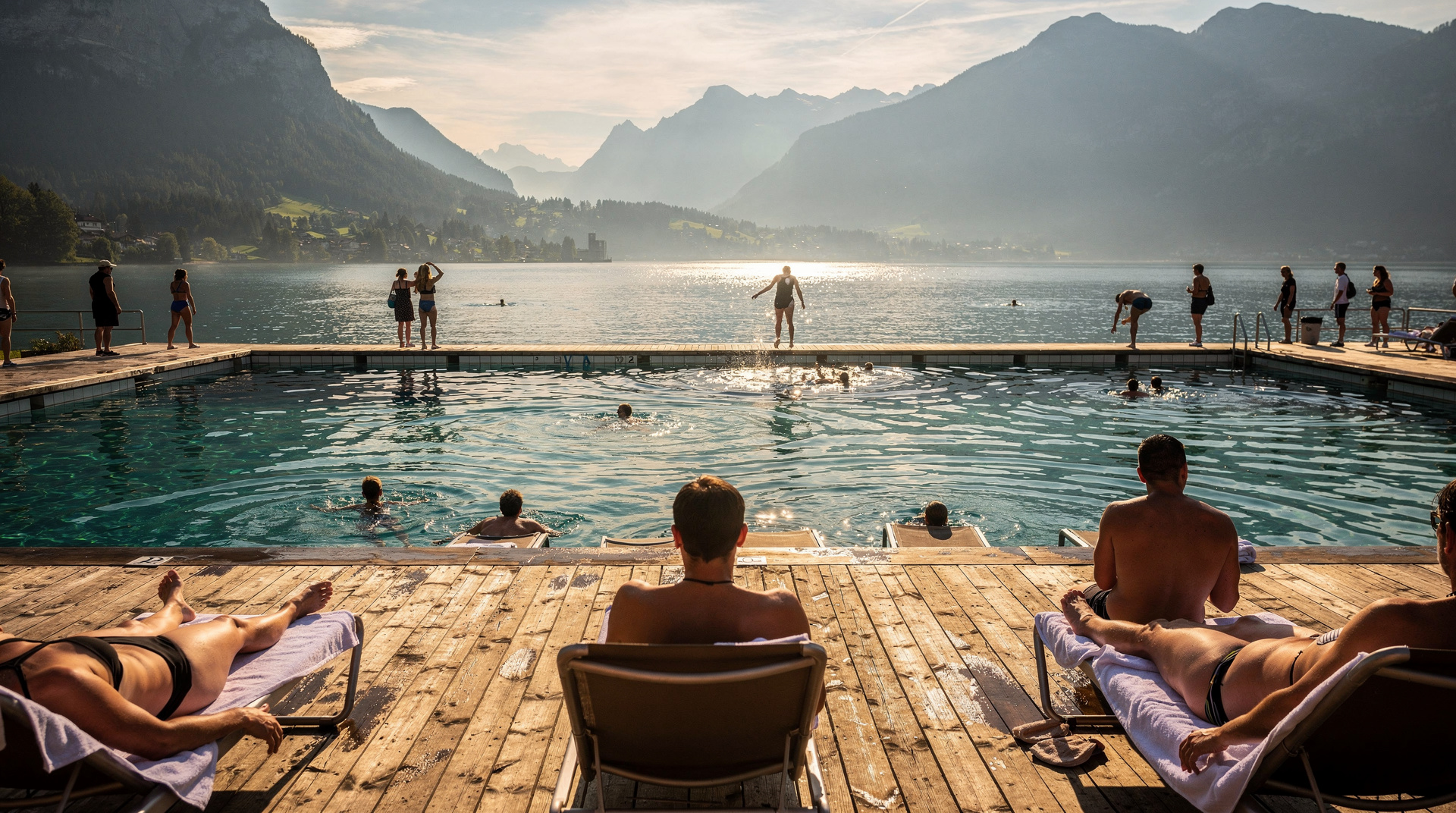
22. Swim in lakes instead of paying for pools. Switzerland’s lakes are stunning, clean, and free to swim in. The Zurich lake, Lake Lucerne, Lake Thun, Lake Geneva — all have free swimming spots with changing facilities (Badis). In summer, swimming is the best free activity in the country.
23. Use the Lindt factory for free chocolate samples. The Lindt Home of Chocolate in Kilchberg costs CHF 19 to enter but includes CHF 150g of chocolate. The factory shop outside the museum entrance, however, has regular free tasting samples.
Book Lindt Home of Chocolate tickets — still worth the entry fee for the full experience.
Planning and timing
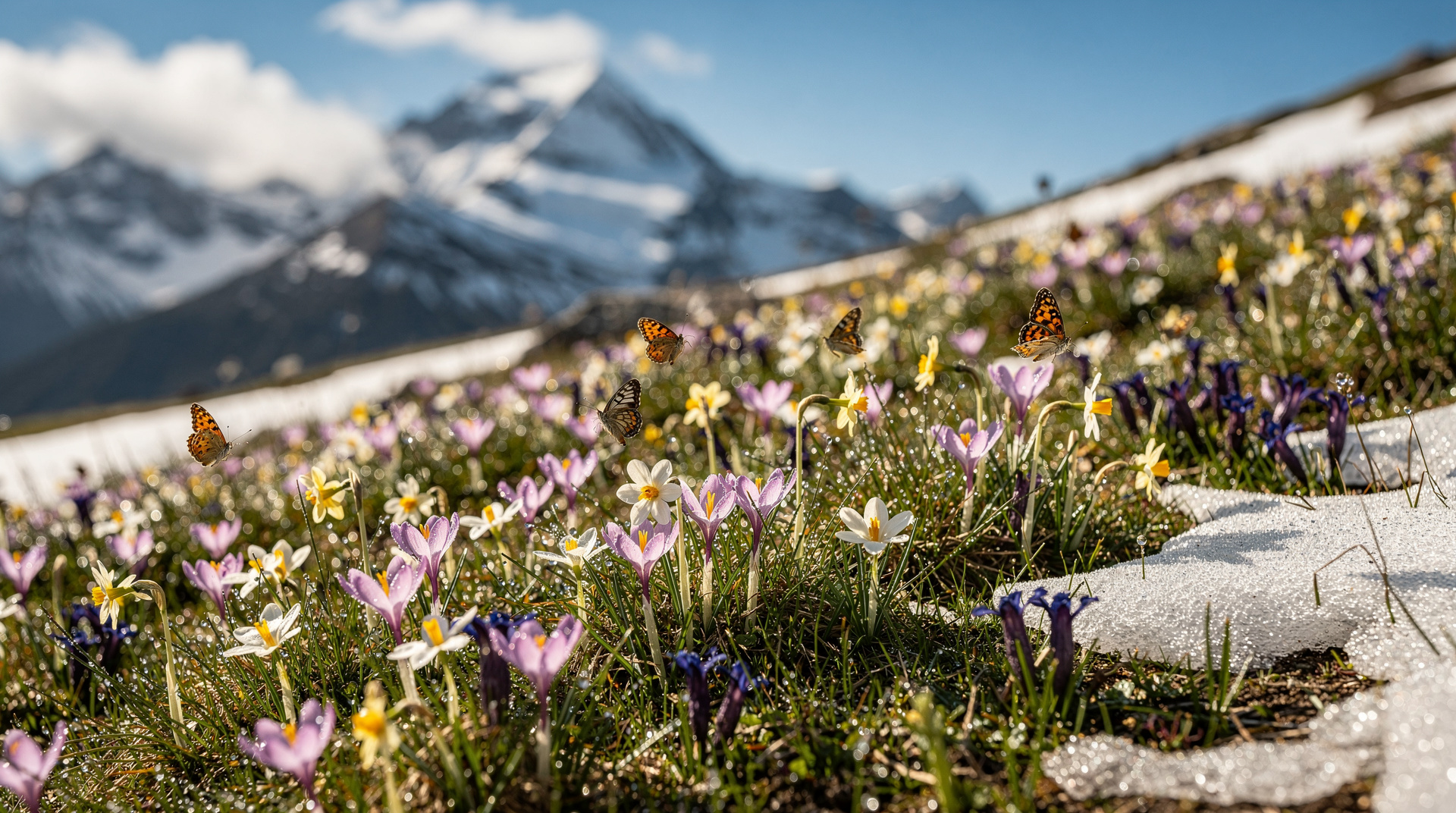
24. Visit in shoulder season. Late spring (May-June) and autumn (September-October) offer lower accommodation prices (typically 15-30% below summer peak), fewer crowds, and excellent weather. October in particular combines spectacular scenery with genuinely reduced prices. See more at the best time to visit page.
25. Base in one place and day-trip. Swiss trains make it entirely practical to base yourself in one mid-price city and day-trip to surrounding attractions. Basing in Interlaken gives you access to the whole Bernese Oberland. Basing in Lucerne gives you Pilatus, Rigi, Engelberg, and even Interlaken as a long day. Moving accommodation less frequently saves both money and packing time.
26. Book flights to Zurich, not Basel or Geneva. Zurich’s international airport has the most routes and generally the most competitive fares. Basel (EuroAirport) is shared with France and has budget carriers, but often at the cost of inconvenient times and extra ground transport costs.
27. Book accommodation well in advance in summer. Swiss accommodation doesn’t discount last-minute in peak season — it sells out. The budget options at peak times go first. Booking 3-4 months ahead secures both availability and better prices.
Money management
28. Use a travel card for currency exchange. Swiss francs are a separate currency from euros, and Swiss ATM and card fees can be significant with standard UK/US bank cards. A Wise (formerly TransferWise) card or similar travel card gives near-interbank exchange rates with low fees. Worth setting up before you leave.
29. Pay by card everywhere you can. Switzerland is highly card-friendly, including at market stalls, bakeries, and small businesses. Paying by card avoids ATM fees, manages the exchange rate more efficiently, and is accepted virtually everywhere in cities and tourist areas.
30. Don’t buy bottled Swiss water at tourist spots. To hammer this point home: tourist area cafes and mountain top restaurants sell water for CHF 4-6 per small bottle. Fill your water bottle before you leave the valley, before you board the train, before you ascend. The tap water at the bottom tastes identical to the overpriced bottle at the top.
Travel Pass vs Half Fare Card: which saves more
| Swiss Travel Pass | Half Fare Card | |
|---|---|---|
| Best for | Trips of 3-15 days with heavy train/boat use | Longer stays (2-3+ weeks) or slower trips |
| What it covers | Unlimited trains/trams/buses/most boats + museum entries | 50% off all rail, bus, and boat tickets |
| Mountain railway discount | 25-50% off | 50% off |
| Typical break-even | Two or more long train days | Roughly 2-3 paid journeys |
The full Swiss Travel Pass vs Half Fare Card comparison breaks down exact pricing tiers; the Swiss Travel Pass vs Eurail guide is worth checking too if you’re arriving by international rail.
More ways to stretch the budget
Choose your base city by cost, not just fame. Lucerne vs Zurich and Interlaken vs Lucerne both cover how accommodation and day-trip costs compare between the classic bases — useful before booking multiple nights anywhere.
Time your mountain excursion around the renting a car vs rail decision. For groups of three or more doing multiple day trips outside main rail corridors, a rental can occasionally undercut several individual Travel Pass supplements — run the numbers for your specific itinerary rather than assuming rail always wins.
Build the trip length around value, not just interest. A 3-day trip concentrates costs into fewer high-value days, while a 10-day or 14-day itinerary spreads fixed costs (Half Fare Card, one big mountain excursion) over more days, lowering the effective daily rate.
The honest bottom line
A genuinely budget Switzerland trip — hostels, supermarket meals twice daily, one restaurant meal per day, strategic mountain excursion, Swiss Travel Pass — will cost around CHF 100-120 per person per day excluding accommodation. Add CHF 40-60 for hostel accommodation.
That’s CHF 140-180 per person per day all-in, or roughly CHF 1,000-1,260 per person for a one-week trip.
That’s not cheap in absolute terms. But for a country of this quality and beauty, with this infrastructure and safety level, it’s not unreasonable. The full budget breakdown has detailed numbers by category.
Switzerland rewards the prepared budget traveler. The unprepared one gets blindsided by prices and spends the trip feeling stressed. Know the numbers, make the choices deliberately, and Switzerland becomes something you can genuinely afford — and genuinely love.
Frequently asked questions about 30 practical tips for visiting Switzerland on a budget
Is Switzerland cheaper to visit in the off-season? Yes, meaningfully. Shoulder season (May-June or September-October) typically brings 15-30% lower accommodation prices along with fewer crowds, without a major weather trade-off compared to peak summer.
Can you visit Switzerland on a true shoestring budget? It’s difficult but not impossible — camping, hitchhiking-style thrift, and skipping all paid excursions can push costs below the CHF 140-180/day estimate above, but you’ll sacrifice most of the mountain experiences that make Switzerland worth visiting in the first place. A realistic budget trip, not a shoestring one, is the more practical target.