What's new in Switzerland for 2025: openings, updates, and changes
Switzerland never stands still
Switzerland has a reputation for continuity — the trains run on time, the mountains stay in place, the chocolate remains excellent. But the country also invests continuously in new infrastructure, new attractions, and improvements to existing ones. 2025 brings a meaningful cluster of openings and updates worth knowing about before you travel.
Whether this is your first visit or your fifth, there’s a good chance something on this list will be new to you. Here’s what’s worth noting for 2025.
At a glance
| What changed | Swiss Travel Pass pricing, Gotthard timetables, Jungfraujoch facilities, new via ferrata routes, museum updates |
| Where it matters most | Zurich, Interlaken/Bernese Oberland, Ticino, Graubünden |
| Action needed | Recheck current Swiss Travel Pass rates and book major attractions ahead, especially for July-August |
| Best time to plan around updates | May-June or September-October, when new experiences are less crowded |
Transport and infrastructure updates
Swiss Travel Pass price adjustments for 2025
The Swiss Travel Pass — the unlimited travel pass covering trains, buses, boats, and free admission to over 500 museums — has seen pricing updates for 2025. If you’ve been quoting prices from a previous trip or older travel guides, recheck the current rates before budgeting. The pass continues to represent excellent value for visitors covering multiple regions, particularly given rising individual ticket prices.
You can book the Swiss Travel Pass for unlimited travel on trains, buses and boats in advance for the best prices. The Swiss Travel Pass guide covers the full breakdown of what’s included and when it makes financial sense versus buying point-to-point tickets.
Gotthard Tunnel operations
The Gotthard Base Tunnel — the world’s longest and deepest railway tunnel at 57km — continues operating regular intercity services, dramatically reducing travel times between northern Switzerland and Ticino. The tunnel has been an operational revolution since opening, and 2025 marks continued optimisation of timetables to maximise capacity.
For visitors this means Zurich to Lugano in around 1 hour 40 minutes — a journey that transforms Ticino from a separate destination into a genuine day-trip option from central Switzerland. If you want the scenic version of that same crossing rather than the fast intercity link, the Bernina Express route through Graubünden remains the more dramatic (if slower) way south.
For a fuller breakdown of exactly what’s changed in pricing and coverage, the dedicated Swiss Travel Pass 2025 update post goes deeper than the summary here.
New tram and urban transport lines
Zurich has continued expanding its already-excellent tram network, with new and extended routes making outer neighbourhoods more accessible. Geneva has similarly invested in urban public transport, improving connections between the main station, the airport, and surrounding communes.
Mountain and alpine developments
Jungfraujoch visitor experience upgrades
The Jungfraujoch — the “Top of Europe” at 3,454 metres — has been progressively upgrading its visitor experience over recent years, and 2025 sees continued improvement to the facilities inside the summit complex. The Sphinx Observatory above the station has improved viewing infrastructure, and the Aletsch Glacier viewing platforms have been enhanced.
The Jungfraujoch remains one of Switzerland’s most extraordinary experiences — the combination of cogwheel railway, glacier views, and sheer altitude is unmatched in accessible alpine tourism — and the ongoing investment is keeping the experience fresh. Book tickets well in advance, particularly for July and August visits.
New via ferrata and adventure infrastructure
Several Swiss regions have invested in new via ferrata routes (mountain climbing routes with fixed iron rungs and cables) suitable for non-technical climbers. The Bernese Oberland, Uri, and Graubünden regions in particular have expanded these offerings, making alpine adventure more accessible to visitors who want more than hiking but less than full mountaineering.
Adventure infrastructure around Interlaken has also expanded, with new canyoning, hiking, and outdoor activity offerings supplementing the already extensive paragliding and white-water options. If hiking rather than adrenaline activities is more your speed, the best hikes guide has been updated with several of the new via ferrata-adjacent trail options mentioned here.
Graubünden in particular has quietly become one of the most active regions for this kind of investment — worth a look if you’ve already done the Bernese Oberland classics and want alpine adventure without the same crowds.
Cultural and museum openings
Swiss museum landscape
Switzerland’s museum culture is world-class and 2025 sees continued development across the country. The Swiss National Museum in Zurich — already one of the finest history museums in central Europe — has updated several permanent galleries with contemporary installation design that makes the historical content more engaging.
Various regional museums covering local history, alpine tradition, and Swiss-specific culture have benefited from modernisation grants, with several smaller cantonal museums emerging as genuinely excellent stops on regional itineraries. The best museums guide has been updated to reflect which of these are now worth a detour versus which remain mainly of local interest.
Watchmaking and craft exhibitions
The La Chaux-de-Fonds region in Neuchâtel — the historical heart of Swiss watchmaking — continues to attract watch enthusiasts with its concentrated collection of watchmaking heritage sites, workshops open to visitors, and the remarkable International Watch Museum. Several new workshop visits and guided watchmaking experiences have been added for 2025.
For Zurich visitors, the Lindt Home of Chocolate museum near Kilchberg remains a firm favourite — the Lindt Home of Chocolate museum entry ticket is worth booking ahead during peak season visits.
Sustainability and slow travel initiatives
Switzerland’s commitment to sustainable tourism
Switzerland has been actively working to position itself as a leader in sustainable alpine tourism, and 2025 sees new initiatives across several regions. These range from enhanced cycling infrastructure and e-bike rental networks to new slow travel itineraries designed around train and boat travel rather than road transport.
The country’s natural advantage — an extraordinarily complete public transport network — means that car-free travel through Switzerland is already among the most practical in the world. The Swiss Travel Pass is central to this, making it genuinely easy to visit remote valleys, small mountain towns, and lake shores that would require a car elsewhere in Europe.
New “slow train” itineraries highlighting lesser-known scenic railway lines complement the headline routes like the Glacier Express and the Bernina Express. If you’ve done the famous routes and want something quieter, ask about the Centovalli Railway, the Appenzell narrow-gauge network, or the Brünig Pass line.
Glacier awareness and alpine environment
Switzerland’s glaciers continue to recede at an alarming rate — a visible consequence of climate change that every alpine visitor is confronted with. Several resorts and mountain areas have invested in educational installations and experiences that contextualise what visitors are seeing. The Rhône Glacier near the Furka Pass has had protective white fleece covering portions of the ice surface for years; nearby informational panels document the retreat with historical photographs that are genuinely sobering.
This context doesn’t diminish the magnificence of what’s there — the Aletsch Glacier viewed from Jungfraujoch, the ice fields around Saas-Fee, the glacial scenery along the Glacier Express route — but it adds a meaningful dimension to visiting these places now rather than waiting.
Food and drink updates
New restaurant openings
Switzerland’s restaurant scene continues to evolve, particularly in Zurich and Geneva where international culinary talent concentrates. Zurich has consolidated its position as one of Europe’s most interesting food cities, with a strong current of restaurants working with Swiss-sourced ingredients in non-traditional formats — think mountain cheese in Asian-influenced preparations, or Swiss wine paired with dishes that wouldn’t traditionally touch it.
The farm-to-table movement that’s been building in Switzerland for several years has deepened, with various restaurants now working directly with alpine farms, mountain cheese producers, and small-scale wine growers. This is most visible in the German-speaking regions and Graubünden.
Wine tourism expansion
Swiss wine remains one of the best-kept secrets in European viticulture — produced in small quantities and mostly consumed domestically, the wines rarely appear outside Switzerland. 2025 sees continued expansion of wine tourism in the Valais, Vaud, and Geneva wine regions, with new cellar visits, wine trails, and wine tourism infrastructure making it easier to explore.
The Lavaux UNESCO wine terraces above Lake Geneva — one of the most beautiful vineyard landscapes in Europe — have new hiking and wine tasting experiences that combine physical activity with gastronomy in a format that suits the setting perfectly.
Local food markets and festivals
Traditional Swiss food markets and agricultural festivals continue to be among the most authentic cultural experiences available. The Zurich Sechseläuten spring festival, the Appenzell agricultural shows, the Valais wine festivals in autumn, and countless local farmer’s markets throughout the year give visitors direct access to Swiss food culture in its most genuine form.
Accommodation trends
New boutique and design hotels
Switzerland’s hotel scene has seen meaningful investment in boutique and design properties, particularly in smaller towns and rural settings that previously lacked quality accommodation options. Several converted farmhouses, historic mountain hotels, and contemporary design properties have opened or significantly renovated, giving visitors more interesting options beyond the traditional grand hotels.
The Swiss hotel classification system (stars) is reliable for basic quality standards, but interesting properties often sit outside the traditional star-rating framework. Look for Relais et Châteaux properties, Design Hotels affiliates, and B&B accommodation in historic buildings for the most characterful stays.
Mountain hut bookings going digital
The Swiss Alpine Club (SAC) hut booking system has continued to improve digitally, making it easier to book the mountain huts that punctuate Switzerland’s most spectacular hiking routes. If you’re planning a multi-day alpine hike with nights in mountain huts, the SAC’s online booking platform is significantly more user-friendly than it was a few years ago.
Planning your 2025 Switzerland trip
A few practical notes for 2025 visitors:
Book major attractions in advance. The Jungfraujoch, popular mountain railways, summer cheese dairies, and renowned restaurants all benefit from advance booking. Popular summer weeks (late July and August) see pressure on the most famous experiences.
The 7-day itinerary is a solid framework if you’re visiting for the first time. For 2025, consider layering in some of the newer experiences above — a wine tasting in Lavaux, an updated museum, or one of the new via ferrata options — alongside the Swiss classics.
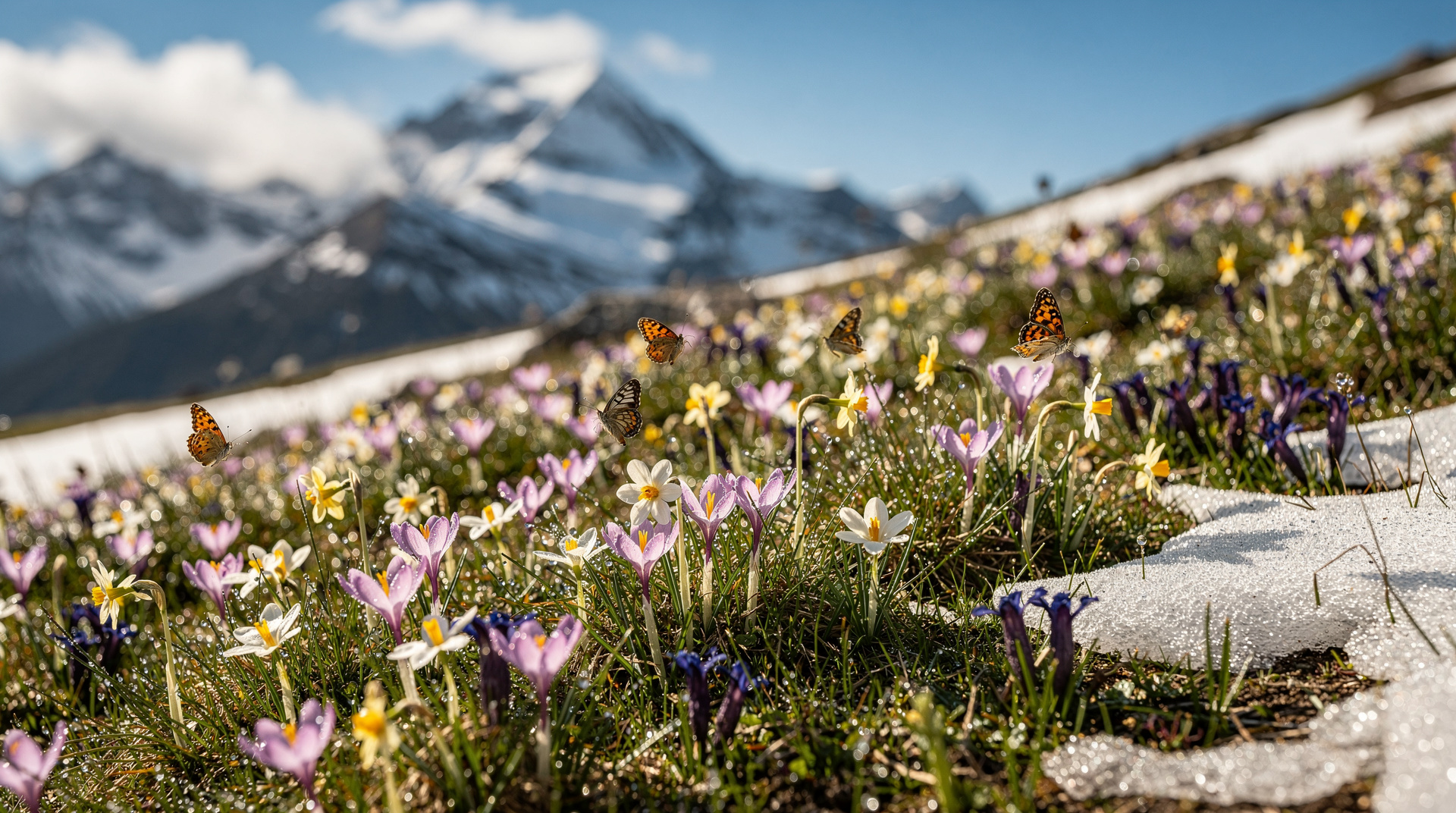
The best time to visit Switzerland remains May to June and September to October for the combination of good weather, manageable crowds, and reasonable prices. Summer school holiday weeks in July and August are beautiful but busy. Spring 2025 is shaping up to be an excellent time to visit the alpine regions as the wildflower season builds.
Switzerland in 2025 is recognisably Switzerland — the mountains, the trains, the chocolate, the extraordinary precision of how the whole country operates. But there’s always something new to discover, and this year’s additions and updates give plenty of reason to visit whether you’re coming for the first time or returning for another look.
Which 2025 updates matter for which kind of trip
Not every update is equally relevant depending on how you travel. This is a quick way to filter the list above to what’s actually worth your planning time.
| Traveler type | Most relevant 2025 update | Why |
|---|---|---|
| First-time visitor | Swiss Travel Pass pricing, Jungfraujoch upgrades | You’ll almost certainly buy the pass and visit the headline alpine site |
| Repeat visitor | New via ferrata routes, Graubünden adventure infrastructure | Fresh experiences beyond the classics you’ve already done |
| Rail enthusiast | Gotthard timetable optimisation, slow-train itineraries | Faster or newer scenic connections change route planning |
| Food and wine focused | Lavaux wine tourism expansion, farm-to-table restaurant growth | Concentrated in specific regions (Vaud, Valais) worth timing a trip around |
| Family travellers | New museum installations, digital SAC hut bookings | Easier logistics and more engaging content for kids |
Frequently asked questions about What’s new in Switzerland for 2025
Do I need to rebudget if I already priced my Switzerland trip using older Swiss Travel Pass rates? Yes — recheck current prices before finalising your budget. The pass still represents strong value for multi-region trips, but the exact figures from a guide or trip report even a year or two old may be out of date.
Are the 2025 changes significant enough to affect a first-time visitor’s itinerary? Not fundamentally. The core experience — Jungfraujoch, the Glacier Express, Zurich, Lucerne, Lake Geneva — remains the backbone of a first Switzerland trip. The 2025 updates are worth layering in around that backbone rather than replacing any of it.