Lucerne vs Zurich: which city should you use as your base?
Should I base myself in Lucerne or Zurich?
Zurich is better for international transport links, city culture, and urban life. Lucerne is better for proximity to mountain excursions, classic Alpine scenery, and a more intimate city atmosphere. For a first-time Swiss trip, Lucerne edges ahead on sheer visual impact.
Lucerne vs Zurich: choosing your Swiss base
Zurich and Lucerne are Switzerland’s two most visited cities, and for most visitors arriving to explore the country for the first time, the question of which to use as a base — or which to prioritise if time allows only one — is genuinely worth thinking through carefully. They are close to each other (45 minutes by train) but quite different in character, scale, and what they offer as bases for Swiss exploration.
This guide gives you an honest side-by-side comparison.
| At a glance | Lucerne | Zurich |
|---|---|---|
| Where | Central Switzerland, on Lake Lucerne | Northern tip of Lake Zurich |
| Nights recommended | Around 2 nights | Around 2-3 nights |
| Typical hotel cost | Moderate (mid-range often around CHF 180-250/night) | Higher (mid-range often around CHF 220-320/night) |
| Getting there | Direct train from Zurich Airport, around 60 min | Direct train from Zurich Airport, around 12 min |
| Best time | May-September for mountain excursions | Year-round, best June-August for the lake |
Lucerne vs Zurich at a glance
| Lucerne classic Alpine city | Zurich financial and cultural capital | |
|---|---|---|
| Best for | Scenery, mountain excursions | Museums, urban life, airport hub |
| Population | 82,000 | 440,000 |
| Mountain access | Pilatus 30–45 min, Rigi 45 min, Titlis 45 min | Titlis 90 min, Pilatus 1.5 h via Lucerne |
| Train to Zurich/Lucerne | 45–50 min to Zurich | 45–50 min to Lucerne |
| Cost level | Moderate | High |
| Top sight | Chapel Bridge + Lake Lucerne | Kunsthaus + Lake Zurich |
| Book | Book Pilatus on GYG | Book city tour on GYG |
The cities at a glance
Zurich is Switzerland’s largest city and its financial capital. Population around 440,000 (greater metropolitan area over 1.3 million). It is confident, cosmopolitan, and expensive. The Kunsthaus Zurich houses one of Europe’s finest art collections. The lakeside, the Limmat river quays, and the medieval old town (Altstadt) are beautiful. The café and restaurant scene is sophisticated and diverse. As an international transport hub, Zurich Airport connects to most of the world.
Lucerne is a much smaller city — population around 82,000 — but punches significantly above its weight in terms of visual impact. The medieval covered Chapel Bridge (Kapellbrücke) is one of Switzerland’s most photographed structures. The old town is compact and walkable. Lake Lucerne (Vierwaldstättersee) reflects the surrounding peaks. Three mountains are visible from the city: Pilatus, Rigi, and Bürgenstock. Lucerne is smaller, quieter, and more immediately lovely than Zurich.
Setting and scenery
Zurich: Situated at the northern tip of Lake Zurich, with gentle hills rather than dramatic mountains in the immediate surroundings. The Alps are visible on clear days — the panorama from Uetliberg hill above the city is genuinely beautiful — but you are not in them. Zurich is a great Swiss city, but the landscape is softer and less dramatic than what most people imagine when they think of Switzerland.
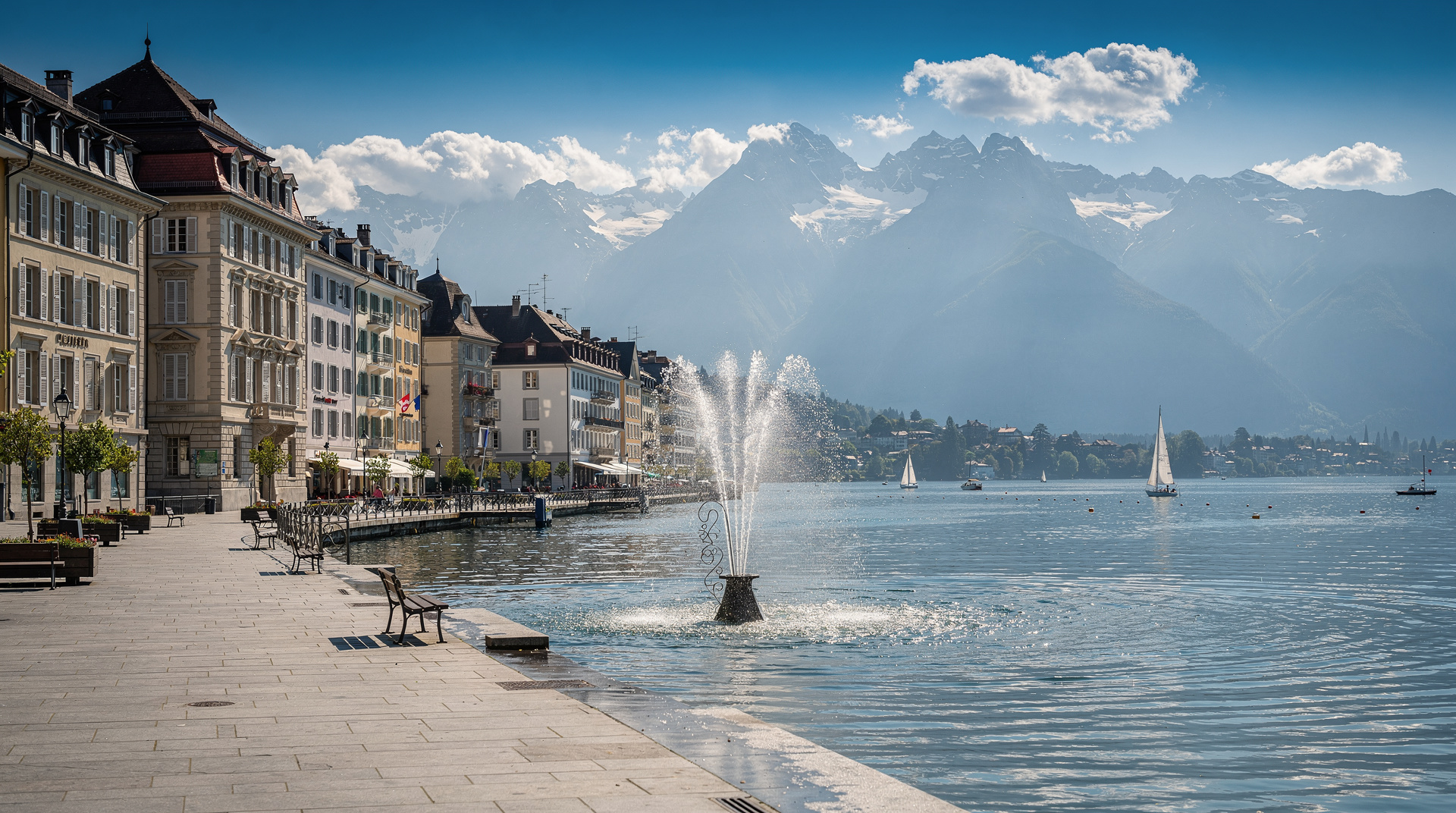
Lucerne: The mountain setting is immediate and dramatic. Lake Lucerne has an irregular, fjord-like shape that reflects the surrounding mountains from every angle. Pilatus (2,132m) and Rigi (1,797m) are both accessed directly from the city. On a clear day, the view from the lakefront — mountains, water, medieval architecture — is among the most beautiful urban settings in Switzerland.
Verdict on setting: Lucerne, by some distance. The immediate Alpine backdrop that Lucerne provides is what most visitors to Switzerland are specifically seeking.
Sights and culture
Zurich:
- Kunsthaus Zurich: one of Europe’s finest art museums (Monet, Picasso, Giacometti, Munch, Hodler)
- Swiss National Museum (Landesmuseum): Swiss history and culture in a magnificent neo-Gothic building
- Zurich old town (Altstadt): medieval streets, guildhalls, two Romanesque churches
- Zurich lake promenade and Badi (lakeside swimming areas)
- Bahnhofstrasse: one of the world’s premier shopping streets
- Zurich Zoo
- Rietberg Museum: Asian and non-European art collections
- The vibrant Langstrasse and Kreis 4/5 neighbourhoods for nightlife and dining
Lucerne:
- Chapel Bridge (Kapellbrücke) with tower and painted panels
- Old town (Altstadt): beautifully preserved medieval streets
- Lake Lucerne boat trips: the most scenic in Switzerland
- KKL Luzern concert hall (Jean Nouvel architecture)
- Rosengart Collection: Picasso and Klee
- Swiss Museum of Transport: excellent, especially for families
- Easy mountain excursions: Mount Pilatus (world’s steepest cogwheel), Mount Rigi (Queen of Mountains), Bürgenstock plateau
Verdict on culture: Zurich is significantly richer in museums and cultural institutions. For serious museum-goers, Zurich is the better base. For travellers who prioritise landscapes and mountain experiences over galleries, Lucerne’s immediate mountain access tips the balance.
Mountain excursion access
From Zurich:
- Mount Titlis (Engelberg): 90 minutes
- Jungfraujoch: 2.5-3 hours
- Mount Pilatus: 1.5 hours via Lucerne
From Lucerne:
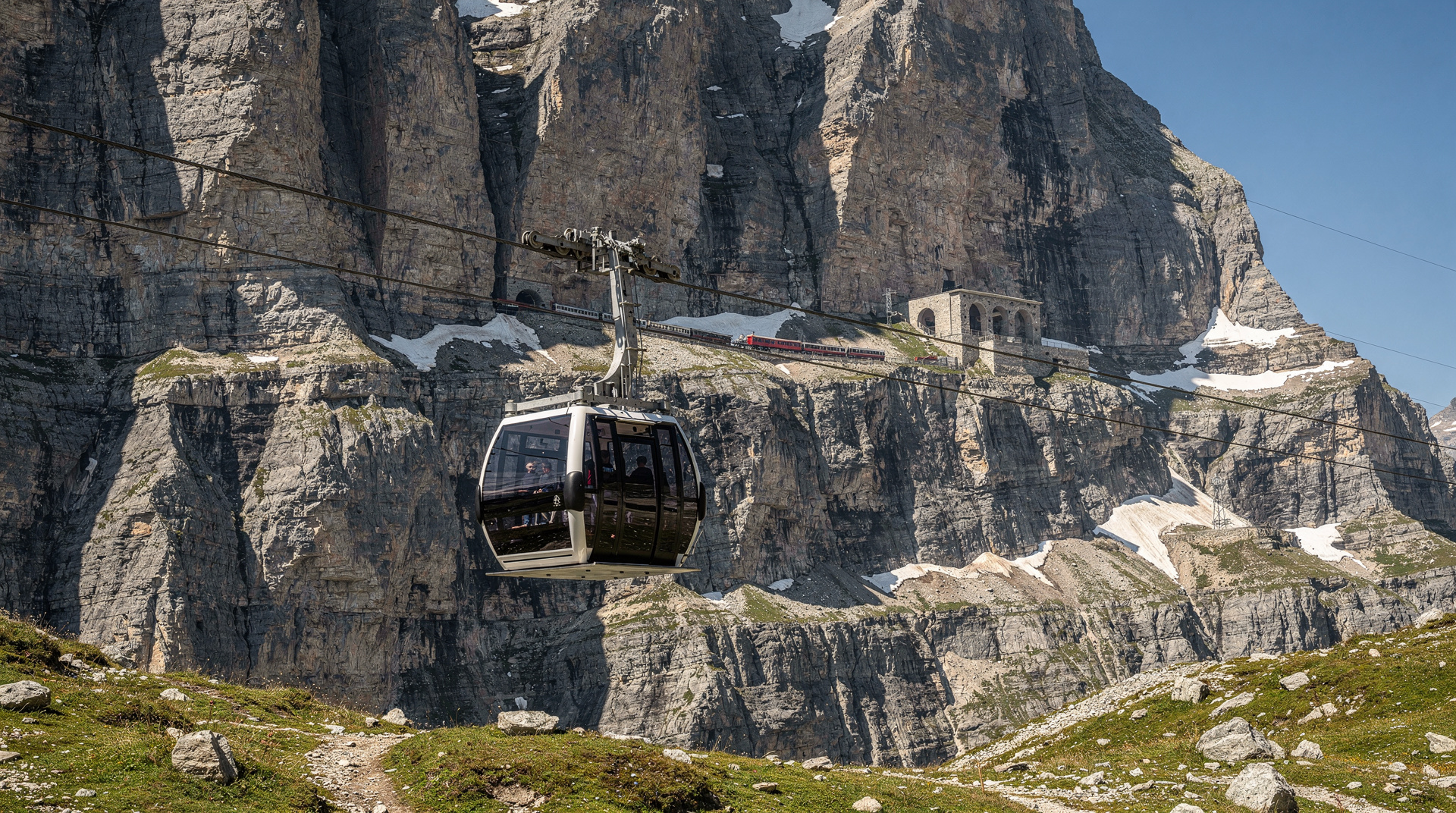
- Mount Pilatus: 30-45 minutes (cogwheel from Alpnachstad, or gondola/cable car from Kriens)
- Mount Rigi: 45 minutes (rack railway from Vitznau)
- Mount Titlis: 45 minutes (train to Engelberg)
- Jungfraujoch: 2 hours
Verdict: Lucerne is significantly better positioned for mountain excursions. If your priority is Pilatus, Rigi, and Titlis, Lucerne is the clear choice as a base. For Jungfraujoch, both cities are roughly similar.
Book the Mount Pilatus golden round trip from Lucerne Discover Mount Titlis from LucerneTransport connectivity
Zurich:
- Zurich Airport (ZRH): one of Europe’s best hubs, direct flights to most of the world
- Zurich Hauptbahnhof: the largest railway station in Switzerland, connecting everywhere in the country
- Direct trains to Geneva, Basel, Lucerne, Interlaken, Zermatt (with changes)
Lucerne:
- No major international airport — closest are Zurich (1 hour) and Geneva (3 hours)
- Lucerne station: excellent rail connections but smaller hub than Zurich HB
- Direct trains to Zurich, Interlaken (Lucerne-Interlaken Express), Bern, Engelberg
Verdict: Zurich is the superior transport hub for international arrivals and departures. If you are flying in and out of Switzerland, using Zurich as your arrival and departure city makes logistical sense even if you spend most of your time elsewhere.
Cost comparison
Both cities are expensive by global standards, but there are differences.
Hotels: Zurich is generally more expensive than Lucerne, particularly for business hotels and high-end accommodation. Mid-range hotels in Lucerne offer better value.
Restaurants: Zurich’s dining scene is broader but also pricier on average. Lucerne has excellent restaurants at slightly lower average prices.
Overall: Lucerne is modestly more affordable as a base, particularly for accommodation.
The Swiss Travel Pass makes both cities excellent bases, covering all standard train connections.
Get your Swiss Travel PassCity size and atmosphere
Zurich feels like a proper metropolis — not overwhelming, but genuinely urban. The diversity of its neighbourhoods (the fashionable Seefeld lakeside, the alternative Langstrasse, the polished Bahnhofstrasse) gives it a texture that takes several days to appreciate. It has the buzz and variety of a real international city.
Lucerne is charming, compact, and very walkable. Most of the old town and lakefront can be covered in an afternoon. This can be a feature (intimate, manageable, immediately beautiful) or a limitation (you run out of things to do in the city itself within 1-2 days). Most visitors supplement Lucerne city time with mountain excursions.
Verdict on atmosphere: Zurich for urban energy and diversity. Lucerne for charm and immediate beauty.
Which city is better for specific traveller types?
Base in Zurich if:
- Flying into Switzerland — Zurich Airport is your gateway
- Your primary interest is museums and urban culture
- You want diverse neighbourhoods, restaurants, and nightlife
- You are a business traveller or on a short trip
- You want easy access to Basel, Bern, and the rest of German-speaking Switzerland
See our full Zurich guide.
Base in Lucerne if:
- Mountain excursions are your primary activity (Pilatus, Rigi, Titlis)
- Classic Swiss visual scenery (lake, mountains, medieval architecture) is your priority
- You want a more relaxed, smaller-city atmosphere
- You are combining with Interlaken and the Bernese Oberland via the Lucerne-Interlaken Express
See our full Lucerne guide.
Consider splitting your stay:
Given that the cities are only 45 minutes apart, most visitors to Switzerland naturally spend time in both. A typical itinerary might be 2 nights Zurich (arrive, explore, museum), 2 nights Lucerne (mountain excursions, old town), then continue to Interlaken or Grindelwald.
Day trips from Zurich vs Lucerne
One of the most practical considerations in choosing between the two cities as a base is what you can reach as a day trip.
Day trips from Zurich:
- Rhine Falls at Schaffhausen: 45 minutes, Europe’s largest waterfall by volume
- Stein am Rhein: 1 hour, best-preserved medieval town in Switzerland
- Basel: 55 minutes, outstanding art museums and beautiful old town
- Rapperswil: 40 minutes, charming old town on Lake Zurich
- Zugerberg: 30 minutes, excellent viewpoint above Lake Zug
- Mt. Titlis via Engelberg: 90 minutes — excellent mountain day trip
Day trips from Lucerne:
- Mount Pilatus: 30-45 minutes (the classic golden round trip)
- Mount Rigi: 45 minutes (rack railway via Vitznau)
- Mount Titlis: 45 minutes (train to Engelberg)
- Bürgenstock: 30 minutes (cable car from Kehrsiten-Bürgenstock)
- Interlaken and Jungfraujoch: 2 hours (Lucerne-Interlaken Express then mountain railways)
- Zurich: 45 minutes (easy back-and-forth if needed)
Verdict on day trips: Lucerne clearly wins for mountain excursion access. Zurich has better day trip access to Swiss cultural destinations (Basel, Stein am Rhein, Rhine Falls).
Seasonal considerations
Best time to visit Zurich: Zurich works year-round. The summer (June-August) is beautiful with lake swimming and outdoor dining. Winter has the famous Christmas market inside the Hauptbahnhof. Spring and autumn offer the city at its most uncrowded and affordable.
Best time to visit Lucerne: Lucerne is at its absolute finest in summer (May-September) when the mountains are visible, the lake shines blue, and boat services run to full timetable. The Christmas market on the lakefront is charming. February’s Fasnacht carnival is one of Switzerland’s best.
For seasonal considerations relevant to your timing, see our when to visit Switzerland guide.
Practical logistics
Arriving by air: Both cities are best reached via Zurich Airport (ZRH) for most international travellers. From ZRH: Zurich city takes 12 minutes by direct train. Lucerne takes approximately 60 minutes (train to Zurich HB, then connection to Lucerne).
Getting between Zurich and Lucerne: Direct trains run every 30 minutes and take 45-50 minutes. The Swiss Travel Pass covers both cities and all transport between them at no extra cost.
Get your Swiss Travel PassWhere to stay in each city
Lucerne: The Old Town (Altstadt) side of the river puts you within walking distance of the Chapel Bridge, the boat pier, and most restaurants. The train station side is more convenient if you plan early starts for Mount Pilatus or Mount Rigi, since the boat pier and station sit next to each other. Book well ahead for July-August, when rooms fill up around Lucerne Festival dates.
Zurich: The Niederdorf and old town cluster around the Limmat river are the most atmospheric and walkable base, close to the Kunsthaus and lakeside. Staying near the Hauptbahnhof is more practical if you are day-tripping out to Basel or Bern, since nearly every regional train departs from there.
Combining both with mountain excursions
Whichever city you choose as your primary base, the mountain excursions around Lucerne remain the standout day trips for the region. Mount Titlis near Engelberg is reachable in around 45 minutes from Lucerne and about 2 hours from Zurich, while a day combining Pilatus with a night in Interlaken works well if you are continuing toward the Bernese Oberland. Travellers comparing the two mountain bases directly should also read our Interlaken vs Lucerne guide.
The honest verdict
For a first-time visitor who wants the quintessential Switzerland experience — lakes, mountains, medieval charm — Lucerne should be your priority city. Its visual impact is immediate and extraordinary. The mountain excursions are excellent. The old town is walkable and beautiful.
For a visitor who wants genuine urban depth, world-class museums, or who is flying through Zurich Airport, Zurich is the obvious choice.
In practice: stay in both. See our 7-day Switzerland itinerary for a route that makes the most of both cities.
Budget context: Switzerland budget guide | Transport: Swiss Travel Pass guide
Quick facts for planning
Lucerne useful information:
- Population: approximately 82,000
- Altitude: 435m
- Canton: Lucerne
- Language: German (Swiss German dialect)
- Train to Zurich: 45-50 minutes
- Train to Interlaken: 2 hours (Lucerne-Interlaken Express)
- Train to Bern: 1 hour 20 minutes
- Airport: Zurich (60 min by train)
Zurich useful information:
- Population: approximately 440,000 (metro over 1.3 million)
- Altitude: 408m
- Canton: Zurich
- Language: German (Swiss German dialect)
- Train to Lucerne: 45-50 minutes
- Train to Interlaken: 2 hours
- Train to Geneva: 2 hours 42 minutes
- Airport: Zurich Airport (12 min by train, directly from the airport station)
Both cities use the same Swiss German dialect (though both also speak standard German and English widely in tourist-facing contexts). See our Zurich guide and Lucerne guide for specific neighbourhood and accommodation recommendations.
Compare with: Geneva vs Zurich | Interlaken vs Lucerne | best time to visit Switzerland
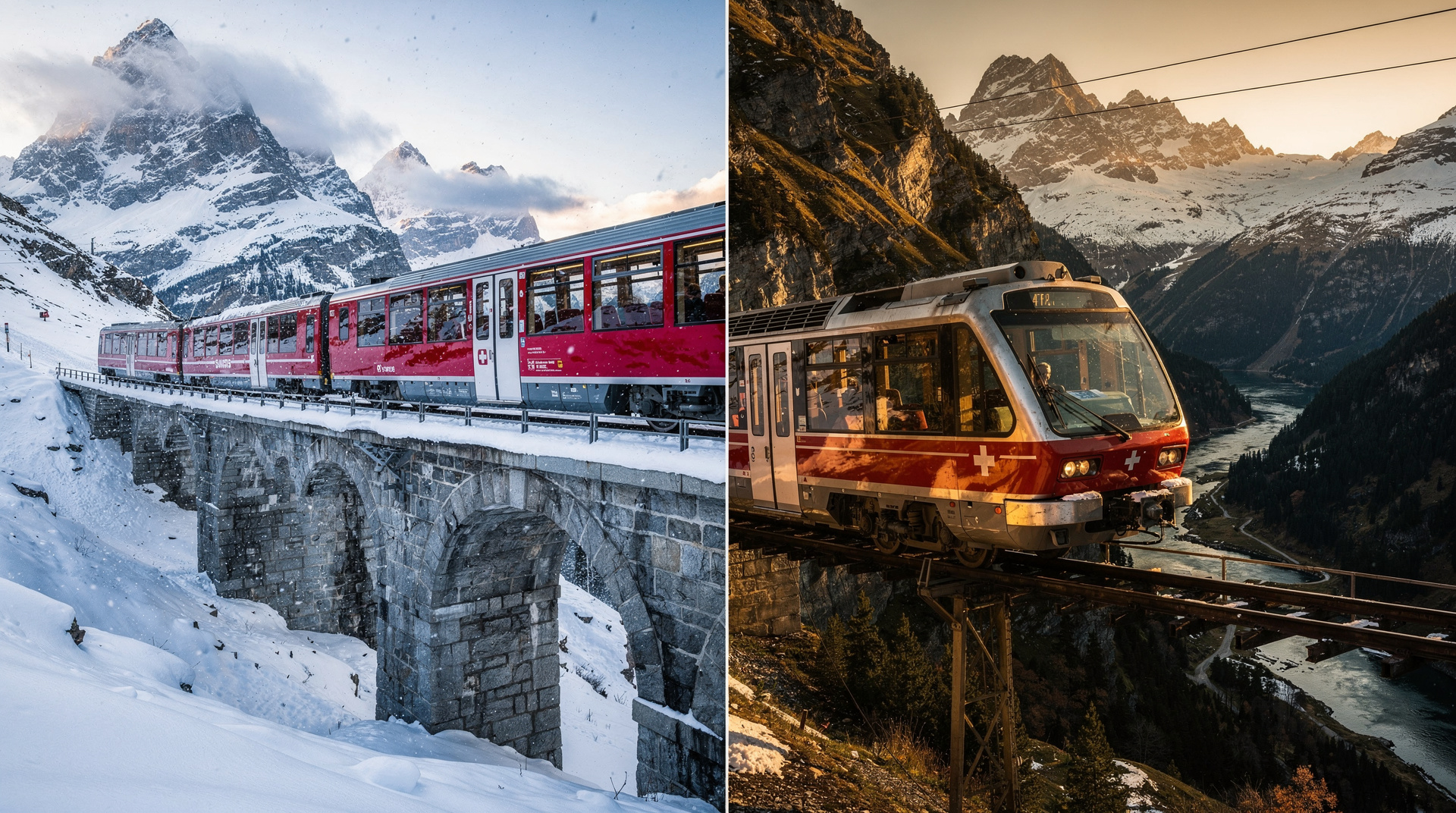
Switzerland’s train network connects all these destinations reliably and comfortably year-round. The Swiss Travel Pass covers unlimited travel on all standard Swiss trains, boats, and provides discounts on mountain excursion railways — making it the most efficient way to explore the country for most visitors. See our getting around Switzerland guide for full transport details, and our Switzerland budget guide for current cost benchmarks across all seasons and destinations.