Snowshoeing in Switzerland: trails, tips, and guided tours
Where is the best snowshoeing in Switzerland?
The Engadin in Graubunden offers the best snowshoeing conditions with reliable snow, groomed trails, and stunning high-alpine scenery. The Bernese Oberland around Grindelwald and Adelboden, and the Jura Mountains near La Chaux-de-Fonds, are excellent alternatives.
Snowshoeing: why Switzerland is perfect for it
Snowshoeing is one of the fastest-growing winter activities in Switzerland, and for good reason. Unlike skiing or snowboarding, it requires no prior skills, no significant equipment investment, and no intimidating chairlift rides into steep terrain. A beginner can be walking confidently through a winter forest within minutes of strapping on snowshoes for the first time.
Switzerland’s combination of reliable high-altitude snowfall, an extraordinary network of marked and maintained winter trails, and easy public transport access to high-mountain areas makes it one of the best countries in the world for the activity. The trails are signposted in the same way as summer hiking paths, with blue signs indicating winter walking routes. Many are prepared (flattened) by local authorities or tourist organisations. Guided tours are available from almost every Swiss resort, typically led by certified mountain guides who bring equipment and local knowledge.
This guide covers the best snowshoeing areas, route recommendations, equipment requirements, and how to find guided tours in each region.
| At a glance | |
|---|---|
| Where | Engadin (Graubunden), Bernese Oberland, Jura Mountains, Rigi/Pilatus near Lucerne |
| Cost | Rental around CHF 12-20/day; guided half-day tours around CHF 45-90 per person |
| Time needed | Half a day for a first trail; a guided full day with lunch for a deeper trip |
| Getting there | Train/PostBus to the resort, then cable car or funicular to the trailhead (Swiss Travel Pass covers most rail/bus legs) |
| Best time | January-February for the most reliable snow; December and March for quieter trails |
The Engadin, Graubunden
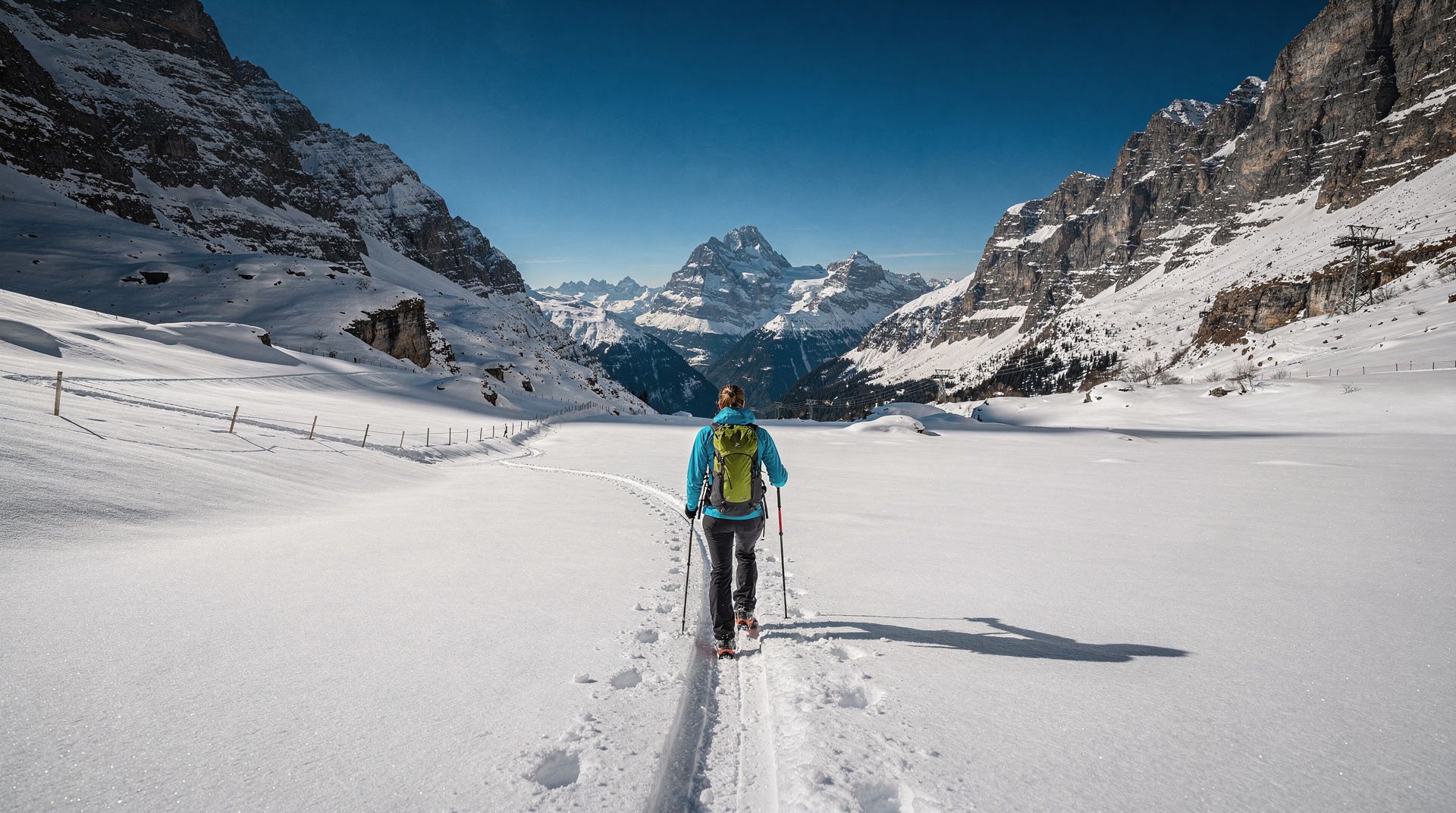
The Upper Engadin — the high valley around St. Moritz, Pontresina, Sils-Maria, and Silvaplana — is Switzerland’s finest snowshoeing territory. The broad valley floor at around 1,800m elevation sits above most cloud inversions in winter, meaning clear blue skies while lower valleys are fog-bound. The surrounding mountain terrain is dramatic but accessible, with marked snowshoe trails ranging from gentle valley-floor circuits to demanding ascents to ridge viewpoints.
Best trails in the Engadin:
Sils to Isola (easy, 8km, 2.5 hours): The frozen Lake Silvaplana and Lake Sils provide a flat approach to the hamlet of Isola at the southern end of Lake Sils. The trail follows the lakeshore through snow-covered birch forests, with the Maloja Pass visible at the valley head. Return by the same route or by PostBus.
Muottas Muragl to Pontresina (moderate, 10km, 3.5 hours): Take the funicular from Samedan up to Muottas Muragl (2,456m), then snowshoe down through the Rosegg Valley to Pontresina. The views from Muottas Muragl across the Engadin to the Bernina massif are among the finest in Switzerland. The descent is gradual and the forest section through Val Roseg is particularly beautiful.
Diavolezza Glacier trail (demanding, full day): Access via the Diavolezza cable car from Pontresina. Guided tours only — the terrain involves glacier travel and requires mountain guide leadership. The views of the Bernina massif at close range are extraordinary.
Pontresina guided snowshoe tours: Pontresina is the main base for guided snowshoeing in the Engadin. The Pontresina mountain guide office offers daily tours of two to five hours. Guides provide snowshoes, poles, and safety equipment. Groups typically eight to twelve people. Cost approximately CHF 50-80 per person including equipment.
Bernese Oberland
The Bernese Oberland offers snowshoeing in some of Switzerland’s most dramatic mountain landscapes, with the Eiger, Mönch, and Jungfrau providing backdrops that photographers dream about. On a non-snowshoeing day, a self-guided trip from Interlaken to the Jungfraujoch brings you up to the high-alpine snow world by train.
Grindelwald First area (easy to moderate): The First plateau above Grindelwald is accessed by cable car. From the First station at 2,168m, prepared snowshoe trails lead through the Bachalpsee bowl (the lake is usually frozen from December to March) and along the ridges toward Schwarzhorn. The panorama of the Wetterhorn, Schreckhorn, and Finsteraarhorn from the Bachalpsee is one of the best in the Alps.
Schynige Platte (easy, seasonal): The Schynige Platte above Wilderswil offers high-altitude snowshoeing when the rack railway is running in winter (check the BLM website for winter operating dates). The ridge trail between the station and the Loucherhorn viewpoint is straightforward and rewarding.
Adelboden area (moderate): The broad valleys around Adelboden have an extensive network of marked winter walking and snowshoe trails totalling over 60km. The trail from Engstligenalp (reached by cable car) to the valley floor is particularly dramatic, traversing the edge of the Engstligen waterfall gorge.
Kandersteg (moderate to demanding): The Oeschinensee area above Kandersteg is one of the most spectacular winter landscapes in Switzerland — the frozen lake below the sheer north faces of the Blümlisalp massif. The trail from the cable car station to the lake (about 45 minutes one way) is maintained and relatively straightforward in good conditions; snowshoes are helpful rather than essential. This area is also the main centre for ice climbing in Switzerland.
Jura Mountains
The Jura Mountains along Switzerland’s northern and western edge offer a different snowshoeing experience: rolling forested hills rather than dramatic Alpine peaks, with deep snow in good years and an intimate, quiet atmosphere very different from the busy resort areas.
La Chaux-de-Fonds region: The plateau around La Chaux-de-Fonds and Le Locle receives significant snowfall and has a growing reputation for snowshoeing. Trails through beech and fir forests lead to viewpoints over the Mittelland below. The absence of ski resort infrastructure means trails are quieter than in the Alps.
Vallée de Joux: The valley that is also home to watchmaking ateliers (see the Swiss watchmaking guide) has extensive forest snowshoe trails accessible from the villages of Le Sentier and Le Brassus. The frozen Lake Joux is sometimes accessible on foot in cold winters.
Franches-Montagnes (Freiberge): The horse-breeding plateau region in the canton of Jura, between Saignelégier and Tramelan, offers rolling snowshoe trails through open meadows where the famous Franches-Montagnes horse breed lives year-round. The combination of landscape and the possibility of encountering herds of horses in the snow is genuinely unusual.
Rigi and Pilatus: accessible snowshoeing from Lucerne
For visitors based in Lucerne, the Rigi and Pilatus mountains provide easy snowshoeing access without a long journey to the Alps.
Rigi: The Rigi plateau (1,797m) has marked snowshoe trails of varying difficulty accessible from the Rigi-Kulm or Rigi-Staffel railway stations. The views from the top of Rigi across the central Swiss lakes and toward the Alps in good weather are exceptional. The rack railway from Vitznau or Arth-Goldau is covered by the Swiss Travel Pass.
Pilatus: Pilatus Kulm (2,132m) is closed to the cogwheel railway in winter but accessible by cable car from Kriens (Lucerne). Snowshoe trails from the summit station lead along ridges with dramatic views. The access cable car is not covered by the Swiss Travel Pass.
Equipment: what you need for snowshoeing
Snowshoes: Modern snowshoes are lightweight aluminium frames with crampons and binding systems. They come in sizes calibrated to the user’s weight. For day hiking on maintained trails, entry-level snowshoes from brands like MSR, Salomon, or Tubbs are entirely adequate. For steep terrain or off-trail touring, larger frames with more aggressive crampons are needed.
Rental: Every ski resort town in Switzerland rents snowshoes, typically for CHF 12-20 per day. Sport shops in Pontresina, Grindelwald, Adelboden, and Kandersteg all stock rental equipment. Guided tours include equipment in their fees.
Poles: Telescoping walking poles with snow baskets significantly improve balance on uneven snow and reduce fatigue. Essential on steep terrain; helpful on any terrain.
Footwear: Waterproof boots with ankle support are necessary. Hiking boots are fine for prepared trails; full mountaineering boots are better for longer tours or off-trail terrain. Gaiters to keep snow out of boot tops are recommended for deeper snow.
Clothing layers: The Swiss winter-layering principle: moisture-wicking base layer, insulating mid-layer, and waterproof shell. Snowshoeing generates significant body heat on ascents; you will overheat if dressed for standing still. Carry gloves, hat, and extra layer in a small pack.
Sunscreen: High-altitude winter sun reflected from snow causes severe sunburn. Apply SPF 30+ to face, neck, and any exposed skin, and renew every two hours. Snow blindness is a genuine risk at altitude without UV-protective sunglasses.
Guided snowshoe tours: what to expect
Guided tours are the best option for first-time snowshoers and for anyone venturing onto ungroomed terrain. Certified mountain guides in Switzerland are trained to a high standard and carry safety equipment for all likely scenarios.
A typical guided half-day tour runs three to four hours, covers five to eight kilometres with 300-500 metres of elevation gain, and includes snowshoes, poles, and safety briefing. Full-day tours often include a mountain restaurant lunch. Evening snowshoe tours with a fondue dinner at an Alpine hut are offered by many resorts — a particularly atmospheric combination.
Booking: contact the local mountain guide bureau (Bergführerbüro) in the resort where you are staying. Most tourist offices can provide contacts and availability. Prices range from CHF 45 to CHF 90 per person for half-day tours depending on group size and terrain.
Snowshoeing with the Swiss Travel Pass
The Swiss Travel Pass covers train and PostBus travel to all the areas described in this guide. In the Engadin, the funicular to Muottas Muragl is not covered (though discounted for pass holders). In the Bernese Oberland, the cable car to Grindelwald First is discounted with the pass.
The pass is particularly valuable for snowshoeing trips where you want to start a trail from one point and return from another — the freedom to hop on a train or bus at the end of a linear trail removes the need to plan circular routes. You can purchase the Swiss Travel Pass online before your trip.
For winter trip planning, snowshoeing combines well with other activities: a morning on snowshoes and an afternoon on the ice rink, or a snowshoe morning followed by an afternoon cross-country skiing session on the valley floor. The winter hiking guide covers prepared winter walking routes on cleared paths, which require no special equipment and can complement snowshoe outings.
Snowshoeing and avalanche safety
One of the most important considerations for snowshoeing off the prepared trail network — in untracked terrain, on slopes, or in areas not regularly maintained — is avalanche awareness. Switzerland has some of the most sophisticated avalanche forecasting in the world, published daily by the Institute for Snow and Avalanche Research (SLF) at slf.ch.
The avalanche danger scale runs from 1 (low) to 5 (very high). For unguided snowshoeing in terrain with any slope angle above approximately 30 degrees, danger levels 3 and above warrant serious caution. On prepared snowshoe trails maintained by tourist organisations, avalanche risk is managed by the trail maintainers. Respecting trail closures is essential.
For independent touring in terrain with slope exposure, carrying avalanche safety equipment — transceiver, probe, and shovel — and travelling with a companion who knows how to use them is strongly recommended. Guided tours take this responsibility off the visitor entirely.
Snowshoeing as a social activity
Evening snowshoe tours with a fondue dinner at an Alpine hut are particularly popular as group activities — corporate team events, birthday trips, and family gatherings. Several Engadin operators run weekly evening tours ending at traditional mountain huts. The combination of physical activity, winter scenery, and a warm hut meal reliably produces memorable evenings.
Mountain guides in Switzerland adapt tour content to the group’s interests. Mentioning in advance that you have photographers, botanists, or geology enthusiasts in the group typically results in a more tailored experience.
Best season for snowshoeing in Switzerland
December to mid-March is the core snowshoeing season. January and February typically deliver the best conditions: reliable cold temperatures, consistent snowfall, and groomed trail networks in full operation. March brings warmer temperatures that can make snow heavy and wet by afternoon — morning tours are better in late season.
The Engadin’s high altitude (1,700-1,800m) gives it a longer season than lower areas, often maintaining good snowshoeing conditions from late November to early April. The Jura’s lower elevation (800-1,400m) is more dependent on individual year snowfall and may have patchy conditions in warm winters.
| Month | Typical conditions | Crowds |
|---|---|---|
| December | Season opening; snow depth building, can be patchy at lower elevations | Moderate, busier around Christmas/New Year |
| January | Cold, reliable snow, some of the best light of the year | Lower outside school holidays |
| February | Peak conditions in most regions, groomed trails in full operation | High (European ski holidays) |
| March | Good snow at altitude; can turn heavy and wet by afternoon at lower elevations | Moderate, easing toward end of month |
| Early April | Engadin and high-altitude trails often still good; lower Jura trails typically closing | Low |
Check the current trail conditions before travel by contacting the local tourist office or checking the resort website. The SLF avalanche bulletin (slf.ch) also reports snowpack depth and stability, useful indicators of overall winter conditions across Switzerland.
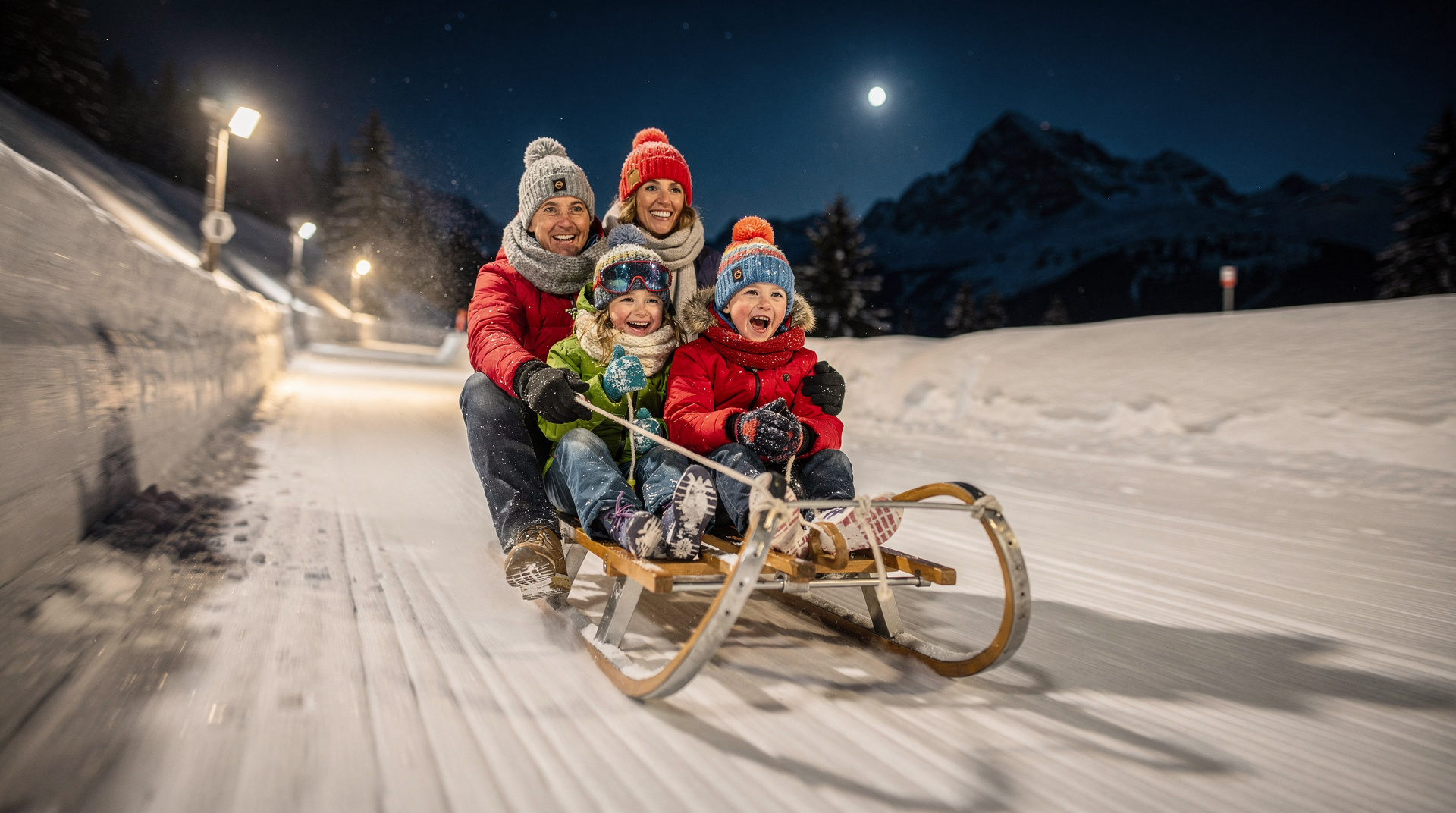
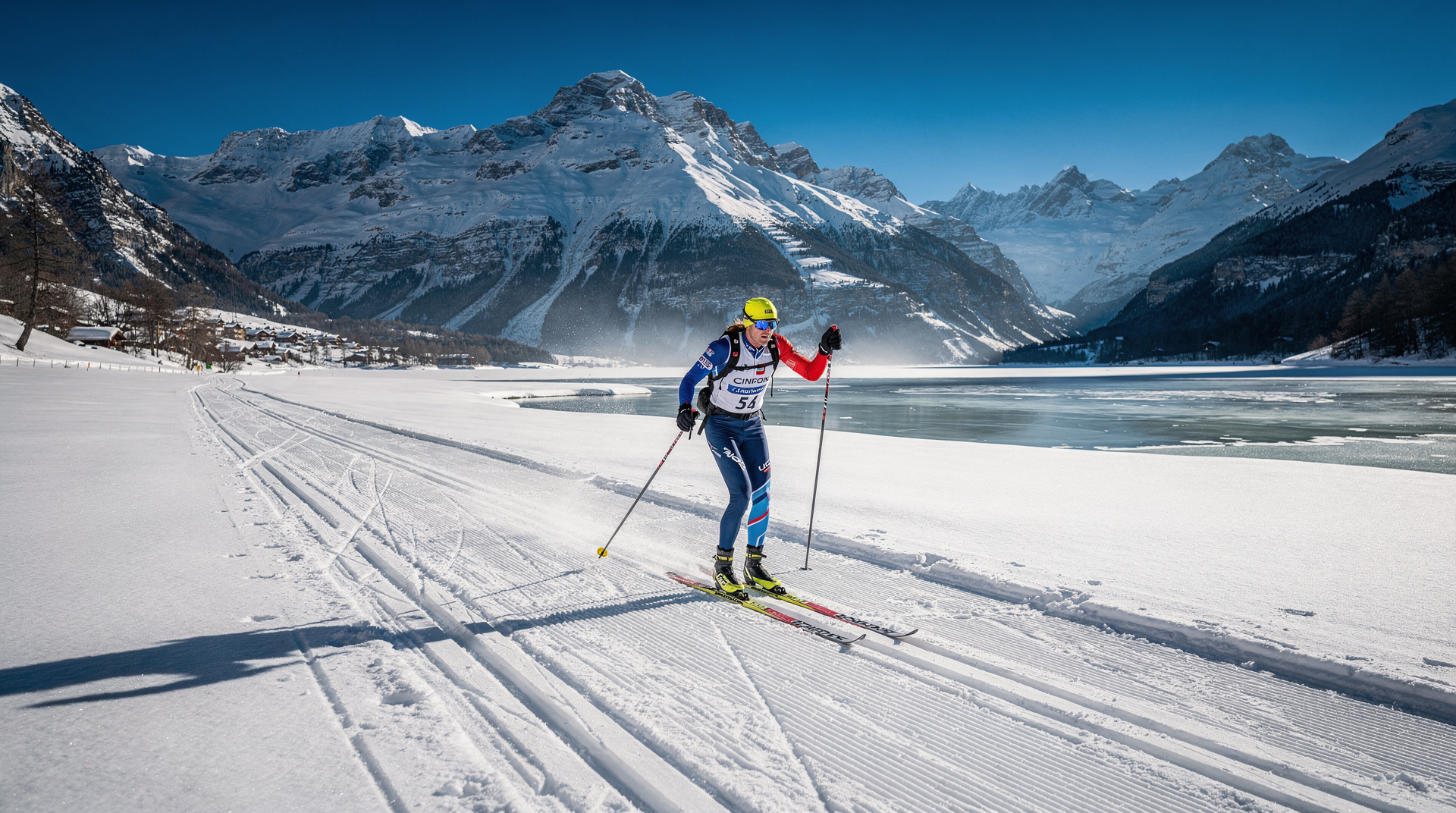
For families visiting Switzerland in winter, the family activities guide and tobogganing guide cover complementary activities accessible to all ages. The cross-country skiing guide covers the flat-terrain nordic alternative for those who want a more continuous workout.
Snowshoeing in different landscape types
Switzerland’s diversity means that snowshoeing looks and feels different depending on the region. Understanding these differences helps you choose the setting that will appeal most:
High alpine snowshoeing (Engadin, Pontresina, Bernina): Open terrain above the treeline, vast panoramas, cold and dry air, reliable hard-packed snow. The experience is dominated by the scale of the mountain landscape — the Bernina massif’s glaciated peaks visible throughout the Engadin tours. This is the most dramatic and photographically rewarding type of snowshoeing.
Forest snowshoeing (Davos valleys, Jura, Bernese Oberland lower slopes): Moving through snow-covered forest on muffled terrain is an entirely different sensory experience. The sound of snowshoes on packed snow through larch or fir forest, the blue shadows between the trunks, and the occasional encounter with chamois or birds creates an intimate, almost meditative quality. Jura forest snowshoeing in particular has this character.
Valley floor snowshoeing (Goms, Engadin lakes, Lauterbrunnen): Flat valley floor terrain allows the rhythm of snowshoeing to develop without the physical demand of ascent. These routes suit beginners, families, and those wanting the experience without the physical commitment of a mountain tour. The Goms valley in Valais, with its straight 80km cross-country skiing and snowshoeing corridor, exemplifies this type.
Village-to-village routes: Many Swiss resorts have established snowshoe routes connecting villages through farmland and forest. These routes have the advantage of ending at different restaurants and guesthouses, making it possible to plan a multi-day point-to-point snowshoe tour using village accommodation. The Engadin village circuit and the Goms valley are both suitable for this approach.
Snowshoeing photography
Winter alpine snowshoeing provides some of the most compelling photographic conditions in Switzerland:
- Blue hour before sunrise: Setting out before dawn and arriving at a viewpoint as the sky turns from deep blue to the first pink of alpenglow on the peaks is a classic winter mountain photograph.
- Fog inversions: When valley fog sits below the snowshoeing altitude, the juxtaposition of white-cloud sea and clear mountain sky above creates dramatically clean images.
- Animal tracks: Fresh snow reveals wildlife activity invisible in other seasons. Chamois, fox, hare, and bird tracks in snow are photogenic and tell ecological stories.
- Lone tree or structure in snow: A single snow-covered pine, a weathered Alpine cross, or a traditional wooden barn half-buried in powder are quintessentially Swiss winter images.
A mirrorless camera in a padded inner pack pocket (to maintain battery temperature in the cold) and a 24-70mm zoom lens covers the majority of snowshoeing photographic opportunities. Smartphone cameras work well in all but very low-light conditions; keep the phone in an inner pocket to prevent battery drain from cold.
Snowshoeing etiquette on Swiss mountain trails
Switzerland’s winter trail network is shared between multiple user groups — snowshoers, winter walkers, cross-country skiers, and occasionally fat-bike cyclists. Informal but important etiquette applies:
- Do not walk in the cross-country ski tracks. Snowshoe on the prepared flat beside the tracks, not in the parallel grooves used by classic skiers.
- Give way to descending users on narrow mountain paths. Moving uphill can pause more easily than someone building speed on a descent.
- Yield to skiers on shared descent sections. Snowshoers are slower and less visible than skiers; staying to the edge of the trail reduces conflict.
- Do not cross avalanche barriers, closed routes, or marked exclusion zones. These exist for safety reasons that may not be immediately apparent from below.
- Leave no trace: carry out all waste, do not disturb wildlife, and avoid shortcutting through vegetation on steep slopes where snow compression can damage alpine plants.
Frequently asked questions about Snowshoeing in Switzerland
Do I need previous hiking experience to snowshoe? No. Basic fitness for a moderate walk is enough for most marked trails. The technique is learned within minutes, and prepared trails in the Engadin, Bernese Oberland, and around Lucerne are graded so beginners can choose an appropriately easy route.
Is snowshoeing better than winter hiking on cleared paths? They serve different purposes. Winter hiking on cleared, packed paths needs no special equipment and suits gentle valley walks; snowshoeing opens up trails through deeper, ungroomed snow that cleared paths don’t reach. Many visitors combine both across a multi-day stay — see the winter hiking guide for the cleared-path alternative.
Combining snowshoeing with a wider Swiss winter trip
Snowshoeing works well as one component of a broader winter stay rather than the sole activity. Basing yourself in St. Moritz or Pontresina puts you close to the Engadin’s best trails and within reach of ice skating, cross-country skiing, and the region’s ski slopes. From Grindelwald or Lucerne, snowshoeing pairs naturally with a day on Mount Rigi or Mount Pilatus. See the winter itinerary guide for full multi-day planning.