Top 10 ski resorts in Switzerland: ranked and reviewed
What is the best ski resort in Switzerland?
Zermatt offers the most complete experience with 360km of pistes, guaranteed snow, glacier skiing year-round, and the Matterhorn as backdrop. Verbier suits advanced skiers; Grindelwald-Wengen is better for mixed-ability groups.
How to choose a Swiss ski resort
Switzerland has more than 200 ski areas — from tiny valley stations with a handful of runs to massive linked resorts covering four valleys and 400 kilometres of pistes. Choosing the right one depends less on total ski area size than on what kind of skier you are, who you are travelling with, and what you want from the experience beyond the skiing itself.
This guide ranks the ten best resorts with honest assessments of who each one suits best. It covers piste length, altitude range, off-piste access, après-ski quality, accommodation, and value for money — because Swiss skiing is rarely cheap, and understanding what you are paying for matters.
The Swiss Travel Pass covers rail and bus access to most of these resorts from major Swiss cities, though lifts must be purchased separately.
At a glance
| Where | Valais, Bernese Oberland, Graubünden and Vaud — all reachable from Zurich or Geneva in 2-3.5 hours by train |
| Cost | Lift passes around CHF 72-105/day; multi-day passes discount to roughly 4-4.5x the day rate for 6 days |
| Time needed | A minimum of 3-4 days to make the travel worthwhile; a week suits most itineraries |
| Getting there | Direct SBB trains plus PostBus or gondola for the final stretch; Swiss Travel Pass covers the rail/bus portion |
| Best time | January for snow and value; February-March for sun and longer days (avoid mid-February school holidays if budget-conscious) |
Matterhorn Glacier Paradise — Zermatt's ultimate ski experience
Access Europe's highest cable car station at 3,883m, ski Europe's longest summer run, and stand at the foot of the Matterhorn. The benchmark Swiss ski resort experience.
- Free cancellation
1. Zermatt
Pistes: 360km | Altitude: 1,620-3,883m | Best for: All levels, guaranteed snow, year-round skiing
Zermatt is the standard against which all other Swiss ski resorts are measured. It sits at the base of the Matterhorn — the single most recognisable mountain shape in the world — in a car-free village that manages to be simultaneously glamorous and authentic. The skiing is high, the snow reliable, and the glacier sector at Klein Matterhorn (3,883m) means skiing is possible every month of the year.
The 360km of marked pistes cover terrain for every ability level, from the wide motorway runs above Riffelberg that suit intermediate skiers to the steep black runs off Stockhorn and the serious off-piste terrain in the Tête Blanche area. The connection to Cervinia in Italy (included in the international ski pass) adds a further 150km of runs and the option of lunch with a pasta-and-Barolo atmosphere.
What makes Zermatt exceptional beyond the skiing: the village itself is charming, the restaurant scene is outstanding (multiple Michelin-starred establishments, countless mountain huts), and the car-free environment means the village is navigated by electric taxis and horse-drawn carriages. The famous Matterhorn Glacier Paradise viewing platform at 3,883m is accessible even for non-skiers by cable car.
Book the Matterhorn Glacier Paradise experience on GetYourGuide — includes cable car access to Europe’s highest cable car station.
Getting there: Train from Zurich (3.5 hours) or Geneva (3.5 hours) to Zermatt. The Matterhorn Gotthard Bahn from Visp is included in the Swiss Travel Pass.
Lift pass prices 2025/26: Adults approximately CHF 88/day or CHF 390/week (Zermatt only); CHF 105/day with Cervinia.
2. Verbier and the 4 Vallées
Pistes: 410km (4 Vallées total) | Altitude: 820-3,330m | Best for: Expert skiers, off-piste enthusiasts, international party scene
Verbier is Switzerland’s most internationally famous resort for advanced skiers and the world’s best off-piste riders. The 4 Vallées ski area (linked with Nendaz, Veysonnaz, Thyon, and La Tzoumaz) is Switzerland’s largest, offering 410km of marked runs and an even larger amount of off-piste terrain in the surrounding backcountry.
The Verbier terrain is genuinely challenging at the top end. The Mont-Fort sector at 3,330m offers steep blacks and access to serious off-piste descents. The Tortin run — steep, mogulled, with an awkward start — has reduced grown adults to tears. The Freeride World Tour, the premiere off-piste competition circuit, includes Verbier as its prestigious final event each April.
Verbier’s après-ski is the liveliest in Switzerland: Farm Club, Fer à Cheval, and the famous Farinet terrace create an atmosphere that continues well past midnight. Accommodation in Verbier itself is expensive; the lower villages of Le Châble and Verbier-Station offer more affordable options with gondola access to the main ski area.
Getting there: Train to Le Châble from Martigny (30 minutes from Sion or Lausanne), then gondola to Verbier. Swiss Travel Pass covers transport to Le Châble.
Lift pass prices 2025/26: Verbier area adults approximately CHF 90/day, 4 Vallées CHF 100/day, 6-day from CHF 420. Book the Glacier Express scenic train between Zermatt and St. Moritz to connect both top resorts in style.
3. St. Moritz
Pistes: 350km | Altitude: 1,720-3,303m | Best for: Luxury experience, mixed ability, non-ski activities
St. Moritz is synonymous with Swiss luxury skiing — the resort that invented the modern concept of a winter sports holiday when hotelier Johannes Badrutt bet British guests they could enjoy his hotel in winter and not just summer, winning the bet and creating an industry. The resort has hosted the Winter Olympics twice (1928 and 1948) and maintains its position as one of the world’s most expensive ski destinations.
The skiing in the Engadin ski region is excellent but not exclusively focused on extreme terrain. The Corviglia and Corvatsch sectors offer long cruising runs ideal for intermediate skiers in spectacular high-altitude scenery. The connecting ski area with Pontresina and Diavolezza adds glacier terrain.
What distinguishes St. Moritz from Zermatt or Verbier is the non-skiing offer: the Cresta Run (a notorious toboggan track), polo on the frozen lake, bobsleigh on the Olympia run, and a shopping street that rivals Geneva or Zurich for luxury retail. It is a resort where non-skiers have as much to do as skiers.
Getting there: Bernina Express or Glacier Express from Zurich or Geneva; direct trains from Zurich (3.5 hours). Swiss Travel Pass covers rail. Car parking and car access are straightforward.
Lift pass prices 2025/26: Adults approximately CHF 85/day, 6-day from CHF 370. Book the Glacier Express from St. Moritz to Zermatt to make your inter-resort transfer an unforgettable journey.
4. Grindelwald-Wengen (Jungfrau Region)
Pistes: 213km | Altitude: 943-2,971m | Best for: Mixed ability groups, scenery, classic Alpine atmosphere, families
The Jungfrau Region ski area centred on Grindelwald and Wengen offers a combination found nowhere else in Switzerland: iconic Alpine scenery (the Eiger north face looms directly above the runs), a car-free village (Wengen), and the highest railway station in Europe at Jungfraujoch. The skiing is excellent for intermediate skiers — long, varied runs on the Kleine Scheidegg and Männlichen sectors — with enough challenge at the top end to keep strong skiers interested.
Grindelwald itself is one of Switzerland’s most rewarding ski bases: a proper village with a wide range of accommodation from budget to luxury, excellent restaurants, and year-round mountain activities. The First sector above Grindelwald is particularly good for mixed-ability groups.
The Eiger Express gondola from Grindelwald to Eigergletscher, opened in 2020, has transformed access to the Kleine Scheidegg sector and cut travel time significantly.
Getting there: Train from Zurich (2 hours via Bern and Interlaken), from Geneva (2.5 hours). Swiss Travel Pass covers rail to Grindelwald. Car parking in Grindelwald; Wengen is car-free.
Lift pass prices 2025/26: Adults approximately CHF 80/day, 6-day from CHF 335. Book the Grindelwald First cableway and Cliff Walk ticket to access the First adventure area above the village.
5. Engelberg-Titlis
Pistes: 82km marked | Altitude: 1,050-3,028m | Best for: Day trips from Zurich, glacier views, beginner-friendly lower mountain
Engelberg is the closest major ski resort to Zurich (90 minutes by train), making it popular for day trips. The vertical range is excellent — from the valley floor at 1,050m to the Titlis glacier at 3,028m — and the top section offers reliable snow and year-round glacier access.
The lower mountain around Brunni and the resort base is good for beginners. The upper Titlis sector has steeper terrain and a thrilling 500-metre suspension bridge at 3,028m (the Titlis Cliff Walk). The resort is smaller than the top five, but the combination of accessibility and vertical is hard to beat for day visitors from Zurich or Lucerne.
Getting there: Direct train from Zurich (90 minutes) or Lucerne (45 minutes). Swiss Travel Pass covers transport to Engelberg.
Lift pass prices 2025/26: Adults approximately CHF 78/day, 6-day from CHF 310. Book the Mount Titlis glacier discovery experience including the rotating Titlis Rotair cable car.
6. Saas-Fee
Pistes: 145km | Altitude: 1,800-3,600m | Best for: Reliable snow, family skiing, car-free village, summer skiing
Saas-Fee sits at 1,800m in a bowl surrounded by a ring of 4,000-metre peaks and glaciers — a setting that delivers exceptional scenery and one of the most reliable snow records in Switzerland. The resort is car-free, reached by an electric bus from the valley car park, giving it a pleasantly unrushed atmosphere.
The skiing suits all levels but is particularly good for confident intermediates. The high altitude of the entire ski area (80 percent of runs above 2,500m) means excellent conditions even in low-snow years. Saas-Fee also has the world’s highest outdoor freestyle terrain park, popular with snowboarders and freestyle skiers.
Getting there: Train from Zurich or Geneva to Brig, then PostBus to Saas-Fee (approximately 45 minutes from Brig). Swiss Travel Pass covers rail.
Lift pass prices 2025/26: Adults approximately CHF 78/day, 6-day from CHF 310.
7. Davos-Klosters
Pistes: 300km | Altitude: 810-2,844m | Best for: Advanced skiers, off-piste, large groups needing accommodation variety
Davos-Klosters is Switzerland’s largest ski resort by piste length in a single connected area (jointly with Verbier 4 Vallées and Zermatt depending on how connections are counted). The resort covers five separate ski areas — Parsenn, Jakobshorn, Pischa, Rinerhorn, and Madrisa — connected by a combination of lifts and train.
The Parsenn sector’s long cruising runs (the Weissfluhjoch to Küblis run is one of the longest descents in Switzerland at 12km) suit strong intermediate skiers. The Jakobshorn is the snowboard hub. Davos as a town is larger and less charming than mountain villages like Zermatt or Saas-Fee, but the accommodation range and value are better.
Getting there: Train from Zurich (2.5 hours via Landquart). Swiss Travel Pass covers rail.
Lift pass prices 2025/26: Adults approximately CHF 80/day, 6-day from CHF 330.
8. Laax (Flims-Laax-Falera)
Pistes: 224km | Altitude: 1,080-3,018m | Best for: Snowboarders, freestyle skiers, young crowd, modern facilities
Laax has positioned itself as Switzerland’s premier snowboard and freestyle destination. The Crap Sogn Gion area has one of Europe’s best superpipes and a well-maintained terrain park that hosts World Cup events. The resort’s modern infrastructure — efficient lifts, contemporary on-mountain restaurants — contrasts with the more traditional atmosphere of older Swiss resorts.
The skiing beyond the park is good and varied, with the high Vorab glacier sector offering excellent late-season conditions. The village of Laax and nearby Flims are quieter and more affordable than comparable terrain elsewhere.
Getting there: Train to Chur from Zurich (65 minutes), then PostBus to Laax/Flims (45 minutes). Swiss Travel Pass covers rail.
Lift pass prices 2025/26: Adults approximately CHF 78/day, 6-day from CHF 315.
9. Crans-Montana
Pistes: 140km | Altitude: 1,500-3,000m | Best for: Sun, beginner-friendly terrain, warm spring skiing, golf-adjacent atmosphere
Crans-Montana faces south on a high plateau above the Rhône Valley in Valais, giving it some of the sunniest skiing in Switzerland. The south-facing aspect means warm spring conditions from February onward, making it excellent for those who value blue skies and terrace lunches over technical skiing.
The resort hosted the Alpine World Ski Championships in 1987 and 2027, and the piste network is well-suited to beginners and intermediates. The altitude of the plateau (most of the skiing is between 1,500m and 2,600m) means snow conditions can be variable in early season, but the glacier access to 3,000m provides top-up options.
Getting there: Train to Sierre from Geneva (90 minutes) or Zurich (2.5 hours), then cable car or bus to Crans-Montana. Swiss Travel Pass covers transport.
Lift pass prices 2025/26: Adults approximately CHF 75/day, 6-day from CHF 295.
10. Adelboden-Lenk
Pistes: 210km | Altitude: 1,350-2,362m | Best for: Traditional atmosphere, Hahnenkamm-equivalent racing, families, intermediates
Adelboden-Lenk is one of Switzerland’s best-loved resorts among Swiss themselves but less known internationally. The linked ski area covering the Adelboden and Lenk valleys has 210km of well-maintained pistes predominantly suited to intermediate skiers. The Hahnenkamm downhill race that defines Kitzbühel has an equivalent in Adelboden — the FIS Ski World Cup slalom and giant slalom on the Chuenisbärgli is held each January.
The resort has an authentic Swiss village atmosphere largely free from the international luxury veneer of Zermatt or St. Moritz. Accommodation is well-priced by Swiss standards.
Getting there: Train from Bern to Frutigen (50 minutes), then PostBus to Adelboden. Swiss Travel Pass covers rail and bus.
Lift pass prices 2025/26: Adults approximately CHF 72/day, 6-day from CHF 280.
Comparing Swiss ski resorts: key factors
| Resort | Pistes | Snow reliability | Best level | Value |
|---|---|---|---|---|
| Zermatt | 360km | Excellent | All | Low |
| Verbier 4V | 410km | Very good | Advanced | Low |
| St. Moritz | 350km | Very good | All | Low |
| Grindelwald-Wengen | 213km | Good | Intermediate | Medium |
| Engelberg-Titlis | 82km | Very good | All | Medium |
| Saas-Fee | 145km | Excellent | All | Medium |
| Davos-Klosters | 300km | Good | All | Medium |
| Laax | 224km | Good | All | Medium |
| Crans-Montana | 140km | Fair | Beginner/Int. | Medium |
| Adelboden-Lenk | 210km | Good | Intermediate | Good |
Planning your ski trip
When to go: December offers fresh snow but cold temperatures and short daylight. January is the best overall month for snow quality and crowd levels. February and March bring more sun and longer days; March can offer excellent conditions if snowfall has been good. The best time to visit Switzerland guide covers this in more detail.
Getting there: All major resorts are reachable by train on the Swiss Travel Pass. The pass covers rail and PostBus but not ski lifts. Flying into Geneva or Zurich and taking the train directly to the resort is the most practical approach and avoids mountain driving on snow-covered roads.
Accommodation booking: Swiss ski resort accommodation books out for peak weeks (Christmas-New Year, February school holidays) from May onward for the following winter. Book early for these periods.
For family ski trips, see the dedicated guide covering ski schools, childcare facilities, and the best family-friendly terrain at each resort. The winter itineraries guide covers multi-resort itineraries and the logistics of combining resorts with other Swiss winter activities.
Ski pass systems and Swiss resort pricing
Swiss ski resort pricing is structured around day passes, multi-day passes, and season passes. The following pricing structure applies broadly across resorts in the 2025/26 season:
Day passes: Typically CHF 70-90 for major resorts, CHF 55-72 for smaller areas. Day passes purchased online in advance can be 5-10 percent cheaper than at the ticket office.
Multi-day passes: Discounts increase with duration. A 6-day pass typically costs the equivalent of 4-4.5 day passes rather than 6. Most major resorts offer 3, 6, 10, and 14-day passes.
Magic Pass: The Magic Pass is a season pass covering over 80 smaller Swiss ski resorts at a single fixed price (approximately CHF 429 for adults when purchased in spring). It does not cover the major resorts (Zermatt, Verbier, St. Moritz) but works well for those wanting to explore the broader Swiss ski landscape or for season residents.
Swiss Snow Pass: A day-based multi-resort pass sold through the SBB (Swiss Federal Railways) that combines train travel with lift access. Useful for day trips from Swiss cities.
Lift plus rail packages: Many resorts offer packages combining the Swiss Travel Pass for travel with discounted lift access. These are worth comparing against separate purchases for trips where significant rail travel is planned.
Ski resort accommodation: types and booking
Swiss ski resorts offer a spectrum of accommodation from youth hostels and mountain inns to five-star hotels. The main categories:
Hotel: Full service, typically with breakfast included. In high-end resorts (Zermatt, St. Moritz, Verbier), hotel prices rival the Alps’ most expensive. Mid-range resorts offer 3-star hotels at more approachable prices.
Apartment/chalet rental: Self-catering accommodation is the most economical option for families and groups of 4+. The cost per person drops significantly with group size, and cooking your own meals reduces total trip cost substantially. Platforms including Airbnb, Booking.com, and specialist Swiss chalet agencies all operate in the major resorts.
Mountain inns (Berghotels): Simple accommodation at altitude, typically dormitory-style or with small double rooms. Meals included. These are primarily used by ski tourers and those who want to start early on the mountain without the descent to the valley.
Youth hostels: Available in Zermatt, Saas-Fee, and several other resorts. Good value for solo travellers or pairs; less practical for families.
Book school holiday periods (Christmas-New Year, mid-February European half-term, Easter if it falls in ski season) 4-6 months in advance for major resorts. January and early February outside school holiday weeks offer good snow and lower prices.
Getting fit for Swiss skiing
Swiss ski resorts assume a base level of fitness that many occasional skiers underestimate. The altitude (most major resorts ski from 2,000-3,000m), the length of the days, and the sustained effort of skiing five or six hours daily puts significant demands on cardiovascular fitness, leg strength, and balance.
A six-week pre-trip preparation programme makes a meaningful difference:
- Cardiovascular training (running, cycling, swimming) three times per week
- Leg strength work (squats, lunges, step-ups) twice per week
- Balance exercises (single-leg stands, wobble board) twice per week
Arriving fit means your first days on the mountain are more enjoyable and you are less likely to sustain the quad-muscle soreness that limits many recreational skiers to half-days after the first two days. The mountains will always have more capacity than the visitor who under-prepared.
Frequently asked questions about skiing in Switzerland
How much does skiing cost in Switzerland per day?
A day ski pass at major resorts costs CHF 72-95, with Zermatt and Verbier at the top end and smaller resorts like Adelboden-Lenk more affordable. Add ski rental (CHF 40-70/day for skis, boots, and helmet), food on the mountain (CHF 15-25 for lunch), and accommodation (CHF 100-400+ per night). A realistic all-in daily budget is CHF 200-350 for mid-range skiing.
When is the best time to ski in Switzerland?
January offers the most reliable snow and smaller crowds outside school holidays. February and March bring longer days, warmer sunshine, and excellent conditions if snowfall has been good — but February school holidays (mid-month) are the busiest and most expensive period. Late March and April offer spring skiing with softer snow and lower prices. Zermatt’s glacier skiing operates year-round.
Which Swiss ski resort is best for beginners?
Grindelwald-Wengen (Jungfrau Region) and Crans-Montana offer the most beginner-friendly terrain with wide, gentle runs and good ski schools. Saas-Fee is also excellent for beginners with high-altitude snow reliability. Avoid Verbier as a beginner — its terrain is predominantly suited to advanced skiers with steep, challenging runs.
Is it cheaper to ski in Switzerland or Austria?
Austria is generally 30-40% cheaper than Switzerland for skiing when you factor in lift passes, accommodation, food, and drinks. Swiss lift passes average CHF 75-90/day versus EUR 55-70 in comparable Austrian resorts. However, Swiss resorts offer higher altitude (more reliable snow), year-round glacier skiing, and exceptional infrastructure. The premium buys genuine quality differences.
Do I need a car to get to Swiss ski resorts?
No, Switzerland’s rail network reaches all major ski resorts. The Swiss Travel Pass covers trains and PostBuses to resort villages, though ski lift passes are separate. Zermatt, Saas-Fee, and Wengen are car-free by design. For resorts like Verbier, a gondola connects the train station at Le Chable directly to the slopes. Train access avoids mountain driving on snow-covered roads.
Can I ski and visit cities on the same trip?
Yes, several resorts are close enough to cities for easy combining. Engelberg-Titlis is 90 minutes from Zurich by train. Grindelwald is 2 hours from Zurich via Interlaken. You can base yourself in Lucerne or Zurich and make day trips to ski, or spend a few days in a resort and a few days in cities — the Swiss Travel Pass covers both.
Après-ski in Swiss resorts: what to expect
Swiss après-ski is more varied than its international reputation suggests. The extreme version — loud music, alcohol fountains, dancing on tables — exists primarily in Verbier, Grindelwald’s Avocado Bar, and a handful of Davos venues. Most Swiss ski resorts have a more moderate après scene that ranges from quiet glühwein on a mountain terrace to busy hotel bars.
The mountain hut lunch is Switzerland’s true après-ski equivalent: a long, convivial midday stop with excellent food (rösti, fondue, local charcuterie), local wine or beer, and the social pleasure of comparing morning runs. The Riffelberg Restaurant above Zermatt, the Männlichen Restaurant in the Jungfrau Region, and the Schilthorn’s Piz Gloria (where James Bond was filmed) are among the finest mountain restaurant experiences in the Alps.
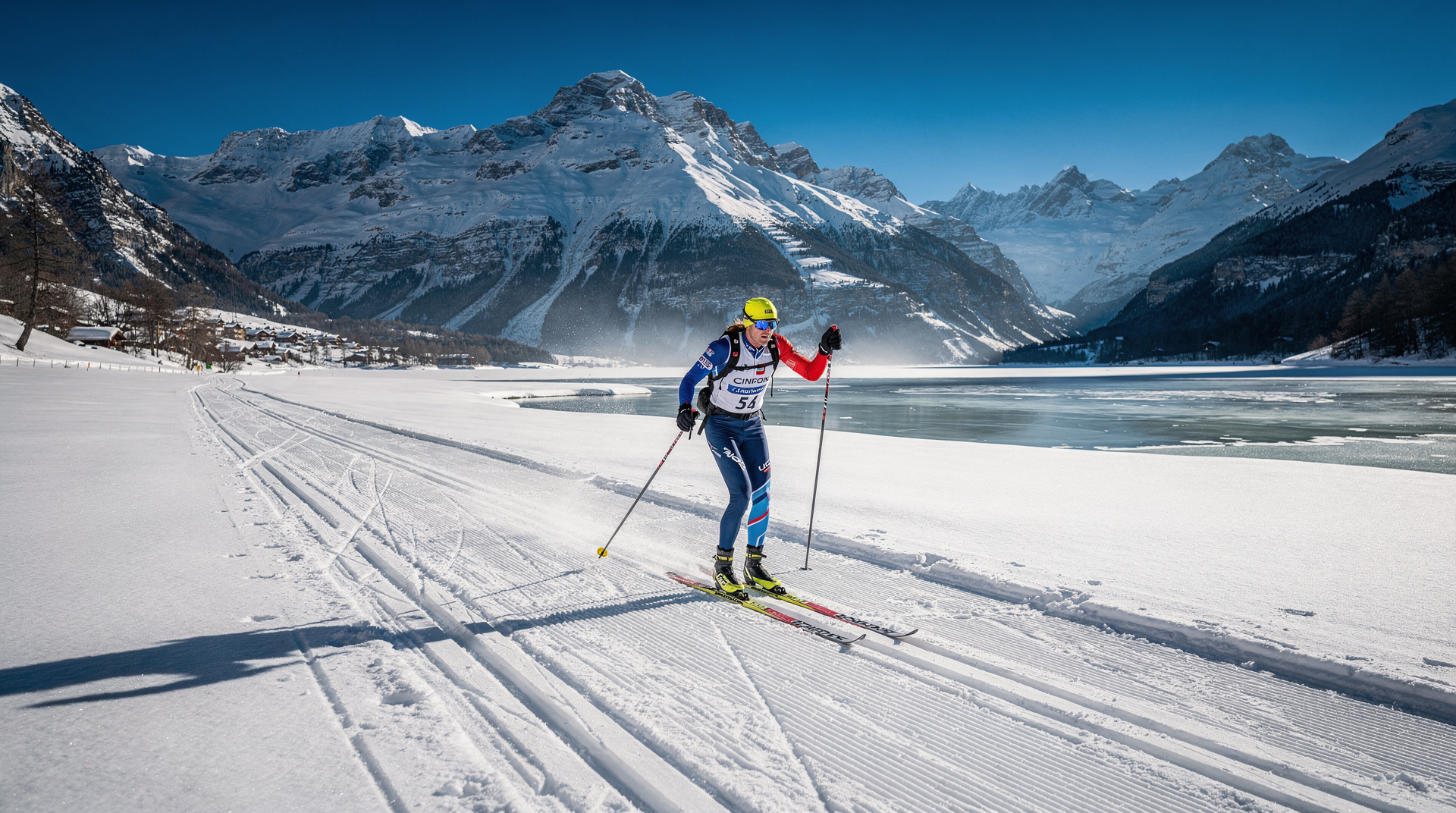
For winter hiking and snowshoeing options alongside skiing, and cross-country skiing alternatives for those wanting a break from the lifts, the dedicated guides cover each in detail.
Resort match-ups: settling the head-to-head questions
Several comparisons come up constantly when travellers narrow down a shortlist. Zermatt vs Grindelwald is really a choice between glacier-guaranteed altitude skiing at Zermatt and a gentler, more scenic Alpine village experience at Grindelwald with the Eiger overhead. Verbier vs Zermatt comes down to terrain difficulty and social scene — Verbier’s off-piste and party atmosphere versus Zermatt’s broader appeal across ability levels and its car-free calm. St. Moritz vs Davos is a question of budget and character: St. Moritz’s luxury glamour against Davos-Klosters’ larger, better-value piste network.
For travellers still deciding between a mountain base and a city base for a winter trip, the interlaken vs Lucerne comparison is a useful companion read, since both towns serve as gateways to several of the resorts above.
Booking lift tickets and equipment in advance
Most major resorts now sell day and multi-day lift passes online with a modest discount over ticket-office prices, and buying ahead also avoids queuing at the base station on a powder morning. Ski and snowboard rental is best reserved a few days before arrival in peak weeks (Christmas-New Year, February school holidays) — popular sizes in boots and skis can sell out at the closest rental shops to the lifts. Renting in a valley town rather than directly at the resort (for example in Interlaken rather than at Grindelwald’s base station) is often noticeably cheaper for multi-day rentals.