Switzerland with kids: what worked and what didn't
The honest version
There’s a version of “Switzerland with kids” that sounds like an advertisement: angelic children gazing at the Matterhorn, toddlers in traditional dress eating raclette, happy families on cogwheel trains with perfect Swiss mountain backdrops.
The real version involves those things too, but also: a six-year-old lying face-down on a Zurich train platform refusing to walk another step, a three-year-old who threw their entire bowl of cheese fondue on the restaurant floor, and a full family meltdown in the cable car queue at Mount Pilatus that still makes me slightly nauseous to remember.
Both versions are true. Switzerland with kids is genuinely wonderful — and genuinely challenging in ways that are worth knowing about before you go.
Here’s the honest account.
| At a glance | |
|---|---|
| Best for | Families wanting mountain railways, lakes, and easy transport over intensive hiking |
| Cost | Under-6s travel free; 6-15s free with the Family Card on the Swiss Travel Pass |
| Time needed | A week covers 2-3 family-friendly bases without over-scheduling |
| Best bases | Lucerne and Interlaken for the best kid-to-effort ratio |
| Watch for | Altitude effects above 2,500m, temperature swings, and early dinner times |
What Switzerland does brilliantly for families
Before the caveats, the genuine strengths.
The transport system is exceptional with children. Swiss trains are smooth, on time, clean, and spacious. Strollers fold easily for Swiss trains (they have bike/luggage spaces in most carriages). Children under 6 travel free on Swiss public transport with an adult. Children 6-15 travel free with the Family Card (available with the Swiss Travel Pass — get it, it’s free and saves significantly).
The Swiss Travel Pass with Family Card attached means children travel free, which transforms the cost calculation of the trip.
Book the Swiss Travel Pass and request the Family Card — it’s added at no extra cost and covers up to 4 children per adult pass holder.
Mountain railways are magical for children. This was the biggest surprise. My children were indifferent to most things they were supposed to find impressive — museums, historic old towns, beautiful lakeshores. But cogwheel trains, gondolas, aerial cable cars, and funiculars? They were absolutely captivated. Every single time.
The cogwheel train to Mount Pilatus. The cable car from Stechelberg to Gimmelwald. The gondola at Grindelwald. These weren’t experiences we had to sell to our children — they were the things our children asked about most in advance and talked about most afterward.
Kids’ menus and family restaurants are good. Swiss restaurants, particularly in tourist areas, cater well to children. Standard children’s options (pasta, schnitzel, Zürigschnätzlets — a Swiss favorite of veal strips in cream sauce) are generally well-prepared, not just an afterthought. The pace of Swiss restaurants is slower than in some countries, which means you’re not rushing children through a meal.
Playgrounds are exceptional. Switzerland has extraordinary public playgrounds. In parks, at train stations, on mountain summits — wherever Swiss families gather, there is excellent, inventive, safe play equipment. The playgrounds at the top of the Rigi, beside Lake Lucerne, and scattered through Zurich and Lucerne are genuinely impressive.
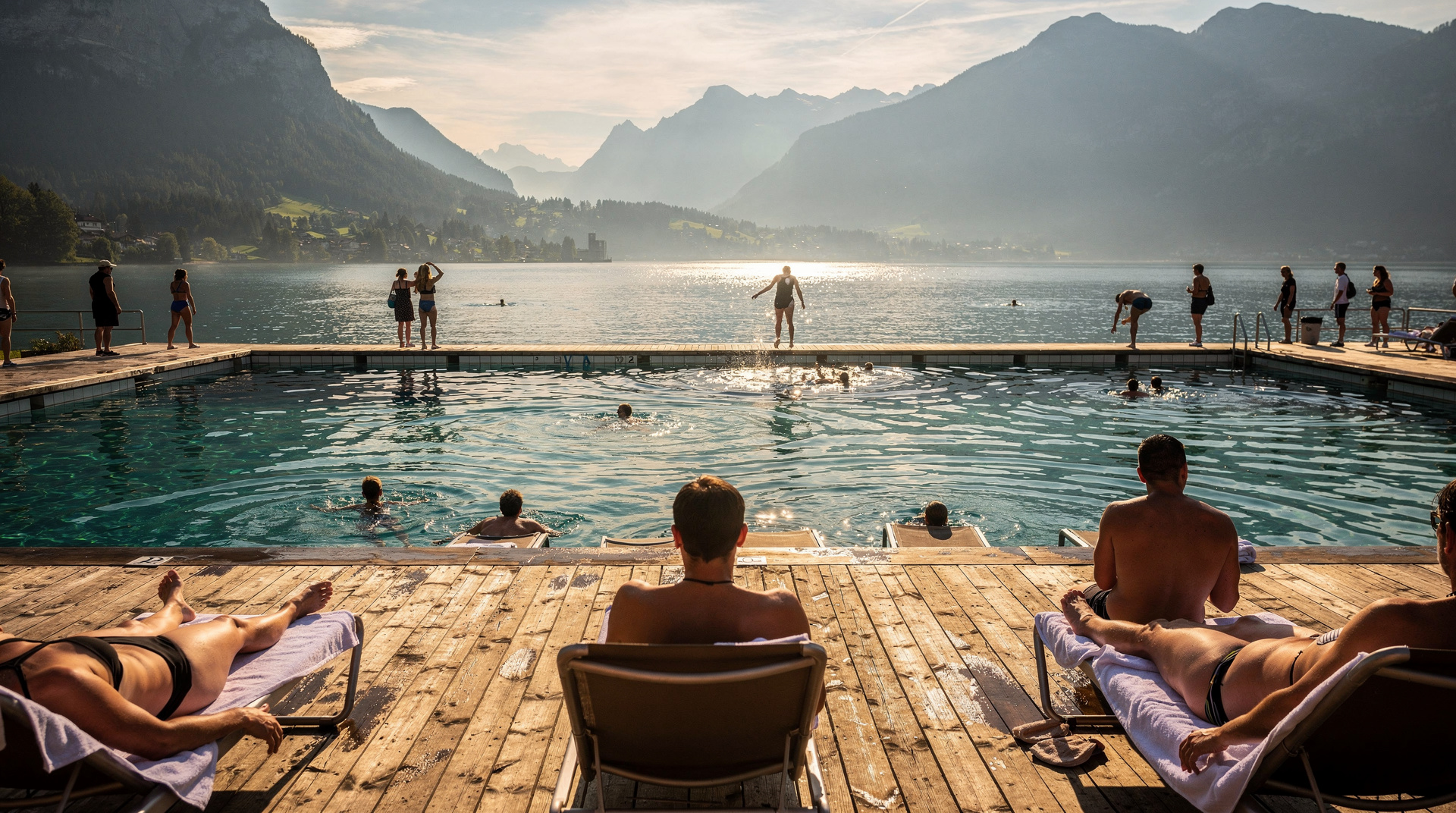
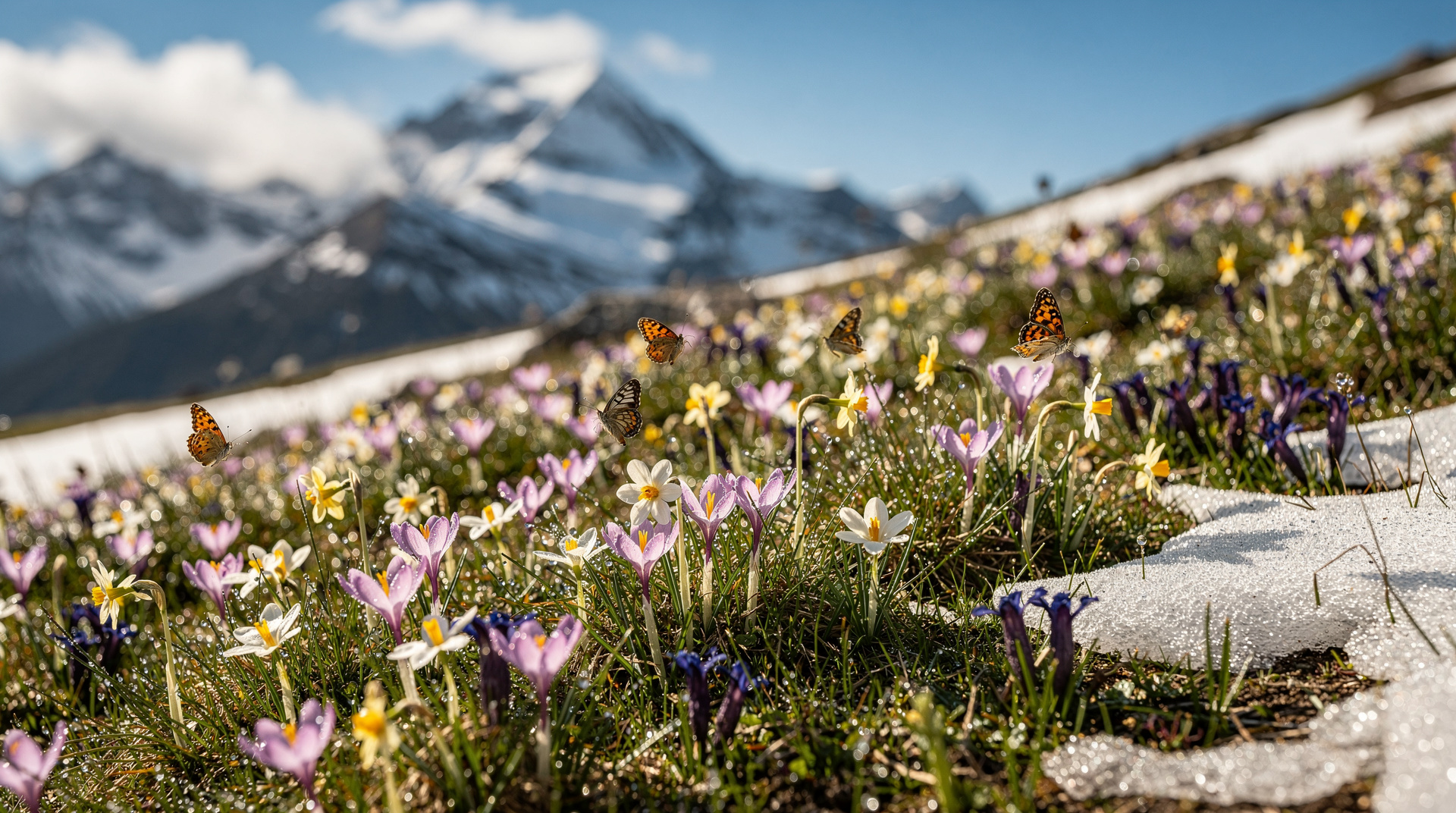
Nature is the best activity. Swimming in Swiss lakes in summer, simple hiking trails through flower meadows, rock skipping in mountain streams — these free activities occupied our children for more time and produced more happiness than any paid attraction. Swiss nature is accessible, beautiful, and endlessly interesting to children who have space to move.
What didn’t work
Fondue. Children in Switzerland mostly don’t like fondue, and Swiss children apparently don’t eat it until they’re older either (a Swiss friend confirmed this while laughing at my fondue-floor incident). The bread-in-hot-cheese concept is not intuitive to a four-year-old. Don’t force it — there are better things to order.
Long hiking days. An adult’s idea of a pleasant mountain hike (8km, 400m elevation gain, 3-4 hours) is a small child’s idea of cruel and unusual punishment. We learned the hard way that hiking with children requires distance estimates of approximately one-third what you’d manage without them, plus three times the snack stops, plus a plan for what happens when someone refuses to walk.
Short trails — 2-3km maximum for under-7s, with significant attractions (a waterfall, an animal, a specific view) along the way — work much better. Build the hike around something they can look forward to, not just the views.
Museum fatigue. The Swiss Museum of Transport in Lucerne is genuinely excellent for families — interactive, varied, a planetarium, and a cinema, in addition to the actual transport exhibits. Most other Swiss museums have less child-specific provision and exhaust children quickly. One museum per trip is enough. Choose it carefully.
Early dinner times vs. Swiss restaurant service. Young children often want to eat at 5:30pm. Swiss restaurants typically fill from 6:30pm onwards and some don’t open until 6pm. We had multiple evenings of hungry, tired small children waiting for restaurants to open. Solution: pre-research restaurants with family tables that accept early sittings, or embrace supermarket dinners more enthusiastically than originally planned.
Heat on mountain trains. Swiss mountain railway carriages can be very warm in summer. Children overheat faster than adults. Bring water, dress in layers, and sit on the side of the carriage away from direct sun.
The best family experiences by destination
Lucerne with kids: Strongly recommend.
The Museum of Transport is the obvious anchor — budget 3-4 hours. The lake cruise on one of the old paddle steamers (included with Swiss Travel Pass) is beautiful and children find the deck and the paddle wheels fascinating.
A Lake Lucerne boat trip is one of those experiences where children and adults are equally happy — no museum boredom, fresh air, and the mountains all around.
The Chapel Bridge is genuinely interesting to older children (8+) who can engage with the painted interior panels. For younger ones, the main attraction is the duck-feeding opportunity on the river bank.
Mount Pilatus from Lucerne: absolutely worth it with children. The cogwheel railway up is thrilling (world’s steepest cogwheel railway). The summit has space to run, a viewing terrace, and — the detail our children still talk about — the dragon statues referencing Pilatus’s medieval dragon mythology. Bring warm layers; the summit can be 10°C colder than the valley.
Book the Mount Pilatus Golden Roundtrip — the combination of lake boat, cogwheel train, and aerial cable car in one circuit is perfect for children.
The Bernese Oberland with kids: Wonderful but plan carefully.
Lauterbrunnen valley is outstanding for families — the waterfalls are immediately impressive to children of any age, the valley floor is flat and easy to walk, and the Trümmelbach Falls (waterfalls inside a mountain — children’s eyes go wide) is one of the most child-appropriate paid activities in Switzerland.
Jungfraujoch works well for children who can handle cold and the mild altitude effects. The snow fields at the top and the ice cave inside the mountain are specifically captivating. The train journey through the Eiger is exciting. Budget at least CHF 150 per adult ticket and check for children’s rates (under 16 travel free with Jungfraujoch’s own youth concession — check current terms).
Book Jungfraujoch tickets in advance, especially with children — you don’t want to wait in a long ticket queue with restless children at Interlaken station.
Zurich with kids: Good for a day, less for more.
Zurich Zoo is among the best in Europe — large, varied, beautifully maintained, with a Masoala rainforest hall that’s extraordinary. A full day at the zoo satisfies most children completely and costs around CHF 25-28 per adult, less for children.
The lake swimming in summer (the Zurich Seebad on the lake) is excellent. The Zurich Toy Museum (Spielzeugmuseum) in the old town is a smaller, charming option for younger children.
Gruyères with kids: The chocolate and cheese combination is excellent. The Cailler chocolate factory tour ends with unlimited tasting — children need no persuasion here.
A Gruyères cheese and chocolate day trip works brilliantly with children who like the interactive factory-visit format.
The village castle at Gruyères has a surprisingly engaging interior for older children (10+).
Family destinations compared by age
| Destination | Best age | Why |
|---|---|---|
| Lucerne | All ages | Museum of Transport, lake boats, Pilatus cogwheel railway, flat old town |
| Interlaken & Lauterbrunnen | 4+ | Waterfalls at valley-floor level, easy walking, mountain railways nearby |
| Zurich | All ages | Zoo, lake swimming, but less unique to children than the mountains |
| Jungfraujoch | 6+ | Cold, altitude, and a long day — better once children can handle both |
| Gruyères | 5+ | Chocolate factory tour, castle interior more engaging for 10+ |
| Zermatt | 6+ | Car-free village is easy with kids, but Matterhorn excursions suit older children |
Practical family logistics
Strollers: Switzerland is stroller-friendly in cities and most town centers. Mountain hiking with a stroller is not realistic above the valley floor. A good baby carrier (for under-3s) or hiking child carrier (for 3-5s) is essential for mountain days.
Food in mountain areas: Pack more snacks than you think you need. Swiss mountain restaurants are expensive and children’s menu options at altitude are limited. A well-stocked day bag (sandwiches from valley supermarket, fruit, chocolate, crackers) keeps everyone functioning.
Nap scheduling: Younger children’s nap times can be built around train journeys — a 90-minute train journey after lunch, with a child asleep in a stroller or on a lap, is one of life’s small victories.
Temperature changes: The difference between valley temperature and mountain summit temperature can be 10-15°C. Children don’t regulate temperature as well as adults. Keep warm layers accessible rather than buried at the bottom of the pack.
Altitude: Most Swiss mountain excursions top out below 3,500m. Mild altitude effects (headache, slight nausea) can occur above 2,500m, even in children who are fit. Jungfraujoch at 3,454m is the most likely to produce effects. Go slowly, drink water, and descend if anyone feels unwell.
What made the trip worth it
For all the challenges, Switzerland with children produced moments that I don’t think we would have had anywhere else.
My older child, then eight, watching the cloud sea below us from the Jungfraujoch Sphinx Observatory, saying quietly: “The world looks completely different from up here.” My younger one, then four, standing in the spray of the Staubbachfall waterfall in Lauterbrunnen, arms out, laughing.
The cogwheel train to Pilatus, both children pressed against the window for the entire ascent. The boat on Lake Lucerne, leaning over the rail watching the mountains pass. The day we found a mountain meadow above Wengen and spent an hour lying in the grass watching clouds build over the Jungfrau.
Switzerland scales. The beauty is overwhelming to adults and just as overwhelming to children, but in a simpler, more immediate way — the waterfall is the biggest they’ve ever seen, the mountain is the highest they’ve ever been, the train is the steepest they’ve ever ridden. It connects them to something larger than everyday experience.
The 7-day itinerary can be adapted for families by replacing more intensive hiking days with mountain railway days and building in more unstructured lake or playground time. The budget tips apply equally to family travel — the Family Card and supermarket lunches save significantly.
Would I take children to Switzerland again? Without a moment’s hesitation. Would I do it differently? Absolutely. Fewer museums, more trains. Shorter hikes, more lakes. And no fondue until they’re ready.
Frequently asked questions about Switzerland with kids
What’s the best Swiss city for young children? Lucerne is the easiest all-rounder — flat old town, the Museum of Transport, lake boats, and an easy cogwheel-railway day trip to Mount Pilatus.
Is Jungfraujoch safe for kids? Generally yes below the mild-altitude-effect threshold, but at 3,454m some children (and adults) get a headache or nausea. Go slowly, hydrate, and be ready to descend if anyone feels unwell.