Chocolate tours in Switzerland: factories, museums and tastings
Where is the best chocolate experience in Switzerland?
The Lindt Home of Chocolate in Zurich and Maison Cailler in Broc (near Gruyères) are the two premier chocolate experiences. Both offer factory tours, tastings, and immersive museums.
Swiss chocolate tours: from bean to bonbon
| At a glance | |
|---|---|
| Where | Zurich (Lindt, Sprüngli), Broc/Gruyeres valley (Maison Cailler), Glarus (Läderach) |
| Cost | Around CHF 12-15 for standard entry; workshops typically CHF 60-120 per person |
| Time needed | 45-60 minutes for a standard factory tour, 90-120 minutes with the museum and shop |
| Getting there | Lindt is 20 minutes by S-Bahn from Zurich; Maison Cailler is reached via Bulle from Lausanne, Bern, or Geneva |
| Best time | Weekday mornings for the most atmospheric Maison Cailler visit; book workshops 1-2 weeks ahead in summer and around Christmas |
Switzerland produces approximately 200,000 tonnes of chocolate annually and exports to more than 100 countries. Per capita, the Swiss eat more chocolate than any other nation on earth — around 10-11 kg per person per year. These are striking statistics, but numbers do not capture what makes Swiss chocolate distinctive: the combination of centuries of craft knowledge, exceptional dairy ingredients from Alpine herds, and a culture in which chocolate is regarded not as a treat but as a staple.
A chocolate tour in Switzerland is not simply about visiting a factory. It is an introduction to a product that is genuinely embedded in Swiss national identity, made using techniques developed here and refined over generations. The range of experiences available — from a grand museum at the Lindt headquarters to an intimate working dairy at Maison Cailler — means that chocolate tours work well for all ages and all travel styles.
This guide covers the four main experiences in detail: Lindt Home of Chocolate (Zurich), Maison Cailler (Broc), Läderach, and Sprüngli, plus a section on combining them into a wider food and drink itinerary.
Lindt Home of Chocolate — skip-the-line museum ticket
The world's largest chocolate museum at Lindt's original Kilchberg factory: a 9.3-metre chocolate fountain, interactive tasting stations, and the full story of Swiss chocolate from Rodolphe Lindt's 1879 conching machine to today.
- Free cancellation
Lindt Home of Chocolate, Zurich
Overview
The Lindt Home of Chocolate opened in 2020 as the world’s largest chocolate museum, built on the site of the original Lindt factory at Kilchberg, on the shores of Lake Zurich, south of the city. The facility took five years and several hundred million francs to construct and represents Lindt’s attempt to create a permanent, world-class visitor attraction at the company’s origin point.
The centrepiece of the museum is the world’s tallest chocolate fountain: a 9.3-metre standing chocolate waterfall that circulates 1,500 kg of Lindt chocolate continuously. It is a spectacular piece of engineering and marketing, and it genuinely impresses even visitors who arrived cynical about the concept.
What to expect
The museum covers the full history of chocolate from the cacao forests of Central America through Spanish colonial trade routes, the European transformation of drinking chocolate to eating chocolate, and the Swiss innovations of the 19th century that created the modern chocolate industry: Nestlé’s development of milk powder (enabling milk chocolate), Rodolphe Lindt’s invention of the conching machine in 1879 (which created the smooth, melt-in-the-mouth texture of modern chocolate), and the subsequent development of Swiss chocolate as a global luxury brand.
The exhibition is interactive and well-designed, with tasting stations throughout. A dedicated section covers cacao cultivation and processing, including the fermentation and roasting stages that most chocolate consumers know nothing about. The connection between bean origin and flavour is explained in accessible terms.
The tour ends in a tasting room with a range of Lindt products, followed by one of Switzerland’s most extensive chocolate shops. Budget for an hour minimum; with the shop, most visitors spend 90-120 minutes.
Practical details
- Location: Schokoladenplatz 1, 8802 Kilchberg (direct train from Zurich main station, S-Bahn line S8, 20 minutes)
- Opening hours: Daily, Tuesday to Sunday (check current schedule at lindt-home-of-chocolate.ch)
- Prices: Adults CHF 15; children (under 6) free; Lindt Experience (with tasting workshop) CHF 35
- Swiss Travel Pass: Does not cover entry, but train to Kilchberg is included
Guided workshops
The Lindt Home of Chocolate offers chocolate-making workshops for groups and individuals, which must be booked well in advance. These include a hands-on session making truffles or moulded chocolates under the guidance of a Lindt chocolatier. Prices for workshops are around CHF 60-80 per person. Private corporate and birthday group workshops are available through the facility directly. Book the Lindt Home of Chocolate guided tour with entry ticket for a structured chocolate-making session with a Lindt expert.
Maison Cailler, Broc
Overview
Maison Cailler is Switzerland’s oldest chocolate brand (founded 1819) and the factory tour at Broc, in the Gruyères valley south of Bulle, is widely regarded as the most atmospheric and experiential of the Swiss chocolate factory visits. Where Lindt in Kilchberg is a purpose-built museum attraction, Maison Cailler in Broc is a working factory that has opened its doors to visitors within the original industrial architecture.
The experience here is more intimate than Lindt and more focused on sensory engagement. The tour uses scent, sound, light, and tasting to walk visitors through the Cailler story and the chocolate-making process. It ends in a room where you can taste the full range of Cailler products to your own contentment — a detail that visitors consistently report as a highlight.
The factory and village setting
Broc is a small industrial village in the Gruyères district, 5 km from the town of Gruyères itself. The factory was built in 1898 and the architecture reflects the late 19th-century industrial aesthetic — brick buildings with large windows, adjacent to a rail line that historically brought cacao and took away finished chocolate. The natural setting is exceptional: the factory looks out toward the Gruyères pre-Alps and the green valley that produces much of Switzerland’s finest dairy.
Combining Maison Cailler with the nearby La Maison du Gruyère cheese dairy makes an obvious full-day food heritage experience. Both are in walking distance of Gruyères town, which itself is a well-preserved medieval hilltop village worth an hour or two.
Practical details
- Location: Rue Jules Bellet 7, 1636 Broc (train from Bulle on the Gruyères line; the Broc-Fabrique station is 200m from the entrance)
- Opening hours: Daily (seasonal variations — check cailler.ch)
- Prices: Adults CHF 12; children 4-15 CHF 7; under 4 free
- Duration: 45-60 minutes for the standard tour
The Swiss Travel Pass covers the train from Bulle to Broc-Fabrique, making this an easily accessible day trip from Lausanne (50 minutes to Bulle), Bern (1 hour to Bulle), or Geneva (1 hour 20 minutes to Bulle).
Läderach: Swiss fresh chocolate
Overview
Läderach is a family-owned Swiss chocolate company based in Ennenda, near Glarus, that has built a distinctive position in the premium chocolate market with its FreshChoc concept — large handcrafted chocolate slabs cut to order in shops across Switzerland. The company was founded in 1962 and remains family-controlled, which preserves a craft focus that larger industrial producers have largely abandoned.
Unlike Lindt and Cailler, Läderach does not operate a large museum or factory tour at its headquarters. The Läderach experience is primarily encountered in their retail stores, found in major Swiss cities including Zurich, Basel, Geneva, and Lucerne. The shop experience itself is distinctive: a long display case of fresh chocolate slabs in dozens of flavour combinations (dark, milk, white, with inclusions of nuts, fruits, spices, or sea salt), which staff slice with a large blade to your chosen weight.
Läderach experiences
The Glarus headquarters offers occasional public tours and workshop experiences, but these require advance booking and are not available on a walk-in basis. For most visitors, the Läderach experience is the flagship stores in major cities, particularly the large Zurich store on Bahnhofstrasse, which is worth a visit for the sheer visual impact of the fresh slab display.
A Läderach FreshChoc box makes an excellent food souvenir and travels well for 2-3 weeks without refrigeration (avoid leaving in a hot car). Prices are higher than mass-market Swiss chocolate — expect CHF 4-8 per 100g depending on the variety.
Sprüngli: Zurich’s confectionery institution
Overview
Confiserie Sprüngli has been operating on Zurich’s Paradeplatz since 1859. It is one of Switzerland’s oldest and most prestigious confectionery businesses and the origin point of the Luxemburgerli — a miniature macaron unique to Sprüngli that comes in dozens of seasonal flavours and has an almost cult status among Swiss food lovers.
Sprüngli is not a factory tour destination. It is a confectionery cafe-patisserie at the heart of Zurich’s financial district, where the experience is the cafe itself: the ornate interior, the extensive praline and truffle displays, the afternoon tea service, and the queues for boxes of Luxemburgerli. It is a Zurich institution that deserves a visit on any food-focused trip to the city.
What to try at Sprüngli
- Luxemburgerli: Small, light macarons with a distinctive soft ganache filling. Available in seasonal flavour rotations including champagne, raspberry, pistachio, and caramel. Sold by weight (around CHF 11-13 per 100g) and in presentation boxes.
- Truffes du Jour: Fresh daily truffles made in the adjoining kitchen. These have a 2-week shelf life and do not travel as well as the Luxemburgerli.
- Pralines and confections: An extensive selection made using traditional methods. The grand cru dark chocolate pralines are exceptional.
- Cafe and light meals: The upstairs cafe serves coffee, tea, and light lunches. The downstairs patisserie sells cakes and tarts to take away.
Sprüngli is on Paradeplatz in central Zurich, a few minutes’ walk from the main train station. Multiple additional branches operate across the city. This is a component of a broader Zurich food tour rather than a standalone half-day, but it is not to be skipped for anyone seriously interested in Swiss food culture. Book the Zurich chocolate tuk-tuk city tour to visit Sprüngli and other chocolate landmarks across the city in a single guided experience.
Chocolatier workshops and tasting experiences
Beyond the major factory visits, smaller chocolate workshops are offered across Switzerland by independent chocolatiers. These hands-on sessions typically last 2-3 hours and involve making your own truffles, pralines, or moulded chocolates under guidance, followed by tasting.
Workshops of this type are available in Zurich, Geneva, Bern, Lausanne, and other cities, and they represent a more personal and educational experience than a museum visit. Quality varies — look for workshops run by professional chocolatiers (check for chocolate industry credentials) rather than tourism-only operations.
Prices typically range from CHF 65-120 per person for a 2-hour workshop. In Basel, a particularly well-regarded option is a hands-on Swiss chocolate-making workshop: book a Swiss chocolate-making workshop in Basel.
Combining chocolate experiences with other Swiss food tourism
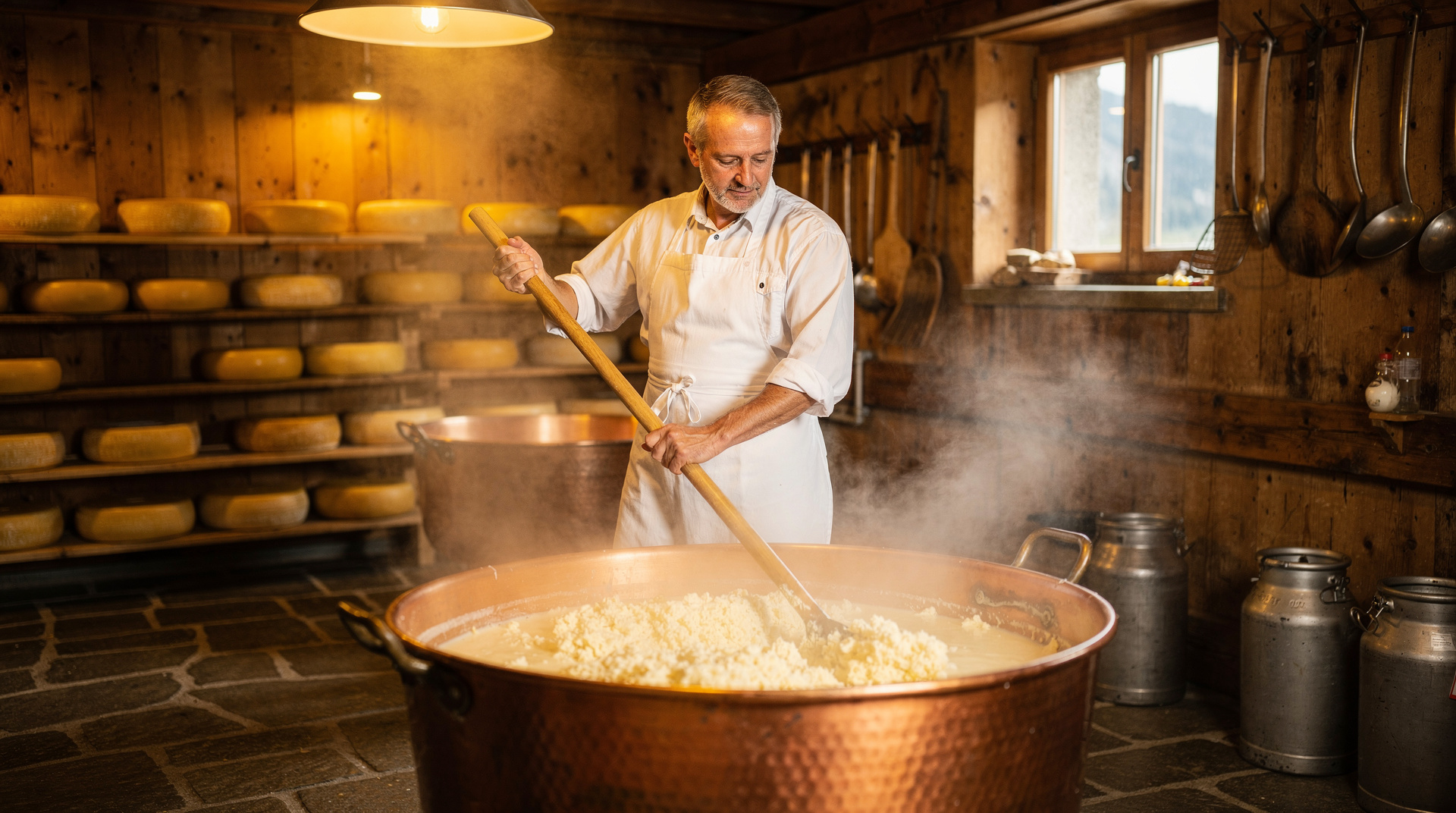
Chocolate sits naturally within a broader Swiss food heritage program. The Gruyères valley — where Maison Cailler and La Maison du Gruyère are both located — allows a single day to cover Swiss cheese and Swiss chocolate in the same mountain valley, with lunch in Gruyères town between the two. The cheese-making experiences guide covers the Gruyères cheese dairy and Emmental Show Dairy in detail.
In Zurich, a food tour combining Lindt (by S-Bahn to Kilchberg), Sprüngli on Paradeplatz, and a city food walk covers chocolate within the wider context of Zurich’s food scene. The Zurich destination guide covers the city’s broader offerings.
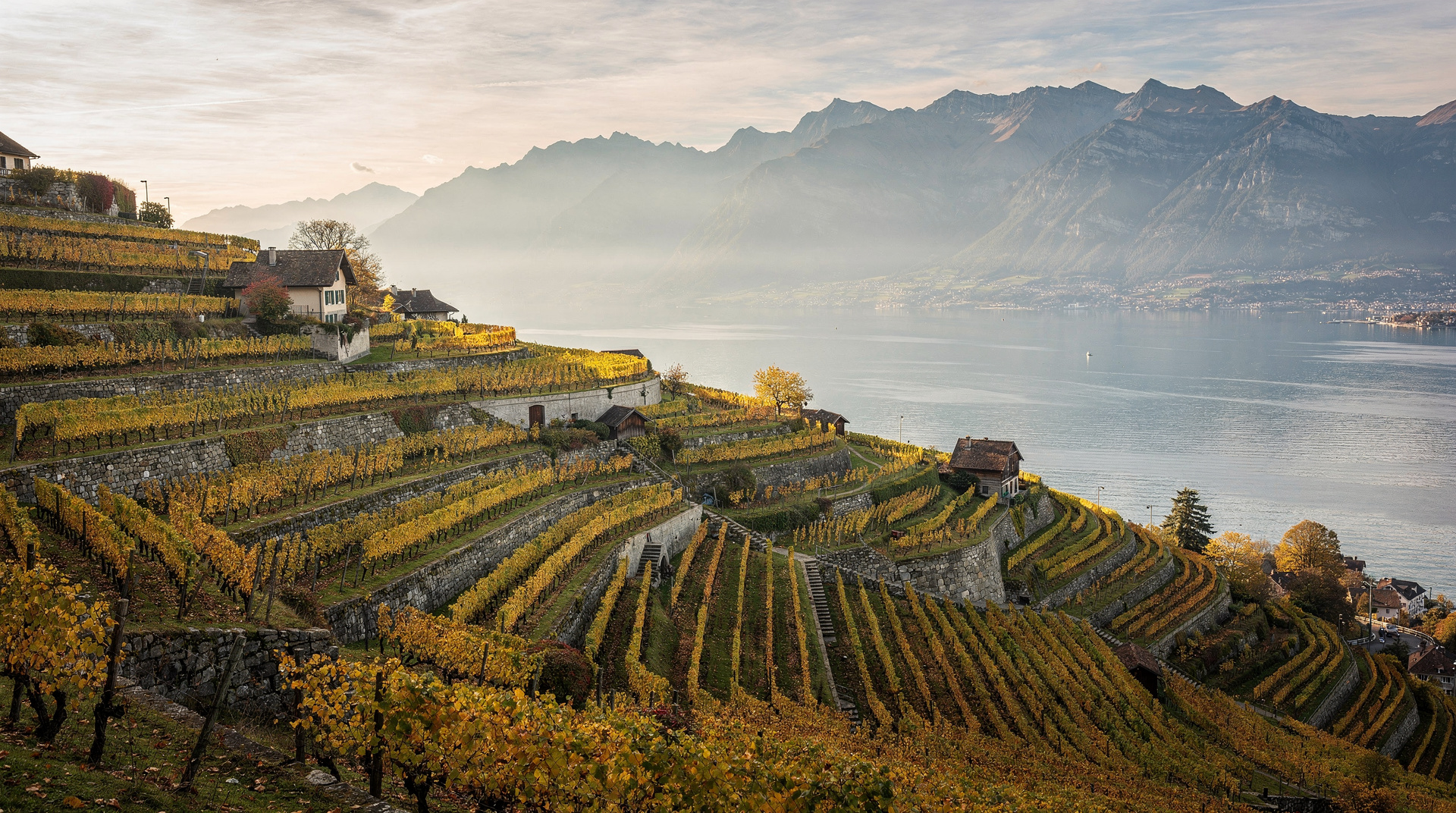
For a complete overview of Swiss food and drink experiences, including wine tasting in Lavaux, fondue experiences, and Swiss cuisine, the food and drink section covers all categories.
Why Swiss chocolate tastes different: the science
Swiss chocolate has a reputation for quality that has been tested over decades of international comparison. Understanding what creates the flavour difference helps in appreciating what you are tasting.
The milk: Swiss milk chocolate uses whole milk powder — but not just any milk powder. The historical accident that shaped Swiss chocolate was Nestlé’s development of condensed and powdered milk in the 1860s and 1870s in Vevey. The process used — a slower, lower-temperature evaporation than competing methods — produces milk powder with caramelised notes and a specific fatty acid profile that became the characteristic base of Swiss milk chocolate. Lindt, Cailler, and Nestlé all use milk powder derivatives in their milk chocolate; the specific processing of that powder is a closely guarded element of each manufacturer’s formula.
Conching: Rodolphe Lindt’s invention of the conching machine in 1879 at his Berne factory changed the texture of chocolate permanently. Conching is the process of mixing chocolate mass continuously under heat for extended periods (hours to days in traditional production). The conching process removes volatile acids (which produce a harsh, bitter flavour), incorporates the cocoa butter evenly throughout the mass, and coats every solid particle with cocoa butter — creating the smooth, melt-in-the-mouth texture we associate with fine chocolate. Lindt machines conche for 72 hours; other producers use longer or shorter times depending on the formula.
Cacao sourcing: The finest Swiss chocolatiers now work directly with cacao farmers in Venezuela, Ecuador, Madagascar, and São Tomé, selecting specific fermented and dried cacao lots for their flavour potential. Single-origin bars from these producers — available at Läderach, Sprüngli, and specialist chocolatiers — taste markedly different from blended commercial chocolate. The difference is not primarily the percentage of cacao solids but the character of the cacao itself.
Fat content: Swiss chocolate regulation requires minimum cacao butter content of 31% for dark chocolate and 25% for milk chocolate, but premium chocolatiers use significantly higher fat content. The characteristic smooth, slow melt of high-quality Swiss chocolate is a function of the cocoa butter content — at the correct temperature (32-34 degrees Celsius, just below body temperature), pure cocoa butter melts rapidly and completely, carrying flavour compounds across the palate.
Swiss chocolate regions and styles
Different Swiss cities have developed distinct chocolate cultures:
Zurich: Formal and elegant. Sprüngli and Teuscher set the tone — precise technique, classic flavours, excellent gift packaging. Zurich chocolate is at home in a boutique on Bahnhofstrasse.
Bern: More rustic and generous. The Bernese chocolate tradition runs to large pralines, nougat-heavy boxes, and the specifically Bernese honey almond confections sold around the Bärengraben.
Fribourg and Gruyères: The Cailler tradition. Milk chocolate made with Fribourg dairy milk, with a distinctly creamy, milky character. The local reference point is always the Gruyères valley cattle.
Geneva: French-influenced. Geneva’s chocolatiers (several of which are branches of international luxury houses) tend toward ganaches with stronger acidity and aromatic complexity. The influence of French pâtisserie is evident in the decoration and flavour profiles.
Tips for visiting Swiss chocolate experiences
Book in advance for workshops: The Lindt Experience workshops and independent chocolatier workshops fill up quickly, especially in summer and around Christmas. Book at least 1-2 weeks ahead.
Timing: The Maison Cailler tour is most atmospheric on weekday mornings when production is running. Weekend afternoons can be crowded with day-trippers from Geneva and Bern.
Temperature: Swiss chocolate in summer requires attention. Avoid leaving purchases in a hot car or bag. Läderach FreshChoc and Sprüngli Luxemburgerli are particularly temperature-sensitive. Most shops provide insulated bags on request.
Dietary considerations: Many Swiss chocolatiers now produce vegan and dairy-free options using plant-based alternatives. The major brands (Lindt, Cailler) have vegan product lines. Independent chocolatiers vary — check in advance if this matters.
Souvenir strategy: Swiss supermarkets (Coop and Migros) stock excellent mid-range Swiss chocolate at a fraction of boutique prices. For gifts at a premium level, the destination-specific packaging at Lindt, Cailler, or Sprüngli adds value beyond the chocolate itself.
Swiss chocolate vocabulary: what the labels mean
Navigating Swiss chocolate labels requires understanding a few key terms:
Cacao content: The percentage of cacao (cocoa solids plus cocoa butter) in the chocolate. Dark chocolate runs from 50% to 100%; milk chocolate typically 30-45%. Higher cacao content generally correlates with more intense flavour and less sugar, but a poorly made 75% bar is inferior to an excellently made 55% bar.
Grand cru / single origin: These terms indicate that the cacao used comes from a specific origin — a country, a region, or a specific farm. Grand cru, borrowed from wine, implies the highest quality tier. Single origin indicates one source rather than a blend of cacao from multiple countries.
Conché: Indicates the chocolate has been conched — the continuous mixing process that creates smooth texture. All commercial Swiss chocolate is conched; the term is used primarily to indicate extended conching time (72+ hours) which produces particularly smooth texture.
Pralinée / Praliné: A filling of caramelised nuts ground with chocolate. In Swiss usage, “praliné” refers to this nut-chocolate paste filling, not (as in some English usage) to a chocolate candy in general.
Ganache: A filling of chocolate emulsified with cream (and sometimes butter, spirits, or flavourings). The quality of a ganache truffle depends on the ratio and quality of its ingredients. Fresh ganache truffles have a much shorter shelf life (1-2 weeks) than other chocolate confections.
Menthe / Kirsch / Marc: Flavouring references in truffle fillings. Swiss chocolate has a tradition of spirit-infused ganaches — Kirsch (cherry schnapps), Marc de Bourgogne, and local Eau de Vie are common. The intensity of the alcohol flavour should be noticeable but not dominating.
Chocolate tourism beyond Switzerland: the Swiss connection abroad
Switzerland’s chocolate heritage is not contained within its borders. The company structures of Swiss chocolate have become global: Nestlé (founded in Vevey) owns several international chocolate brands; Kraft/Mondelez owns Toblerone (a Swiss invention, the triangular bar modelled on the Matterhorn) internationally; the Frey brand (sold in Swiss Migros) is one of the world’s largest private-label chocolate operations.
None of these international operations fully replicates what the Swiss heritage brands produce in Switzerland itself. The milk used in Cailler chocolate comes from Fribourg; the Lindt factory where the original conching machine was invented is in Berne (now a museum site); the Sprüngli Luxemburgerli are made in Zurich daily and are not shipped internationally. The connection between the product and the place is not incidental.
Visiting Switzerland specifically for chocolate tourism is a genuine motivation for a growing number of food-focused travellers. Combining the Lindt Home of Chocolate, Maison Cailler, a Sprüngli cafe visit, and a chocolatier workshop creates a three-day immersive program that would be impossible to replicate anywhere else.
Which Swiss chocolate experience should you choose?
| Experience | Type | Cost | Best for |
|---|---|---|---|
| Lindt Home of Chocolate | Large interactive museum | Around CHF 15 (workshop around CHF 35+) | Families, first-timers, spectacle (the 9.3m chocolate fountain) |
| Maison Cailler | Working factory tour | Around CHF 12 | Atmosphere, sensory storytelling, pairing with Gruyeres cheese |
| Läderach | Retail/FreshChoc shops | Chocolate priced by weight (CHF 4-8/100g) | Souvenir shopping rather than a tour |
| Sprüngli | Confectionery cafe | Cafe prices; Luxemburgerli by weight | A Zurich institution visit, not a factory experience |
If you have time for only one stop, Maison Cailler in Broc offers the most memorable experience per hour spent, especially combined with the cheese-making dairy in the same valley. Families with children often prefer the scale and interactivity of the Lindt Home of Chocolate in Zurich.
Frequently asked questions about Chocolate tours in Switzerland
Do I need to book Lindt Home of Chocolate or Maison Cailler in advance? Standard entry tickets can usually be bought on arrival outside peak season, though booking online in advance avoids queues in summer. Chocolate-making workshops at either location should be booked 1-2 weeks ahead, especially around Christmas.
Can you visit both Maison Cailler and a cheese dairy in one day? Yes — Maison Cailler in Broc and La Maison du Gruyère are a short distance apart in the same valley near Gruyeres, and combining both with the medieval village makes a complete day trip from Geneva, Lausanne, or Bern. See the cheese-making guide for details.