Lavaux wine region: complete visitor's guide to the UNESCO terraced vineyards
What is the Lavaux wine region and how do I visit?
The Lavaux is a UNESCO World Heritage vineyard area (805 hectares) between Lausanne and Vevey on Lake Geneva's north shore. Visit by regional train from Lausanne, the Lavaux Express tourist train, or on foot via the Terraces Trail. May–October is ideal; September–October is harvest season.
Switzerland’s most celebrated vineyard landscape
The Lavaux is one of Europe’s great wine landscapes — 805 hectares of stone-walled terraced vineyards climbing steeply above the northern shore of Lake Geneva between Lausanne and Vevey. UNESCO recognised the area as a World Heritage Site in 2007, not merely for its beauty but for what it represents: an unbroken agricultural tradition stretching back more than a thousand years, when Cistercian and Augustinian monks first organised the terracing system that still shapes every slope today.
The vineyards face south and southeast over the lake, capturing maximum sunshine in a region where every degree of warmth counts. Winemakers here speak of the trois soleils — the three suns — that give Lavaux grapes their character: the sun overhead, the reflected light from the lake’s surface, and the radiated warmth from the stone terrace walls that absorb heat during the day and release it through the night. This microclimate, combined with well-drained limestone and morainic soils, produces Chasselas white wine of uncommon mineral precision — a style so specific to this place that virtually none of it is ever exported.
| At a glance | |
|---|---|
| Where | Lakeside terraces between Lausanne and Vevey, Lake Geneva north shore |
| Cost | Free to walk the trail; tastings typically around CHF 5-15 per pour, cellar visits often free or with a small charge |
| Time needed | Half a day for a village and a tasting; a full day for the Lutry-Saint-Saphorin walk |
| Getting there | S31 regional train from Lausanne, every 30 minutes, covered by the Swiss Travel Pass |
| Best time | May-June for open cellars and green vines; September-October for harvest colour |
Lavaux vineyard experience from Lausanne
Guided walk through the UNESCO terraces with a local wine expert: cellar visits, Chasselas tastings from multiple appellations, and commentary on the landscape, history, and viticulture of this unique wine region.
- Free cancellation
The appellations of Lavaux
Unlike larger wine regions where a single name covers diverse terroirs, the Lavaux is subdivided into named appellations — each tied to a specific village, slope angle, and soil composition. Understanding these is the key to navigating the wine lists in local restaurants.
Lutry is the westernmost appellation, closest to Lausanne. Wines here tend to be light and fresh, excellent as aperitifs. The village itself — with its medieval château surrounded by vines — is one of the most attractive entry points to the region.
Cully sits at the heart of the Lavaux beneath the steepest section of terraces. Its wines carry more body and a pronounced mineral edge from the deep limestone bedrock. The village hosts the annual Fête du Cully, one of the Lavaux’s most-loved wine festivals, held in March.
Epesses produces some of the Lavaux’s most sought-after wines. The vineyards here include the famous Clos du Boux, a walled single-vineyard parcel whose Chasselas is considered among the finest in Switzerland. Wines from Epesses have a distinctive mineral tension — flinty and persistent on the palate.
Calamin Grand Cru is one of the Lavaux’s two Grand Cru appellations. The Calamin is a small protected hillside above Lake Geneva between Cully and Epesses, covering around 16 hectares. Its wines are classified at the highest level in Swiss wine law — precise, mineral, long-lived, and rarely available outside the region.
Dézaley Grand Cru is the Lavaux’s most prestigious appellation — a morainic slope above the village of Epesses, historically owned partly by the canton of Vaud. Dézaley Chasselas combines extraordinary mineral character with a richness that gives it real ageing potential. Bottles from top producers last 10-15 years and evolve into something quite different from their crisp young versions.
Saint-Saphorin occupies the eastern end of the Lavaux, where the slopes are somewhat gentler and the wines slightly rounder. The village — a cluster of ancient stone buildings around a Roman-era church — is one of the most characterful settlements in the whole wine trail, and its single restaurant is an essential lunch stop.
Rivaz and Chexbres complete the appellation landscape. Rivaz wines are elegant and mineral; Chexbres, perched high on a ridge overlooking the whole lake from a wide terrace, offers some of the region’s most panoramic views. The Lavaux Panoramic tourist train begins its descent from Chexbres.
Chasselas: the grape that defines Lavaux
Chasselas is Switzerland’s signature white grape and one of the most misunderstood varieties in the wine world. Outside Switzerland, it is planted mainly in Alsace (as Gutedel), in Germany’s Baden region, and in small amounts in Savoy — but nowhere does it reach the quality or distinctiveness that the Lavaux terroir produces.
The grape is ancient — genetic studies suggest it is among the oldest cultivated Vitis vinifera varieties, possibly reaching Switzerland through the medieval monastic wine trade. In the Lavaux, it has been cultivated continuously for over a thousand years, and the vine is so well adapted to the specific conditions of the terraces that alternatives have never seriously competed.
Lavaux Chasselas in its classic form is dry, light, and mineral — with low alcohol (typically 11–12.5%), a slight natural effervescence called perlant, and a finish that lingers on the palate with a distinctive chalky or saline quality. It is the ideal companion for Swiss fondue, raclette, lake fish (perch fillets and fera are the classic pairings), and the local papet vaudois (a slow-cooked dish of leeks and potatoes with saucisse aux choux).
Drink Lavaux Chasselas young — within one to three years of harvest as a general rule — except for the Grand Cru wines, which reward patience.
Getting to the Lavaux
By regional train (recommended): The S31 regional train from Lausanne serves all the main Lavaux villages in sequence — Lutry, Cully, Epesses, Rivaz, Saint-Saphorin — before continuing to Vevey. Journey times from Lausanne range from 5 minutes (Lutry) to 22 minutes (Saint-Saphorin). Trains run every 30 minutes throughout the day. All services are covered by the Swiss Travel Pass.
The InterCity route: The direct Geneva–Lausanne–Vevey–Montreux InterCity line runs above the vineyards on the upper rail, offering excellent views but not stopping at the vineyard villages. For the vineyards, transfer at Lausanne to the S31.
From Geneva: Lausanne is 35 minutes from Geneva Cornavin by InterCity or RegioExpress. Guided full-day tour from Geneva covering Lavaux and Montreux — includes transport, a guided walk through the terraces, and wine tasting stops in the appellations.
From Montreux: The S31 in the opposite direction connects Vevey and the eastern Lavaux villages to Montreux in 10–15 minutes.
Walking the Terraces Trail
The Lavaux Terraces Trail is a marked walking route through the vineyards — one of the most scenic short hikes in Switzerland. The full route runs approximately 13 kilometres from Lausanne-Ouchy to Vevey, with around 400–500 metres of total ascent and descent. Allow 4–5 hours at a comfortable pace with stops.
Lutry to Saint-Saphorin (the classic section): This 8-kilometre stretch passes through the heart of the UNESCO zone — the most photogenic terraces, the steepest sections, and the best-placed villages for food and wine breaks. Start at Lutry station, follow the yellow hiking signs uphill and eastward through Cully and Epesses, descend through Rivaz to Saint-Saphorin. Take the train back to Lausanne from Rivaz or Saint-Saphorin.
Cully to Saint-Saphorin (shorter option): The most rewarding 5-kilometre section for visitors with limited time or mobility concerns. Train to Cully, walk east through Epesses and Rivaz to Saint-Saphorin. About 1.5–2 hours of walking. Suitable for reasonably fit visitors in comfortable shoes.
The trails are well-marked but not flat — expect genuine ascents between terraces. Walking shoes with grip are essential; trainers work for the shorter sections, proper hiking shoes are better for the full route.
The Lavaux Express and Lavaux Panoramic
Two tourist trains serve visitors who want the vineyard experience without hiking:
Lavaux Express: A small road-going tourist train that departs from Lutry (and seasonally from Cully) on a circuit through the vineyard lanes. It stops at key viewpoints, passes through village streets barely wide enough for the carriages, and includes a wine tasting stop. Operates from May to October; check schedules at lavaux-express.ch.
Lavaux Panoramic: An electric rack railway that descends from Chexbres through the vineyards to Vevey, with extraordinary panoramic views across the lake. Operates from April to October. The Chexbres viewpoint at the top — accessible from the village or by car — is one of the best wide-angle viewpoints in the entire region. Check schedules at lavaux-panoramic.ch.
For a boat perspective on the vineyards from the lake, the Lausanne Riviera cruise passes below the Lavaux terraces offering a unique perspective impossible from any road or trail.
The best villages to visit
Saint-Saphorin is the jewel of the eastern Lavaux — ancient stone streets, a medieval church on Roman foundations, almost no tourist infrastructure, and the celebrated Auberge de l’Onde. The village’s single restaurant occupies a 16th-century building and serves Lavaux wines alongside serious Vaud cuisine. Reserve well in advance.
Cully has the most to offer in terms of facilities — restaurants, wine cellars (caves), a small harbour on the lake, and the institutional wine centre at the Maison des Terroirs de Lavaux. The Café du Raisin on the main square is a reliable lunch option. Several cellars in Cully offer walk-in tastings on weekends and by appointment on weekdays.
Epesses sits high on the slope with spectacular views and produces the region’s most prestigious wines. A tiny village — just one main street — but worth the climb for the terroir.
Rivaz connects Epesses to Saint-Saphorin on the walking trail and offers a quieter alternative to Cully for a lunch stop.
Chexbres is the ridge-top village that serves as the upper terminus of the Lavaux Panoramic and offers the widest panoramic view in the region — both the western and eastern Lavaux are visible simultaneously, along with the full sweep of the lake to the French Alps.
Lutry is the most accessible and best-equipped village for visitors arriving directly from Lausanne. The medieval Rue du Bourg has several wine boutiques and restaurants. The October harvest festival (Fête des Vendanges de Lutry) fills the streets with barrels, music, and flowing Chasselas.
Wine cellars open for tasting
Most Lavaux winemakers are small family producers with limited export ambitions and a genuine interest in welcoming visitors who make the effort to arrive at their cellar door. Here are some of the most visitor-friendly:
Domaine Henri Cruchon (Echichens): One of the most celebrated names in Vaud wine, with specific Lavaux parcels including Dézaley. Tastings by appointment; highly recommended for serious wine enthusiasts.
Cave Cidis (Tolochenaz): A cooperative cellar representing multiple Lavaux producers. Open for walk-in tastings during business hours on weekdays and Saturday mornings. Good range of appellations in one place.
Domaine Croix Duplex (Epesses): Epesses producer with direct cellar sales and tastings by appointment. Their Calamin and Dézaley are consistently excellent.
Cave de la Ville de Lausanne: The city of Lausanne owns vineyard parcels in the Dézaley Grand Cru and produces wine sold under the Cave de la Ville label. Available at the cellar or through specialist wine shops in the city.
Domaine Bovy (Cully): A Cully family estate with multiple Lavaux appellations. Walk-in tastings on Saturdays in summer; weekday visits by appointment.
Maison du Terroir (Cully): A collective tasting and retail space in Cully representing dozens of Lavaux producers. The best single destination if you want to compare multiple appellations without planning multiple individual visits. Open Tuesday–Sunday.
Baron Philippe de Rothschild partnership (Dézaley): The French wine house maintains a partnership with a Lavaux grower producing Dézaley under a joint label. Available through specialist importers and at the cellar by appointment.
Food pairings with Lavaux wine
Lavaux Chasselas is among the most food-friendly white wines produced anywhere. Its low alcohol, natural acidity, and mineral character make it a flexible table companion:
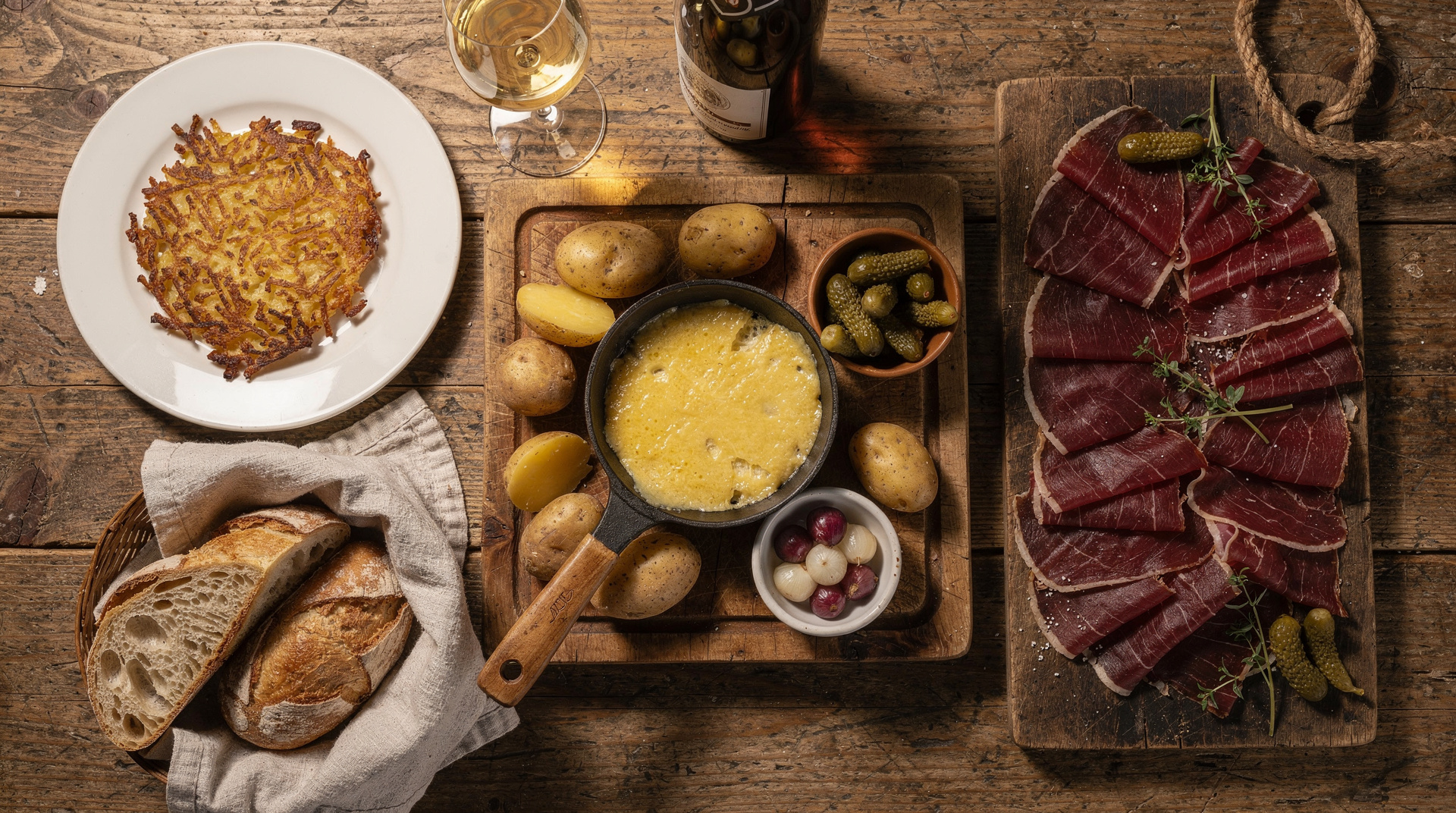
Fondue: The classic pairing. The Chasselas’s acidity cuts through the melted cheese fat, its mineral character complements the Gruyère or Vacherin Fribourgeois used in most fondues, and the wine’s low alcohol means a long fondue evening remains manageable. Some local restaurants insist that Lavaux wine is the only appropriate accompaniment.
Raclette: Equally classic. The wine’s slight effervescence lifts the richness of the melted cheese. Order a carafe and drink it at the temperature of a cool cellar — around 10–12°C.
Papet vaudois: Leeks and potatoes cooked long and slow, served with a saucisse aux choux (cabbage sausage) — a Vaud regional dish of remarkable comfort and depth. Chasselas is the traditional companion.
Lake fish: Perch fillets (filets de perches) from Lake Geneva are the area’s signature lake dish — lightly floured, pan-fried in butter, served with potato and lemon. The mineral Chasselas is the textbook pairing, a combination of local wine and local fish found on every serious lakeside restaurant menu between Lausanne and Montreux.
Cheese: Chasselas works beautifully with all Swiss washed-rind cheeses (Époisses-style Vacherin, L’Etivaz, Gruyère AOP) and holds its own against the stronger flavours of Appenzeller or Raclette du Valais.
When to visit
May and June: The vineyards are brilliant green after spring rain. The Caves Ouvertes de Lavaux — an annual open cellar weekend held in late May — opens every cellar in the region to visitors simultaneously, with free tastings and walking routes connecting properties. This is the single best event for wine lovers visiting the Lavaux. Check current dates at lavaux.ch.
July and August: Peak tourist season. The terraces are hot — the three-sun effect is at maximum intensity. Walk early in the morning before 10:00. Wine cellars are open but busy on weekends. The lake swimming at Vevey, Lutry, and Pully offers relief from the vineyard heat.
September and October: Harvest season — the most beautiful time of year in the Lavaux. The vines turn gold and amber from mid-September. Harvest typically runs from mid-September through early October depending on the vintage. Many producers welcome visitors during harvest; ask at the Maison du Terroir in Cully. The Fête des Vendanges de Lutry in October celebrates the harvest with market stalls, local food, and rivers of Chasselas.
November to April: The Lavaux is quieter but rewarding for photographers — bare vines reveal the stone terrace architecture, and the winter light on the lake is extraordinary. Most individual cellars are closed outside summer hours, but the Maison du Terroir in Cully remains open.
Accommodation in the Lavaux
Accommodation is limited within the vineyards themselves, which keeps the villages quiet. Most visitors stay in Lausanne or Vevey and day-trip into the terraces.
Lausanne: The most convenient base for the western Lavaux, with the full range of hotel categories and 5–12 minutes to any village by regional train.
Vevey: A charming smaller town with good hotel options and 5 minutes by train to Saint-Saphorin, the eastern Lavaux, or Montreux.
Within the Lavaux: A handful of small guesthouses and chambres d’hôtes (bed-and-breakfast style) operate within or adjacent to the vineyard villages. These fill quickly in summer and harvest season; book three to four months in advance.
Chexbres: The ridge-top village has a small hotel with spectacular views and is quieter than the lake-level villages.
Getting back to Lausanne and Geneva
All Lavaux villages are connected to Lausanne by the S31 regional train throughout the day, with last trains running after 22:00. From Lausanne, Geneva Cornavin is 35 minutes by InterCity. The Swiss Travel Pass or a regional day pass covers all these connections.
From Vevey, the CGN lake steamer service to Lausanne-Ouchy runs in summer — a scenic 45-minute alternative to the train across the lake, with the vineyard slopes receding astern as you head west. Book a guided wine tour of the Lavaux vineyards from Montreux — useful if you want a return transfer included.
Frequently asked questions about Lavaux wine region
Can you visit the Lavaux without a car? Yes, easily — the S31 regional train reaches every appellation village directly from Lausanne, and the whole area is designed around rail and walking access rather than driving.
Is one day enough to see the Lavaux? A single day covers the essentials well: a train up to Cully or Epesses, a short walk through the terraces, a cellar tasting, and lunch in Saint-Saphorin or Rivaz. Wine enthusiasts who want to visit multiple cellars by appointment should allow two days.
Related guides
- Wine tasting in Lavaux — detailed guide to tastings, cellars, and wine styles
- Geneva to Lavaux — day trip planning from Geneva
- Lausanne destination guide — base city for the Lavaux
- Montreux destination guide — eastern gateway with Château de Chillon
- Fondue experiences in Switzerland — the classic Chasselas pairing
- Swiss cuisine guide — food context for wine country
- Lake Geneva cruises — the vineyards from the water
- Best time to visit Switzerland — seasonal planning context