Best food tours in Switzerland: Zurich, Lucerne, Geneva and Lugano
Are food tours in Switzerland worth it?
Yes — Swiss food tours cover more ground and context than eating independently. Zurich and Lucerne have excellent guided options covering local cheeses, chocolate, bread, and wine in 2-3 hours.
Swiss food tours: eating your way through the cities
Switzerland’s food culture is often underestimated by visitors focused on the mountains and the scenery. But Swiss cities — particularly Zurich, Lucerne, Geneva, and Lugano — have serious food traditions rooted in their specific geography and cultural influences. Zurich’s Germanic food heritage (Zürcher Geschnetzeltes, Zopf bread, Tirggel biscuits) coexists with a cutting-edge restaurant scene that consistently produces Michelin-starred restaurants. Geneva’s French influence creates a city of grand brasseries, exceptional cheese shops, and lake fish cuisine. Lugano, in Italian-speaking Ticino, feels like northern Italy in its food culture — risotto, osso buco, and extraordinary cured meats.
A guided food tour provides something that independent eating cannot: context. The guide explains why a specific bakery has been operating for 150 years, how Zürcher Geschnetzeltes (creamed veal with mushrooms and rösti) became the city’s signature dish, and which market stall sells the region’s best Appenzeller. For first-time visitors with limited time, a 2-3 hour food tour compresses a week’s worth of culinary discovery into a morning.
This guide covers the best food tour options in each of Switzerland’s four main visitor cities.
| At a glance | |
|---|---|
| Where | Zurich, Lucerne, Geneva, Lugano |
| Cost | Around CHF 70-110 per person for a 2-3 hour guided tour |
| Time needed | 2-3 hours per tour; a full food-focused itinerary across all four cities takes about a week |
| Getting there | All four cities are on the main SBB rail network; the Swiss Travel Pass covers intercity travel |
| Best time | Year-round, though outdoor markets and grotti dining in Lugano are best from spring to autumn |
Zurich food tour — 8 tastings with cheeses and chocolates
The most comprehensive guided food experience in Zurich: 8 tasting stops across the Altstadt covering local cheeses, chocolates, Zopf bread, Tirggel biscuits, and a hot Swiss dish — all with expert commentary from a local guide.
- Free cancellation
Zurich food tours
Overview
Zurich is Switzerland’s largest city and its most cosmopolitan food destination. The old town (Altstadt) on both sides of the Limmat river contains some of the country’s finest food shops, traditional restaurants, and covered markets. The Zurich farmers’ markets — particularly the Saturday market at Burkliplatz on the lake — are among the best in Switzerland.
The food culture here spans traditional German-Swiss cooking (heavy on veal, pork, bread, and dairy), a thriving international restaurant scene driven by the city’s banking-sector wealth and immigrant communities, and a growing number of craft operations — chocolatiers, cheese affineurs, bread bakers — producing artisanal versions of traditional Swiss products.
Guided food tour options
Zurich food tour with tastings (cheese, chocolate, and bread): The most comprehensive guided option in Zurich covers 8-10 tasting stops across the Altstadt over approximately 2.5-3 hours. A typical program includes stops at a traditional baker (try the Zopf braided bread and Tirggel ginger biscuits), a cheese shop focused on Swiss regional varieties, a chocolate specialist, and at least one restaurant stop for a hot dish. This type of tour is the fastest way to understand Zurich’s food culture without extensive pre-trip research.
Book the Zurich food tour with 8 tastings: cheeses, chocolates and moreZurich culinary tuk-tuk tour: A mobile food experience covering a wider geographic area of the city, visiting markets and specialty producers by electric tuk-tuk. More about variety of location than depth at each stop, but useful for getting orientation across the city alongside the food.
Book the Zurich culinary tuk-tuk tourWhat to eat in Zurich
- Zürcher Geschnetzeltes: Thin-sliced veal in a cream and mushroom sauce, served with Rösti (fried potato cake). The city’s signature dish, found in almost every traditional restaurant.
- Zopf: Braided egg bread, soft and buttery, typically eaten at breakfast or brunch on weekends.
- Tirggel: Thin, crisp aniseed biscuits made with honey, a Zurich Christmas and New Year tradition, but available year-round at traditional bakeries.
- Raclette: Found at several Zurich restaurants year-round, particularly in the old town.
- Sprüngli Luxemburgerli: The city’s most famous confection — see the chocolate tours guide for details on visiting the Paradeplatz confiserie.
Zurich market
The Bürkliplatz Saturday market (07:00-11:00, open year-round) is Zurich’s finest market — a waterfront gathering of farmers, cheesemakers, bakers, and food producers from around the Swiss-German region. The quality of produce here is exceptional and the lakeside setting is beautiful. Arrive before 09:00 for the best selection.
The Helvetiaplatz market in the Langstrasse neighbourhood (Tuesday and Friday mornings) is more multicultural and less tourist-oriented — good for a different perspective on what Zurich actually eats day-to-day.
Lucerne food tours
Overview
Lucerne is often approached primarily as an architectural and lake-cruise destination, but the city has a food culture that rewards attention. The old town around the Reuss river contains excellent traditional restaurants, and the weekly market on Tuesday and Saturday mornings is one of the most photogenic in the country (set on the Untere Weidling quay below the Chapel Bridge).
Lucerne’s cuisine reflects its position in Central Switzerland: heavily influenced by the German-Swiss tradition but with proximity to Uri and the Gotthard pass bringing in mountain specialties. Nidwalden and Obwalden, the half-cantons on either side of Lake Lucerne, produce excellent dairy and the Älplermagronen (Alpine macaroni with potatoes, cream, and cheese) is a hearty regional classic.
Guided food tour options
Lucerne walking and boat tour with cheese and wine tasting: A combined program that covers the old town food scene on foot, then transitions to a short boat excursion on Lake Lucerne for a tasting of Central Swiss cheeses and wines. This is an elegant way to combine two of Lucerne’s main appeals — the lake and the food culture.
Book the Lucerne walking and boat tour with cheese and wine tastingOne-hour catamaran cruise: For those who want the lake experience combined with an on-board tasting program:
Book a 1-hour catamaran cruise on Lake LucerneWhat to eat in Lucerne
- Älplermagronen: Macaroni baked with potatoes, cream, and cheese, topped with crispy onions. Served with apple sauce. The quintessential Central Switzerland one-pot dish.
- Süre Mocke: Braised beef marinated in vinegar, a Lucerne speciality rarely found outside the canton.
- Luzerner Chügelipastete: A puff pastry vol-au-vent filled with veal, mushrooms, and raisins in a cream sauce. The city’s most traditional dish, found at festivals and in heritage restaurants.
- Central Swiss cheeses: Obwaldner Käse (a semi-hard mountain cheese from Obwalden) and the dairy products of the Pilatus and Rigi alp farms are distinctive and rarely exported.
Lucerne market
The Tuesday and Saturday market on the Reuss quay runs from 07:00-13:00 and is one of the most atmospheric in Switzerland. Fresh flowers, mountain vegetables, regional cheeses, bread, and the occasional truffle seller in autumn. The market is set against the backdrop of the old town and the Chapel Bridge.
Geneva food tours
Overview
Geneva is Switzerland’s most French-influenced city — French is the working language, French food culture pervades the restaurant scene, and the proximity to the Savoie and Haute-Savoie regions of France (whose cuisine centres on fondue, raclette, and lake fish) gives Geneva’s food culture a specifically Franco-Swiss character.
The city is also one of the most international in Europe, hosting the UN and numerous other international organisations. The Rive Gauche (left bank) around the old town has the most concentrated food culture; the Carouge neighbourhood south of the centre has a more artisanal and neighbourhood character.
What to eat in Geneva
- Perch fillets (filets de perche): The lake perch of Lake Geneva, pan-fried in butter, is the defining Geneva dish. Found at lake-view brasseries along the Quai du Mont-Blanc and in the old town. Unavoidable and excellent.
- Cardon à la Genevoise: Cardoon (a relative of the artichoke) in a cream and bone marrow sauce — a distinctly Genevois tradition, especially at Christmas.
- Longeole: A Geneva sausage made from pork and fennel seeds, cooked slowly and served with lentils or boiled potatoes. A heritage product unique to the canton.
- Malakoff: Deep-fried cheese fritters, eaten as an aperitif. Originally a Vaud tradition but widely adopted in Geneva.
Food experiences in Geneva
The Gruyères day trip from Geneva — visiting Maison Cailler and La Maison du Gruyère — combines Swiss chocolate and cheese in a beautiful valley setting, 90 minutes from the city. Book the Geneva to Gruyères tour with cheese and chocolate factories — a guided day trip combining both experiences. The Geneva 50-minute lake cruise provides the lake context:
Book a 50-minute Lake Geneva cruiseThe Plainpalais market (Tuesday and Sunday) is Geneva’s main outdoor market — less touristic than the Rive Droite hotel zone, and a genuine representation of what residents shop for.
Lugano food tours
Overview
Lugano is Switzerland’s Italian-speaking city, and the food culture is unmistakably Ticinese-Italian. The Ticino canton has a culinary tradition more closely related to Lombardy than to German Switzerland — risotto al salto, osso buco, polenta, and an extraordinary charcuterie culture (salami, coppa, pancetta from the grotti, traditional stone buildings that serve as restaurants and larders).
The climate is warmer than the rest of Switzerland, producing conditions for olive oil production (on the slopes above the lake), chestnut forests (chestnuts are a seasonal obsession in autumn), and a wine culture of mostly Merlot-based reds.
What to eat in Lugano
- Risotto: In the Ticino style — often al salto (pan-fried into a crispy cake), or in seasonal variations with mushrooms, luganiga sausage, or asparagus.
- Polenta: Served throughout Ticino as a side dish or as a main with cheese and mushroom sauce. The polenta here is yellow cornmeal, slow-cooked to a thick consistency.
- Busecca: Tripe in a tomato and vegetable broth with white beans — a traditional Ticino weekend lunch dish.
- Chestnut dishes: In autumn, chestnuts appear in everything from soups to desserts. Maroni (roasted chestnuts from street vendors) are an essential Lugano October experience.
- Luganiga: A fresh pork sausage, mildly spiced and sold in coils. Grilled on an open fire is the traditional preparation.
The grotti experience
The grotti (singular: grotto) are Ticino’s most distinctive dining institutions — stone buildings originally used as larders and farm buildings that have evolved into informal restaurants, typically rustic in setting, with tables outside under pergolas and menus focused on simple, hearty Ticinese cooking. They are concentrated in the valleys and villages around Lugano, Locarno, and Bellinzona. Finding a genuine grotto — as opposed to a tourist version in the city centre — requires going a little out of the way, which is entirely worth it.
A genuine grotto experience: a table outside in dappled light, a carafe of house Merlot, a plate of affettati (cured meats) with bread, followed by polenta with luganiga. This is the Ticino equivalent of sitting in a French village bistro — the atmosphere is as important as the food. Book the Lugano self-guided food tour to discover the city’s best grotto spots and Ticinese food culture at your own pace.
Planning a food-focused Swiss itinerary
Switzerland’s compact geography and excellent rail network make a multi-city food itinerary genuinely practical. The Swiss Travel Pass covers all intercity trains, meaning the incremental cost of moving between food cities is zero once the pass is purchased.
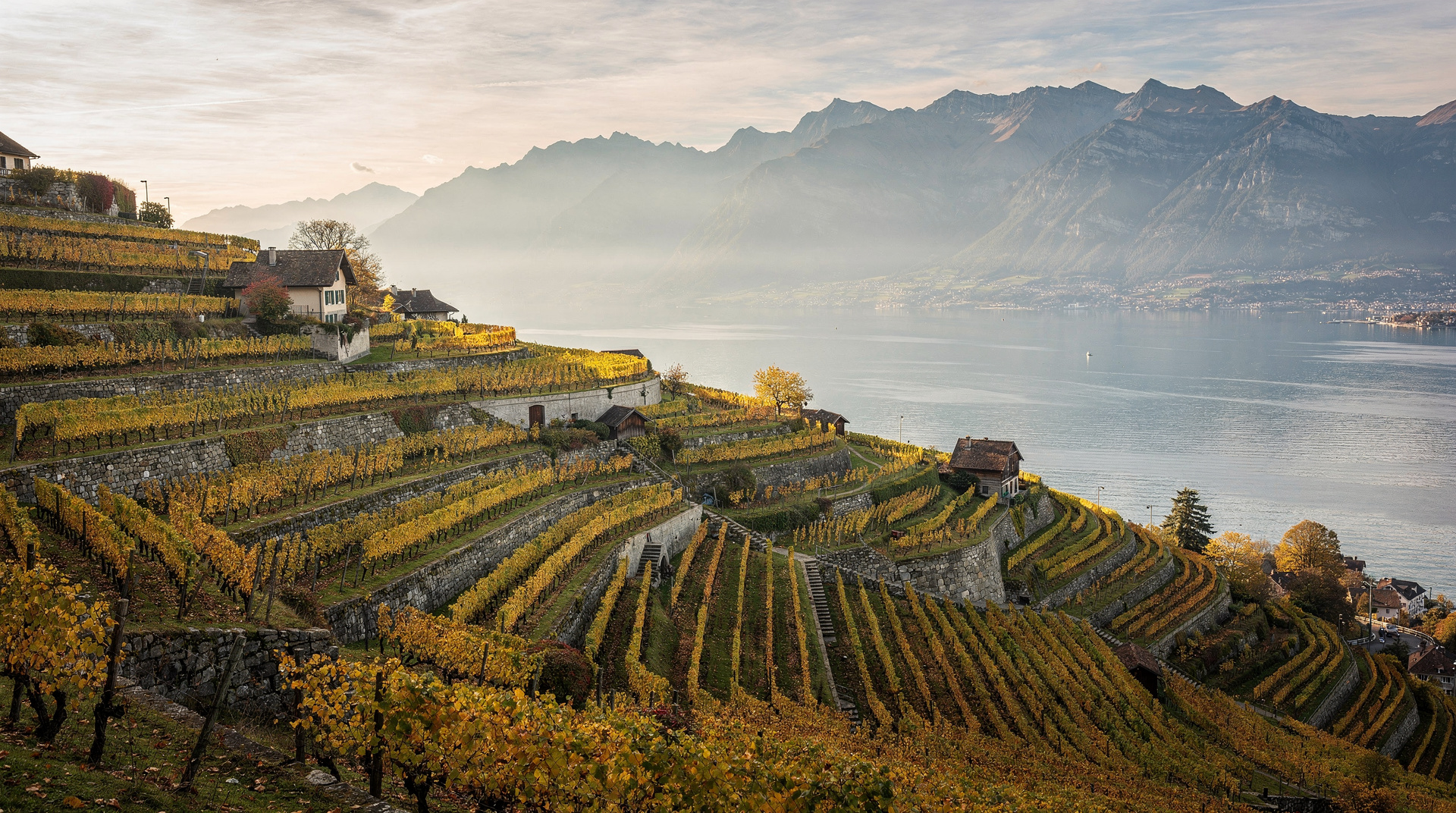
A four-city food itinerary might look like: Day 1-2 in Zurich (Altstadt food tour, Sprüngli, Lindt day trip); Day 3 in Lucerne (old town market, boat tour with tasting); Day 4-5 in the Geneva-Gruyères corridor (Lake Geneva cuisine, Lavaux wine, Gruyères cheese and chocolate); Day 6-7 in Lugano (grotto dining, risotto, chestnut season).
For more context on Swiss food culture beyond city tours, the Swiss cuisine guide covers the full range of national dishes, regional specialties, and culinary traditions. The cheese-making experiences guide and chocolate tours guide provide detailed coverage of Switzerland’s two most internationally recognised food products. See the food and drink section for all culinary experiences covered on this site.
Swiss food markets: the best in each city
Markets deserve specific mention because they provide access to local food culture that guided tours cannot replicate — the spontaneity of talking to a cheesemaker directly, buying a bag of dried Graubünden mountain herbs, or eating a Cervelat sausage (Switzerland’s most-consumed sausage, strangely underknown abroad) from a market grill.
Zurich — Bürkliplatz (Saturday, 07:00-11:00): The finest farmer’s market in the German-speaking part of Switzerland. Set on the lakefront promenade at the southern end of Zurich’s main shopping street, it brings together 70-100 vendors selling everything from Appenzell cheese and St. Gallen bratwurst to organic mountain honey, seasonal vegetables, and artisan bread. Arrive before 09:00 for the best selection and smallest crowds.
Zurich — Helvetiaplatz (Tuesday and Friday, 07:00-11:00): A neighbourhood market in the Langstrasse quarter, more working-class and multicultural than Bürkliplatz. Excellent value, good for observing what Zurich residents actually eat rather than what they buy for special occasions.
Lucerne — Wochenmarkt (Tuesday and Saturday, 07:00-13:00): Set along the Reuss quay below the Chapel Bridge, this is one of Switzerland’s most photogenic markets. The backdrop of the medieval water tower and the Lucerne skyline makes even routine shopping feel cinematic. Excellent selection of Central Swiss cheeses, local bread, and seasonal produce.
Geneva — Plainpalais (Tuesday and Sunday): A large, somewhat sprawling market with a strong multicultural character reflecting Geneva’s international population. Excellent for cured meats, olives, and seasonal French-influenced produce from the Savoie region across the lake.
Lausanne — Place de la Palud (Wednesday and Saturday): A compact but excellent market in the old town below Lausanne’s city hall. Good for Vaud regional products — wines, cheeses, and the seasonal produce of the lake shore.
Lugano — Via Cattedrale (Thursday): The weekly market in Lugano’s old town with a Ticino character — chestnuts in season, luganiga sausage, polenta flour, and the local Merlot del Ticino from small producers.
Swiss food souvenirs worth buying
Beyond the obvious chocolates and cheese, Switzerland produces several food products that travel well and make excellent gifts:
- Landjäger: Dried hard sausage (beef and pork) that keeps for 3-4 weeks without refrigeration. Available at any Swiss butcher or market.
- Bündnerfleisch: Air-dried beef from Graubünden, thinly sliced. A Graubünden speciality that does not exist in this form elsewhere. Sold vacuum-packed.
- Dried wild mushrooms: Particularly porcini and chanterelles from the Alpine forests. Available at markets and specialty food shops.
- Alpine herb tea: Blends of dried Swiss mountain herbs — edelweiss, mountain mint, thyme, chamomile. Available at pharmacies and natural food shops across the country.
- Swiss honey: Regional varieties include Jura forest honey (dark, complex), Alpine meadow honey (floral, aromatic), and linden blossom honey from the Mittelland. Available at markets and directly from producers.
- Maluns powder: A Graubünden speciality of slow-cooked potato and flour mixture, difficult to find outside the canton. Worth seeking at St. Gallen or Chur markets.
Budget notes
Swiss food is expensive by international standards. A three-course dinner in a mid-range Zurich restaurant costs CHF 60-90 per person without wine. The food tour operators typically price their 2-3 hour programs at CHF 70-110 per person, which represents reasonable value considering the number of tasting stops included and the guide’s local knowledge.
Markets are the budget alternative: shopping at the Bürkliplatz market in Zurich or the Lucerne quay market and picnicking near the lake is an excellent and cheap way to sample Swiss food quality without restaurant prices. The budget guide covers food costs across Switzerland in detail.
Comparing the four cities for a food tour
| City | Food character | Best guided tour type | Standout dish |
|---|---|---|---|
| Zurich | Germanic tradition meets cosmopolitan dining | Walking tour with 8+ tastings | Zürcher Geschnetzeltes |
| Lucerne | Central Swiss mountain-influenced cuisine | Walking and boat tour with tasting | Älplermagronen |
| Geneva | French-Swiss, lake fish, international | Day trip combining chocolate and cheese | Filets de perche |
| Lugano | Italian-Ticinese, grotti dining culture | Self-guided food walk | Risotto al salto |
Frequently asked questions about Best food tours in Switzerland
Which Swiss city has the best food tour? Zurich has the most developed guided food tour scene, with options covering 8+ tastings across cheese, chocolate, and bread in a single walk. For a more relaxed, independent experience, Lugano’s self-guided tour and grotti culture are excellent alternatives.
Do I need to book food tours in advance? Popular Zurich tours benefit from booking a few days ahead, especially in summer. Lucerne’s boat-combination tours have limited daily departures and should be booked similarly. Market visits need no booking at all.