Lake Thun and Lake Brienz cruises: the complete guide
Are Lake Thun and Lake Brienz cruises covered by the Swiss Travel Pass?
Yes — regular BLS lake boat services on both Lake Thun and Lake Brienz are fully covered by the Swiss Travel Pass.
Two lakes, one unforgettable day
The Bernese Oberland holds two lakes side by side — separated by the narrow isthmus of land on which Interlaken is built — and they could scarcely be more different in character. Lake Thun (Thunersee) is the broader, calmer, more pastoral of the two: 18 kilometres long, with a wide basin surrounded by rolling hills on the north shore and the opening profiles of the Bernese Alps visible to the south.
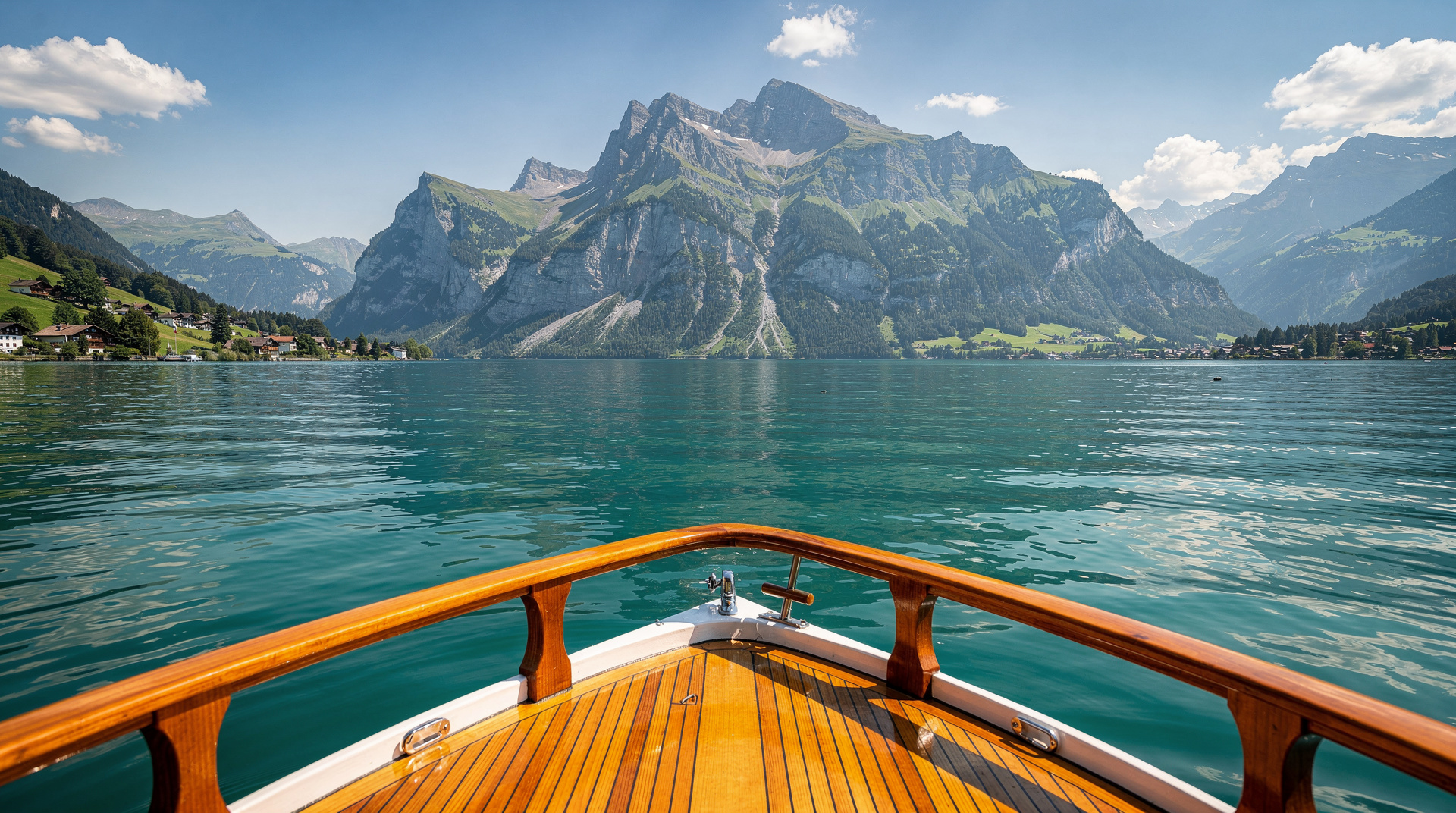
Lake Brienz (Brienzersee) is more compact and intensely blue-green — the colour comes from glacial silt suspended in the water, giving it a turquoise luminosity on sunny days. The mountains around Lake Brienz are steeper, the waterfalls more dramatic, and the atmosphere more specifically Alpine than the gentler Thun shore.
Both lakes are served by BLS (Bern–Lötschberg–Simplon) lake boats — a fleet of traditional Belle Époque vessels and modern motor boats operating scheduled services that function as transport for lakeside communities as well as scenic excursions for visitors. The two lakes together cover 53 square kilometres and are navigated in very different moods: Lake Thun is the lake for leisurely exploration of its castle shores and vineyard villages; Lake Brienz is the lake for the concentrated drama of Giessbach Falls and the Brienzer Rothorn railway.
Most visitors approach both lakes from Interlaken, which sits between them. Interlaken West station (on the Lake Thun side) and Interlaken Ost (on the Lake Brienz side) are both within walking distance of each other, making it practical to combine both lake experiences in a single day or split them across the days of a Bernese Oberland stay.
| Where | Interlaken West (Lake Thun) and Interlaken Ost (Lake Brienz), Bernese Oberland |
| Cost | Around CHF 30-45 for a full one-way traversal; covered fully by the Swiss Travel Pass |
| Time needed | Around 1.5-2 hours per lake traversal; a full combined day around 6 hours |
| Getting there | Train to Interlaken (well connected from Bern, Zurich, Lucerne); both piers a short walk from the stations |
| Best time | May-June for peak Giessbach flow and green shores; September for lighter crowds and golden light |
The operator: BLS
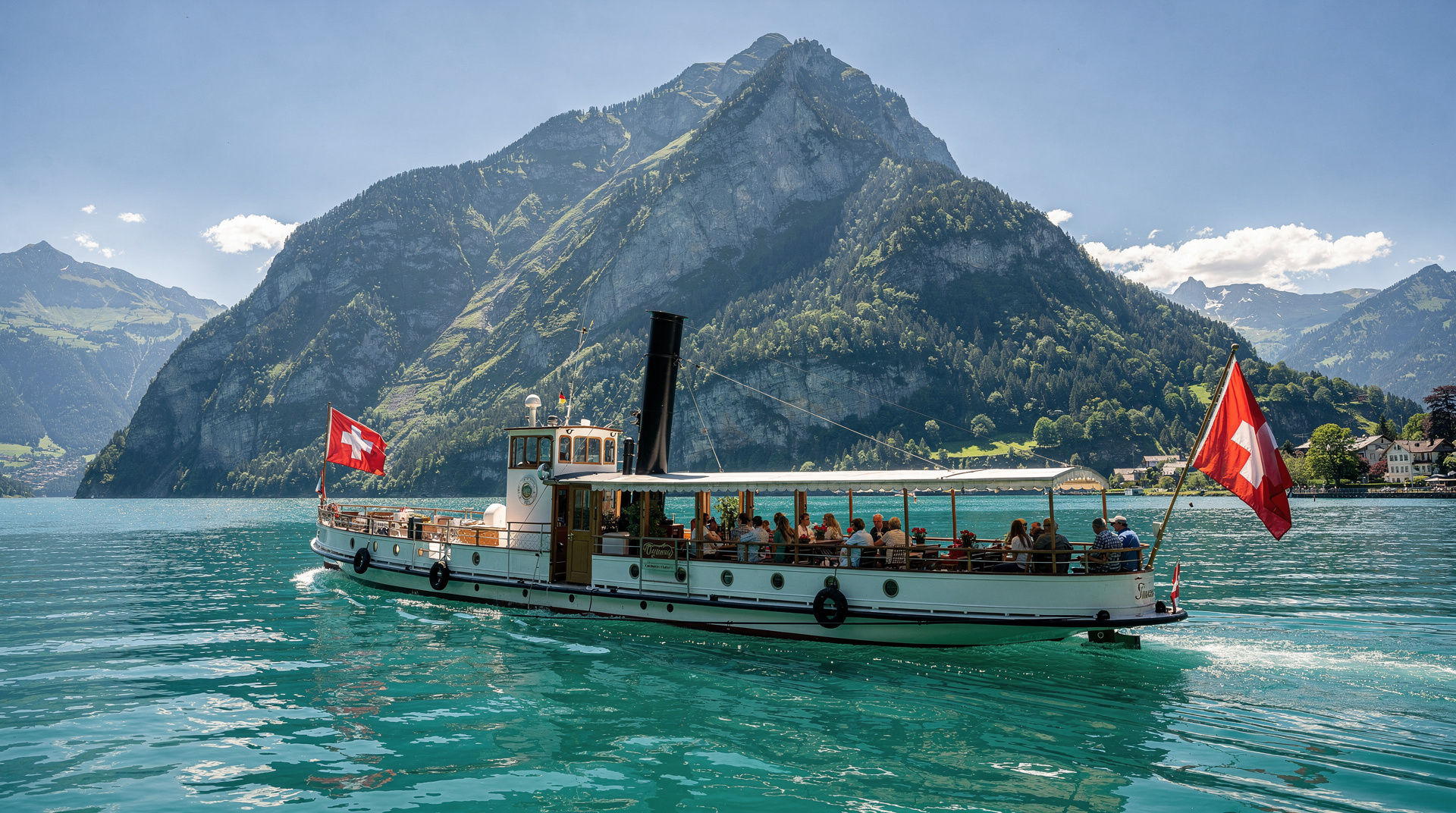
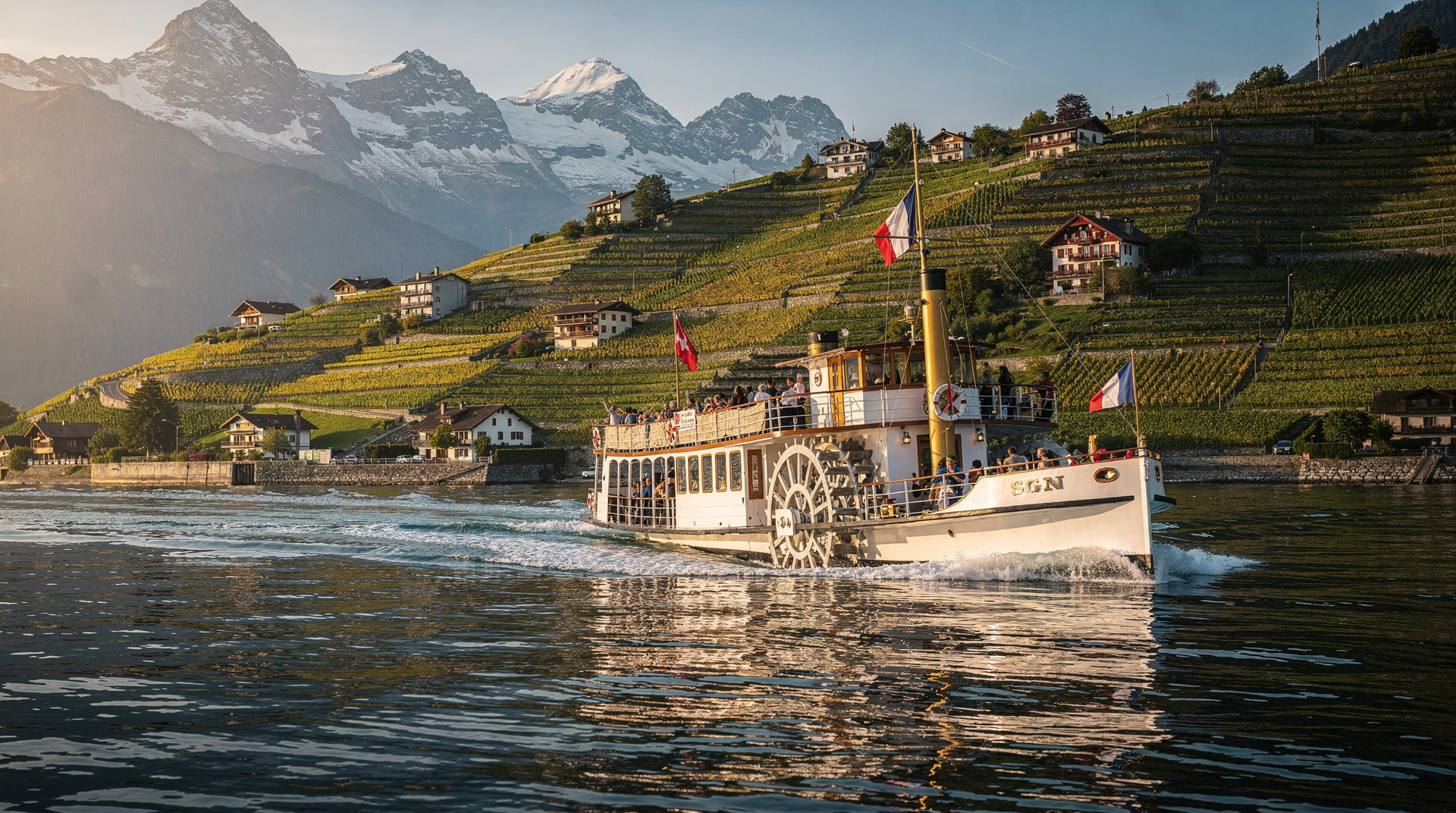
BLS Schifffahrt operates the lake boat services on both Lake Thun and Lake Brienz. The Lake Thun fleet includes several restored paddle steamers (the Blümlisalp, built 1906, is one of the finest historic lake vessels in Switzerland) and modern motor vessels. The Lake Brienz fleet is smaller, consisting primarily of modern motor vessels and one historic steamship.
The BLS lake services are integrated with the rail timetable at the main connecting stations (Thun, Spiez, Interlaken West/Ost, Brienz) and are covered by the Swiss Travel Pass.
Lake Thun: routes and highlights
Interlaken West to Thun
The full Lake Thun traversal from Interlaken West to Thun (or vice versa) takes approximately 1 hour 45 minutes with stops. Departing from Interlaken, the boat enters the open lake and heads north-west, with the Niesen pyramid (2,362m) dominant to the south and the Bernese Oberland peaks visible beyond. The route stops at Beatenbucht, Merligen, Gunten, and Spiez before reaching Thun.
The return from Thun by boat follows the north shore, stopping at Oberhofen (the château gardens directly accessible from the landing stage) and Hilterfingen before returning to Spiez and continuing to Interlaken West. The two shores present quite different landscapes: the south shore is steeper and more Alpine-facing; the north shore is gentler, with lakeside châteaux and vineyard gardens.
Spiez
Spiez is the visual centrepiece of Lake Thun — a medieval castle on a promontory above a horseshoe bay, with vineyards descending directly to the water. From mid-lake on a clear day, the arrangement of castle, vineyards, bay, and Bernese Alps beyond is one of the most composed natural-and-human-made landscapes in the whole of Switzerland. The castle (open to visitors) houses a good museum of regional history; the church below it is partly Romanesque.
Arriving by lake boat at Spiez and walking up to the castle gives the proper sequence — approach by water, ascend by land, understand the strategic logic of the position from above. Return by boat or by the direct train to Interlaken (12 minutes).
Oberhofen
Oberhofen Castle sits directly on the Lake Thun shore — a many-towered medieval structure surrounded by English-style gardens that run down to the water’s edge. The castle is one of the most visited in the Bernese Oberland and houses a well-presented museum of domestic life through the centuries. The BLS boat stops at the castle landing stage. The gardens (open without charge) are particularly good in rose season (June to July).
Beatenbucht and St. Beatus Caves
Beatenbucht is the landing stage for the St. Beatus Caves — a network of limestone caves with an underground waterfall accessible by a short walk from the landing stage. The cave tour takes about 45 minutes and covers the natural cave formations alongside the legend of the Irish hermit Beatus, who allegedly founded the first Christian community in Switzerland at this site. The waterfall visible at the cave entrance is dramatic in spring when snowmelt swells the underground streams.
Niesen funicular
The Niesen funicular from Mülenen (20 minutes from Spiez by S-Bahn) climbs to the summit of the Niesen (2,362m) — called the “Swiss pyramid” for its regular triangular profile — in an almost perfectly straight funicular line that is the longest three-section funicular in the world. The view from the summit encompasses both lakes (Thun and Brienz, separated by Interlaken), the Bernese Alps from the Eiger to the Blüemlisalp, and the Swiss Plateau stretching north to the Jura.
The Niesen is one of the more unusual Bernese Oberland summit experiences — less well-known than the Jungfraujoch but offering a panorama that in some respects is more comprehensive.
Lake Brienz: routes and highlights
Interlaken Ost to Brienz
The Lake Brienz service from Interlaken Ost to Brienz takes approximately 1 hour 15 minutes with stops at Iseltwald, Giessbach (ferry landing), and Brienz town. The lake’s glacial blue-green colour is most visible from mid-lake; the southern shore is dominated by steep forested walls rising to rocky ridges.
Giessbach Falls and the Grand Hotel
The Giessbach Falls landing stage is one of the most atmospheric stops on any Swiss lake cruise. A free funicular (the oldest funicular in Switzerland, built 1879, originally water-operated, still running) carries passengers from the boat landing to the terrace in front of the Grandhotel Giessbach — a Victorian-era grand hotel in a dramatically beautiful position, with the Giessbach Falls tumbling 500 metres down the cliff directly beside the hotel terrace.
The falls can be walked along a path that climbs beside the cascade — a 45-minute circuit that gets wet in places (bring a jacket) and offers increasingly dramatic views of the multiple falls stages. The hotel serves lunch and afternoon tea on the terrace; having a coffee here with the falls as backdrop and the lake visible below is one of the most satisfying mid-excursion stops in the Bernese Oberland.
Iseltwald
Iseltwald is a small village at the end of a wooded peninsula on the south shore of Lake Brienz — a car-accessible but still quiet community with one of the finest lake swimming positions in the Bernese Oberland. The wooden pier extending into the lake from the village became briefly famous in 2022 when it appeared in the South Korean drama Crash Landing on You, triggering a wave of Korean visitors. The village itself is attractive without the fame; the BLS boat stops here on the main Interlaken–Brienz route.
Brienz and the woodcarving tradition
Brienz (the town, not just the lake) is the centre of Swiss woodcarving — an industry that grew from the folk tradition of Alpine farmers carving through the long winter months and developed into a cottage industry of extraordinary skill during the 19th-century tourism boom. The Swiss Open-Air Museum Ballenberg (2 kilometres from Brienz town, accessible by postal bus) is the best outdoor museum in Switzerland: 60 historic farmhouses, barns, and village buildings relocated from across Switzerland and reconstructed on a 66-hectare site, with demonstrations of traditional crafts including woodcarving, cheese-making, and weaving.
The Brienz Rothorn Bahn — a steam rack railway that has operated since 1892 — climbs from Brienz town to the Brienzer Rothorn (2,350m) in approximately 1 hour, with open carriages on some summer services and views of both lakes from the summit. This is one of the last regular steam rack railways in Europe.
Booking and Swiss Travel Pass
Book a boat day pass on Lake Thun from Interlaken Book a boat trip to Giessbach Falls with hike to IseltwaldFor a fuller day out, this Iseltwald, Aare Gorge and Lake Brienz experience extends the excursion further along the valley.
The boat day pass on Lake Thun is the best option for those wanting to explore the full lake at leisure — hop on and off at Spiez, Oberhofen, and Beatenbucht without paying per segment. The Giessbach Falls and Iseltwald boat trip is a structured excursion combining the most dramatic single stop on Lake Brienz with a walking connection to Iseltwald village.
For holders of the Swiss Travel Pass, all regular BLS lake services on both Lake Thun and Lake Brienz are covered without supplement.
Seasonal schedule
Both lakes operate reduced winter schedules (November to March) with main-line services maintained. Full summer schedules run from mid-April to mid-October. The paddle steamer Blümlisalp on Lake Thun operates primarily on summer weekends and public holidays.
The best seasons for lake cruises are:
May to June: the Alps are still snow-capped, the shoreline vegetation is intensely green, and wildflower season is beginning. Giessbach Falls are at peak flow from snowmelt.
September: summer crowds reduce, the light becomes lower and more golden, the Giessbach area is particularly atmospheric.
October: the larch forests above the lake turn gold, making the Lake Brienz south shore especially beautiful.
| Month | Weather on the water | Crowds | Notes |
|---|---|---|---|
| May-June | Mild, occasional rain | Moderate | Giessbach Falls at peak flow; green shores |
| July-August | Warm, sunniest | High | Book Giessbach funicular around midday queues |
| September | Mild, clearer light | Lower | Best balance of weather and quiet decks |
| October | Cooler, golden light | Low | Larch forests turn gold above Lake Brienz |
| Nov-March | Cold, reduced schedule | Very low | Main-line services only; paddle steamer rarely runs |
Making the most of a short visit
If you only have half a day rather than the full combined circuit above, prioritise Lake Brienz: the Giessbach Falls stop delivers the single most memorable moment on either lake in about 2 hours door to door from Interlaken Ost. Pair it with a coffee on the Grandhotel terrace rather than rushing the falls path alone. For a longer stay in the region, the Bernese Oberland destination guide and the best time to visit guide help plan which season suits your priorities, and day trips from Bern covers how to combine the lakes with a visit to the capital.
Travellers weighing up value across the whole trip should also check the Switzerland budget guide — lake cruises are one of the better-value scenic experiences in the country when covered by the pass, compared with some of the higher-altitude cable cars. For packing, remember a light waterproof layer for the Giessbach spray and Trümmelbach-style caves elsewhere in the region; see the packing list guide.
Combining the two lakes in one day
A satisfying combined day from Interlaken:
Morning: Lake Brienz boat from Interlaken Ost to Giessbach (50 minutes), funicular to the Grand Hotel, walk beside the falls (45 minutes), boat back to Interlaken Ost.
Afternoon: Lake Thun boat from Interlaken West to Spiez (45 minutes), castle visit (1 hour), boat return to Interlaken.
This circuit uses both lakes and visits the two best single stops without rushing. Total time: about 6 hours from Interlaken.
Practical tips
The south shore of Lake Brienz (facing north) is in shadow on summer afternoons; for the best light, take the morning boat east to Brienz.
Giessbach on weekends in July and August is crowded at the funicular landing — arrive before 10am or after 3pm.
The Blümlisalp paddle steamer on Lake Thun runs on specific days — check the BLS timetable at the Interlaken West landing stage or at bls.ch for the current season’s schedule.
From Thun: the Lake Thun and Brienz cruises connect naturally to Thun town — the hilltop castle, the old town arcades, and the pleasant lakeside walk are worth 2-3 hours. Thun is the gateway to the Bernese Oberland.
For the full picture of Swiss lake cruising, see the lake cruises overview. For the 7-day Switzerland itinerary, Lake Thun and Brienz typically feature as part of a Bernese Oberland section. The Swiss Travel Pass guide explains pass coverage in full.
Frequently asked questions about Lake Thun and Lake Brienz cruises
Can I do both Lake Thun and Lake Brienz cruises in one day?
Yes — Interlaken sits between the two lakes, with Interlaken West (Lake Thun) and Interlaken Ost (Lake Brienz) a short walk apart. A combined day covering Giessbach Falls in the morning and Spiez castle in the afternoon takes around 6 hours and is a popular way to see both lakes without an overnight stay elsewhere.
Is the Giessbach Falls funicular included in the boat ticket?
Yes — the historic funicular from the Lake Brienz boat landing up to the Grandhotel Giessbach terrace is free to use for anyone arriving by boat; it exists specifically to connect the two.