Switzerland in March: weather, activities, and tips
Is March a good time to visit Switzerland?
March is a transitional month — still excellent for skiing at altitude while spring begins in the valleys. Crowds thin noticeably after school holidays end, and prices drop. High resorts like Zermatt and Saas-Fee offer superb spring skiing conditions.
Switzerland in March: what to expect
At a glance
| Where | Best split between a mountain resort (Zermatt, Saas-Fee, or the Bernese Oberland) and a valley city |
| Typical cost | Mid-range — mountain resort rates drop after mid-March; city hotels stay at low-season prices all month |
| Time needed | 5-7 days to combine skiing with city time |
| Getting there | Fly into Zurich or Geneva, then SBB trains to resorts (around 2-3 hours) |
| Best time within March | Last two weeks, once school-holiday crowds clear but snow is still consolidated |
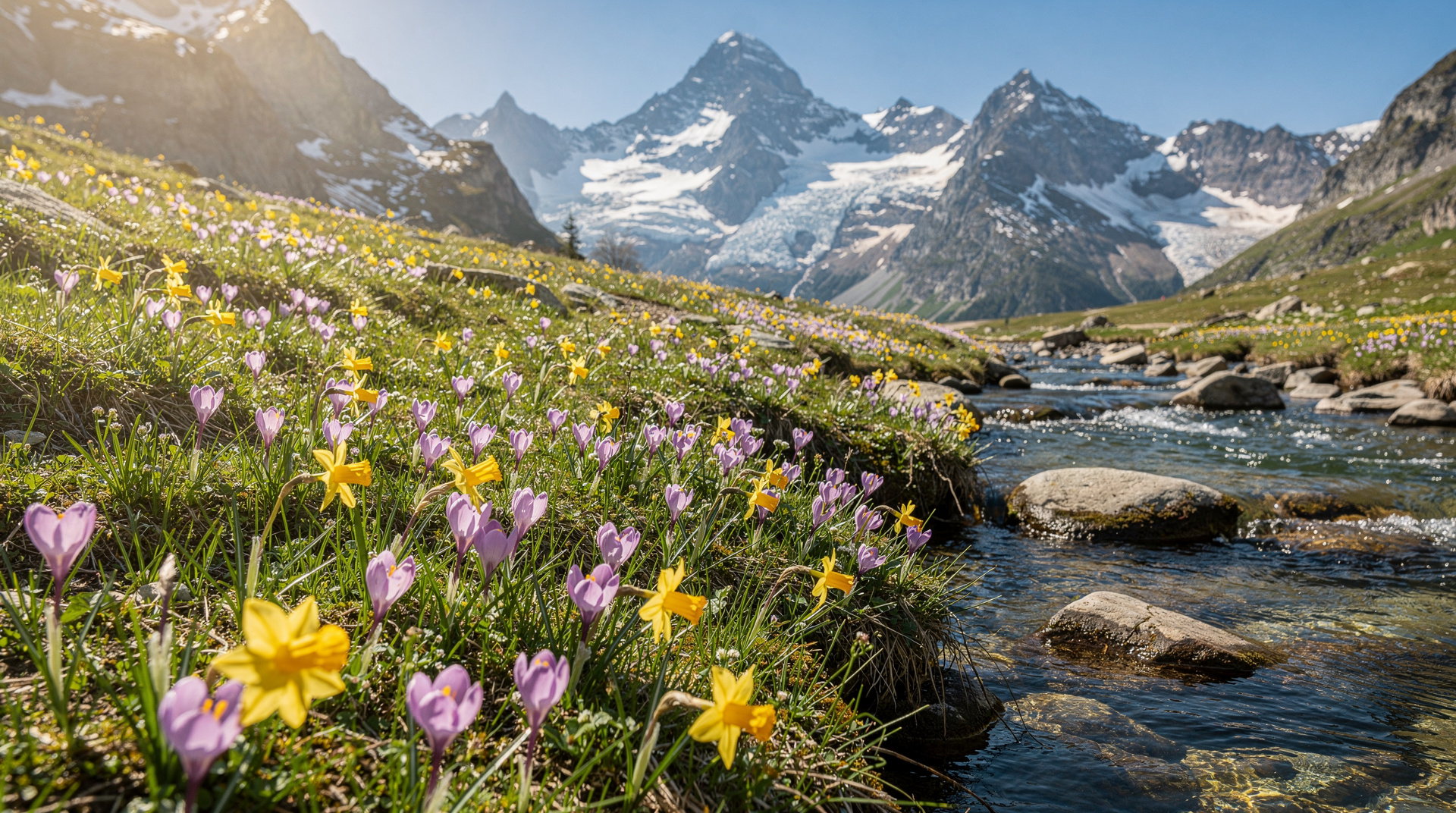
March is one of the most underrated months in Switzerland. The ski season is still running strong at altitude, but the crowds that define January and February begin to thin after the school holiday rush ends. Prices in mountain resorts drop noticeably. Meanwhile, in the valleys, the first unmistakable signs of spring appear — longer days, the occasional mild afternoon, and the first tentative wildflowers pushing through at lower elevations.
It is a month of contrasts: step off the train in Zurich and you might be in early spring, with crocuses appearing in the parks. Take the cable car up to 2,000m and you are in the heart of winter. Both versions of Switzerland are worth experiencing, and March is one of the few months where you can do both on the same day.
March weather in Switzerland
Valley cities: Temperatures climb gradually through the month, from around 5-8C in early March to 8-12C by the end. Sunshine becomes more frequent as the notorious winter fog (Hochnebel) begins to dissipate. Occasional rain replaces snow at valley level.
Interlaken and Lucerne: Similar to other valley cities, 5-10C by the end of March. Interlaken’s valley fog begins to break more reliably. The lakes start to reflect blue sky more often.
Mountain resorts (1,500-2,000m): Still reliably cold and snowy. Daytime temperatures might nudge above freezing in direct sun, creating slushy afternoon snow but excellent morning conditions. Night temperatures remain comfortably below freezing, preserving the snowpack.
High alpine: -8 to -5C. Snow conditions are often magnificent in March — the winter snowpack has had time to consolidate and settle, giving a dense, workable surface that many skiers prefer to the powder of January.
Daylight increases dramatically through March, from around 11 hours at the start to over 12.5 hours by the month’s end.
| Location | Typical daytime temp | Conditions | Crowd level |
|---|---|---|---|
| Valley cities (Zurich, Geneva, Basel) | 5-12C | Fog clearing, occasional rain | Low-moderate |
| Interlaken / Lucerne | 5-10C | Lake fog breaking, mild afternoons | Low-moderate |
| Mid-altitude resorts (1,500-2,000m) | around freezing | Firm morning snow, slushy afternoons | Moderate (higher in first half) |
| High alpine (Zermatt, Saas-Fee) | -8 to -5C | Consolidated winter snowpack | Moderate |
What’s open in March
Ski resorts: Fully operational. All major resorts run until at least mid-April, and high-altitude venues like Zermatt and Saas-Fee ski year-round. Some smaller, lower-altitude ski areas may close early in March if warm weather accelerates snow melt.
Mountain excursions: Jungfraujoch, Mount Titlis, and Mount Pilatus (gondola) all operate. The Pilatus cogwheel railway remains closed until May.
What’s starting to close or still closed: Some mountain-side summer restaurants and hiking infrastructure are still in winter mode. The Schynige Platte railway near Interlaken and similar summer-only lines are not yet running.
Cities: All normal services. Geneva, Zurich, Basel, Bern fully operational.
Events and festivals in March
Fasnacht (Basel / Lucerne, early March): Depending on the Easter calendar, Fasnacht falls in late February or early March. Basel’s 72-hour carnival and Lucerne’s multi-day celebration are both timed to this period.
Sechseläuten (Zurich, dates vary): While the main Sechseläuten is in April, guild activities and preparations begin in March. This is Zurich’s great spring festival.
International Geneva Motor Show (mid-March, Geneva): One of the world’s premier automotive events, held at Palexpo near Geneva Airport. Significant local interest and draws international crowds. Hotels in Geneva book up — plan ahead if visiting at this time.
Ski season races: March is World Cup ski race season. Events in Lenzerheide, Crans-Montana, and Wengen/Kvitfjell draw large crowds.
Best activities for March
Spring skiing
Spring skiing is a distinct pleasure that dedicated skiers seek out. March mornings — with firm, consolidated snow, blue skies, and sunshine — deliver some of the best on-piste conditions of the year. The key is timing: head up early (first lift), ski until about midday when the snow begins to soften in direct sunlight, then retire to a mountain terrace for lunch in the sun.
The best destinations for spring skiing in March include:
Zermatt: At altitude up to 3,883m, Zermatt’s high-elevation terrain stays cold and reliable all month. The Klein Matterhorn section is essentially unaffected by March sun until well into the afternoon.
Saas-Fee: Another high-altitude resort with glacier skiing that runs year-round. Famous for its car-free village and excellent intermediate terrain.
St. Moritz: Its south-facing bowl gets enormous sunshine in March, making it a particular favourite for spring skiing.
Book the Matterhorn Glacier ParadiseHiking in the valleys
By late March, lower elevation paths (below 800m) are clearing of ice and snow. The Rhine valley paths, paths around the lakes near Lucerne and Geneva, and lowland trails near Zurich are increasingly walkable. This is not yet proper hiking season, but gentle valley walks are genuinely enjoyable.
Visiting cities
March is an excellent month for city tourism. Zurich, Geneva, and Basel are all moving out of their winter quietness without yet attracting summer crowds. Restaurant reservations are easy to get. Museum lines are minimal.
Snowshoeing and winter sports
Snowshoeing remains excellent throughout March. The combination of longer days and deep snowpack makes March one of the best months for all-day snowshoe excursions. Most mountain resorts offer guided tours.
Paragliding (lower elevations)
As temperatures moderate, paragliding begins to open up in the lower resorts. Interlaken — the paragliding capital of Switzerland — starts to see flights resuming in March, weather permitting.
Book tandem paragliding in InterlakenMarch costs
March is increasingly good value compared to January and February once school holidays end (typically mid-February to mid-March, varying by country). The last two weeks of March offer particularly good combinations of excellent ski conditions and reduced prices.
City hotels remain affordable throughout March. Mountain resort prices dip noticeably compared to peak season.
Packing for March in Switzerland
The key word for March packing is versatility. You need to be prepared for winter conditions in the mountains and spring conditions in the valleys, sometimes on the same day.
Layers: A warm base layer that can be removed is essential. You might start the day in ski gear at 2,000m and finish the evening strolling in a city at 8C.
Waterproofs: March rain is more common than in January. A packable waterproof jacket is useful in the cities even when you are not skiing.
Sun protection: March sun is strong at altitude. Sunscreen and sunglasses are critical.
Footwear: Waterproof boots for potential slush at resort level. Good walking shoes for city evenings.
Suggested March itinerary
Split trip (7 days): 4 nights in a mountain resort (Zermatt or Grindelwald recommended), skiing in the mornings, mountain terrace lunches, then 3 nights in Zurich or Lucerne for city culture. Use the Swiss Travel Pass for all train travel.
Pure ski trip (7 days): Stay in one resort, ski every morning, explore the village each afternoon. Incorporate a Jungfraujoch day trip on a clear afternoon when lift queues are minimal.
See our 7-day itinerary for detailed route planning.
Pros and cons of visiting in March
Pros:
- Excellent spring ski conditions especially in the mornings
- Far fewer crowds than January/February after school holidays end
- Lower prices in mountain resorts
- Longer days — more time for outdoor activities
- First signs of spring in valleys
Cons:
- Afternoon snow can get slushy at lower altitudes
- Some summer attractions still closed
- Weather more variable than midwinter
- Valley fog still possible, especially in early March
Getting around Switzerland in March
The Swiss Travel Pass is excellent value in March, particularly as you move between mountain resorts and city bases. Train services are fully operational, and the SBB network handles the late-ski season traffic efficiently. Mountain trains and most cable cars serving ski areas are running at full capacity.
Get your Swiss Travel PassThe Glacier Express runs daily in March and is an outstanding choice for the journey between Zermatt and St. Moritz. In March, the train passes through snow-covered mountain landscapes at their most dramatic, and the trains are less crowded than in summer.
Book the Glacier Express for March travelMountain excursions in March
The three major excursion mountains are all accessible in March. The Jungfraujoch is open year-round and March is an excellent time to visit — snow is deep and spectacular, and the visitor numbers are considerably lower than in summer.
Book Jungfraujoch in MarchMount Titlis from Lucerne is also excellent in March, with the glacier and cliff walk at their most wintry.
Discover Mount Titlis in MarchNote that the Pilatus cogwheel railway does not operate in March — the gondola is available for a partial ascent, with the full Golden Round Trip opening in May.
Chocolate and Swiss food in March
March is still firmly in Swiss comfort food season. Fondue and raclette are at their most appropriate — the cold weather and mountain setting make these dishes feel genuinely satisfying rather than tourist-facing. Restaurants in mountain resorts serve Rösti, Älplermagronen, and hearty winter menus. In cities, restaurant booking is easy in March with no need for advance reservations at most venues.
The Lindt Home of Chocolate in Zurich’s Kilchberg is open year-round — an excellent rainy-day option if you are spending time in Zurich during March.
Book the Lindt Home of ChocolateMarch budget and costs
March costs sit between the January-February ski peak and the summer tourist peak. In the first half of March (during school holidays in many countries), mountain resort prices remain at or near peak. After mid-March, prices drop noticeably — sometimes 20-30% below peak January rates. City hotels are at low-season rates throughout March.
See our Switzerland budget guide for specific March pricing benchmarks.
Quick tips for March visitors
Book the morning’s first lift — morning snow is almost always better than afternoon snow in March. If your resort has a mountain restaurant with a sun-facing terrace, secure a lunch table early.
Check Easter dates — if Easter falls in late March, prices spike and crowds return to mountain resorts. Easter Sunday and the surrounding long weekend are busy across all of Switzerland.
If you are visiting cities in March, the fog (Hochnebel) is beginning to break more regularly than in January and February. Build in at least one clear-weather mountain excursion to take advantage of the improving visibility.
Read our full when to visit Switzerland guide for context across the full year, and see our 7-day Switzerland itinerary for route planning in any season.
March versus other months
March sits in a clear position in Switzerland’s seasonal calendar: it is the last serious winter sports month at altitude, while simultaneously the first month of genuine spring promise in the valleys. This duality is its greatest strength.
March vs January/February: March is less crowded and less expensive (after school holidays). Snow conditions are often excellent — the winter snowpack has had time to settle into a dense, workable surface. The main drawback is shorter skiing season remaining.
March vs April: March still offers good skiing at altitude; April does not at most resorts. March is colder and potentially foggier in valleys. April has better blossoms and wildflowers.
March vs May: May is better for warmth, open infrastructure, and outdoor activities. March is better for skiing and quieter mountain resorts.
Who should visit in March: Skiers who want good conditions at lower prices than January and February. Visitors who enjoy the transition season. Anyone attending Fasnacht (Basel or Lucerne). Budget travellers who want mountain scenery without peak prices.
Destination guides for March: Zermatt | Grindelwald | Lucerne | Interlaken
Alternatives if you can’t decide
If the split-trip logistics feel like too much for a first visit, a simpler base is Grindelwald — a single village giving direct access to the Jungfrau region without switching hotels. For travellers who want low-key valley walking rather than skiing, Bern makes a good calm alternative to the busier resort towns, with its UNESCO old town largely free of March crowds. Anyone weighing whether to come now or wait can check our Switzerland in April comparison for the trade-off between late-season skiing and better blossoms.
A few more questions people ask
Is it too late to ski in Switzerland in March? No — March is often considered a sweet spot for skiing. Snowpack is well-consolidated, resorts are fully open, and prices are lower than January or February once school holidays end. High-altitude resorts like Zermatt and Saas-Fee ski well into spring.
Do I need a car in Switzerland in March? No. Trains, PostBuses, and mountain railways reach essentially every resort and city covered in this guide; a Swiss Travel Pass usually works out cheaper and less stressful than renting a car, especially with mountain roads still icy in places.