Where to stay in Interlaken: best areas and neighborhoods
Should I stay near Interlaken West or Interlaken Ost?
Interlaken West (Interlaken HB) has the main town, Höheweg promenade, and most hotels. Interlaken Ost is better if your priority is Jungfraujoch day trips (fewer connections required). For most visitors, West is the better base. Unterseen gives charming village feel 10 minutes' walk away.
How to choose where to stay in Interlaken
Interlaken sits between two lakes — the Thunersee to the west and the Brienzersee to the east — in a flat valley floor at the foot of the Bernese Alps. This unusual geography, combined with its position as the primary gateway to the Jungfrau region, makes Interlaken the most visited tourist town in the Swiss mountains.
The practical question most visitors face is straightforward: Interlaken West or Interlaken Ost? The two train stations are 2.5 kilometres apart, and the choice between them shapes the logistics of your stay. Beyond that, the older village of Unterseen (west of Interlaken proper) and the suburban area of Matten (south of the centre) offer alternatives worth considering.
Accommodation is plentiful but prices are high relative to the quality — Interlaken’s tourism infrastructure is extensive but the town is not a luxury resort destination in the St. Moritz or Zermatt sense. You are paying for location and Bernese Alps access, not for architectural grandeur or culinary excellence. Budget travellers will find more options here than in Zermatt, but costs are still substantial in summer. See the Switzerland budget guide for realistic cost planning.
| At a glance | |
|---|---|
| Where | Interlaken West (main town), Interlaken Ost (mountain connections), Unterseen (charm), Matten (budget) |
| Typical cost | Around CHF 35-60 for a hostel dorm, CHF 130-450 for a hotel room |
| Time needed | 2-4 nights as a base for Jungfrau region day trips |
| Getting there | Direct trains from Bern, Zurich, and Lucerne via the Brünig line |
| Best time | June-September for hiking and adventure sports; December-March for the Jungfrau ski region |
Interlaken’s two stations and its summer demand make the choice of dates and cancellation terms matter as much as the area. Decide first whether you want to be near the West or the Ost station, then check the walking distance to the platform and whether a hostel dorm or a hotel room fits your plan for Jungfrau day trips. Prefer rooms you can cancel free of charge, and you can compare stays across Interlaken on Booking.com for the area you chose.
Interlaken West (near the West station) — best for the main town
What to expect
The central area of Interlaken — the Höheweg, the main commercial street, and the Kursaal garden — is served by Interlaken West station. This is where the majority of hotels are concentrated, where the main restaurants and supermarkets are located, and where the Höheweg provides the famous view of the Jungfrau rising above the green meadow to the south.
Most visitors who book “Interlaken” are placed in this area automatically, and it is the correct default for anyone who wants access to the town’s services, restaurants, and the base for adventure sports operators. The Ballenberg open-air museum bus, the Thunersee lake boats, and numerous adventure companies all operate from the West area.
Pros
Maximum access to the town’s services: supermarkets, restaurants, banks, tourist offices, and the adventure sports operators. The Höheweg view of the Jungfrau from the Kursaal garden is iconic and easily accessible. Trains to Bern and to Lucerne via the Brünig line depart from Interlaken West.
Cons
Somewhat further from Grindelwald and Lauterbrunnen connections than Interlaken Ost. The immediate area around West station is the most tourist-concentrated part of Interlaken — heavily commercial and somewhat lacking in neighbourhood character.
Price range
CHF 150-450 for standard hotel options. Several large 4-star hotels (Hotel Victoria Jungfrau, Hotel Metropole) operate in this zone at premium prices. Budget options include several hostels in the CHF 35-60 dorm range.
Interlaken Ost (near the East station) — best for mountain connections
What to expect
Interlaken Ost is the narrower-gauge railway hub: all trains to Grindelwald, Lauterbrunnen, Wengen, Mürren, and Jungfraujoch depart from Ost. If your primary reason for coming to Interlaken is accessing the Jungfrau region — including the Jungfraujoch, the Schilthorn, or any other peak via the mountain railway network — then staying near Ost saves a 15-minute bus ride every morning and evening.
The Ost area has fewer hotel options and a quieter, more residential character than the West. The Brienzersee lakefront near Ost station is genuinely beautiful, with views across the lake toward the Brienz Rothorn and the town of Brienz.
Pros
Direct access to the mountain railway network without the Ost-to-West transfer. The Brienzersee lakefront is quieter and more attractive than the West area lake access. Slightly less tourist-saturated than the West zone.
Cons
Fewer restaurant and service options within immediate walking distance. Farther from the main Höheweg promenade and the town centre. Most visitors instinctively gravitate toward West, so the social atmosphere around Ost is quieter.
Price range
CHF 130-300 for the hotels in this area. Generally slightly more affordable than equivalent West-area properties.
Book Jungfraujoch and Bernese Alps tours on GetYourGuideUnterseen — best for village character
What to expect
Unterseen is the old village immediately west of Interlaken proper — a separate municipality with its own medieval church, old town square (the Unterseen Kirchbühl), and a character noticeably quieter and more authentic than the tourism-saturated Interlaken centre. The walk from Unterseen to Interlaken West station takes about 10-15 minutes along the Aare river path or through the main street.
Several excellent hotels operate in Unterseen, ranging from small guesthouses to four-star properties. Prices are generally 10-20% below equivalent Interlaken West properties for comparable room quality.
Pros
The most attractive neighbourhood setting in the Interlaken area — genuinely old buildings, a church square, riverside walks. Quieter and more relaxed than the tourist concentration of the main Höheweg. Slightly better value than equivalent properties in central Interlaken.
Cons
Requires a 10-15 minute walk (or short bus ride) to reach train stations and main town facilities. Limited restaurant options within immediate walking distance of Unterseen itself — most dining requires walking to Interlaken proper.
Recommended for
Visitors who want a quieter base and don’t mind the short walk to the station. Families who need more space and calm. Second or repeat visitors to Interlaken who already know the main sights.
Price range
CHF 120-280 depending on property. Some of the best value mid-range accommodation in the Interlaken area is in Unterseen.
Matten — best for budget
What to expect
Matten bei Interlaken is the suburban district immediately south of Interlaken proper, separated by the Aare river crossing. It contains Interlaken’s largest concentration of budget accommodation including the Balmer’s Hostel (one of the best-known budget properties in the Swiss mountains), several cheaper guesthouses, and the camping and glamping sites that provide the absolute lowest-cost accommodation in the area.
Matten is not a tourist attraction in itself — it is a functional residential area — but the Swiss Travel Pass and local bus coverage makes access to the stations and town centre straightforward.
Pros
The lowest accommodation prices in the Interlaken area. Balmer’s Hostel has a genuinely lively social atmosphere and is a good place to meet other travellers. The camping sites have direct access to the Aare river and mountain views.
Cons
Requires a bus connection or 20-minute walk to reach the main stations. The area has no particular character of its own — purely functional as an accommodation zone.
Recommended for
Budget travellers, backpackers, families with tents or camping equipment, travellers who want a social hostel atmosphere.
Price range
CHF 30-50 for camping. CHF 35-60 for hostel dorms. CHF 80-150 for basic private rooms.
Adventure sports and where to stay
Interlaken is Switzerland’s adventure sports capital — paragliding, canyoning, bungee jumping, skydiving, and white-water rafting all operate here. If you are coming specifically for these activities, proximity to the West station area is most practical, as most operators are concentrated there. See the paragliding in Interlaken guide and the canyoning guide for what to book.
Browse adventure sports activities in Interlaken on GetYourGuideMountain access from Interlaken
The mountain railway network radiating from Interlaken Ost is the primary reason most visitors come here. The Swiss Travel Pass covers the Bernese Oberland Railway to Grindelwald and Lauterbrunnen, and gives discounts on the higher mountain railways:
- Jungfraujoch: 25% discount with Swiss Travel Pass. Full price CHF 145; reduced CHF 72.
- Schilthorn (Piz Gloria): partially discounted.
- First Mountain above Grindelwald: discount applies.
- Harder Kulm above Interlaken: free with Swiss Travel Pass.
The Grindelwald vs Lauterbrunnen guide explains which valley to prioritise based on your interests.
Practical booking tips for Interlaken
Summer weekends (July and August) and the Easter holiday period fill Interlaken’s accommodation rapidly and push prices to their highest. For summer visits, book at minimum six to eight weeks in advance for good availability and rates.
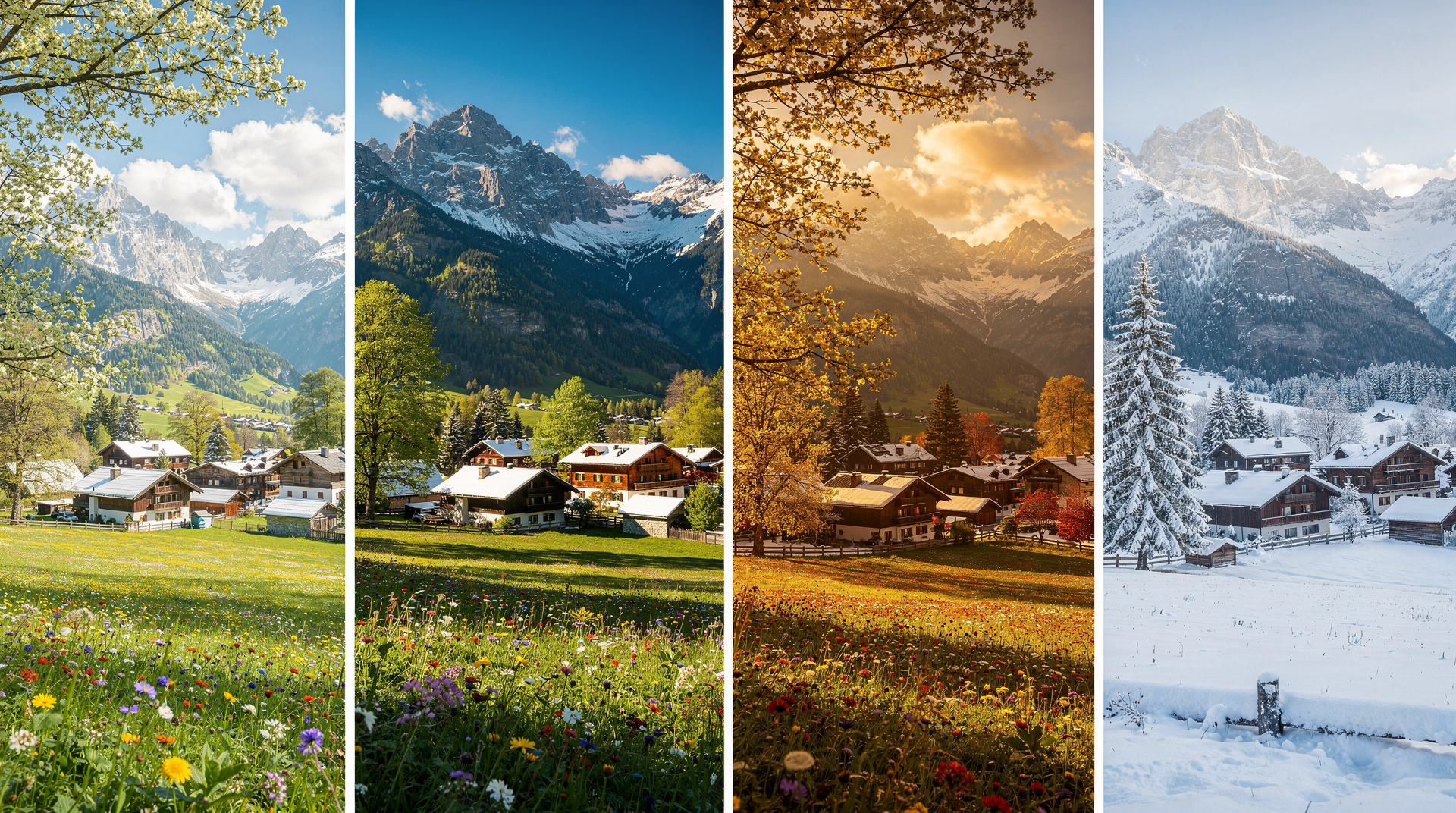
The shoulder seasons (May, June, September, October) offer better prices and thinner crowds while maintaining good mountain access. October is particularly beautiful — the Aare valley turns gold and red, and the Jungfrau snowcap can be seen against clear autumn skies.
Winter in Interlaken (November to March) is a different experience from the summer adventure resort: quieter, with some facilities closed, but access to Grindelwald, Wengen, and the broader skiing of the Jungfrau ski region all within easy reach. The town itself is not a ski resort destination, but as a base for skiing the Bernese Oberland, it is efficient and affordable.
See the 7-day Switzerland itinerary for how to position Interlaken within a broader Swiss circuit. The connection from Interlaken to Lucerne via the Brünig Pass is itself a scenic journey worth planning deliberately.
Interlaken areas compared
| Area | Vibe | Price level | Best for |
|---|---|---|---|
| Interlaken West | Central, commercial | CHF 150-450 | First-timers, main town access |
| Interlaken Ost | Quieter, rail hub | CHF 130-300 | Jungfraujoch-focused stays |
| Unterseen | Old village, calm | CHF 120-280 | Quieter base, families |
| Matten | Suburban, budget | CHF 30-150 | Backpackers, campers |
Frequently asked questions about Where to stay in Interlaken
Is it better to stay in Interlaken or Grindelwald for Jungfraujoch?
Interlaken Ost gives more accommodation choice and better connections to Bern and Lucerne; Grindelwald puts you closer to the Eiger Express and cuts the daily commute to the mountain railways. For a single Jungfraujoch day trip, either works; for several mountain days in a row, Grindelwald saves time.
How many nights do I need in Interlaken?
Two to three nights covers Jungfraujoch, one of First or Schilthorn, and a walk around the town and lakes. Adventure-sports visitors (paragliding, canyoning) often add a night for weather flexibility.