Switzerland in winter: weather, activities, and tips
Is winter a good time to visit Switzerland?
Winter is excellent for two distinct types of trip: skiing (January and February peak season) and Christmas market touring (December). Cities are affordable and uncrowded outside holidays. Expect cold valleys with fog and brilliant sunshine above 1,000m.
Switzerland in winter: an overview
Swiss winter — running from December through February — is one of the world’s great seasonal tourism experiences, but it rewards understanding. There are essentially two Switzerlands in winter: the foggy, cold, quiet valley Switzerland of the cities, and the snow-drenched, sun-lit, expensive mountain Switzerland of the ski resorts. Which one you experience depends almost entirely on your elevation.
Valley cities like Zurich, Geneva, Basel, and Bern spend much of winter shrouded in Hochnebel — a thick layer of fog that settles on the valley floors and can persist for days without lifting. The result is a grey, damp, and short-dayed winter that would dampen even the most resilient spirit. But drive or take the cable car to 1,000m above sea level, and the fog layer disappears entirely, revealing a world of brilliant blue sky, deep snow, and extraordinary mountain views.
Understanding this distinction is the single most important thing to know about winter in Switzerland. Book a mountain resort and you are almost certain to get sunshine. Book a city hotel and stay at valley level, and you may spend your entire trip in grey fog. The mountains are where Swiss winter reveals itself most fully.
At a glance
| Winter in Switzerland | |
|---|---|
| Where | Mountain resorts (Zermatt, Grindelwald, St. Moritz) for sun and snow; cities for Christmas markets |
| Cost | City hotels near annual lows in January; mountain resorts at annual peak in January-February |
| Time needed | A week for a single ski resort; 5-7 days for a Christmas market circuit by train |
| Getting there | Zurich or Geneva airport, then the Swiss Travel Pass for mainline rail to resorts |
| Best time within the season | Early-to-mid January for good snow with fewer crowds, outside school holiday weeks |
December in Switzerland
December is the festive month — Christmas markets, Glühwein, and the beginning of ski season. Switzerland’s Christmas markets are among the finest in Europe, and December is the primary reason many visitors choose winter for their trip.
The Basel Christmas market around the medieval Rathaus is consistently rated in Europe’s top five. Zurich’s indoor Hauptbahnhof market is spectacular. Bern’s market through the arcaded old town, Lucerne’s lakeside market, and Montreux’s lakeside market with the Alps as backdrop complete a remarkable circuit that can be covered by train in 5-7 days.
Ski season opens progressively through December. High-altitude resorts (Zermatt, Saas-Fee, Verbier) open in early December. Most major resorts are at full operation by mid-December.
Geneva’s Escalade festival (first weekend of December) is a distinctive local tradition commemorating the 1602 Savoyard attack with torchlight processions and historical costumes.
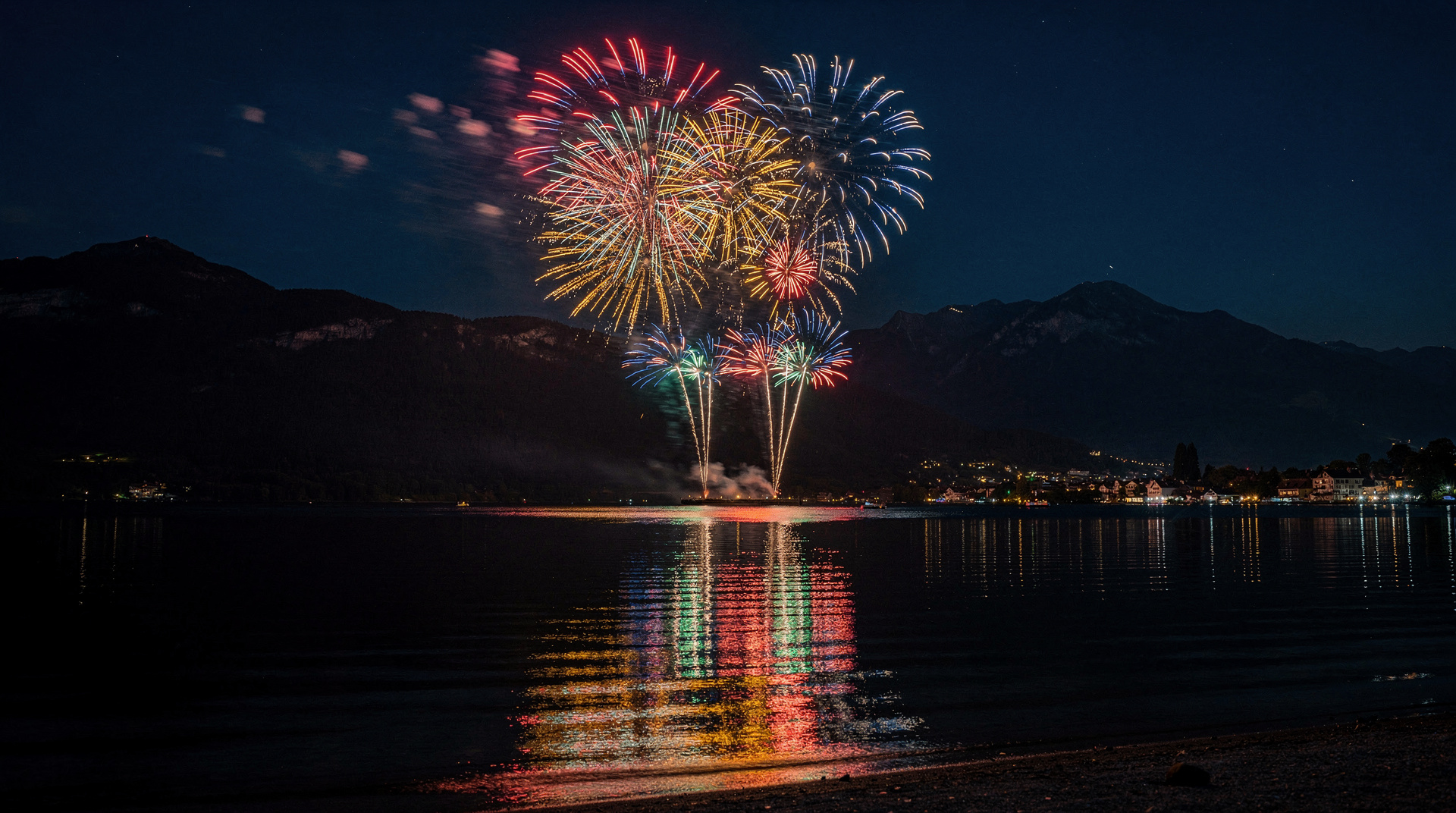
Swiss National Day is August 1, but December 31 brings spectacular New Year’s Eve celebrations over Swiss lakes — Zurich’s lakeside fireworks and Geneva’s displays are particular highlights.
For detailed December information, see Switzerland in December.
January in Switzerland
January is pure peak ski season. Snow is deep and reliable at resorts above 1,000m. The ski infrastructure is humming at full capacity. Mountain restaurants are packed at lunch. And the Swiss Alps in January — with their deep blue skies above the fog layer, brilliant white snowpack, and the dramatic mountain architecture of the Eiger, Matterhorn, and Jungfrau — are at their most majestic.
Valley cities in January are quiet and affordable. Business travel has wound down after the New Year. Museum lines are non-existent. City hotels are at or near their annual lows for non-ski travellers.
The Lauberhorn World Cup ski race in Wengen (mid-January) is one of the highlights of the alpine racing calendar — the world’s longest downhill race course, with enormous crowds and a brilliant atmosphere in the Jungfrau region.
For detailed January information, see Switzerland in January.
February in Switzerland
February combines peak ski season with the extraordinary spectacle of Fasnacht — Basel’s 72-hour carnival beginning at 4:00am on the Monday after Ash Wednesday with the Morgestraich, where thousands of costumed figures march through a darkened city by lantern light. It is one of Europe’s great events, inscribed on the UNESCO Intangible Cultural Heritage list, and unlike anything else in Switzerland.
Lucerne also holds its Fasnacht carnival, more accessible and tourist-friendly but equally genuine.
The ski season is at its best in February — snow conditions are typically the deepest and most reliable of the year. The challenge is school holidays: European half-term breaks in February create the year’s busiest ski resort period, with queues, full restaurants, and premium prices.
For detailed February information, see Switzerland in February.
Winter weather by region
Zurich and northeast Switzerland: Cold valley winters. Zurich averages 2-5C in January, with fog frequent throughout. Above 1,000m: reliably sunny and cold.
Geneva and Lake Geneva: Slightly milder than the plateau due to the lake’s moderating influence. Geneva sees fog but also more frequent windows of winter sunshine. Montreux at lake level is often warmer than Zurich.
Lucerne and central Switzerland: Classic valley fog in winter. The bowl geography of Lucerne makes it particularly prone to Hochnebel. Spectacular when clear — the mountains visible in all directions.
Interlaken and Bernese Oberland: Cold valley, brilliant mountains above. Interlaken itself can be foggy, but Grindelwald, Wengen, and Mürren at higher elevations enjoy superb winter sunshine.
Valais: One of Switzerland’s sunniest winter regions. The Rhône valley in the Valais sees significantly more winter sunshine than the plateau. Zermatt benefits from its south-facing bowl position — sunshine is more reliable here than at most other resorts.
Ticino: The mildest Swiss winter climate. Lugano rarely freezes. Palm trees survive in sheltered positions. The south-facing slopes in Ticino can be genuinely pleasant in winter.
Graubünden and Engadin: Cold but reliably sunny. St. Moritz’s famous sunshine (over 300 sunny days per year average) continues through winter. The Engadin at 1,800m base elevation ensures snow reliability.
Ski resorts: the key winter choices
Choosing the right ski resort for your budget, ability, and priorities is the central winter planning decision.
Zermatt: Car-free, glamorous, skiing to 3,883m with essentially year-round snow reliability. Connects to Italy via Cervinia. Good for all abilities but particularly excellent at high-altitude terrain for advanced skiers.
Verbier: Part of the massive 4 Vallées network. Best for advanced skiers who want challenging terrain and an active après-ski scene. Access via Martigny from Geneva or Lausanne.
Davos/Klosters: The largest ski area in Switzerland by piste length. More understated, popular with Swiss families and serious athletes. Good for intermediates.
St. Moritz: The original luxury resort. South-facing, reliably sunny, excellent infrastructure. Higher prices but outstanding facilities.
Grindelwald: Part of the Jungfrau Ski Region connecting to Wengen and Mürren. Good for intermediates and families. Spectacular mountain backdrop. Easy access from Bern or Interlaken.
Engelberg: Quick access from Lucerne (45 min train). Home of Mount Titlis. Good for all levels, popular with Asian visitors.
Saas-Fee: Glacier skiing year-round. Car-free. Often better snow conditions than lower resorts when early or late season snowpack is uncertain.
For a detailed ski resort comparison, see our Zermatt vs Verbier guide and Zermatt vs Grindelwald guide.
Winter activities beyond skiing
Christmas market circuit
December’s city circuit is one of Europe’s finest winter trips. Cover Basel, Zurich, Bern, Lucerne, and Montreux by train over 5-7 days.
Get your Swiss Travel Pass for a market circuitJungfraujoch in winter
The Jungfraujoch is at its most dramatic in winter — deep snow, clear blue skies, and far fewer visitors than in summer.
Book Jungfraujoch — Top of EuropeMatterhorn Glacier Paradise (Zermatt)
The highest cable car station in Europe at 3,883m. Extraordinary winter views across four countries.
Book the Matterhorn Glacier ParadiseSnowshoeing and winter hiking
Every ski resort offers snowshoe rental and marked snowshoe trails. Evening snowshoe tours by torchlight, ending at a mountain hut for fondue, are a winter highlight.
Tobogganing
Switzerland has extraordinary toboggan runs. The Flämserbahn in Flumserberg, the run from Grindelwald First, and several runs in the Bernese Oberland are open all winter.
Thermal baths
Leukerbad (Valais) and Bad Ragaz (St. Gallen) both offer natural thermal mineral water bathing. A long soak in hot mineral water on a cold winter evening is one of Switzerland’s great simple pleasures.
Hot air ballooning (Château-d’Oex, January)
The International Hot Air Balloon Festival in Château-d’Oex each January is one of the world’s finest balloon events, with dozens of balloons visible over the pre-Alps on clear days.
Winter costs
Winter pricing divides sharply. City hotels (Zurich, Geneva, Basel) are at their cheapest in January and most affordable in February (outside school holiday weeks). Mountain resort accommodation and lift passes are at annual peak prices in January and February.
December pricing is high in the Christmas/New Year period, moderate in early December.
The Swiss Travel Pass covers train transport to and between resorts but not ski lift passes (which are purchased separately at the resort).
See our budget guide for detailed winter pricing.
Recommended winter itinerary
Christmas markets (5-7 days December): Basel night 1, Zurich night 2, Bern night 3, Lucerne night 4, Montreux night 5. Travel entirely by train using Swiss Travel Pass.
Ski plus culture (7 days): 4 nights Zermatt (skiing, Matterhorn Glacier Paradise, village), 1 night Lausanne or Geneva, 2 nights Zurich (museums, shopping, Christmas market if December).
Pure skiing (7 days): Choose one resort (Verbier, Davos, or St. Moritz) and stay the week. Ski every day, explore the village, use one rest day for a mountain excursion or thermal baths.
See our dedicated winter itinerary for detailed planning.
Pros and cons of winter in Switzerland
Pros:
- World-class skiing with reliable mountain snow
- Christmas markets among Europe’s finest
- Fasnacht carnival (Basel/Lucerne) in February
- Quiet and affordable city tourism
- Jungfraujoch spectacular with deep winter snow
- Cities have a genuine, non-tourist winter character
Cons:
- Valley fog persistent and depressing
- Ski resort accommodation at annual peak prices
- School holiday weeks bring intense crowds to ski resorts
- Short daylight hours
- Mountain excursions weather-dependent
Winter transport: the Swiss Travel Pass
The Swiss Travel Pass covers all mainline train travel to ski resorts (the final local railway to Zermatt, for example, is fully covered). It does not cover ski lift passes, but it does provide the 25-50% discount on mountain excursion railways (Jungfraujoch, Pilatus, Titlis).
Get your Swiss Travel Pass for winter travelAlternatively, the Half Fare Card (CHF 120 for 30 days) gives 50% off all standard Swiss transport for visitors who prefer flexibility over unlimited use.
Get the Swiss Half Fare CardSwiss winter food
Winter food in Switzerland is one of the country’s greatest pleasures. The traditions are deep-rooted and the quality is excellent:
Fondue: The quintessential Swiss winter dish. Käsefondue (cheese fondue — Gruyère and Vacherin Fribourgeois melted with white wine and kirsch), Fondue Bourguignonne (meat in hot oil), and Fondue Chinoise (thinly sliced meat in hot broth). Every mountain resort and city restaurant has its version.
Raclette: A large wheel of Raclette cheese melted and scraped onto boiled potatoes with pickled onions and gherkins. Originally from the Valais canton, now enjoyed throughout Switzerland.
Zürcher Geschnetzeltes: Zurich’s signature dish — thinly sliced veal in a cream and white wine sauce, served with Rösti.
Rösti: Swiss hash brown, made from grated and fried potatoes. Served as a side dish throughout the country.
Berner Platte: A Bernese winter speciality — various smoked and cured meats (beef, pork, sausages) served with sauerkraut, boiled potatoes, and green beans.
Avoiding the crowded weeks
Swiss winter pricing and crowds are heavily influenced by school holidays, which differ by country and by Swiss canton. Key weeks to avoid (or book very early for) if visiting ski resorts:
- New Year’s week (25 December - 4 January): most expensive of the entire year
- Swiss school ski weeks (different dates by canton — Zurich, Bern, and other large cantons each have a designated “ski week” where schools close)
- French school February half-term (typically 2 weeks, dates vary)
- German school February half-term (Faschingsferien, dates vary by German state)
- British February half-term (typically 1 week in mid-February)
Check these dates before booking. A week that falls between two school holiday periods can be dramatically quieter and cheaper.
Quick reference
Compare winter vs other seasons: when to visit Switzerland
Budget planning: Switzerland budget guide
Individual month guides: December | January | February
Ski resort comparisons: Zermatt vs Verbier | Zermatt vs Grindelwald | St. Moritz vs Davos
Destinations: Zermatt | Grindelwald | Interlaken | Lucerne
Winter month by month
| Month | Weather | What’s happening | Best for |
|---|---|---|---|
| December | Valley fog common; sun above ~1,000m | Christmas markets, ski season opening | Market circuits, early skiing at high resorts |
| January | Cold, reliably snowy at altitude | Peak ski season, quiet affordable cities | Skiing, Lauberhorn race, low city prices |
| February | Deepest snowpack of the year | Fasnacht carnival (Basel/Lucerne), school holidays | Best snow conditions, but busiest and priciest ski weeks |
Frequently asked questions about Switzerland in winter
Will I actually see the mountains, or just fog, in winter? It depends entirely on elevation. Valley cities like Zurich, Bern, and Lucerne often sit under Hochnebel fog for days, while resorts above roughly 1,000m — Zermatt, Grindelwald, St. Moritz — are usually above the fog in brilliant sunshine. Book a mountain stay if guaranteed sunshine matters to you.
Does the Swiss Travel Pass cover ski lift passes? No — it covers mainline and local trains to resorts (including the branch line to Zermatt) and gives discounts on excursion railways like the Jungfraujoch, but lift passes are bought separately at the resort.