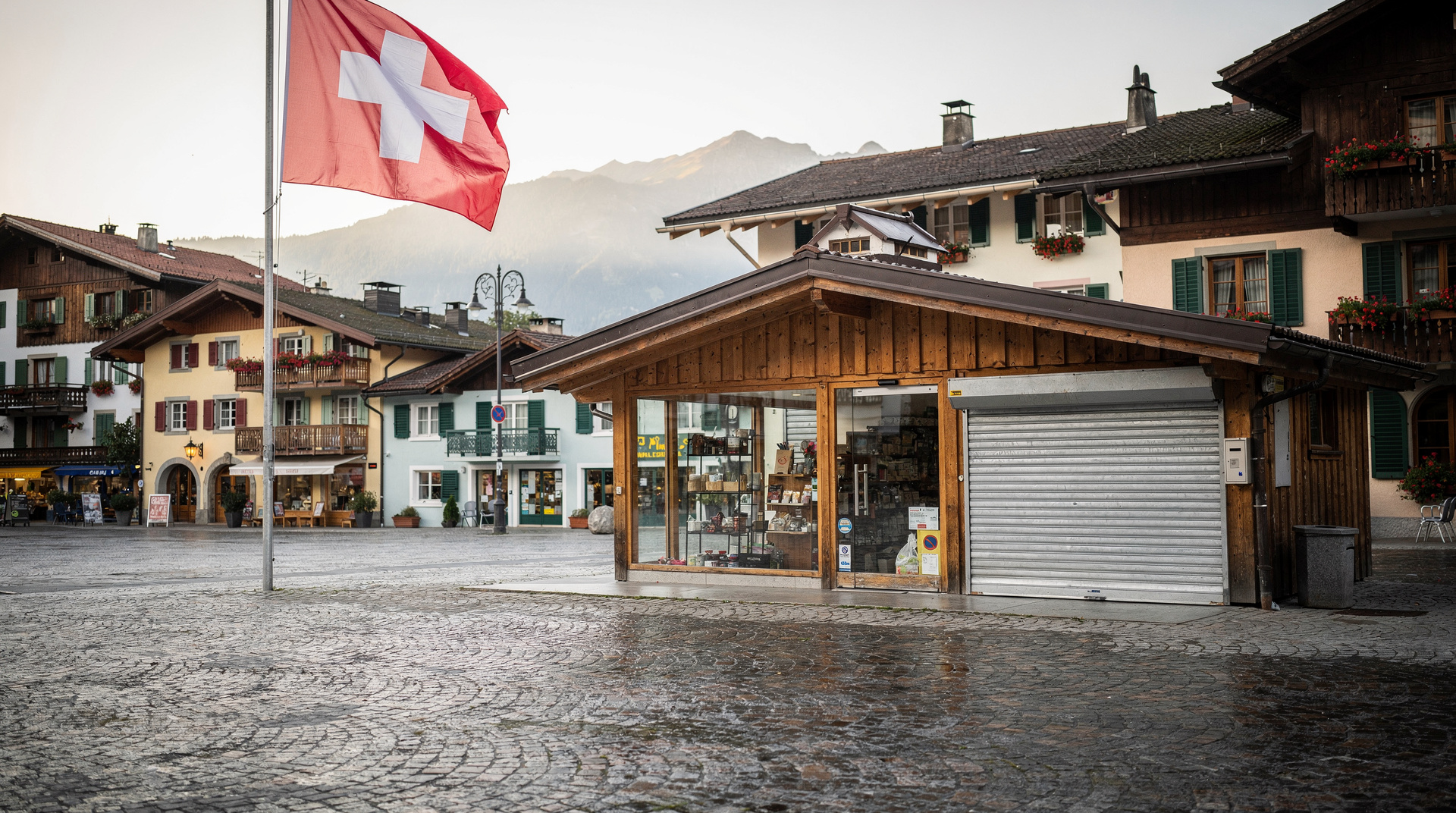
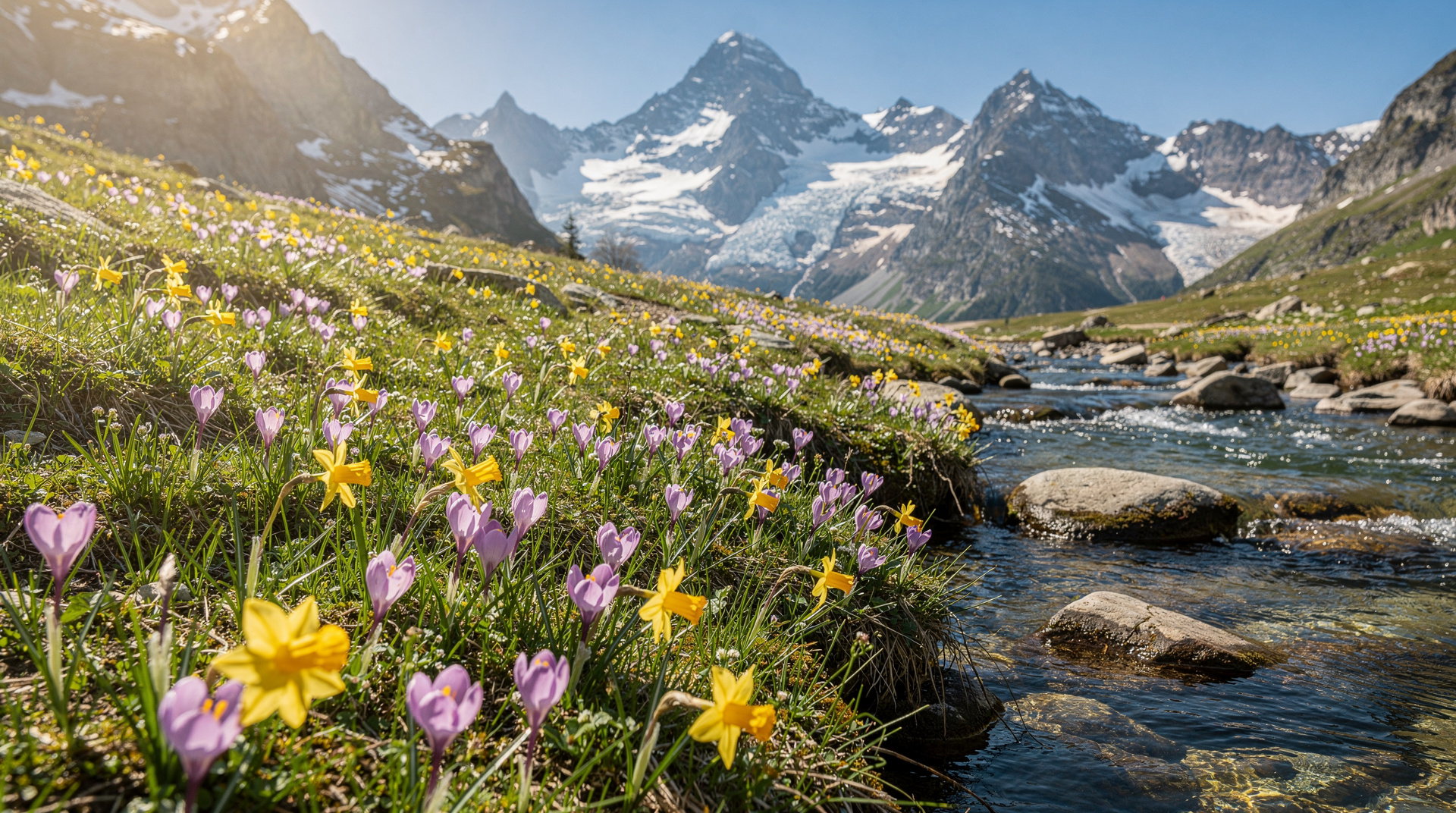
Switzerland in summer: weather, activities, and tips
Is summer a good time to visit Switzerland?
Summer (June to August) is the peak season for good reason — warm weather, all attractions open, superb hiking, lake swimming, and long days. June is the sweet spot for manageable crowds. July and August are the busiest and most expensive months but offer the full Swiss summer experience.
Switzerland in summer: an overview
Swiss summer — running from June through August — is the most popular time to visit the country, and the reasons are obvious. The weather is warm and generous. Every mountain railway, cable car, and hiking trail is operational. The lakes are swimmable. The days are long (16+ hours of daylight at the solstice). And the landscape — Alpine flowers at altitude, turquoise lakes in the valleys, snow-capped peaks above — is at its most spectacular.
The trade-off is that summer is expensive and crowded, particularly in July and August. The Jungfraujoch can mean multi-hour queues without advance planning. Popular trails resemble processions. Mountain resort and city hotel prices are at their annual peak. Navigating summer Switzerland well requires advance booking, strategic timing, and a willingness to explore less-visited corners of this compact but endlessly rewarding country.
June is the strategic choice for those who want summer conditions without August crowds. September carries the summer torch into excellent early-autumn conditions. But if your window is July or August, Switzerland is still magnificent — it just requires more planning.
At a glance
| Summer in Switzerland | |
|---|---|
| Where | Everywhere is at peak operation; lakes (Lake Geneva, Lucerne) and high alpine trails both shine |
| Cost | Around 30-50% above low-season rates, highest in July-August |
| Time needed | A week for a classic route; 10-14 days to add lake time and scenic trains without rushing |
| Getting there | Zurich or Geneva airport, then the Swiss Travel Pass network |
| Best time within the season | Early-to-mid June for near-peak conditions with noticeably fewer crowds |
June in Switzerland
June marks the start of Swiss summer with genuinely ideal conditions. School holidays in most European countries haven’t begun yet, so the major tourist sites are busy but manageable. The days are at their longest — the June solstice (21 June) delivers over 16 hours of daylight. Temperatures are warm (20-26C in valleys) without the intense heat that can make July and August uncomfortable. Alpine flower season is at its peak at middle elevations, and hiking trails are fully open.
The first half of June is particularly good — before school holidays begin in Germany and elsewhere, the combination of excellent weather and manageable crowds makes this one of Switzerland’s finest windows.
Key June events include the Alpaufzug (cattle drives to high summer pastures), various cultural festivals in Zurich, and the Corpus Christi processions in Catholic cantons.
For the detailed month guide, see Switzerland in June.
July in Switzerland
July is the peak month — and one of the best despite the crowds. The Montreux Jazz Festival (early to mid-July) is a world-class event with free lakeside concerts alongside ticketed shows. Paléo Festival in Nyon (late July) is another major music event. Swiss National Day on August 1 approaches with building excitement. The landscape is at its summer peak.
The key strategy for July is advance planning. Book accommodation 3-6 months ahead. Reserve Glacier Express seats and Jungfraujoch excursion tickets online. Use early morning hours for popular sites. Travel midweek rather than weekends.
The July advantage: everything is operating at maximum capacity, the weather is reliable (with afternoon thunderstorm patterns that experienced Swiss visitors manage around), and the long days give enormous flexibility.
For the detailed month guide, see Switzerland in July.
August in Switzerland
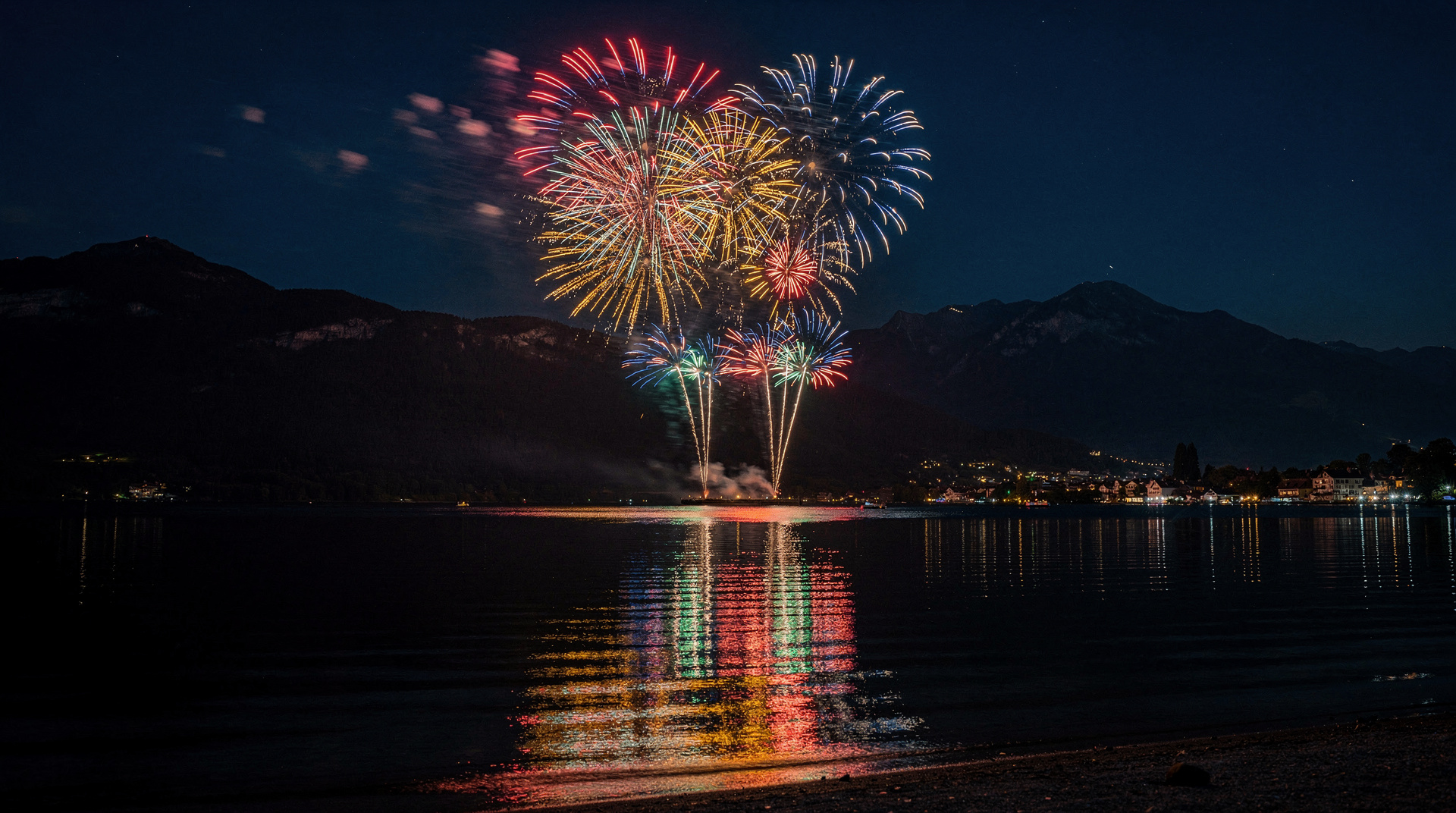
August is simultaneously the busiest and most festive month. Swiss National Day on August 1 brings the country together in celebration — bonfires on hilltops, fireworks over lakes, community gatherings. Zurich’s Street Parade (second Saturday of August) is Europe’s largest electronic music parade, drawing over one million people. The Locarno Film Festival runs in early August.
Lake temperatures are at their peak (22-24C in the warmest lakes). High-altitude hiking trails are all clear. The full adventure sports calendar in Interlaken is running at capacity. And the summer atmosphere — outdoor dining, lake swimming, mountain terrace lunches — is at its most vivid.
The challenge: this is the most expensive and crowded month. Book everything as early as possible.
For the detailed month guide, see Switzerland in August.
Summer weather by region
Zurich and northeast Switzerland: 24-28C average highs in July. Afternoon thunderstorms common. Lake Zurich swimmable and beautiful.
Geneva and Lake Geneva: One of Switzerland’s warmer regions in summer. Geneva sees 26-30C in peak summer. Montreux is particularly warm. Lake Geneva swimmable and spectacularly beautiful.
Lucerne and central Switzerland: 22-27C. The mountain backdrop is extraordinary on clear days. Afternoon cloud buildup and thunderstorms typical.
Interlaken and Bernese Oberland: Valley temperatures of 22-28C. The narrow valley focuses heat but also channels storms. Morning is usually clear; plan outdoor activities before noon when possible.
Valais: One of Switzerland’s driest and sunniest regions. Temperatures can exceed 30C in Sion and the Rhône valley. Zermatt at 1,600m is more moderate. Wine country in full summer production.
Ticino: The most Mediterranean of Swiss regions. Lugano and Locarno regularly see 30-35C in July and August. The palm trees around Lake Lugano and Lake Maggiore feel genuinely Italian.
Graubünden and Engadin: Higher elevation means cooler temperatures. The Engadin at 1,800m is often 5-8C cooler than the plateau. St. Moritz is typically 20-24C in peak summer — warm but never stifling.
Summer activities
Hiking
Summer hiking in Switzerland is among the finest in Europe. With all trails open and conditions at their best, the range of possibilities is extraordinary:
Jungfrau region: Trails from Grindelwald First, Kleine Scheidegg, Mürren, and Wengen cover every difficulty level. The Eiger Trail along the base of the famous north face is essential.
Zermatt area: Trails with Matterhorn views from multiple angles. The path from Schwarzsee to Zermatt and the routes up to the Hörnligrat base are spectacular.
Engadin: The Via Engiadina long-distance path, lake walks around St. Moritz, and routes into the Bernina massif.
Alpine passes: Many historic passes (Susten, Grimsel, Gotthard, Julier) have summer hiking routes following ancient paths.
Book Grindelwald First cableway and cliff walkLake swimming
Swiss Badi culture is one of the great pleasures of summer. Free or affordable lakeside swimming areas dot every major Swiss lake. Lakes reach 20-24C in peak summer:
- Lake Zurich: Multiple Badi around the lake, swimming in the city.
- Lake Geneva: Warm, clear, with the Alps as a backdrop.
- Lake Thun and Lake Brienz: Glacier-fed but warming in summer. Brienz is notably turquoise.
- Lake Lugano: Mediterranean warmth in Ticino.
Mountain excursions
All three major excursion mountains are at peak operation in summer. Book in advance to avoid queues:
Book Jungfraujoch — Top of Europe Book the Mount Pilatus golden round trip Discover Mount Titlis glacierAdventure sports
Summer is the full season for Interlaken’s adventure sports offering:
Book tandem paragliding over InterlakenGlacier Express and scenic trains
Summer is prime time for scenic train journeys. The Glacier Express from Zermatt to St. Moritz is fully booked on some summer days — reserve months in advance.
Book the Glacier ExpressCity life
Swiss cities have their own summer rhythm. Zurich’s lake quays become outdoor living rooms. The Aare river swimming through Bern is a local institution. Basel’s Rhine swimming (using a waterproof bag as a buoyancy float) is a uniquely Basel experience.
Summer costs
Summer pricing is at its annual peak in July and August. June is slightly lower. Expect accommodation prices 30-50% above low-season rates.
The Swiss Travel Pass is strongly recommended for summer travel — the combination of trains, mountain railways, and lake boats you will use makes it efficient value.
Get your Swiss Travel PassSee our Switzerland budget guide for detailed summer cost breakdowns.
Managing summer crowds
Go early: The most popular sites are best before 09:00. The Jungfraujoch Good Morning Ticket (depart before 08:00, return by 13:00) saves money and avoids the worst queues.
Travel midweek: Summer weekends at popular mountain destinations are intense. Arriving Sunday and leaving Friday avoids the worst crowd pressure.
Explore alternatives: For every Jungfraujoch, there is a Mount Rigi, Schilthorn, or Harder Kulm with similar mountain views and a fraction of the visitors. The Bernese Oberland’s lesser-visited trails (Saxeten valley, Kiental) are remarkable in summer without summer crowds.
Use the Swiss Travel Pass efficiently: Free unlimited travel on most Swiss transport means you can arrive at attractions at optimal times without worrying about ticket costs for each individual journey.
Recommended summer itinerary
Classic 7-day summer: 1 night Zurich, 1 night Lucerne, 2 nights Interlaken (adventure sports, Jungfraujoch), 1 night Grindelwald (hiking), 2 nights Zermatt (Matterhorn hiking, glacier).
Scenic trains focus: 3 nights Zermatt, Glacier Express to St. Moritz, 3 nights Engadin (hiking, lake walks).
See our full 7-day Switzerland itinerary for detailed routing.
Pros and cons of summer in Switzerland
Pros:
- Everything open and operational
- Warm, long days — maximum outdoor time
- Lake swimming in warm water
- Montreux Jazz Festival, Swiss National Day
- Best hiking conditions
- Full adventure sports season
Cons:
- Most crowded period
- Peak hotel prices
- Advance booking essential
- Afternoon thunderstorms can disrupt outdoor plans
- Jungfraujoch and popular sites very busy
Swiss summer culture
Summer is Switzerland’s festival season. Beyond the Montreux Jazz Festival and Swiss National Day, the summer months bring:
Buskers Bern (August): International street performers take over Bern’s UNESCO-listed old town for several days. Free outdoor entertainment.
William Tell Open-Air Theatre (Interlaken, June-September): Schiller’s classic performed in German in a purpose-built outdoor theatre with the Jungfrau mountains as a backdrop.
Zurich Marathon and outdoor sports events: Throughout summer, Swiss cities and mountain venues host running races, cycling events, and triathlons.
Alpabzug (June): Cattle drives to high summer pastures — one of the most distinctly Swiss spectacles of the year. Decorated cows, farmers in traditional dress, and mountain paths that have been used for centuries.
Swiss lakes in summer
Switzerland’s lakes are a defining feature of summer in the country. Each has its own character:
Lake Geneva (Lac Léman): The largest, most cosmopolitan. The CGN paddle steamers provide beautiful day trips. Lausanne, Montreux, Vevey, and Nyon are all accessible by boat.
Lake Lucerne (Vierwaldstättersee): Irregular, mountain-surrounded, dramatic. Boat routes connect to Flüelen in the far end of the lake and across to the Rütli meadow (Swiss national founding myth site).
Lake Zurich: Urban and accessible. Swimming in the lake from the Zürichhorn Badi or Tiefenbrunnen is a classic Zurich summer experience.
Lake Thun and Lake Brienz: The turquoise-blue colour of Lake Brienz (particularly) is extraordinary. Both are connected to Interlaken and accessible by boat.
Lake Lugano and Lake Maggiore (Ticino): Mediterranean warmth. Palm trees on the shore. Italy visible across the water.
Summer budget tips
Summer is expensive, but there are ways to manage costs:
- Book accommodation 3-4 months in advance for July and August
- Jungfraujoch Good Morning Ticket (before 08:00) saves CHF 60-70 per person
- Eat lunch at mountain restaurants rather than dinner (lunch menus are typically 30-40% cheaper)
- Use public Badi for swimming (free or minimal cost) rather than hotel pools
- Travel by Swiss Travel Pass rather than buying individual tickets
For detailed budget planning, see our Switzerland budget guide.
Quick seasonal comparison
Summer is the classic choice, but it is not always the best choice. For context, see our when to visit Switzerland guide. If you are flexible, May and September offer very similar conditions with significantly lower crowds and prices.
Individual month guides: June | July | August
Planning resources: 7-day Switzerland itinerary | Interlaken guide | Grindelwald guide | Zermatt guide | Lucerne guide
Summer month by month
| Month | Weather | Crowds | Notes |
|---|---|---|---|
| June | 20-26C, longest days of the year | Manageable, especially first half | Sweet spot before European school holidays begin |
| July | 24-30C, afternoon storms possible | Very busy | Montreux Jazz Festival, Paléo Festival; book months ahead |
| August | Peak lake temperatures (22-24C) | Busiest of the year | Swiss National Day (Aug 1), Street Parade, Locarno Film Festival |
Frequently asked questions about Switzerland in summer
Is June or July the better month for a first Switzerland trip? June, if you can choose — conditions are close to July’s but with meaningfully smaller crowds and lower prices, especially in the first half of the month before most European school holidays start.
Do I really need to book the Glacier Express months in advance in summer? For July and August, yes — popular departures sell out weeks ahead. For June, booking 3-4 weeks out is usually sufficient; see our Glacier Express guide for booking specifics.