21 days in Switzerland: the ultimate three-week trip
Why three weeks is worth it
Three weeks in Switzerland is a rare luxury — long enough to explore every region without rushing, ride every iconic scenic train, and discover the places that shorter itineraries always skip. This is the complete Swiss experience: from the rolling Alpine foothills of Appenzell in the northeast to the palm-fringed shores of Lugano in the south, from the medieval capital of Bern to the glamour of St. Moritz and the international cosmopolitanism of Geneva.
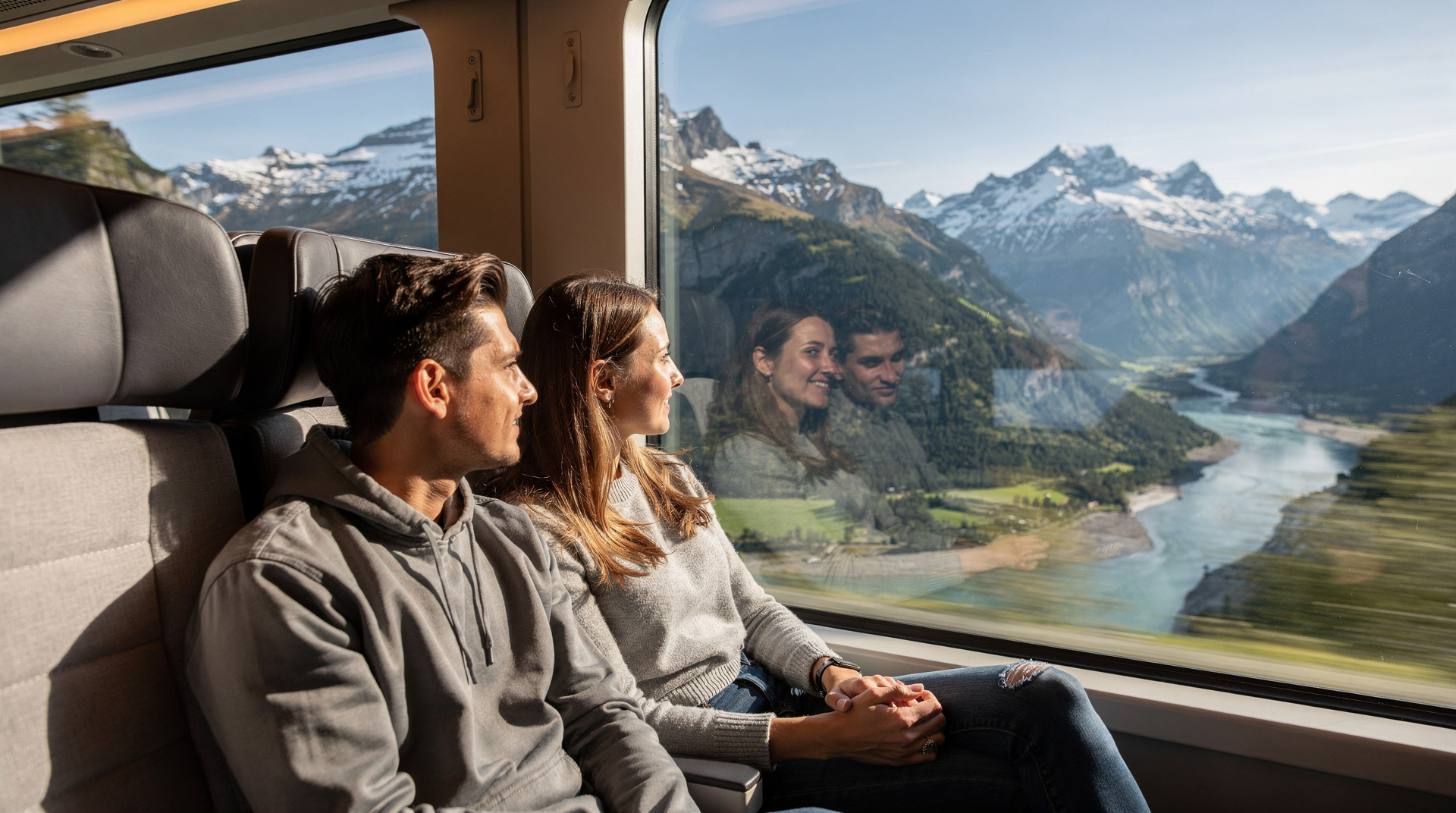
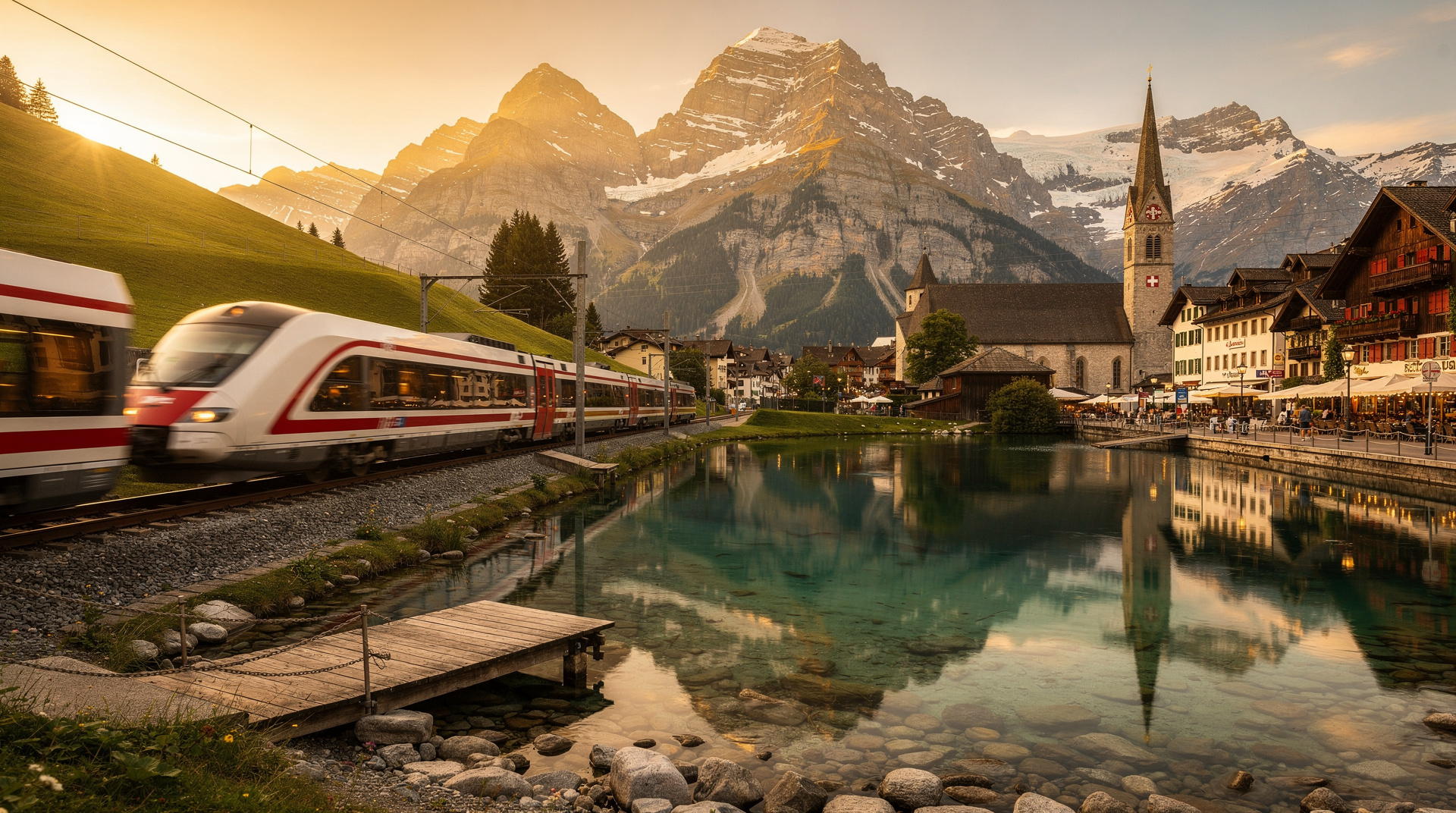
The five iconic train journeys in this itinerary — the Glacier Express, the Bernina Express, the GoldenPass Panoramic, the Gotthard Panorama Express, and the Voralpen Express — represent the best of Swiss rail engineering and scenery. The Swiss Travel Pass covers all of them (seat reservations required for the first two).
| At a glance | |
|---|---|
| Route | Zurich → Appenzell → Lucerne → Locarno → Lugano → St. Moritz → Zermatt → Chur → Bern → Interlaken → Montreux → Geneva |
| Cost (excl. flights) | Around CHF 6,000-7,600 per person |
| Pace | Moderate — mostly 1-2 night stays, five scenic-train days |
| Best for | Comprehensive travellers, train lovers, deep exploration of every region |
| Best time | June or September; book all five scenic trains and the Jungfraujoch well ahead |
Days 1-2: Zurich and Appenzell
Day 1 — Zurich
Arrive at Zurich Airport and spend your first evening and the following morning in Zurich. The Altstadt, the Fraumünster (Chagall windows), the Kunsthaus Zürich, and the lake promenade deserve at minimum a full afternoon and evening. Dinner in the Langstrasse district.
Day 2 — Zurich and the Lindt museum
A more relaxed second day in Zurich. Morning at the Lindt Home of Chocolate museum at Kilchberg (20 minutes by S-Bahn). Afternoon walking Zurich’s lesser-known quarters: the Enge and Wollishofen lakeside neighbourhoods south of the city, or the Seefeld district east of the centre. Evening in the old town.
Reserve your Lindt Home of Chocolate entry ticket →Accommodation: 2 nights Zurich.
Days 3-4: Appenzell and eastern Switzerland
Day 3 — journey to Appenzell
Train from Zurich to Appenzell via St. Gallen (about 1h 45min). Appenzell is the most traditional of all Swiss towns — a region that retained some of the oldest forms of Swiss democracy (the Landsgemeinde open-air vote was held here until 1997), with elaborately painted wooden farmhouses, the richest folkloric tradition in the country, and some of the finest walking in the Alpstein range.
The main street of Appenzell town is lined with painted buildings in deep reds, yellows, and greens with ornate gable windows — the architecture is unlike anything elsewhere in Switzerland. The Appenzell Museum documents the extraordinary local customs: Appenzell headdresses, cowbell ceremonies, and the cheese culture of the Alpstein.
Book a full-day guided tour to Appenzell from Zurich →Day 4 — Säntis summit and Wildkirchli caves
The Säntis is the highest peak in the Alpstein at 2,502 metres and has a cable car from Schwägalp (bus from Appenzell). The summit panorama on a clear day covers Germany, Austria, Liechtenstein, and the Swiss plateau all the way to the Jura. The rotating platform gives 360-degree views.
On the way back, visit the Wildkirchli caves near Ebenalp — a cluster of prehistoric caves used as a hermitage from the 17th century, reached by cable car and a short cliff path. The terrace restaurant at Ebenalp, perched on the cliff edge above a sea of cloud, is one of the most dramatic café settings in Switzerland.
Accommodation: 2 nights Appenzell.
Days 5-6: Lucerne
Train from Appenzell to Lucerne via Gossau and Zug (about 2 hours). Two full days in Lucerne — the classic Swiss city.
Day 5 — the city
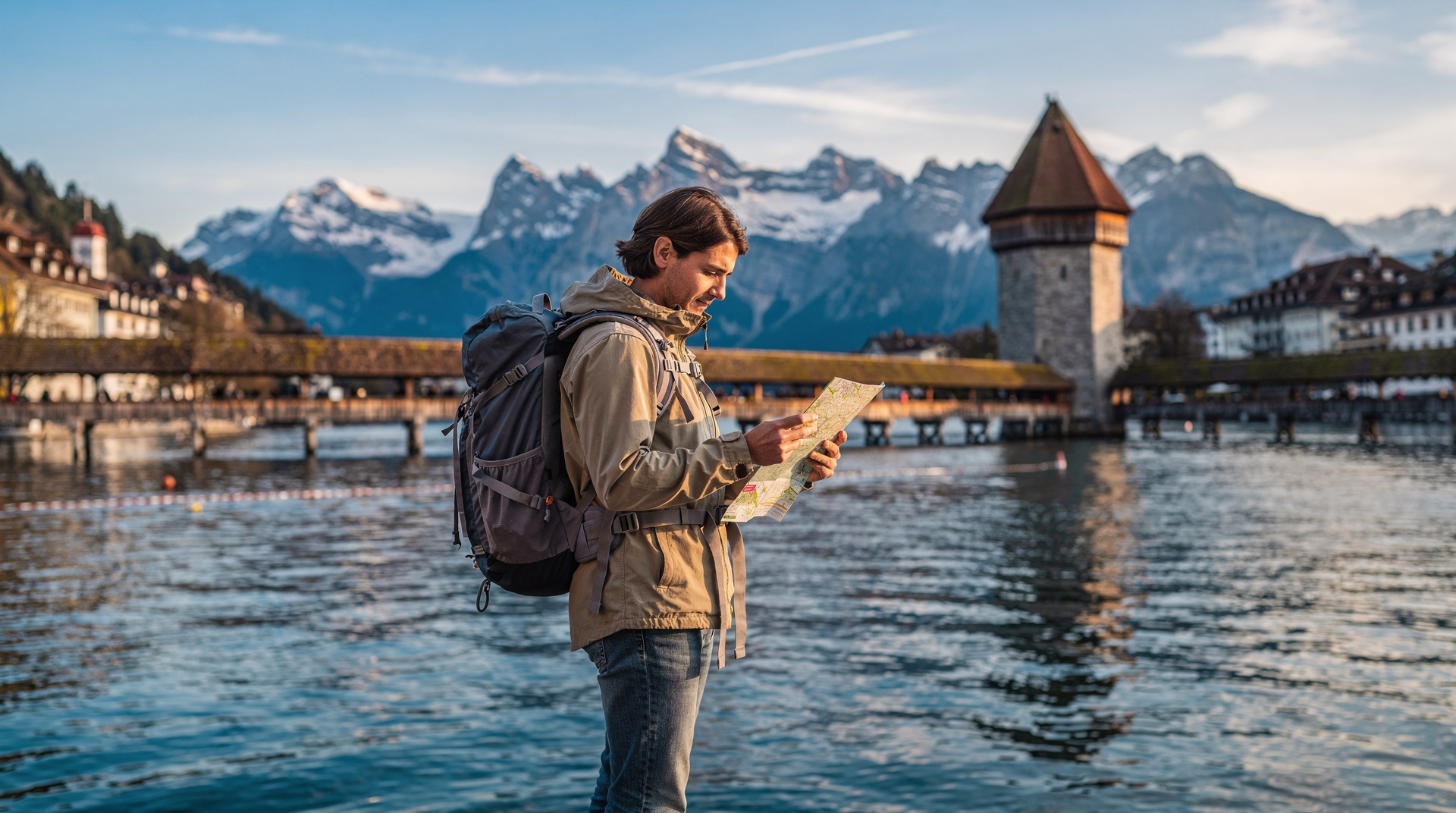
Chapel Bridge, Musegg Wall, Weinmarkt, Jesuit Church, Swiss Museum of Transport. The Lion Monument — a dying sandstone lion carved into a cliff face, commemorating the Swiss Guards killed in Paris in 1792 — is one of the most moving public sculptures in Europe. Twain called it “the most mournful and moving piece of stone in the world.”
Lake cruise on the evening steamer.
Book a Lucerne city tour with cruise and cheese tasting →Day 6 — Mount Pilatus
The Pilatus Golden Round Trip: boat from Lucerne to Alpnachstad, world’s steepest rack railway (gradient 48%) to the 2,132-metre summit, cable car return via Fräkmüntegg. The whole circuit takes four to five hours. Alternative: take the boat to the Rigi — the “Queen of the Mountains” and the first European mountain accessible by rack railway (1871). The Rigi summit at 1,797 metres has sunrise and sunset views over an extraordinary expanse of cloud and lake.
Pre-book the Pilatus Golden Round Trip — a bucket-list Swiss excursion →Accommodation: 2 nights Lucerne.
Day 7: Gotthard Panorama Express — Lucerne to Locarno
The Gotthard Panorama Express is a two-stage journey: first by steamboat from Lucerne down the length of Lake Lucerne to Flüelen (2.5 hours), then by vintage panorama train through the Gotthard massif to Locarno on Lake Maggiore (2 hours). The boat section passes the Tell’s Platte, the Rütli meadow (birthplace of the Swiss Confederation), and the dramatic narrowing of the lake at Brunnen.
The train section climbs through the spiral tunnels of the old Gotthard route (opened 1882) before descending through Ticino to the Mediterranean atmosphere of Locarno. A seat reservation is required (approximately CHF 15). This is one of the lesser-known scenic journeys in Switzerland and one of the most atmospheric.
Arrive in Locarno by late afternoon. Stroll the palm-lined lakefront, the Piazza Grande (the largest open public space in Switzerland, famous for its outdoor film festival in August), and the medieval old town. Take the funicular to the Santuario della Madonna del Sasso, a pilgrimage church on a cliff above the town with lake views.
Accommodation: 1 night Locarno.
Day 8: Lugano
Train from Locarno to Lugano (50 minutes). Lugano is the financial and cultural capital of Italian-speaking Switzerland — a city of striking contradictions, where Swiss orderliness meets Italian style along a deep blue alpine lake.
Monte San Salvatore (funicular from Lugano-Paradiso) and Monte Brè (cable car from Cassarate) frame the city on both sides. The lakeside walk from Lugano to Gandria (2 hours one way) is the finest in Ticino. MASI, the Museum of Art of Italian Switzerland, has a strong 20th-century Swiss and Italian collection.
Book the Monte San Salvatore tour with funicular ride over Lake Lugano →Accommodation: 1 night Lugano.
Days 9-10: St. Moritz and the Engadine
Train from Lugano to St. Moritz via Bellinzona and Chur (about 3 hours). St. Moritz sits at 1,800 metres in the Engadine, Switzerland’s highest inhabited valley, known for its extraordinary light — 300 sunny days per year by local claim — and its long history as the birthplace of alpine winter tourism.
Day 9 — arrival and the valley
Arrive and walk the village. The Segantini Museum houses the most important collection of Giovanni Segantini’s work — his enormous late Alpine paintings capture the light and solitude of the Engadine with extraordinary precision. Walk the lake shore and, in summer, rent a bike to explore the valley toward Maloja.
Day 10 — Diavolezza and Morteratsch Glacier
The Diavolezza cable car from Pontresina reaches 2,978 metres and opens onto one of the great high-altitude panoramas in the Alps: the Bernina massif (Piz Bernina at 4,049 metres is the highest in the Eastern Alps), the Morteratsch Glacier below, and Italy beyond. In summer there is a famous glacier walk from Diavolezza across the ice to Munt Pers and down to the glacier tongue — a full-day adventure requiring crampons (rentable at the summit).
The Morteratsch Glacier walk from the valley (2 hours return) is the most accessible glacier excursion in the Engadine — signs at the trailhead mark the glacier’s retreat over the past century in sobering detail.
Accommodation: 2 nights St. Moritz.
Day 11: Bernina Express — St. Moritz to Lugano (or Tirano)
The Bernina Express is widely considered the most scenic railway in the world — a UNESCO World Heritage Line that climbs to 2,253 metres, crosses permanent snowfields, and descends through subtropical vegetation to the Italian border town of Tirano, all within three hours. The Brusio circular viaduct — a perfect stone loop used to control the gradient — is the most photographed structure on the line.
Ride the train to Tirano, then take the postbus or regional train through Como to Lugano for the night. Or if you have already seen Lugano, take the bus to Bergamo (Italian city with a magnificent walled upper town) for a side trip.
Accommodation: 1 night Lugano or Tirano area.
Days 12-13: Zermatt
Train to Zermatt via Bellinzona, Brig, and Visp (about 4 hours). The arrival into Zermatt — car-free village, electric taxis, the Matterhorn filling the skyline at the end of Bahnhofstrasse — is one of the great moments of any Swiss itinerary.
Day 12 — Matterhorn Glacier Paradise
Matterhorn Glacier Paradise at 3,883 metres (highest cable car in the Alps), Glacier Palace ice cave, 29-peak panorama. Afternoon in the village: Matterhorn Museum Zermatlantis, the mountaineers’ churchyard.
Reserve your Matterhorn Glacier Paradise ticket — 4 countries visible from the summit →Day 13 — Glacier Express departure day (morning free)
Free morning in Zermatt — walk to Riffelalp, take the Rothorn cable car, or simply sit in a cafe and look at the Matterhorn. Afternoon departure on the Glacier Express.
Day 14: Glacier Express — Zermatt to Chur (full route section)
The full Glacier Express in first class from Zermatt departs at 9:52am and arrives in St. Moritz at 6:57pm. On this itinerary, having already visited St. Moritz, ride the train to Chur and stay overnight — the journey takes about five hours and covers the most dramatic sections including the Oberalp Pass and the Rhine Gorge descent. Chur is the oldest city in Switzerland (documented Roman settlement) with a compact medieval old town.
Accommodation: 1 night Chur.
Day 15: Bern
Train from Chur to Bern (2 hours). The Swiss capital deserves a full day — 6 kilometres of covered arcades, the Zytglogge tower, the Rose Garden, the Federal Palace. Visit the Einstein Museum in the Bern Historical Museum.
Discover Bern’s hidden stories on a guided walking tour →Accommodation: 1 night Bern.
Days 16-17: Interlaken and the Bernese Oberland
Train to Interlaken (50 minutes). Two nights to explore the Jungfrau region properly.
Day 16 — Jungfraujoch
Jungfraujoch — the 3,454-metre summit railway, Ice Palace, Aletsch Glacier. Early start essential.
Book the Top of Europe train — the Jungfraujoch sells out fast →Day 17 — Lauterbrunnen valley and Schilthorn
Trümmelbach Falls, Staubbach waterfall, walk the valley floor. Afternoon on the Schilthorn (2,970 metres) — the rotating James Bond restaurant and Piz Gloria with its Eiger-Mönch-Jungfrau panorama.
Accommodation: 2 nights Interlaken or Grindelwald.
Days 18-19: GoldenPass — Interlaken to Montreux
Day 18 — GoldenPass Panoramic Express
The GoldenPass line from Interlaken to Montreux is one of Switzerland’s most varied scenic journeys — crossing from the German-speaking Bernese Oberland to the French-speaking Vaud through the Simmental valley, over the Zweisimmen pass, and descending through vineyards to the lake. The new GoldenPass Express (introduced 2022) runs the full route without changing trains for the first time, using variable-gauge wheel sets to switch between two different rail gauges. The journey takes about three hours.
Arrive in Montreux by midday. Walk the lakefront, visit the Freddie Mercury statue, and take the afternoon to visit the Château de Chillon.
Book your Château de Chillon ticket — Byron’s dungeon, 13th-century fortress →Day 19 — Chillon and the Lavaux vineyards
Château de Chillon entrance ticket for the morning — the 13th-century fortress on its lake rock is the most visited historic monument in Switzerland. Walk back to Montreux along the lakeside path.
Afternoon: the Lavaux UNESCO wine terraces between Montreux and Lausanne. Take the local train to Rivaz or Epesses and walk the vine trail back toward Vevey through the terraced vineyards, with the lake below and the Alps of Savoy across the water.
Accommodation: 2 nights Montreux.
Days 20-21: Geneva and Gruyères
Day 20 — Gruyères cheese and chocolate
Day trip from Montreux to Gruyères. The medieval hilltop village of Gruyères (45 minutes from Montreux by train and bus) is the origin of one of Switzerland’s most famous cheeses. The Gruyères cheese and chocolate experience includes a visit to the working cheese dairy (La Maison du Gruyère), the Cailler chocolate factory at Broc, and the perfectly preserved medieval village. The HR Giger Museum in Gruyères village — dedicated to the Swiss artist who designed the “Alien” creature — is an unexpected and excellent addition.
Return to Montreux by evening and take the train to Geneva (45 minutes).
Book the Gruyères cheese and Cailler chocolate factory experience →Day 21 — Geneva and departure
Final day in Geneva. Walk the old town, see the Jet d’Eau, visit the UN Palais des Nations (with advance booking), and have a final Swiss dinner on the lakefront. Geneva Airport is 15 minutes by direct train from Cornavin station.
Practical information
Transport pass
The Swiss Travel Pass (21 consecutive days) costs approximately CHF 560 per adult in 2026. For this itinerary it is by far the best value option — it covers all regular trains, all lake boats, and gives substantial discounts on mountain railways.
Budget estimate (per person, 21 days, comfort budget)
- Swiss Travel Pass (21 days): CHF 560
- Mountain excursions: CHF 350-450
- Scenic train reservations: CHF 100
- Accommodation (21 nights, comfort mid-range): CHF 3,500-5,000
- Food (CHF 70/day): CHF 1,470
Total per person (excluding flights): CHF 6,000-7,600
For budget-conscious alternatives, see the budget itinerary and Swiss Travel Pass guide. For the scenic trains in detail, each has its own guide on this site.
Day-by-day summary
| Days | Base | Highlight |
|---|---|---|
| 1-2 | Zurich | Old town, Kunsthaus, Lindt museum |
| 3-4 | Appenzell | Säntis summit, Wildkirchli caves |
| 5-6 | Lucerne | Chapel Bridge, Pilatus Golden Round Trip |
| 7 | Locarno | Gotthard Panorama Express |
| 8 | Lugano | Monte San Salvatore, Monte Brè |
| 9-10 | St. Moritz | Diavolezza, Morteratsch Glacier |
| 11 | Lugano/Tirano | Bernina Express |
| 12-13 | Zermatt | Matterhorn Glacier Paradise |
| 14 | Chur | Glacier Express |
| 15 | Bern | Zytglogge, Bear Park |
| 16-17 | Interlaken/Grindelwald | Jungfraujoch, Schilthorn |
| 18-19 | Montreux | GoldenPass Express, Château de Chillon |
| 20-21 | Geneva | Gruyères day trip, old town, departure |
Frequently asked questions about 21 days in Switzerland
Is 21 days too long for Switzerland?
Not for travellers who want to ride every major scenic train and visit all four linguistic regions — Switzerland is small geographically but culturally varied enough to reward three weeks. If that sounds like more depth than you need, the 14-day itinerary covers most of the same regions in about two-thirds the time.
Do I need to book everything before arriving?
Yes, more than any shorter itinerary here. With five scenic trains and the Jungfraujoch each requiring separate reservations, booking them all before departure avoids a cascade of rebooking if one date is unavailable. See how to book scenic trains for a step-by-step approach.