Winter sports in Switzerland: skiing, sledging, snowshoeing and more
What winter sports can you do in Switzerland?
Switzerland offers downhill skiing and snowboarding in resorts such as Zermatt, Verbier and St. Moritz, plus sledging, cross-country skiing in the Engadin, snowshoeing, winter hiking, ice skating, ice climbing and curling. The main season runs from mid-December to early April.
Switzerland in winter: far more than skiing
Switzerland invented much of modern winter tourism. In the 1860s, a St. Moritz hotelier bet his English summer guests that they would enjoy the Engadin in winter, and the sledging, curling and skating that followed shaped the Alpine holiday as we know it. Today the country has around 200 ski areas, thousands of kilometres of groomed cross-country trails, signposted winter hiking paths and some of the most famous sledging runs in Europe.
What sets Switzerland apart is how easy it is to reach all of this without a car. Trains run to the foot of almost every major resort, many villages are car-free, and the same cable cars that carry skiers also carry walkers, sledgers and sightseers. You do not have to be a skier to enjoy a Swiss winter: some of the best days are spent on a sledge, on snowshoes or simply on a sunny terrace at 2,000 m.
This guide gives an overview of every major winter sport, where to do it and what it costs, with links to our detailed guides. For the season as a whole, including weather, Christmas markets and events, read our guide to Switzerland in winter.
| At a glance | |
|---|---|
| Main season | Mid-December to early April; glacier skiing almost all year in Zermatt and Saas-Fee |
| Best snow | January to March |
| Quietest weeks | Early January and from mid-March, outside school holidays |
| Top regions | Valais, Graubünden, Bernese Oberland, central Switzerland |
| Getting there | Train to almost every resort; many villages are car-free |
| Non-skiers | Sledging, snowshoeing, winter hiking, thermal baths, scenic railways |
Downhill skiing and snowboarding
Skiing remains the main reason people visit the Swiss Alps in winter. The big names are famous for good reason: high altitude, reliable snow, efficient lifts and spectacular scenery. Our ranking of the best ski resorts in Switzerland compares them in detail, but here is the short version.
- Zermatt: the most complete resort, with high-altitude glacier skiing, a link to Cervinia in Italy and the Matterhorn above every run.
- Verbier: the largest linked area in the 4 Vallées and a favourite of advanced and off-piste skiers.
- St. Moritz: sunshine, glamour and wide pistes on Corviglia and Corvatsch.
- Grindelwald and Wengen: mixed-ability skiing with direct views of the Eiger, Mönch and Jungfrau, and the famous Lauberhorn World Cup downhill in mid-January.
- Davos and Klosters: a huge area with five ski mountains, popular with snowboarders.
- Laax: Switzerland’s freestyle capital, with some of the best snow parks in Europe.
For a choice between two of the most famous names, our comparisons of Verbier and Zermatt and St. Moritz and Davos help you decide.
What it costs. Swiss skiing is expensive. A day pass in a major resort usually costs between CHF 70 and CHF 100, and equipment rental adds CHF 40-70 per day. Smaller family areas are much cheaper, and some resorts now use dynamic pricing, so buying online and early saves money.
Families. Ski schools in Switzerland are excellent, and many resorts have dedicated children’s areas with magic carpets and snow gardens. Our guide to family ski resorts lists the best options for young children.
Lessons, rental and lift passes
Swiss ski schools teach in English almost everywhere, and group lessons for adults and children usually run in the morning, leaving the afternoon free to practise. Private lessons are worth it for a first day on skis or for a quick boost in confidence on steeper runs. Rental shops in every resort offer skis, snowboards, boots and helmets, and booking online a few days ahead is often cheaper than walking in. Many shops let you leave your equipment overnight at the bottom of the lifts, which saves carrying it back to the hotel.
Lift passes are sold for a day, a half-day or several days. Most resorts reward buying online in advance, and a multi-day pass becomes much cheaper per day. Pedestrian passes exist in many resorts for non-skiers who want to ride the lifts to the restaurants and viewpoints.
Matterhorn Glacier Paradise, Zermatt
Ride up to Europe's highest cable car station for glacier views over the Matterhorn, open to skiers and non-skiers alike.
Book the Matterhorn Glacier ParadiseSledging and tobogganing
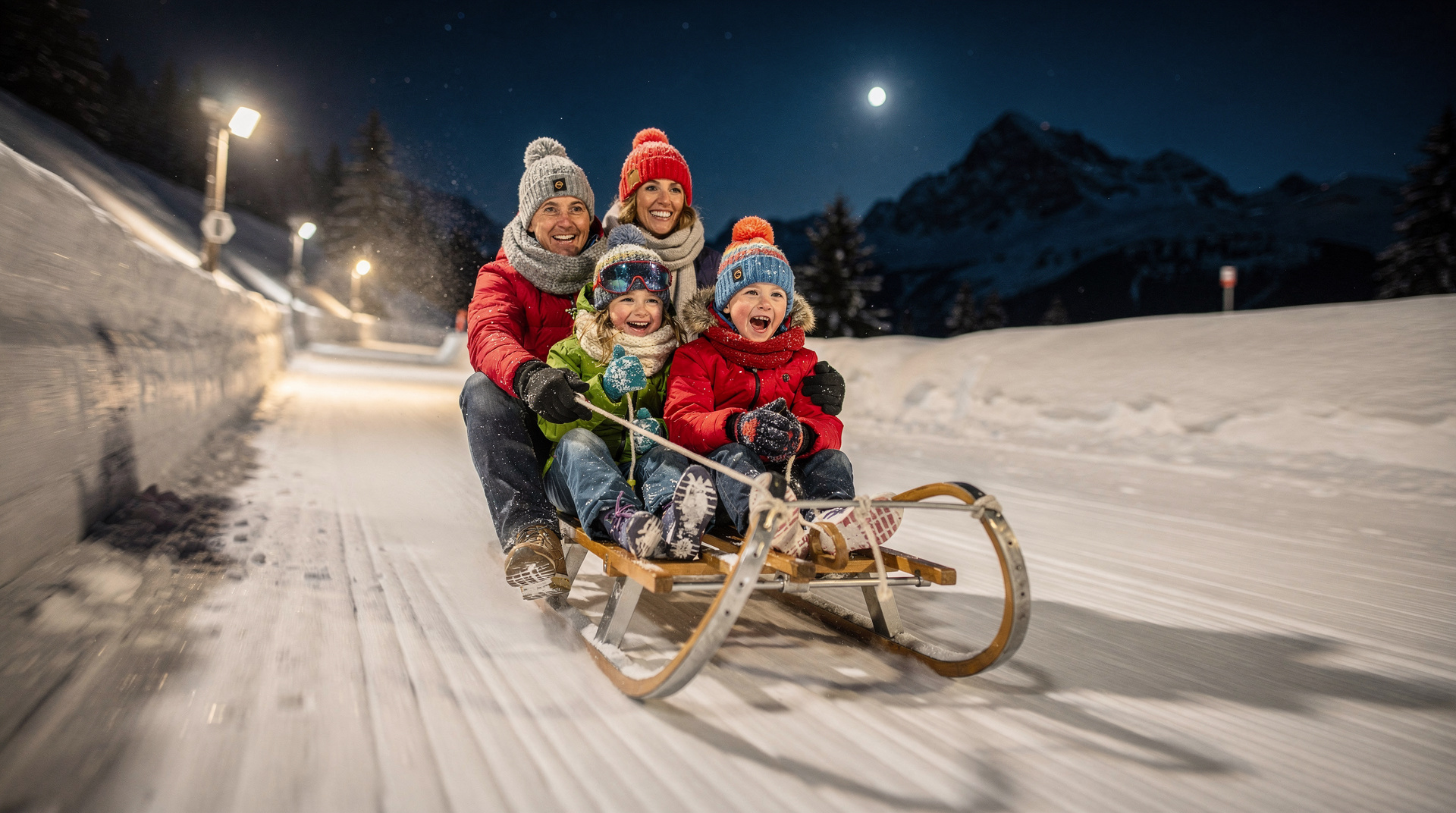
Sledging is the Swiss winter sport everyone can do, and it is taken surprisingly seriously. Many resorts have long, prepared runs served by trains or cable cars, with sledges for hire at the top or bottom.
- Preda to Bergün in Graubünden: a 6 km run on a road closed to cars in winter, with the Albula railway bringing you back up. It is lit for night sledging on several evenings a week.
- Faulhorn to Grindelwald: a long descent of around 15 km from the Faulhorn, one of the longest runs in the Alps.
- Grindelwald First, Wengen and Mürren: several shorter runs that suit families.
Wear ski goggles, waterproof trousers and sturdy boots: your heels are your brakes. Our sledging guide lists the best runs region by region.
Night sledging is one of the best evening activities in the Alps. Several runs, including Preda to Bergün and runs around Engelberg and Grindelwald, are floodlit on set evenings. A classic plan is a cheese fondue in a mountain restaurant followed by the descent by headlamp or under the lights. Sledges are usually rented at the station or the restaurant, and a day ticket for the train or cable car covers several runs.
Cross-country skiing
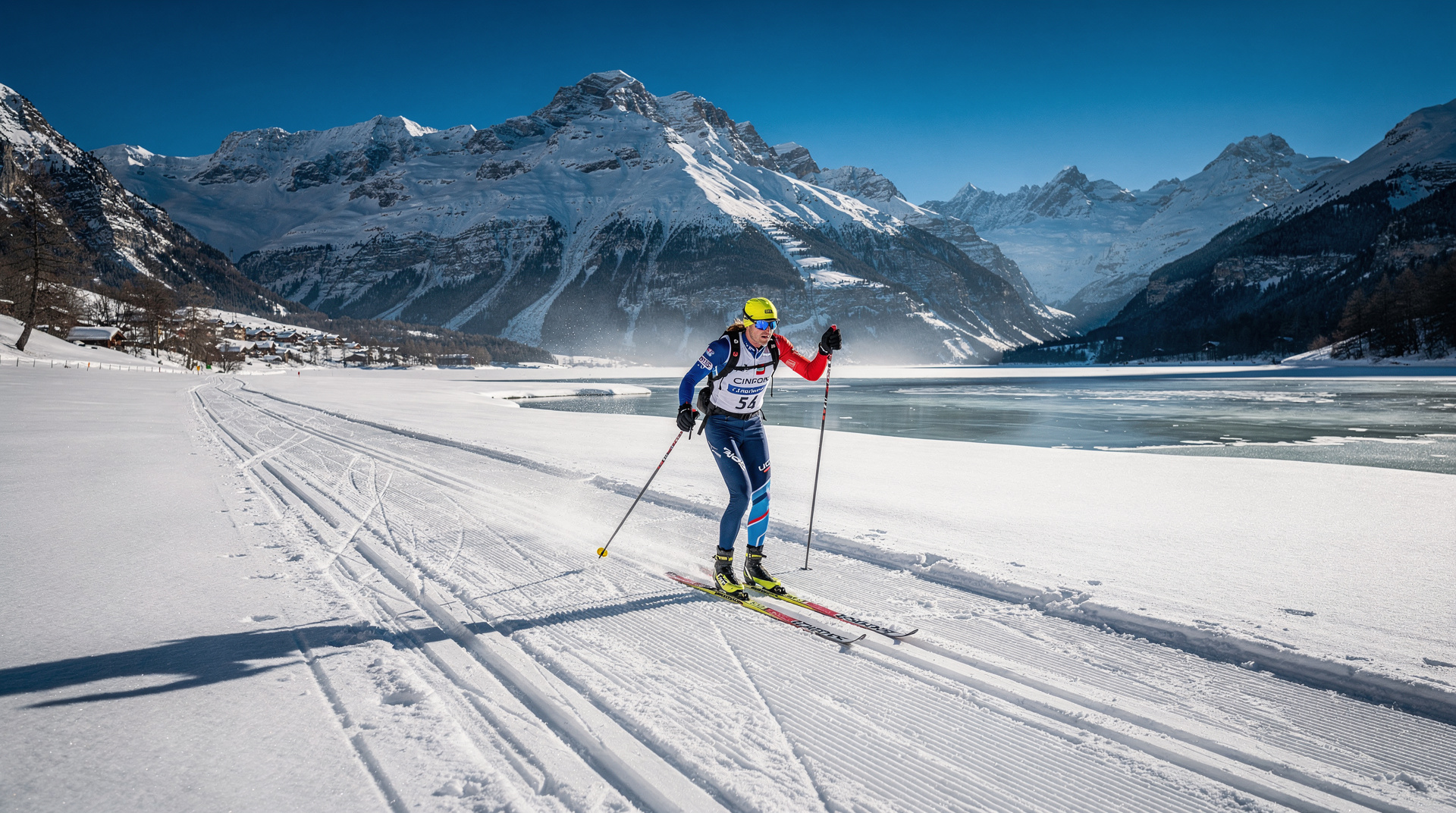
Cross-country skiing is cheap, quiet and a superb workout. The Upper Engadin, around St. Moritz and Pontresina, has the most famous network in the country, with around 230 km of groomed trails across frozen lakes and wide valley floors. It hosts the Engadin Skimarathon every March. Goms in Valais, Kandersteg and the Jura mountains are excellent alternatives.
Trail passes are inexpensive compared with lift tickets, and most ski schools offer short taster lessons in classic or skating technique. Read our cross-country skiing guide for the best regions.
Snowshoeing and winter hiking
Snowshoeing opens up silent forests and high plateaus that skiers never see. Many resorts now signpost snowshoe trails with pink markers, and rental is cheap. For a first try, choose a marked trail rather than open terrain, where avalanche knowledge is essential. Our snowshoeing guide suggests the best routes.
What to bring: waterproof boots, gaiters, layers you can remove as you warm up, sunglasses and sun cream, because the sun reflects strongly off the snow at altitude. Poles help on uphill sections and are usually included with the rental. A guided snowshoe walk is the best introduction: the guide chooses a safe route, explains the snow conditions and often ends the tour at a hut with a hot drink.
If you prefer to walk without special equipment, Switzerland also has an extensive network of prepared winter hiking paths, rolled flat and marked with pink signs. They are ideal for non-skiers and mixed groups, and often lead to a mountain restaurant with a sunny terrace. See our guide to winter hiking in Switzerland.
Ice skating, curling and ice climbing
Ice skating. Almost every resort has an outdoor rink, and natural frozen lakes such as Lake St. Moritz, Lake Sils and the Arosa lake host skating, horse races and polo when the ice is thick enough. Never walk onto a frozen lake unless it has been officially opened.
Curling. Switzerland is one of the strongest curling nations in the world. Many resorts, including St. Moritz, Davos, Wengen and Arosa, offer beginner sessions with an instructor.
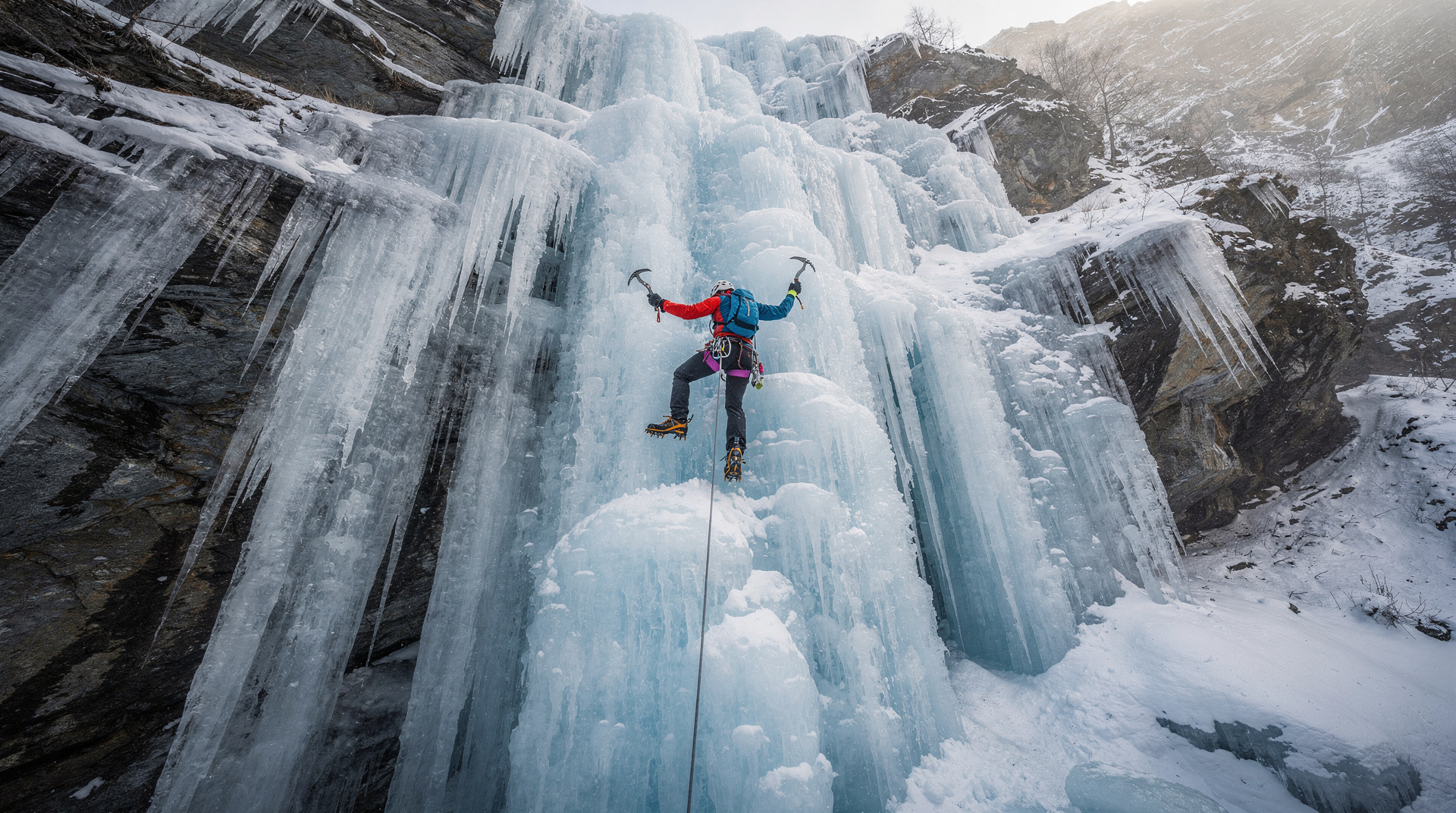
Ice climbing. Frozen waterfalls in Kandersteg, Pontresina and the Engadin attract climbers from all over Europe. Beginners should only climb with a mountain guide. Our ice climbing guide explains where to find guided courses.
Winter events and spectacles
Several world-famous events take place each winter:
- Lauberhorn races, Wengen (mid-January): the longest downhill course on the World Cup circuit.
- White Turf, St. Moritz (February): horse races on the frozen lake.
- Cresta Run, St. Moritz: the legendary head-first skeleton run, open to guest riders.
- Engadin Skimarathon (March): thousands of cross-country skiers between Maloja and S-chanf.
In December, many towns also host Christmas markets, which pair well with a few days in the mountains. See our guide to Christmas markets in Switzerland.
After the slopes: thermal baths and scenic trains
A winter trip is not complete without a warm thermal bath with snow all around. Leukerbad, Vals, Bad Ragaz and Scuol are the classics. Our guide to thermal baths in Switzerland compares them.
The scenic railways are also at their most beautiful under snow, and the high-mountain excursions stay open all winter. The Jungfraujoch, Titlis, Gornergrat and Matterhorn Glacier Paradise all run year-round and make a perfect rest day between ski days.
Book a Mount Titlis glacier excursion on GetYourGuide, a good snow day for non-skiers in the group.
Where to base yourself
The right base depends on who is travelling and what they want to do.
- For serious skiers: Zermatt, Verbier, St. Moritz or Davos, where the lift systems are huge and the snow reliable.
- For mixed groups and first-timers: Grindelwald, Wengen or Engelberg, with gentle slopes, sledging runs, winter walks and easy train access.
- For cross-country skiing: Pontresina, Sils or Samedan in the Upper Engadin, or the Goms valley in Valais.
- For a city-and-snow combination: stay in Lucerne or Interlaken and take day trips to Titlis, the Jungfrau region or the sledging runs at Grindelwald.
Car-free villages such as Zermatt, Wengen and Mürren have a special atmosphere in winter: quiet streets, horse-drawn sleighs and no traffic. Accommodation in the most popular resorts is expensive and books up early for the holiday weeks, so a valley town with a fast train connection can be a sensible compromise. Interlaken, for instance, is less than an hour from the Grindelwald and Wengen slopes.
When to go and how to get there
Season. Most resorts open their lifts in early to mid-December and close in early to mid-April. Snow is most reliable from January to March. Christmas, New Year and the February school holidays are the busiest and most expensive weeks; early January and late March are often the best value, with good snow and long sunny days in March.
Getting there. The Swiss rail network reaches almost every resort in this guide. Zermatt, Wengen, Mürren, Saas-Fee and Braunwald are car-free, and the Swiss Travel Pass covers the journey and often discounts mountain railways. Ski bags travel free on Swiss trains, and luggage can be sent ahead to many stations.
Safety. Always check the avalanche bulletin before leaving marked pistes or trails, never go off-piste without a guide and proper equipment, and buy insurance that covers mountain rescue, which is expensive in Switzerland.
Skiing on a budget
A Swiss ski week does not have to cost a fortune. The biggest savings come from choosing the right resort and the right dates. Smaller areas in central Switzerland, the Jura and the Valais side valleys charge much less for a day pass than Zermatt or St. Moritz, and many have excellent slopes for beginners and intermediates.
Book lift passes online as early as possible, because dynamic pricing rewards early buyers and quiet days. Rent equipment in advance too, and compare shops in the valley with those at the top of the lifts. Self-catering apartments save a lot compared with hotels, especially for families, and supermarkets in most resorts make it easy to cook. Lunch is often the hidden cost of a ski day: a packed lunch eaten on a sunny bench is a perfectly normal Swiss habit.
Several resorts offer combined train and lift tickets, sold through the Swiss railways, which include the journey from any station in Switzerland and a day pass at a reduced price. They are well worth checking for a day of skiing from a city base such as Zurich, Lucerne or Bern.
What to pack for a Swiss winter
Good clothing makes the difference between a great day and a miserable one. Temperatures in the resorts are often between -10°C and 0°C in January, colder on the summits and with wind chill on the lifts.
- Layers: a thermal base layer, a fleece or light down jacket and a waterproof shell, so you can adapt to sun, wind and snow.
- Warm accessories: a hat, a neck warmer, waterproof gloves and a spare pair of socks.
- Eyes and skin: sunglasses or goggles with good UV protection and high-factor sun cream, because the sun at altitude is strong even in winter.
- Footwear: waterproof boots with good grip for icy village streets, winter walks and sledging.
- Small extras: a reusable water bottle, lip balm, a power bank and a small backpack for the day.
Ski clothing can also be rented in many resorts, which is useful if you only plan one or two days on the slopes and do not want to buy a full outfit.
A first winter trip: a simple plan
For a first visit, a week split between two bases works well. Spend three or four nights in Grindelwald or Wengen, with ski lessons or gentle pistes in the morning and sledging or a winter walk in the afternoon. Then move to Lucerne or the Engadin for the rest of the week: a day on Mount Titlis or a scenic train ride under snow, an afternoon in a thermal bath and an evening of fondue. This mix keeps every member of the group busy, spreads the cost of lift passes and leaves room to adapt to the weather, which can change quickly in the mountains. If the snow is poor at lower altitude, shift the ski days to higher resorts such as Zermatt or Saas-Fee and keep the lower valleys for walks and sightseeing.